
Which Travertine Sealer Will. Protect Your Floor?
Last Updated on July 14, 2026 by David
Which Sealer Is Safe for Your Travertine?
Run your fingertips across the travertine, then examine it under raking light. The finish, open pits and traffic-worn areas all influence which sealer will suit the floor. Do not judge a product only by how strongly it darkens one convenient test patch. What matters more is whether the colour settles evenly around filler, grout edges, natural holes and areas that have worn at different rates.
Indoor or Outdoor Location
Which travertine sealer gives the best long-term protection indoors or outside? The answer starts with location, because a kitchen floor and an exposed patio face very different risks. Indoors, cooking spills, tracked-in moisture and repeated cleaning usually favour a penetrating sealer that protects below the surface without creating an obvious film. Water-based products can suit homes where low odour and simpler application matter, but the label must confirm compatibility with travertine, the existing finish and the room.
Outside, rain, frost and temperature changes make breathability more important. In UK conditions, assess weather-resistant penetrating sealers that repel water and oil without forming a continuous coating that may trap moisture. Patios and paving also need a product specifically rated for exterior use, freeze-thaw exposure and the expected drying conditions.
Colour enhancement changes with location too. An enhancing sealer can deepen beige and cream tones while retaining a broadly natural look, yet shaded external stone may become much darker. Test several tiles, grout and filler together, not one hidden corner. Readers comparing exterior options can review travertine flooring for outdoor spaces. The final choice should follow the product’s exterior-use, moisture-resistance and maintenance specifications.
Moisture Exposure
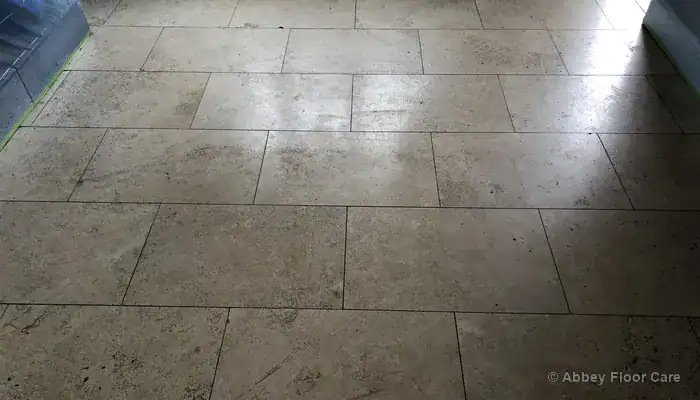
Frequent water exposure changes which travertine sealer will provide reliable long-term protection. Bathrooms, wet rooms and sink areas need more resistance to repeated wetting than decorative walls or lightly used rooms.
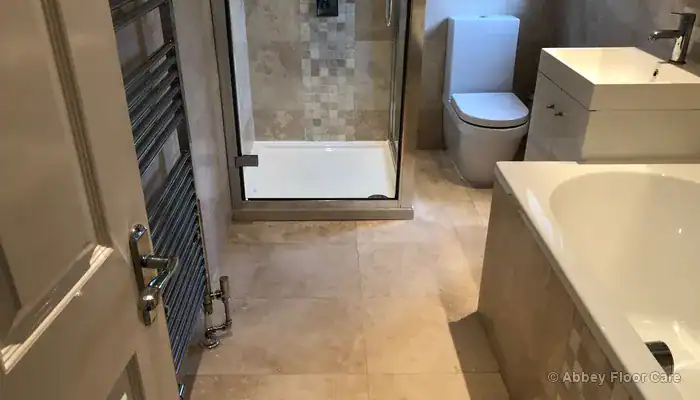
A penetrating product with higher active content may suit these zones because it protects within the stone while allowing moisture vapour to pass. Check that the label confirms wet-area use, curing time, water repellence and stain resistance.
A topical sealer creates a visible sacrificial film over smooth, factory-filled tiles. It can unify the appearance of stone and grout and simplify routine cleaning, but it also increases maintenance. Steam heat, unsuitable cleaners and wear in busy lanes can damage the coating first, leaving uneven sheen that needs controlled renewal rather than another random coat.
Preparation is equally important. A floor that has been washed, stripped or professionally extracted must dry completely, including joints and natural cavities that stay damp after tile faces appear dry. Large areas may need a damp-meter check rather than touch alone. Where soil remains in pits, cleaning soil from tumbled travertine explains why mopping may not prepare the surface properly. Sealing over moisture or contamination traps the problem beneath the new protection.
Traffic Level
Busy floors need a travertine sealer that protects for longer without showing obvious wear lanes. Kitchens, hallways and garden entrances often suit penetrating treatments because there is no surface film to scuff or peel, although traffic zones still need periodic water testing and resealing. Solvent-based penetrating products may be considered where deeper penetration and stronger oil repellence matter. Water-based alternatives may suit homes prioritising low odour and lower VOCs.
Finish type also affects the result. Many UK floors use 12mm factory-filled, honed tiles with a soft satin appearance. An enhancing product may deepen the stone while making beige filler and grout look different. Honed and filled travertine should remain smooth and even; tumbled or unfilled stone retains visible voids, which stay visually matt even after colour enhancement.
Heavy use quickly exposes poor preparation. Soil or old residue inside pits can block even absorption and shorten sealer life, so the floor must be uniformly clean, residue-free and fully dry before products are compared. Avoid hot moisture that may disturb an existing finish. The difference between controlled preparation and domestic steaming is explained in whether steam cleaning is safe for travertine. Persistent contamination should be professionally assessed before sealing.
Finish Preference
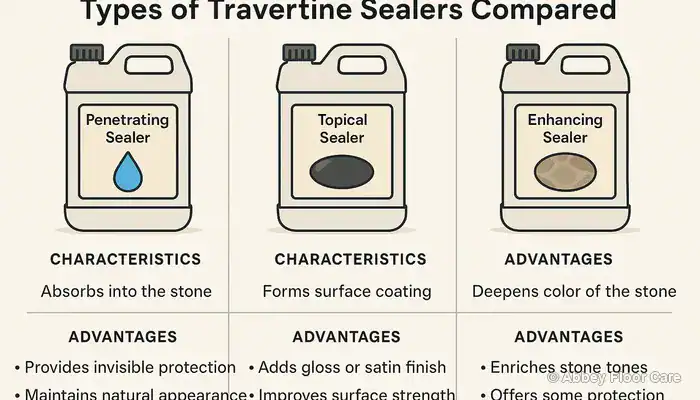
The best sealer for your travertine should protect the floor without creating a finish you do not want. For a natural matt or satin appearance, an invisible penetrating treatment is usually the starting point. It reduces liquid absorption below the surface without deliberately adding sheen. Water-based products may dry clear and preserve a rustic look, while solvent-based alternatives may penetrate more deeply and improve oil repellence. The label must still name travertine and confirm the correct indoor or outdoor use.
For richer colour, consider an enhancing sealer that deepens the stone’s natural tones. This can suit textured finishes and travertine with strong geological variation, but it may also emphasise mismatched filler, grout or repaired pits. A representative test should therefore include all three. Once dry, the area should look even, with no glossy residue, oily patches or dark rings around voids.
A more unified sheen may point towards a film-forming topical coating. It can improve surface consistency and provide a sacrificial layer, but it requires compatible cleaners and periodic film maintenance. Homeowners wanting low-maintenance, natural-looking protection may reject that trade-off. Those choosing a controlled sheen should understand that wear, steam heat and incompatible products can eventually require stripping rather than simple resealing.
Maintenance Commitment
Long-term protection depends on choosing a travertine sealer you are prepared to maintain. Penetrating products usually need less visible film care, although traffic lanes and wet zones should still be checked periodically with a water-drop test. Topical coatings demand closer attention because the sacrificial layer can lose sheen unevenly. Colour-enhancing treatments also need timely renewal if the enriched appearance fades at different rates.
Routine cleaning must support the selected sealer. Use acid-free, pH-neutral products that the manufacturer confirms are compatible. Avoid steam mops and residue-forming cleaners because they can soften topical films or leave deposits that distort water testing. Suitable choices are covered in travertine floor cleaning and maintenance tips. Following the care instructions helps protection wear evenly and last longer.
A reliable supplier or contractor should provide a clear maintenance handover, not simply say “reapply when needed”. Useful guidance identifies the cleaner, curing restrictions, testing intervals and early signs of uneven wear. A properly restored and sealed floor is easier to clean, looks more consistent and may perform better than when first installed because the finish and protection have been matched to the stone rather than chosen from appearance claims alone.
Why the Existing Finish Changes Your Options
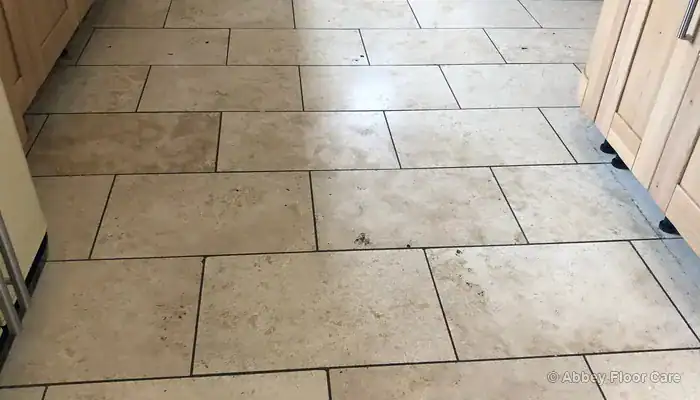
What is already on the travertine determines which new sealer can protect it properly. A surface that feels tacky, looks patchy in angled light or catches a fingernail at an edge may carry a film rather than being bare stone. Absorbed treatments can remain below the visible surface, so a floor that looks clean may still reject a new product or take it unevenly.
The previous finish decides whether fresh protection must penetrate the stone or bond to a coating. Excess impregnator left to cure can form glossy streaks, dull drag marks or a smeared residue that needs controlled removal before resealing. Old acrylic, wax-like or polyurethane coatings may require a compatible stripping system, not another coat. The tumbled travertine project in Lincoln shows why surface condition must be established before choosing protection.
A new sealer can only perform properly when the old surface condition is correctly identified.
Cleaner residue creates another compatibility problem. Professional-grade alkaline cleaner can remove organic soil, but it must be thoroughly rinsed and extracted. A wet vacuum removes contaminated slurry before it settles in pits and voids. Identifying the former sealer is therefore only part of the assessment; the floor must also be free from chemical residue and embedded contamination.
Complete dryness finishes the check. Stone, grout and filler must dry evenly before application, and a damp meter can confirm moisture where touch is unreliable. Sealing while damp can cause whitening, delayed curing or patchy penetration. Product selection should begin only after the previous treatment, remaining residue and moisture condition are understood.
What Happens When Sealers Are Incompatible
The wrong travertine sealer can turn a protection job into a costly strip-back. Sticky areas, milky patches, peeling edges or visible lap lines usually indicate poor adhesion, uneven penetration or moisture trapped beneath a film. Adding another coat rarely corrects the underlying problem.
Routine resealing is lower risk when the previous treatment is known, the stone absorbs evenly and the floor is completely dry. A compatible penetrating sealer can renew water and stain resistance without unexpectedly changing the finish. Even then, the applicator must observe working time and remove excess before it cures.
Uncertain previous coatings carry greater risk because a new product may bond to residue rather than the intended surface. Whitening, delamination and patchy sheen then appear as cloudy areas, loose edges or uneven gloss. Accurate identification and controlled removal must come before new protection. The safe method for removing old travertine sealer explains why untested stripping can worsen the damage.
Persistent damp also needs professional assessment because trapped moisture can prevent curing and repeatedly break adhesion. Large outdoor areas add changing temperature, airflow and working time. Extraction may remove deep contamination and slurry, but sealing should start only after the moisture source and former treatment are understood.
Not every failure is product incompatibility. Residual alkalinity can interfere with penetrating chemistry, while sustained steam heat can soften a suitable topical film and break its bond.
Match the Sealer to the Floor
To choose the best travertine sealer for long-term protection, start with how the floor absorbs water. Test several representative areas because sink zones, entrances and garden access points often lose repellence before quieter tiles.
- Test clean, fully dry tiles in a quiet area, a traffic lane and a frequently wet zone.
- Leave several drops for the product manufacturer’s recommended observation period.
- Choose penetrating protection when water darkens the stone and a natural matt or satin finish is preferred.
- Consider colour enhancement only after a test area dries evenly around filler, grout and natural pits.
- Evaluate a topical coating only where a visible film, unified sheen and ongoing maintenance are acceptable.
- Select a breathable, weather-resistant exterior product for patios exposed to UK rain, frost and temperature changes.
The water-drop test shows whether liquid beads or absorbs into exposed pores. Different responses normally indicate uneven wear, not that every tile needs identical treatment. The test cannot identify an unknown coating, confirm dryness or prove old residue has been removed.
Outdoor travertine needs breathable, weather-resistant penetrating protection because frost can act on moisture trapped beneath unsuitable coatings. The product should specify exterior use, water repellence and freeze-thaw suitability. Indoor wet areas may place greater emphasis on stain resistance, higher active content and low odour during curing.
Complete dryness remains essential whichever category is selected. The final decision should also include a written care routine covering cleaner choice, curing time, water testing and resealing intervals. This prevents a suitable product from failing through incompatible maintenance and gives the homeowner a clear standard for future performance.
How to Seal or Reseal Travertine Correctly
UK-Available Travertine Sealer Brands
Several trusted brands offer sealers formulated for UK conditions. Professionals widely recommend Fila, LTP and Lithofin for their durability, ease of application, and compatibility with natural stone.

MP90 Eco Xtreme
|

LTP MPG Sealer H20
|
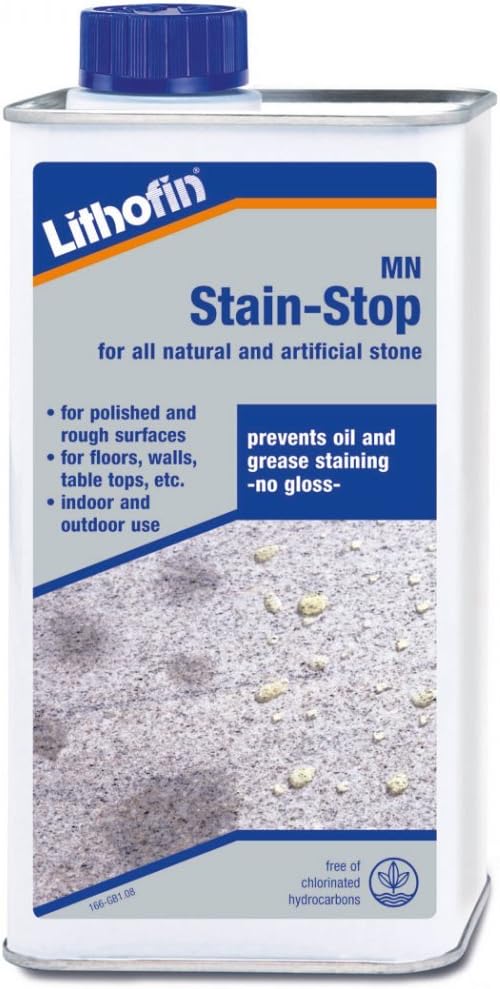
Lithofin MN Stain Stop
|
When purchasing, look for features like stain resistance, UV stability, and frost protection to ensure long-term performance. Investing in a high-quality sealer from a reputable brand can significantly extend the life of your travertine.
Once you have chosen the right sealer, application determines whether protection lasts. The floor should feel clean, leave no chalky residue and be fully dry through joints and voids. Product selection should already reflect location, moisture, traffic, finish and previous treatment.
DIY sealing can suit a manageable indoor area when the old treatment is known and the homeowner can control coverage, working time, ventilation, curing and excess removal. Test a representative area first to confirm that stone, grout and filler absorb the product and dry evenly.
Large floors, outdoor areas and uncertain coatings are safer in professional hands. Temperature, airflow and limited working time can cause overlap marks, poor adhesion or cured residue before application is complete. Professional preparation and application improve the chance of even coverage and durable results.
Deep contamination or unknown residue should be assessed before compatibility and damp checks. Further guidance appears in the travertine care and restoration hub. Correct product matching, complete dryness and controlled application remain the foundation of successful sealing.

David Allen — Abbey Floor Care
David Allen has more than 30 years of experience evaluating and restoring travertine floors through Abbey Floor Care. His buyer guidance focuses on matching penetrating, topical and colour-enhancing sealers to the floor’s finish, location, moisture exposure and maintenance requirements.
19 Willow Rd,
New Malden
KT3 3RS
(01372)-664-337
We work throughout the country, just some of our work counties:
Copyright © Abbey Floor Care. Natural Stone Floor Restoration in Surrey and South West London FAQ - Privacy Policy - Terms And Conditions
Abbey Floor Care is a participant in the Amazon Services LLC Associates Programme, an affiliate advertising programme designed to provide a means for websites to earn advertising fees by linking to Amazon.co.uk. As an Amazon Associate, we earn from qualifying purchases.