
Can You Steam Clean Travertine Floors?
Last Updated on July 13, 2026 by David
Can You Steam Clean Travertine Safely?
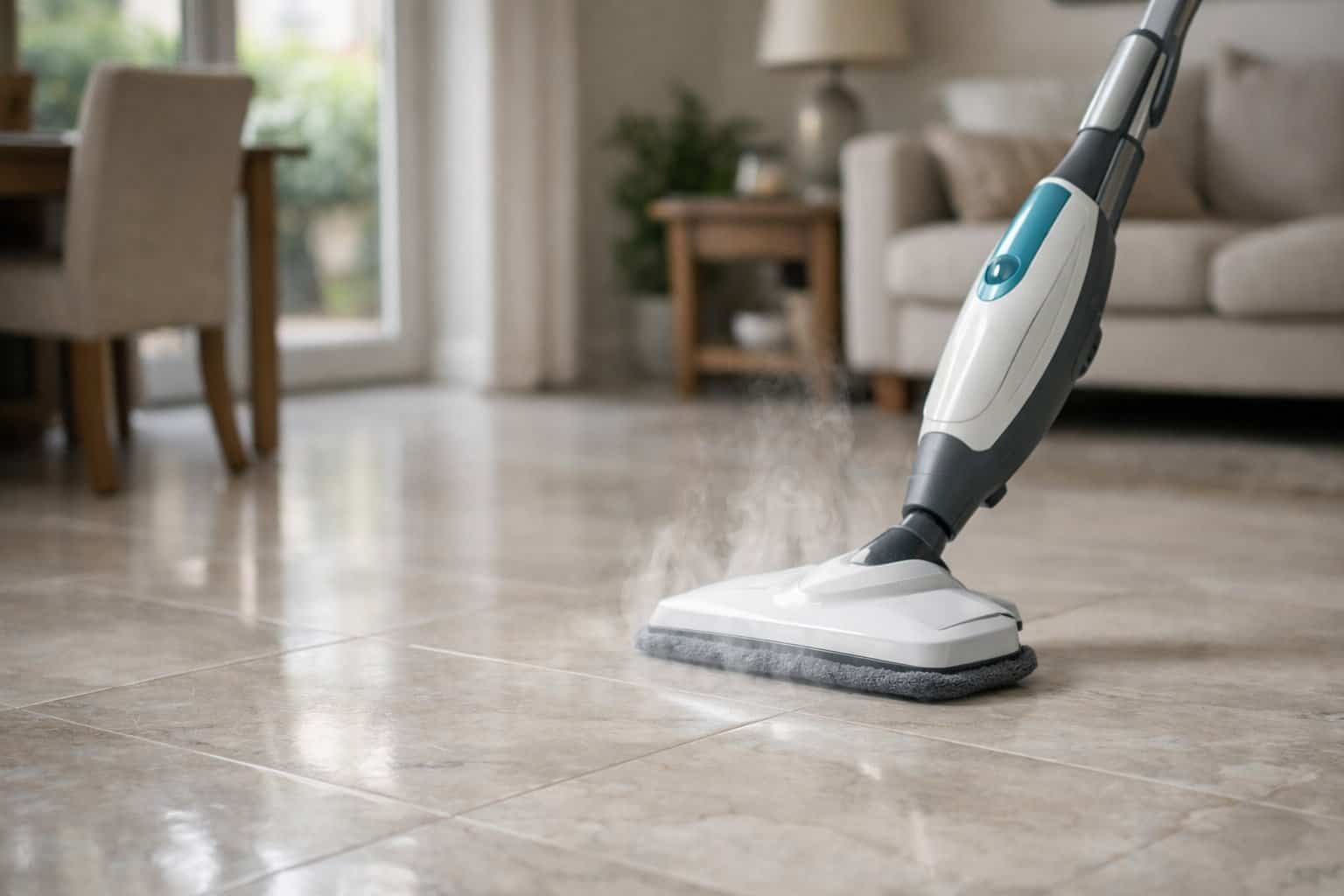
Do not use a steam mop on travertine. Concentrated heat damages sealers, while steam pads loosen soil without extracting dirty slurry from holes or grout. Before cleaning, inspect your dry floor for structural weak spots and pre-existing damage.
1. Structural Damage & Defective Filler
New pits or crumbly areas indicate failing factory filler rather than stone breakdown. Check out this guide on filling small travertine holes safely to see when localized repair is needed. If filler moves, sheds particles, or stands proud of the tile, avoid steam completely; moisture and heat will accelerate the failure and force dirt beneath the remaining edges.
2. Surface Wear, Etching, & Scratches
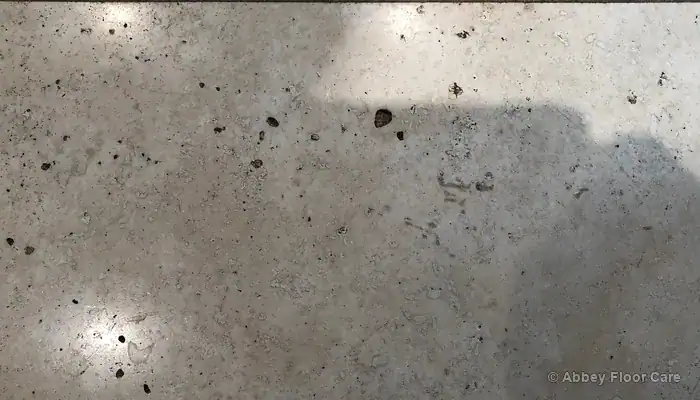
Glossy spots next to flat, dull traffic lanes show uneven coating wear. Using steam across these mixed conditions makes the contrast worse. Similarly, pale, rough patches near sinks or dining areas represent chemical etching from wine, juice, or harsh cleaners—not surface dirt. Steam cannot reverse a physical change to the stone’s calcite structure.
Fine curved scratches across busy routes point to grit grinding underfoot. Because wet cleaning makes scratches catch the light and look deeper, always vacuum or dry-brush loose debris away first. As shown in the travertine cleaning work in Abbots Bromley, identifying surface wear versus actual soil is vital before choosing a method.
3. Coating Discolouration & Cleaning Residue
Yellowing, sticky streaks, or dark bands usually mean an old surface coating has built up. Steam should never be used to soften an unidentified film, as patchy removal leaves an ugly, irregular finish. For cloudy marks or cleaning residues, do not use vinegar or acidic limescale removers. Travertine is highly acid-sensitive. Test a diluted, stone-safe pH-neutral cleaner in an inconspicuous area instead.
4. Trapped Dirt & Poor Mop Recovery
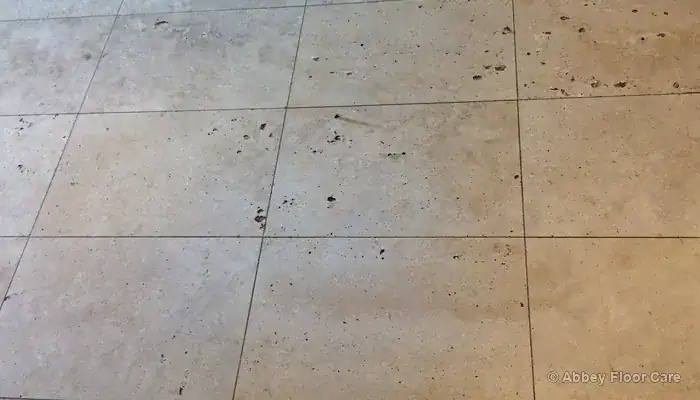
Small dark spots in holes or black lines along recessed grout show where repeated mopping has pushed dirty water into the lowest points. Learn more about why travertine grout turns black. Mops and steam pads loosen this dirt but lack a recovery stage to pull slurry out of cavities.
Test deep spots with a soft brush and pH-neutral cleaner—never scrape with metal. If dirt just spreads around the hole, your cleaning method has hit its limit. This is illustrated by a deep-cleaned travertine floor in Hull, which highlights the difference between superficial wiping and full extraction. If your mop pushes grey water or leaves foam streaks, stop and switch to fresh, absorbent microfibre.
5. Texture Variations & Final Inspection
Always wait for the floor to dry fully before inspecting it, as wet grout and pits temporarily look darker. Tumbled or textured stone naturally retains matt recesses and cavities. Our project cleaning tumbled travertine in Kings Lynn shows that the goal is to clear the texture, not erase it. Even factory-honed, smooth floors should be checked from a low angle for hidden hairline pits before cleaning.
The Safe Maintenance Verdict
When multiple warning signs overlap—like loose fill, tacky coatings, and dark pits—household experimentation won’t work. The case study of cleaning a heavily soiled travertine floor in Selby proves why you must diagnose the floor’s physical state first. Stick to dry soil removal and controlled damp mopping for routine care; if dirt remains packed inside the stone’s natural voids, skip the steam and arrange professional extraction.
What Can Damage the Floor?
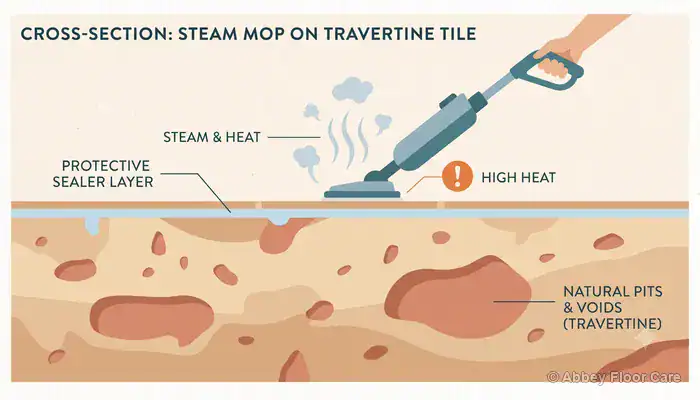
When steam heat leaves a sealer feeling soft or slightly grabby beneath a clean cloth, it is already affecting the protective film. Grit trapped under the pad can score the stone during the same pass. Heat, chemicals and abrasion cause damage in different ways, but each can leave the floor more difficult to clean.
Concentrated steam can soften a film-forming sealer and weaken its bond with the tile. Excess water then remains beneath the damp mop or settles into open holes, carrying loosened contamination towards grout lines rather than removing it. An invisible penetrating treatment may also deteriorate gradually when sustained heat combines with cleaning residue.
Steam loosens contamination but does not extract it from travertine’s natural voids.
Chlorine bleach and other harsh household chemicals can cause discolouration, surface damage and sealant degradation. Travertine has an acid-sensitive calcite composition, which means vinegar, acidic bathroom cleaners and acidic limescale products can dissolve the finished surface and leave pale, rough patches. Use a stone-specific formulation, then rinse with clean water and a soft cloth.
Loose dirt beneath a pad creates physical scratches as the mop travels across the floor. Vacuum first using a suitable head or remove the grit with a soft-bristled brush. Then check that the microfibre mop is free from dust and grit. This preparation limits the surface wear caused by normal foot traffic.
What You Need to Clean It
A clean mop head that glides freely is more important than choosing a stronger cleaner. Once the pad begins dragging gritty slurry across the tile, it is no longer cleaning effectively. Keep washing and recovery as separate stages so loosened soil leaves the floor instead of being spread over it again.
Dry Soil Removal
Where loose dirt is visible around entrances or grout joints, remove it with a soft-head vacuum or soft-bristled brush before adding water. Use this approach when routine dust and grit can be lifted without passing a wet pad over the floor.
Controlled Damp Cleaning
For light general soiling, use warm water, a pH-neutral stone cleaner and a clean microfibre mop. Follow the manufacturer’s dilution instructions and work in small areas so the product cannot dry on the tile. This method is suitable where the floor is intact and the visible holes do not contain heavy contamination.

Dirty-Solution Recovery
When the cleaning water turns grey, recover it using fresh absorbent microfibre material rather than carrying on with a loaded mop. Any deeper cleaner must be followed by a clean-water rinse, and that rinse liquid must also be removed. Use this stage where residue or streaks remain after the first controlled pass.
Professional Extraction
Dark soil packed into natural holes will not be removed properly by stronger DIY chemicals. Professional equipment combines controlled hot water, agitation and immediate slurry removal, lifting deep contamination without depositing it elsewhere. This is the appropriate method when embedded soiling persists after a safe test clean.
What a Safely Cleaned Floor Looks Like
A safely cleaned travertine floor should feel clean and dry beneath your palm, without sticky drag, gritty residue or dark slurry remaining inside visible holes. Carry out the final inspection only after the floor has dried completely, as damp grout and wet pits temporarily appear darker.
Clean result: the colour looks even across comparable tiles, the grout lines are clearly defined and the mop no longer collects grey residue. Natural cavities remain visible because they are an inherent feature of the stone, but their edges should be free from loose soil and dried cleaning product.
Residue remaining: the dry surface feels tacky or shows streaks where cleaner has been left behind. A clean-water rinse followed by a separate recovery pass is needed because un-rinsed alkaline residue can weaken the protective layer and accelerate dullness.
Condition cleaning cannot correct: pale, rough areas represent changes to the finished surface rather than dirt. Scratches, worn filler and a patchy coating will also remain visible once the contamination has been removed. These conditions need a different intervention and should not be pursued with repeated mopping.
Embedded contamination: dark spots that remain inside open holes after the surrounding tile has dried show that routine cleaning has reached its limit. Professional hot water extraction provides void penetration and immediate slurry removal, leaving the floor significantly cleaner and easier to maintain than repeated incomplete washing.
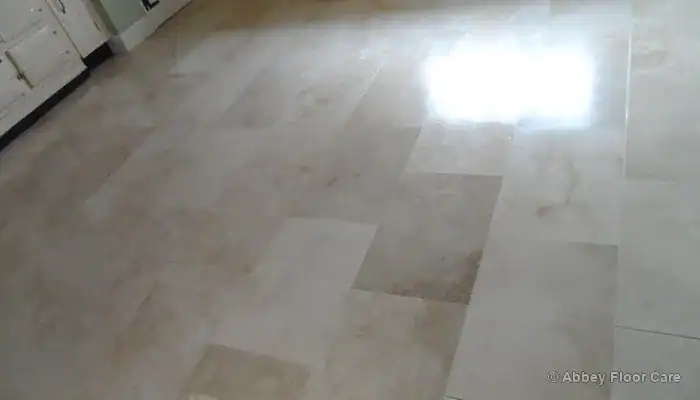
A honed and filled travertine floor has a smooth, consistent satin surface. Unfilled or tumbled travertine retains visible voids. These may be filled or left open, but even when enhanced, the voids remain visually matt against the surrounding surface.
How to Maintain Travertine Afterwards
When repeated damp cleaning leaves the tile feeling slightly tacky underfoot, the usual cause is too much product or insufficient recovery — not a need for a stronger solution. Remove grit frequently, blot spills straight away and use an acid-free pH-neutral cleaner with the mop only damp enough to loosen surface soil.
Rinse or replace the microfibre material as soon as the recovered water becomes visibly grey. Carrying on with a loaded mop pushes abrasive grit and slurry back into void edges and grout lines. And allowing alkaline cleaner to dry can shorten the life of the sealer.
Inspect open holes and older filler regularly so localised contamination or crumbling material can be dealt with before it interferes with everyday cleaning. Ongoing maintenance based on grit removal, controlled damp mopping and resealing at the appropriate interval is the most important factor in extending the floor’s useful life. The complete travertine flooring care guide covers cleaning, repair, sealing and restoration as separate stages. A maintenance routine suited to the finish keeps the floor clearer and reduces unnecessary intervention.
Products Used In This Guide
Travertine Cleaning Equipment

David Allen — Abbey Floor Care
David Allen has more than 30 years of experience with Abbey Floor Care, assessing and restoring travertine floors throughout the UK. His work includes identifying when controlled pH-neutral cleaning is suitable, when steam must be avoided and when embedded contamination requires professional extraction.
Recent Posts:
We work throughout the country, just some of our work counties:
Copyright © 2026 Abbey Floor Care. Tile And Natural Stone Cleaning Consultants FAQ - Privacy Policy - Terms And Conditions
Abbey Floor Care is a participant in the Amazon Services LLC Associates Programme, an affiliate advertising programme designed to provide a means for websites to earn advertising fees by linking to Amazon.co.uk. As an Amazon Associate, we earn from qualifying purchases.