
Why Travertine Grout Turns Black Between Clean Tiles
Last Updated on July 18, 2026 by David
For the wider relationship between the stone, its grout, surface finish and protective treatment, see our travertine care, cleaning and restoration guide.
Why does travertine grout turn black? Travertine grout usually turns black because porous or recessed joints retain dirty cleaning water, soap film, grease, soil or moisture-linked growth. The smoother tile faces release contamination more easily, so the stone can look clean while the lower grout lines remain dark.
Why Grout Turns Black While the Tiles Look Clean
When travertine grout turns black but the tile faces still feel smooth and clean beneath your fingertips, the pattern often tells you more than the colour. Dark grout can appear as isolated marks, continuous lines, scattered black spots or widespread discolouration, and each presentation points towards a different condition. The first step is not choosing a cleaner. It is working out where the change appears, how closely it follows the joints and whether the surrounding stone has altered at all.
Isolated Black Spots Between Otherwise Clean Tiles
If your travertine tiles look clean but a few grout joints are turning black, check whether the marks are isolated or part of a wider pattern. Small black spots beside a sink, shower fitting, pet bowl or regular spill area suggest a local source rather than general floor dirt. They may look sharply defined when dry, become darker after mopping and remain visible even when a white cloth lifts no soil from the adjoining tile.
Inspect each mark under strong side lighting. Blackening held inside the grout and staying matt under raking light differs from a surface smear crossing both stone and joint. Also note whether the spot sits in a pinhole, rough patch or slightly recessed section. When the surrounding travertine remains pale and clean-looking, a dark mark confined to the joint is more likely to be embedded contamination than loose dirt spread across the floor.
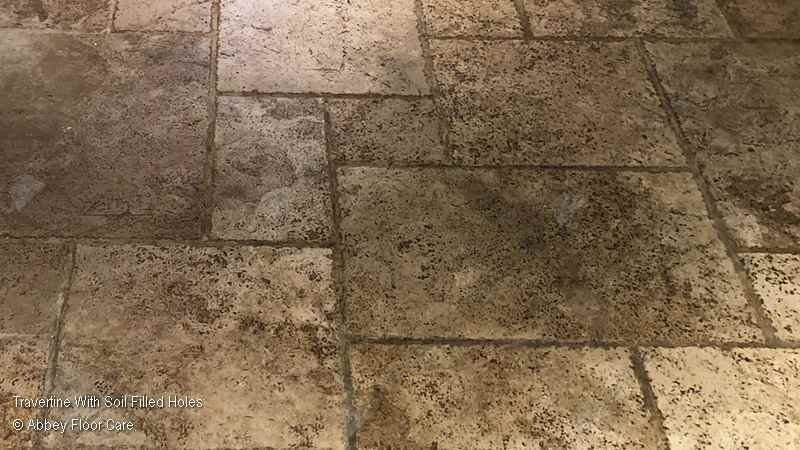
I regularly see these localized issues worsen when the wrong cleaning methods are used. For example, during a project I undertook to resolve heavily contaminated joints on a worn travertine kitchen floor in Reading, the combination of recessed grout lines and deep natural pores in the stone had allowed dark, greasy soil to build up exclusively below the tile surface while the faces of the tiles stayed relatively pale.
Dark Grout Lines Recessed Below the Travertine
Dark or dirty grout lines often stand out because the joints sit below the surrounding travertine tiles. Run a fingertip gently across the floor rather than along the joint. A dip, rough edge or narrow channel shows that the blackening is concentrated beneath the tile surface, where dirty liquid and residue can settle.
From standing height, recessed grout can look almost black because the lower joint receives less light. Closer inspection may reveal irregular grey, brown and black patches instead of one uniform shade. Naturally dark grout is usually consistent; contaminated grout commonly changes colour along the same joint.
The contrast is especially noticeable on pale filled-and-honed travertine, where smooth tile faces reflect more light than the dirty recessed lines. Photographs of projects involving rapidly soiling travertine grout lines show how strongly black joints can divide an otherwise clean-looking floor. Comparing tile faces, joint depth and colour variation helps separate grout contamination from darkening within the stone itself.
Traffic Routes Traced by Black Grout
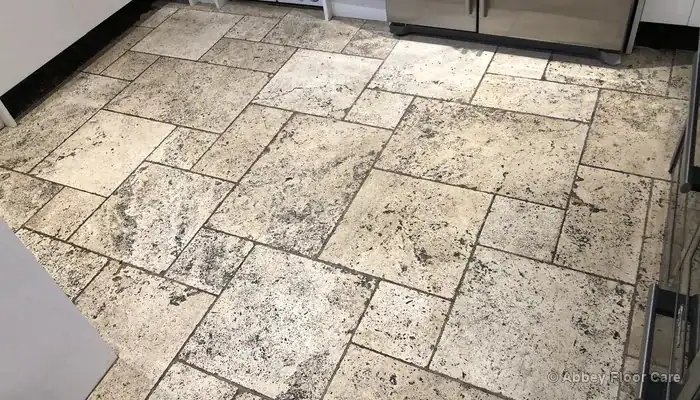
If the black grout follows the routes people walk most often, compare those joints with quieter areas behind doors or beside fixed units. Traffic-related darkening commonly creates connected lines through entrances, kitchens and hallways. The travertine tiles may still appear reasonably clean, while the dirty grout traces the route between an outside door, sink, cooker or adjoining room.
The pattern is usually strongest where people turn, stand or enter from the garden, then fades towards less-used areas. A pale worn strip or fine scratching may also appear on the tile surface, but that is a separate symptom. The lighter stone shows surface wear; the black line beside it shows contamination retained within the joint.
Busy kitchens can display several overlapping patterns, including a dark walkway, a broader patch near the sink and isolated marks beside bins or preparation areas. The travertine floor cleaning project in Hull shows how coarse grout and domestic traffic can produce uneven blackening rather than identical discolouration across the room.
Black Grout Around Showers and Damp Areas
Black grout in a travertine shower usually appears first where joints remain damp. Check corners, low points, silicone edges and areas that dry more slowly than the surrounding stone. Moisture-linked growth commonly forms fixed black or dark grey speckles, unlike the softer brown-grey discolouration associated with dirty water or tracked soil. It may also return first in exactly the same corners after wiping.
Compare the grout when fully dry with its appearance immediately after use. Cement-based grout that merely darkens when wet normally changes evenly and returns towards its original colour as moisture evaporates. Permanent black spots remain visible after drying and may feel rough, pitted or irregular beneath a fingertip.
This dry-versus-wet comparison helps distinguish ordinary temporary darkening from contamination or biological growth embedded within the joint. Also check whether the marks remain limited to persistent wet zones or continue into drier areas, where another cause may be contributing.

Dirty Grout Lines Across the Entire Floor
When nearly every grout line on a travertine floor looks dark or dirty, first confirm whether the blackening is genuinely widespread. Step back and look for stronger bands through entrances, work areas and walking routes. Installation-wide discolouration often appears as an overall grey or brown cast, with near-black sections inside deeper or rougher joints, while the tile faces remain pale and relatively clean.
Dried cleaner film can leave cloudy edges beside the dark grout. Under low-angle light, these areas may appear streaky, and the joint may feel slightly sticky beneath a damp fingertip or drag against a clean cloth. That behaviour differs from dry black spotting concentrated in a shower.
Because cream, beige and white grout show modest colour changes clearly, compare the exposed floor with a protected joint beneath a removable threshold or behind an appliance. A lighter hidden section confirms that use, cleaning or previous treatment has darkened the visible grout. Matching colours may indicate that the original grout was naturally darker than remembered.
Grout That Turns Dark Again After Mopping
If your travertine grout turns black or dirty-looking soon after cleaning, watch what happens as the floor dries. Temporary darkening is normal when cement-based grout absorbs water, but it should lighten again. A joint that remains dark after the travertine tiles have dried is showing more than ordinary dampness.
The pattern often appears where a mop changes direction, dirty water collects or the grout sits below the tile surface. Over repeated cleaning cycles, those areas may become progressively darker even though the stone faces continue to look clean. The result is a pale travertine floor divided by persistent black or grey lines.
Look for consistency over several days. Natural grout variation remains broadly stable, whereas retained contamination changes with mopping, moisture and use. A section that lightens after cleaning and quickly darkens again may contain cleaner film, redistributed soil or residue below the surface. Recognising that cycle before using stronger products helps prevent several different grout problems from being treated as ordinary dirt.
Why the Blackening Keeps Coming Back
Travertine grout often turns black again because mopping loosens dirt without removing the dirty liquid from the joints. Water carrying suspended soil, grease and cleaner residue passes over the tile faces before settling into porous or recessed grout. The smooth travertine dries and looks clean first, while the lower joint retains the darker deposit.
Soap, shampoo and surfactant films can leave a slightly sticky layer inside the grout. Fresh grime then bonds to that residue, so repeated wiping creates rapid resoiling instead of a fully clean joint. The specialist distinction is extraction. The method described in this guide to cleaning heavily soiled travertine safely removes released contamination rather than pushing it towards pits and grout lines.
A useful test is to clean one small joint, let it dry and compare it with the surrounding floor after the next normal mop. If the grout initially lightens but soon becomes dark again, residue or contaminated moisture remains below the visible surface. Rotary scrubbing followed by rinse-and-capture extraction removes that retained liquid more effectively, allowing the joint to stay cleaner for longer.
Repeated mopping can move contamination into recessed grout faster than it removes it.
On travertine floors I inspect, a common confirmation is that one test joint initially dries lighter after controlled cleaning, then stays lighter after the released liquid has been extracted. Where the adjoining joints are only scrubbed and wiped, they often dry darker again because contaminated rinse water remains below the tile surface.
Highly alkaline cleaners can also leave detergent or mineral deposits when rinsing is incomplete. The grout may feel rough or tacky, attract new soil and repeatedly return to a dirty grey or black appearance.
Moisture-linked growth follows a different pattern. It remains concentrated in persistently damp corners and appears as fixed black spotting. Redistributed contamination follows mop routes, traffic lanes and recessed joints. Both can occur together, which is why treating only visible black spots may leave the wider dark grout lines unchanged.

When the Wrong Treatment Makes It Worse
Do not keep using stronger chemicals or harder scrubbing when black travertine grout remains embedded. Aggressive brushing can erode cement-based joints and disturb the finish on adjoining tiles. Chlorine bleach may temporarily lighten surface staining, but repeated or poorly controlled use can weaken or discolour grout and affect the surrounding travertine. The result may be a rough, pale joint beside damaged stone, while the original contamination remains.
Acidic limescale removers create a separate, irreversible risk. Travertine is primarily calcium carbonate, so acidic products react with the stone itself rather than simply dissolving deposits sitting on top of it. Calcium stone like Travertine reacts immediately with acid, so hard-water deposits must never be treated with household descalers. A dull or whitish mark left after acid contact is physical surface loss, not residue that can be rinsed away.
Steam mops add heat and moisture without recovering the dirty liquid they release. Heat can soften topical sealer films or weaken their bond, while the pad moves loosened soil into pits and recessed grout. Professional extraction works differently because contaminated liquid is removed immediately. The guidance on whether steam cleaning is safe for travertine explains why this matters.
Stop when gentle stone-safe cleaning leaves blackening embedded, the grout sheds particles or the cause remains uncertain. Stronger household treatment is then more likely to alter the grout or stone than solve the condition.
What the Pattern Reveals About the Cause
Where the black grout appears on your travertine floor usually reveals what is feeding the discolouration. Follow the dark grout lines across the floor and feel whether the joints sit lower than the surrounding tiles. Where the blackening appears can help show whether the cause is surface dirt, trapped cleaning residue, damp-related growth or contamination left behind by earlier cleaning.
- Check traffic routes. Black or dirty grout connecting entrances, sinks and working areas points towards foot traffic and repeated movement of contaminated mop water.
- Check wet zones. Fixed black specks in shower corners or joints that remain damp are more consistent with moisture-linked growth than general floor soil.
- Check spill areas. Localised brown or black marks beside bins, pet bowls or food-preparation areas suggest a specific contamination source.
- Check joint depth. Darkening held below the tile plane indicates soil or residue trapped in recessed grout, particularly when the travertine edges remain clean.
- Compare two dry joints. Clean one small section gently and leave the adjoining joint untouched. Grout that briefly lightens before turning dark again is likely retaining cleaner film, dirty water or alkaline residue.
For installation-wide blackening, compare an exposed joint with grout protected beneath a threshold or appliance. A lighter hidden section confirms gradual change through use or previous treatment. If both match, the apparent problem may be the original grout colour intensified by moisture or contrast with pale stone.
Loose surface dirt may respond to controlled stone-safe cleaning. Rapidly recurring darkening, sticky joints or ingrained deposits require liquid recovery rather than more scrubbing. General travertine floor cleaning guidance defines safe product limits, but overlapping patterns may need professional diagnosis.
When Black Grout Needs Professional Cleaning
Black travertine grout needs professional cleaning when stone-safe surface cleaning does not remove it, it returns quickly or remains embedded below the tile surface. Sticky joints, recurring dirty lines and dark deposits held inside porous grout indicate that stronger DIY chemicals are unlikely to help. Controlled deep cleaning and hot water extraction are needed to release the contamination and recover the dirty liquid immediately.
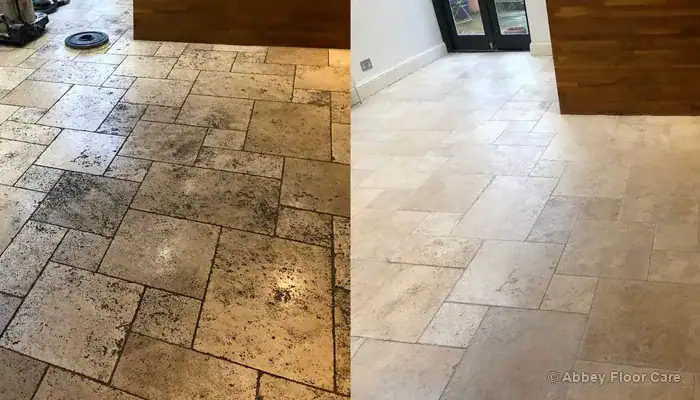
Our extraction will remove retained cleaner residue, soil and redistributed mop water, improving the grout colour considerably, like the image of a restoration job completed in London.
It cannot reverse every permanent change. Grout already eroded by aggressive scrubbing, roughened by bleach or deeply stained may remain uneven even when hygienically clean. The broader travertine care, cleaning and restoration guide explains when cleaning should be combined with grout repair, finish correction or renewed protection rather than treated as contamination alone.

David Allen — Abbey Floor Care
David Allen has more than 30 years of experience with Abbey Floor Care diagnosing travertine floors where grout turns black whilst the surrounding tiles remain clean. His work centres on separating embedded contamination, cleaner residue and moisture-linked growth so the correct level of intervention can be identified without causing unnecessary damage.
19 Willow Rd,
New Malden
KT3 3RS
(01372)-664-337
We work throughout the country, just some of our work counties:
Copyright © Abbey Floor Care. Natural Stone Floor Restoration in Surrey and South West London FAQ - Privacy Policy - Terms And Conditions
Abbey Floor Care is a participant in the Amazon Services LLC Associates Programme, an affiliate advertising programme designed to provide a means for websites to earn advertising fees by linking to Amazon.co.uk. As an Amazon Associate, we earn from qualifying purchases.