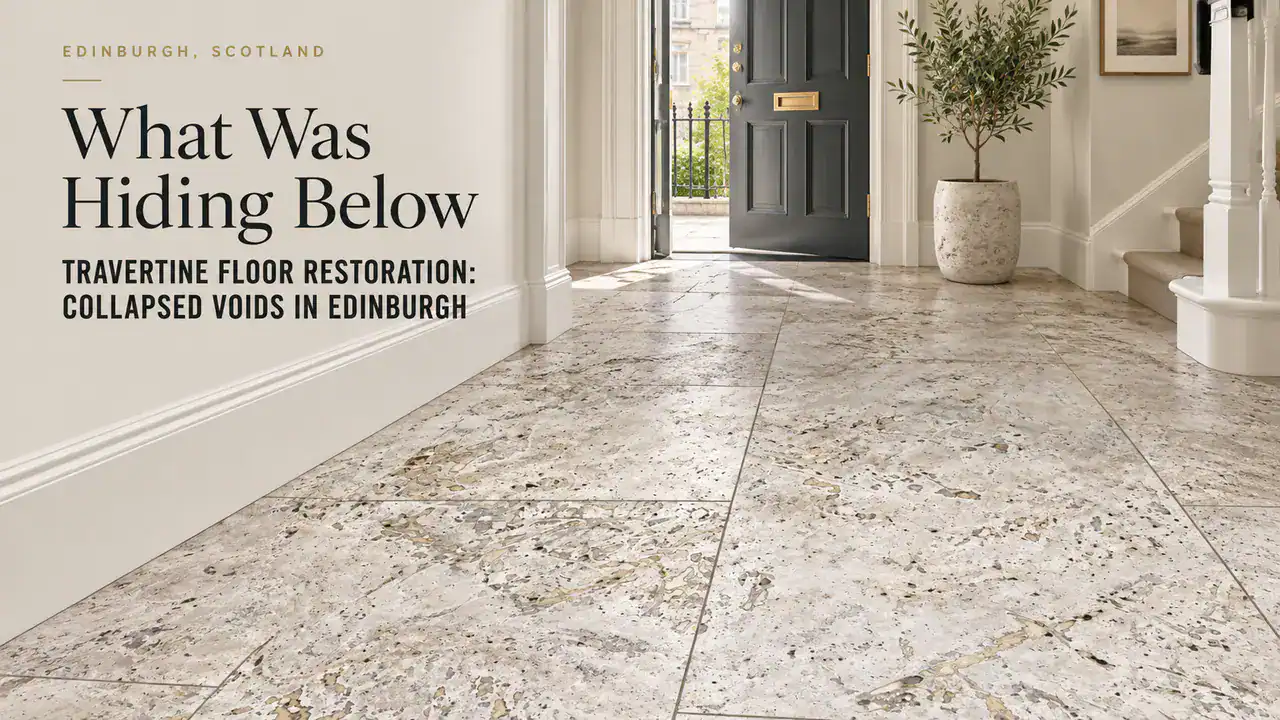
Travertine Floor Restoration: Collapsed Voids in Edinburgh
Last Updated on September 16, 2026 by David
This 80m² travertine floor in Edinburgh covered the lounge, kitchen, dining area and washroom. Tracked-in grit, moisture and household residues had left the stone dull and heavily soiled, while failed filler had exposed natural holes that trapped dirt and made routine mopping ineffective.
After inspecting the floor, we mechanically cleaned the tiles and grout, removed contamination from the open pits, filled the holes tile by tile and applied a compatible sealing system. The finished surface retained a natural appearance and became easier for the homeowner to maintain.
Worn travertine, failed filler and trapped dirt
Open holes and dark deposits in travertine can indicate that dirt has become embedded below the immediate surface. In this property, the lounge, kitchen, dining area and washroom all contained heavily worn travertine with ingrained soil and exposed voids.
Regular pet traffic had brought grit and moisture onto the floor. As these residues accumulated, they became embedded in the worn surface and natural cavities of the stone.
In the most heavily used areas, sections of the existing filler had broken down. This exposed additional holes that collected dirt and made the floor increasingly difficult to clean with routine methods.

The homeowner wanted a clean, durable and natural-looking surface that would be easier to maintain despite ongoing pet activity. Achieving this required more than surface cleaning because the contamination extended into the open pits and areas of failed filler.
Deep cleaning the open pits and worn surface
Dark soil remaining inside the pits after routine cleaning indicated that the contamination was not confined to the tile surface. Dirt and residues had collected inside the natural holes and around the edges of the failed filler, leaving the floor rough and uneven in affected areas.
A rotary machine was used to work a stone-compatible travertine cleaner and sealer remover into the tiles, grout lines and exposed voids. A cleaning pad then helped loosen the residues attached to the worn surface.
The cleaning solution was selected to break down the ingrained contamination and remove residues from the previous sealer. The floor was then rinsed with clean water to remove the loosened dirt and cleaning solution.

Once the floor was clean, the failed filler and exposed holes were prepared for repair. Several fixing holes left by an old kitchen storage unit also needed to be filled.

Cleaning the surface and preparing the open holes created a sound base for the filling and sealing stages. The repairs would close the dirt-trapping cavities, while the subsequent sealer would help reduce absorption and make routine cleaning easier.
Filling the open holes and sealing the floor
On the following day, the exposed holes were filled tile by tile using Jasmine-coloured grout selected to complement the existing travertine. As the grout began to set, surface haze was removed with dry pads and the remaining dust was vacuumed away.
A pre-sealer was applied at the end of day two to minimise unwanted colour enhancement, particularly across the older grout. The floor was then left so that the repairs could cure and the stone could dry sufficiently before final sealing.

On day four, a compatible combination of impregnating and film-forming sealers was applied to the restored floor. This sealing system was chosen to reduce absorption, protect the repaired surface and make everyday soil easier to remove without excessively darkening the older grout.
The sealing stage took approximately five hours across the full 80m² area. Although the sealer makes maintenance easier, it cannot prevent physical wear or scratching. High-traffic areas should therefore be monitored and may require periodic resealing as the protection gradually wears.
How to maintain the restored travertine
Regular maintenance should begin with the removal of loose grit using a vacuum cleaner or microfibre mop. Removing abrasive particles before damp cleaning helps limit further surface wear, particularly in areas used frequently by pets.
The floor can then be cleaned using a pH-neutral stone cleaner diluted according to the product instructions. Acidic, strongly alkaline or abrasive household products should be avoided because unsuitable cleaners can damage the travertine, affect the repaired areas or reduce the performance of the sealer.
Promptly wiping up spills, regularly removing tracked-in grit and arranging timely resealing will help keep the restored floor easier to maintain. For further aftercare advice, see our guide on when travertine floors require expert restoration.
Learn more about professional travertine cleaning or explore our travertine sealing services.

David Allen — Abbey Floor Care
This Edinburgh project involved cleaning, grout filling, and sealing 80 square metres of travertine across the lounge, kitchen, dining room, and washroom areas.
If you would like to apply to become the contractor for this area, please use the contact form.
Copyright © Abbey Floor Care.
We are proud to be your local stone floor cleaning, polishing, and restoration specialists for homes and commercial properties in Central Scotland.
With years of experience working with all types of stone floors, our friendly and professional stone floor cleaning services can’t be beaten on price or service.
FAQ - Privacy Policy - Terms And Conditions
Abbey Floor Care is a participant in the Amazon Services LLC Associates Programme, an affiliate advertising programme designed to provide a means for websites to earn advertising fees by linking to Amazon.co.uk. As an Amazon Associate, we earn from qualifying purchases.