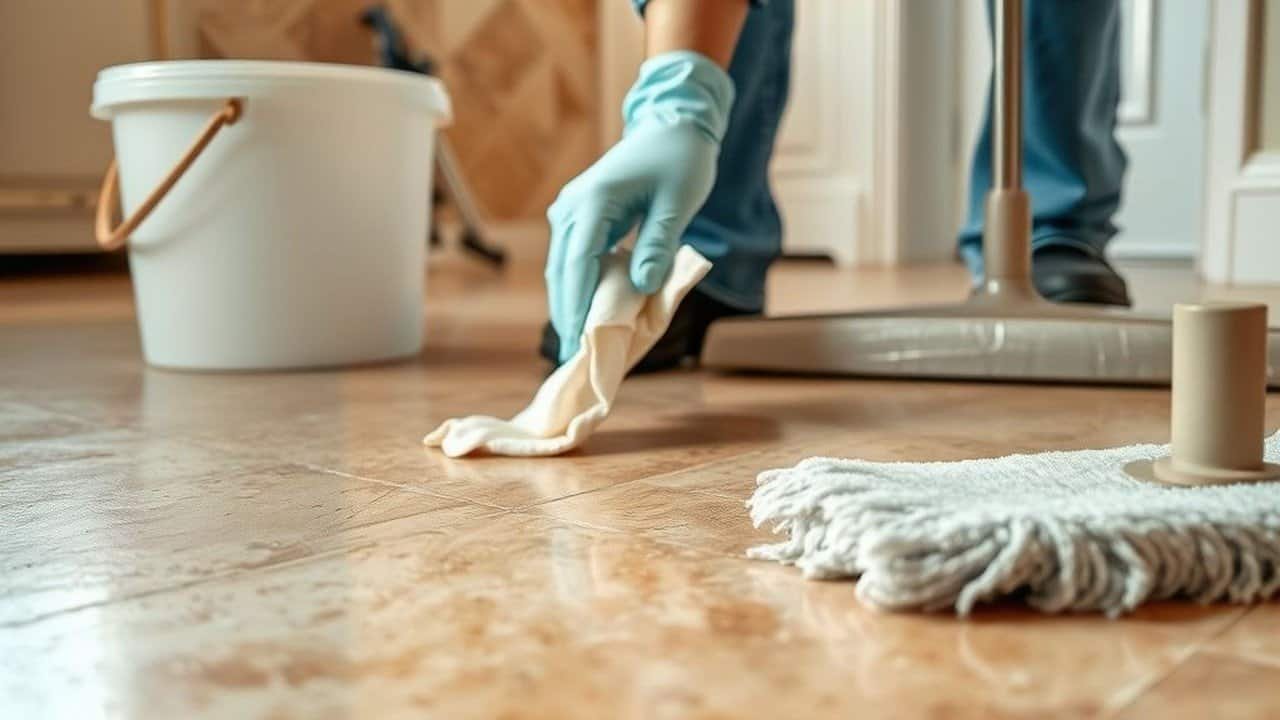
The Safe Way To Remove Old Sealer From Travertine
Last Updated on July 13, 2026 by David
Safely removing old sealer from travertine starts with three things: recognising whether the coating has failed, identifying the treatment that remains and avoiding chemicals that can dissolve the stone’s calcium-carbonate surface. A controlled travertine sealer remover softens the coating in small sections, allowing the residue to be agitated, recovered and rinsed away without spreading contamination into pits, grout lines or neighbouring tiles.
The stages below explain what to prepare, how to test the remover and, crucially, where a homeowner should stop.
When Old Sealer Must Come Off Safely
Old sealer should be removed from travertine when the finish is peeling, flaking, patchy or visibly uneven. Start by comparing the main walking routes with protected edges and areas beneath furniture, because traffic lanes normally lose their finish first.
Look for yellowing, isolated glossy patches, worn borders around pits or a coating that marks easily under shoes. Removal may also be needed as part of planned resealing when the existing treatment has reached the end of its serviceable life, even if it has not failed dramatically. Leaving scattered areas of sound-looking sealer can make the next finish inconsistent.
Sticky, rubbery or unusually slick patches after normal drying may indicate softened acrylic, synthetic polish, a lacquer-like coating or built-up surface sealer rather than ordinary wear. Test only a discreet area before extending the work.
Do not use acidic bathroom cleaners, limescale removers or aggressive scrapers on travertine. Its calcite content reacts with acid, causing pale, rough or permanently dull damage. Gloves, eye protection and effective ventilation are the minimum controls before any test begins.
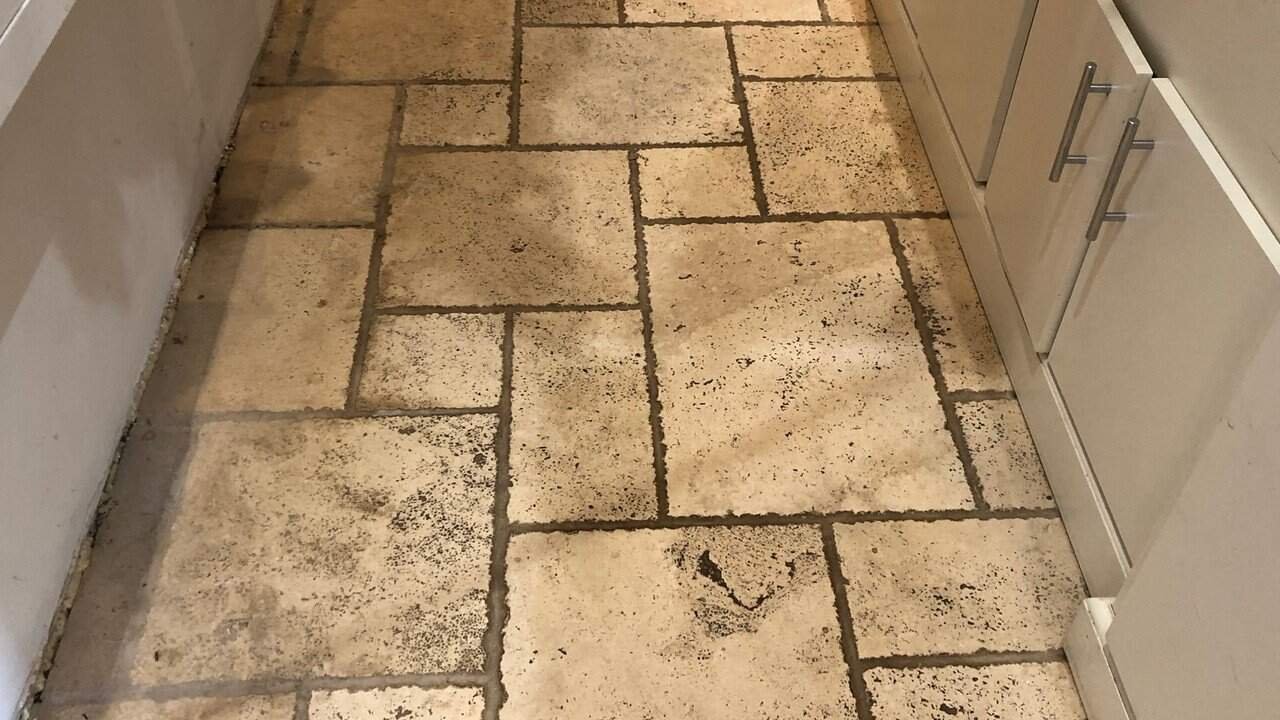
Tumbled travertine can conceal coating wear because its pits and texture are naturally matt. The finish shown in this tumbled travertine project in Lincoln helps distinguish normal variation from degraded film and avoids unnecessary stripping.
What You Need Before You Start
Before removing old sealer from travertine, assemble everything needed to contain, loosen and recover the coating. Used gloves, pads and cloths can spread dissolved residue beyond the working area.
Wear chemical-resistant gloves, eye protection and covered clothing, with strong cross-ventilation throughout. Open doors and windows, remove ignition sources and avoid domestic trials on yacht varnish, two-part solvent finishes or exceptionally thick coatings.
Prepare polythene sheeting, low-tack tape, absorbent cloths and separate waste bags. Keep clean rinsing materials apart from slurry cloths, which can redeposit adhesive polymers or silicone residue.
Softened sealer must be recovered, not moved from one part of the floor to another.
Useful equipment includes a travertine-compatible gel stripper, polypropylene or soft nylon brush, plastic scraper, wet vacuum and replaceable white pads. Gel helps confine the product and control dwell time better than a thin liquid.
Keep clean water, disposable absorbent material and adequate wet-vacuum capacity ready for repeated recovery. Older UK floors may release moisture slowly, so use a damp meter rather than judging dryness by colour.
LTP Solvex often appears in searches for a travertine sealer remover, but its label, safety sheet and stone-compatibility instructions must govern use. Test every product because coatings, fillers and earlier treatments vary.
How to Strip the Sealer in Stages
Test the Coating Before Stripping the Floor
Begin with a small, discreet patch to establish whether the sealer remover and travertine are compatible. Limit the area to what one person can soften, agitate and extract before the coating becomes sticky.
Apply the product exactly as directed and observe the finish throughout the stated dwell time. Topical sealer normally softens and transfers to a white cloth or plastic scraper, while an impregnator may leave little visible film. Yellow or cloudy tackiness can indicate acrylic contamination; uneven softening may reveal layered coatings.
Polyurethane may stay rubbery or resist a water-based remover. Never increase strength or dwell time beyond instructions. Stop for professional assessment if the coating remains unresponsive or the stone becomes pale, rough or permanently cloudy. That indicates damage, not successful stripping, and acid must never be used.
Keep Softened Sealer Inside the Test Area
Before applying remover, protect the area around the travertine test patch. Tape polythene beyond the working edge and position absorbent material wherever liquid could collect.
Containment keeps dissolved sealer away from skirting boards, timber, metal thresholds, grout edges and adjoining floors. It also prevents contaminated slurry from spreading onto areas that remain clean.
Perimeter silicone may soften, swell or smear when exposed to incompatible chemistry. Keep remover away from sealant joints unless the manufacturer confirms compatibility. Lift loosened adhesive polymers with a separate wet cloth, then bag it immediately instead of wiping it across the tiles. Replace barriers and absorbent material as soon as they become loaded, because saturated protection can no longer contain the residue.
Keep the Remover Active Without Flooding the Stone
When old sealer softens unevenly, first confirm that the remover remained wet for its full stated dwell time. Spread a controlled, even layer across the small section without flooding pits or grout recesses.
Dry edges stop reacting before the centre, making the coating appear more uneven. Add product only where the instructions permit and never extend dwell time indefinitely. Thick or layered sealer usually needs another short application rather than one prolonged soak.
Maintain ventilation because solvent residue may release strong vapours while breaking down. Stop if fumes remain uncomfortable. Two-part finishes, yacht varnish, polyurethane and heavy synthetic coatings that resist an approved water-based remover require professional assessment, not stronger domestic chemistry.
Lift the Softened Coating Without Scratching Travertine
Loosen old sealer without grinding or abrading the travertine. Use a soft nylon brush around grout lines and natural cavities, then work flatter areas with a non-abrasive white pad.
Once loaded, a pad begins dragging, smearing and redepositing residue instead of lifting it. Clean or replace it immediately. Fresh pads also make remaining film easier to identify and prevent contaminated areas from appearing evenly stripped.
Use a plastic scraper on smooth sections, keeping its blade flat and free from grit. Never use metal blades or abrasive pads. They can scratch the surface or catch the thin stone cap above a natural cavity.
Extract the Sealer Slurry Before It Dries
Recover softened sealer from the travertine immediately, before it dries back onto the floor. Use a wet vacuum rather than pushing dissolved coating, dirty liquid and residue into pits or grout recesses.
Travertine has natural geological cavities. The dense stone between them is not sponge-like, but depressions can mechanically trap slurry that later cures into stubborn deposits beyond routine wiping.
Move the extraction nozzle slowly enough to draw liquid from low points, and empty the waste tank before suction falls. Treat recovered slurry as contaminated waste. Follow the remover manufacturer’s disposal instructions and never pour concentrated stripper into surface drains.
Rinse Away Remover and Loosened Residue
A soapy or oily feel after stripping means remover and dissolved sealer remain on the travertine. Apply a controlled amount of clean water, agitate briefly with a clean brush and extract it immediately using the wet vacuum.
Repeat until the recovered water shows no foam, visible residue or oily sheen. Alkaline products may assist coating removal, but chemical residue left behind can interfere with later treatment.
A domestic steam mop cannot replace extraction because it heats and redistributes contamination instead of removing it. Immediate liquid recovery is the critical difference. The professional guidance on steam cleaning travertine explains why heat without extraction can also soften topical coatings.
Let the Test Patch Dry Before Judging the Result
Wait until the travertine test patch is dry before deciding whether all old sealer has gone. Low raking light reveals glossy islands, slick borders and smeared residue that overhead lighting may conceal.
After fully rinsing away the remover, place several water drops across the patch and compare them with untreated areas. Rapid darkening may indicate exposed stone, while strong beading can show that an impregnator or surface film remains.
Do not reseal based on this test alone. Stripping chemicals and rinse water must first leave the stone. Confirm consistent dryness with a damp meter before considering a new penetrating sealer or topical coating.
Repeat the Process Only on Remaining Sealer
When patches of old sealer remain, retreat only those areas rather than applying stronger chemistry or scrubbing harder. Use a short, controlled pass with fresh tools and extract the slurry before it becomes sticky.
Layered coatings may release at different rates. Acrylic can soften first while older solvent sealer, polyurethane or metallised polish remains as a dull yellow film. Each pass should remove an identifiable layer, not redistribute it more evenly.
Stop if the coating no longer responds, tackiness persists or stripping reveals wear, pitting or unstable factory fill. Chemical treatment cannot repair physical loss. The travertine care and restoration guide routes exposed conditions to the correct specialist stage, while this specialist travertine guide covers repair after stripping.
What a Fully Stripped Floor Should Look Like
A travertine floor with all old sealer removed should look consistently clean and open rather than artificially glossy. Once dry, low raking light should reveal no isolated slick patches, shiny borders or smeared coating.
A fully stripped surface feels even beneath a dry hand, without peeling edges, tacky residue or yellowed film. Filled travertine should look consistent across comparable tiles, while unfilled or tumbled stone will retain its natural matt cavities and texture.
A partly stripped surface still shows glossy islands, dark rims or tacky areas that catch on a clean glove. A white cloth may collect softened coating, and water may bead strongly in one area while quickly darkening another. Those patches may need another local treatment after thorough rinsing and extraction.
Do not mistake temporary moisture for remaining sealer. Rinse water darkens travertine until it evaporates, so allow the floor to dry evenly before comparing colour, sheen or residue. A damp meter provides a more reliable distinction than appearance alone.
Leave the floor uncovered while moisture escapes, particularly over older substrates that release water slowly. Applying another treatment prematurely may trap moisture or disrupt curing.
Successful stripping leaves the travertine’s natural colour visible and the surface free from softened coating, contaminated residue and uneven film. It is then ready for complete drying, condition assessment and a later decision about suitable protection.
Where Travertine Care Goes Next
After removing old sealer from travertine, allow the floor to dry fully and assess what the coating had concealed. Persistent tackiness, uneven colour or dark areas indicate that the stone is not ready for another treatment.
The travertine flooring care hub directs homeowners to the appropriate guidance on drying, condition assessment, cleaning, sealing, repair and long-term maintenance. Until moisture levels and surface condition are confirmed, leave the stripped travertine untreated.
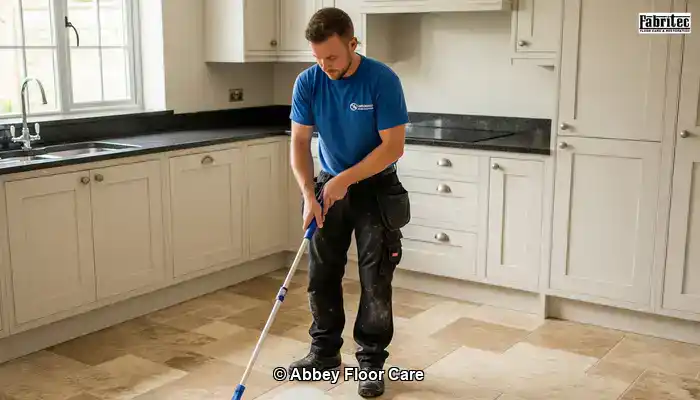
The guide to travertine sealers for long-term protection explains penetrating and topical options once the floor is dry, clean and stable.
Where stripping exposes wear, pitting or staining, stop further chemical work and arrange an assessment. The travertine floor-care guidance covers later maintenance rather than extending this sealer-removal method into a separate aftercare procedure.

David Allen — Abbey Floor Care
David Allen has more than 30 years of experience with Abbey Floor Care, assessing and restoring travertine floors across the UK. His method-led approach to sealer removal centres on identifying the existing coating, controlling the stripping chemistry and confirming that the stone is clean and fully dry before the next treatment begins.
Recent Posts:
We work throughout the country, just some of our work counties:
Copyright © 2026 Abbey Floor Care. Tile And Natural Stone Cleaning Consultants FAQ - Privacy Policy - Terms And Conditions
Abbey Floor Care is a participant in the Amazon Services LLC Associates Programme, an affiliate advertising programme designed to provide a means for websites to earn advertising fees by linking to Amazon.co.uk. As an Amazon Associate, we earn from qualifying purchases.