Travertine Floor Restoration In New Malden
Last Updated on July 16, 2026 by David
The Full-Length Crack Across This New Malden Floor
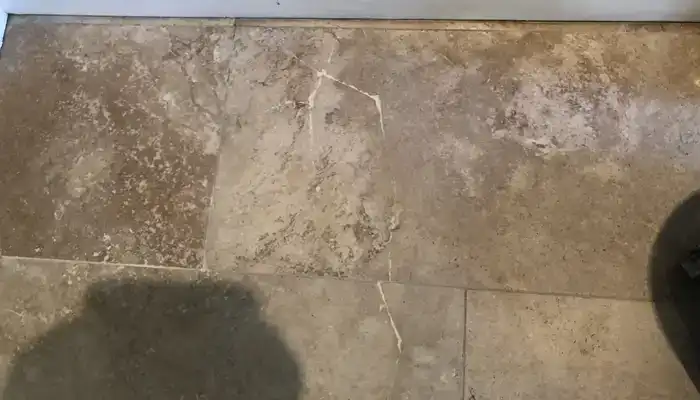
If your travertine floor is dirty, cracked and pitted, the damage can make an otherwise sound tiled area look far worse than it is. That was the condition in this New Malden home, where one irregular full-length crack crossed the connected floor beside worn joints, loose edges and dark surface holes.
The travertine had once read as one continuous natural-stone feature through a busy living space. By the time the homeowner contacted me, that continuity had broken down. The crack appeared as a dark, uneven line through several tiles, while missing grout and open joints added further gaps that made the floor look tired and fragmented.
Although most surrounding tiles remained intact, the fracture drew attention across the whole installation. In normal room light, the eye followed it from one side of the floor to the other. Under low raking light, recessed joints, worn traffic areas and pitted sections became still more visible, increasing the impression of widespread deterioration.
Many New Malden homes have linked halls, kitchens, dining spaces and later rear extensions, allowing one travertine floor to run across several walking routes. Here, the connected layout meant the crack did not read as a single damaged tile. It visually divided the room, while regular foot traffic had pressed soil into grout lines, rough joint edges and the natural depressions within the stone.
Routine mopping was no longer improving the appearance. Dirt remained compacted inside open holes, grout lines stayed dark, and contamination collected around missing joint material. Even when the exposed tile faces had been wiped, the floor still looked dull and uneven because the dirty recesses contrasted sharply with the lighter travertine around them. Small changes in level also made some damaged edges more noticeable underfoot.
Travertine naturally contains pits and cavities formed within the stone, so visible holes are not automatically defects. The concern on this floor was the mixture of natural voids, failed filling, missing grout and ingrained soil. Homeowners facing the same problem can see why soil remains lodged in travertine holes. Ordinary wiping cleans the upper face but often leaves contamination clearly visible below the surface.

The recorded starting condition combined ingrained surface soil, dark grout, contaminated pits, lost joint material and a crack extending through the tiled area. Together, those defects interrupted the colour and pattern of the stone and made the entire installation appear neglected. The homeowner wanted the floor restored as one connected surface, because the dirty, cracked and pitted travertine, open joints and worn traffic lanes were affecting the appearance of the whole room rather than remaining isolated marks.
Why Cleaning Had To Come Before Repairs
A dirty, cracked and pitted travertine floor cannot be repaired properly until the embedded soil has been removed. On this New Malden project, cleaning came first so the crack edges, failed grout and open voids could be assessed before filling.
The fracture reflected movement within the installation. Cleaning could empty soil from the crack, but it could not reconnect the edges or prevent loose material from breaking away. Missing grout behaved similarly: washing removed dirt, but the joints stayed recessed and incomplete.
Cleaning can expose the true condition of a crack, but it cannot stabilise it or replace missing grout.
The restoration clean began with a gel-based alkaline cleaner applied under controlled conditions. A low-speed rotary machine loosened grease and compacted contamination around pits and grout lines without changing the stone plane.
The released slurry then had to be extracted. I rinsed with clean water and recovered the slurry through a wet vacuum and rinse-and-capture system, preventing it from settling back into the same holes and joints. The difference between extraction and a domestic heated mop is explained in the guidance on steam cleaning travertine floors.
After cleaning, the travertine was allowed to dry fully. Drying revealed the true grout colour, sound crack edges and loose legacy filling, while creating stable surfaces for epoxy and cementitious repairs.
The repair work then followed two distinct stages. First, the full-length crack was prepared and filled with a two-part jasmine-coloured epoxy compound to create a bonded repair. Second, missing grout and selected open holes were reinstated with a fine jasmine-coloured cement grout. The epoxy bonded the moving fracture edges; the cementitious grout rebuilt open joints and selected surface voids.
Preparation remained selective because visible pits are part of travertine’s natural structure. Sound cavities were left as natural character, while loose, contaminated or unsupported filling was removed. This preserved the stone’s natural character while concentrating repair work on defects that affected support, cleanliness or visual continuity.
A travertine cleaning and repair project in Chinnor shows the same principle: cleaning, sealing and selective repair must work as one sequence. Each stage should support the next without disturbing sound stone or closing stable pits that belonged to the original travertine.

The epoxy components were mixed and placed into the prepared fracture, where they cured together to form a firm bond. Jasmine colouring reduced the visual contrast, but the irregular line remained identifiable as a repaired crack. The objective was stability and better blending, not invisibility, because a long irregular fracture can remain detectable after a sound professional repair.
The principles behind filling small holes in travertine safely also applied here. Filler placed over soil, moisture or weak residue can release later, regardless of colour match. Therefore, both repairs followed cleaning, extraction and drying.
Larger pits and missing joints then received the fine cement grout. This second filling stage supported open edges and reduced the dark interruptions caused by empty recesses. After both repair materials had cured, surplus residue was removed from the tile faces and the surface was prepared for sealing.

The completed sequence was professional alkaline cleaning, rotary agitation, rinse-and-capture extraction, full drying, epoxy crack repair, cement-grout replacement to selected holes and joints, curing and final surface preparation. No polishing was required because cleaning, repair and the later mid-sheen surface-film sealing system produced the intended restored appearance.
The Before-and-After Transformation
Can a dirty, cracked and pitted travertine floor look consistent again? Here, the restored surface felt smoother and read as one connected floor, with cleaner joints and less disruption from the repaired fracture.
Before restoration, ingrained soil dulled the tile faces, contaminated pits appeared dark, missing grout broke up the layout and the open crack divided the room. The uneven colour and interrupted joints made sound tiles look worn.
After restoration, the stone showed a richer, more even tone. Repaired joints and selected voids blended better, while the jasmine-coloured crack repair no longer appeared as a dark line. Six thin coats of a mid-sheen topical sealer formed a sacrificial film that unified the stone, grout and repaired areas.
Each coat cured before the next was applied, reducing trapped haze and building a consistent mid-sheen. The reference to choosing a suitable travertine sealer gives broader guidance, although this project used one topical system.

Cracked, pitted travertine can look beyond saving before restoration begins. Here, the restored surface felt smoother and read as one connected floor, with cleaner joints and less disruption from the repaired fracture.
The homeowner was delighted with the result. Natural holes, colour variation and the repaired crack remained visible, but no longer made the floor appear neglected.
When Travertine Needs Full Restoration
Widespread cracking, open holes and failed grout usually indicate that a floor needs more than another clean, particularly where rough edges catch a fingertip or foot. Cleaning alone may still be enough where the stone is sound and the problem is limited to surface soil, dark grout or residue held within stable recesses.
Repair-led restoration becomes appropriate when cracks remain open, grout has disappeared, loose filling breaks away or surface wear affects the appearance across a connected area. Newly visible holes do not automatically mean the stone itself is failing. They may be caused by weakened factory filler or by normal wear exposing cavities that were previously concealed beneath the surface cap.
A professional assessment separates contamination from physical defects before work begins. The wider travertine flooring care and restoration guide explains the main conditions affecting domestic floors and the appropriate next steps. On the New Malden project, the floor needed one coordinated sequence of cleaning, extraction, drying, repair, curing and surface-film sealing rather than isolated cleaning, polishing or maintenance work.
Pro Tip: We recommend these products for daily Travertine maintenance cleaning.

Fila Pro Floor Cleaner
|

LTP Floorshine
|

Vileda H2PrO Spin Mop System
|
No third-party product or supplier links appeared in the New Malden project record. Professional cleaners, repair fillers and the sealing system were selected for this dirty, cracked and pitted travertine floor.

David Allen — Abbey Floor Care
David Allen has more than 30 years of stone floor restoration experience with Abbey Floor Care. On this New Malden travertine project, he repaired a full-length crack, reinstated failed grout and selected void filling, extracted embedded contamination and applied a controlled mid-sheen protective finish.
19 Willow Rd,
New Malden
KT3 3RS
(01372)-664-337
We work throughout the country, just some of our work counties:
Copyright © Abbey Floor Care. Natural Stone Floor Restoration in Surrey and South West London FAQ - Privacy Policy - Terms And Conditions
Abbey Floor Care is a participant in the Amazon Services LLC Associates Programme, an affiliate advertising programme designed to provide a means for websites to earn advertising fees by linking to Amazon.co.uk. As an Amazon Associate, we earn from qualifying purchases.