Why This Travertine Floor In Chippenham Stayed Dirty
Last Updated on August 1, 2026 by David
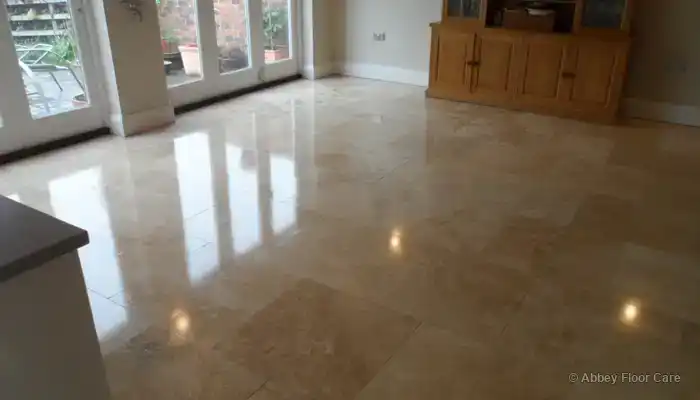
A worn, pitted travertine floor can still look dirty after every mop because ingrained soil and dirty water settle inside open cavities, failed filler and recessed grout. On this fourteen-year-old floor in Chippenham, professional restoration removed the trapped contamination, repaired the unstable holes, levelled the cured repairs with diamond pads and protected the surface with a mid-sheen film.
A Pitted Floor That Needed Cleaning, Repair and Protection
If open pits remain dark after repeated mopping, loose surface dirt is no longer the only problem. This Chippenham floor was approximately fourteen years old and had been maintained regularly, yet freshly mopped tiles still showed dark spots. Some grout remained grey, and the surface was becoming noticeably uneven.
Years of household traffic had worn away parts of the honed travertine’s original surface protection and thinned the upper face of the stone. Small recessed marks broke up the finish, whilst several larger holes had been left behind where the original filler had collapsed. Against the lighter travertine, those dark cavities were difficult to miss.

The grout lines made the floor look even less consistent because they no longer returned to an even colour after cleaning. Mop water travelled across the tile faces and settled in the lower joints, carrying fine soil with it. The homeowner could remove ordinary marks from the surface, but the darker contamination lodged below normal wiping level remained in place.
Not all of the holes looked the same. Some were broader cavities where the original filling material had broken down over time. In other areas, foot traffic had worn the upper surface and exposed smaller pinholes that trapped ingrained soil and dirty mop water.
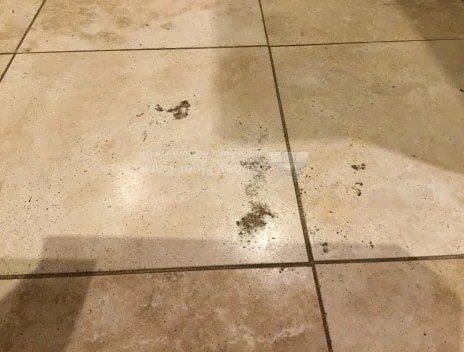
Together, the dark recesses, collapsed filling material and uneven grout colour left the installation looking tired and noticeably less consistent than the other cleaned floors in the house.
This was not a case of the homeowner neglecting the floor or allowing ordinary dirt to accumulate unchecked. Numerous connected defects affected a well-used area, so an isolated patch repair would not have been enough. Readers dealing with only one or two small openings can consult the guide to travertine repair kits for dirt-trapping holes. Here, the wider pitted surface needed to be cleaned, filled and sealed so the floor could look consistently clean again.
Fourteen Years of Wear in a Chippenham Home
Although the floor had been maintained, the worn stone was now retaining soil faster than routine cleaning could remove it. Professional cleaning began with travertine-safe solutions and a rotary floor machine. Its rotary action worked the solution across the tile faces, grout joints and cavity edges, loosening contamination that hand mopping had left behind.
The rotary clean removed contamination from the surface, but deeper voids still held soil. I therefore pressure-rinsed the floor to flush residue from the pits. The guide to cleaning travertine when soil stays trapped explains why contamination below the tile surface can require more than ordinary mopping.
Dirty mop water had also darkened the recessed joints by depositing fine soil below normal wiping level. The guide explaining why travertine grout turns black describes how this repeated build-up discolours recessed grout.
Once the floor was clean, the larger cavities containing collapsed filler were prepared for repair with a two-part, colour-matched hard filler. Masking kept each repair controlled and precise. It also reduced the amount of abrasion needed around the surrounding stone after curing.

After the filler had cured, the repaired areas were gently refined with diamond pads until they sat level with the surrounding floor, without opening additional voids. The remaining pinholes were then filled with colour-matched grout so they blended more naturally with the stone and no longer provided the same collection points for soil. Any grout residue was removed, and the floor was left to dry fully before sealing.
From Endless Mopping to Simple Maintenance — After Two-Stage Filling
A worn, pitted travertine floor that still looks dirty after mopping needs more than surface cleaning. On this Chippenham floor, the trapped contamination was removed before repairs began so the unstable cavities and smaller pinholes could be filled on a clean surface. The larger holes containing collapsed filler were prepared first and repaired with a two-part, colour-matched hard filler. After curing, the repaired areas were refined with diamond pads until they sat level with the surrounding stone. The remaining pinholes were then filled with colour-matched grout, completing the repair in two stages.
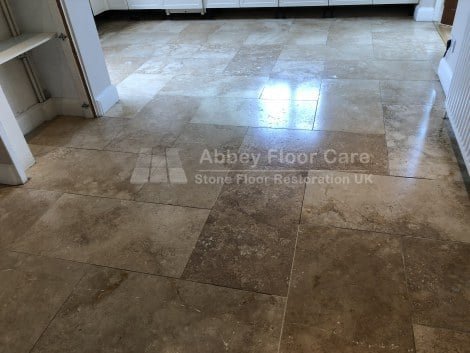
Once the filler and grout residue had been dealt with and the floor had dried fully, I applied a mid-sheen, film-forming sealer. The worn and repaired travertine needed a continuous protective coating, and the sealer gave the surface a more uniform satin appearance while providing a sacrificial wear layer over the stone. With the rough cavity edges repaired, levelled and protected, the floor no longer held dirty water in the same way and became significantly easier to clean and maintain.
The original completion photographs were lost because of a camera fault, so the image below is not direct evidence from the Chippenham property. It shows a similar sealed travertine floor from a separate New Malden project and is included only to illustrate the general mid-sheen appearance of this type of protective finish.
Protecting the Easy-Clean Finish From Returning Dirt — With a Mid-Sheen Film
The completed Chippenham floor no longer had the same rough cavity edges that had held dirty water below the mop. Instead of remaining patchy after repeated cleaning, it was significantly easier to clean and maintain. The homeowner confirmed the visible improvement: “I did not expect the floor to look this good. The floor looks much cleaner and nicer – thank you very much for your expertise.” Professional restoration can make a worn floor look significantly better and, in many cases, better than when it was installed.
At handover, the homeowner received maintenance guidance specific to the repaired and sealed floor. Correct ongoing care is the main factor in extending its useful life: remove loose grit before wet mopping, use a pH-neutral cleaner and reseal the protective film at the appropriate interval. Steam cleaning remained unsuitable because heat and moisture could damage both the travertine and its surface protection. The guide to whether steam cleaning is safe for travertine explains this maintenance risk in more detail.
The broader travertine cleaning, repair and restoration guide explains how worn protection, open voids and collapsed filler affect travertine floors, whilst this case study records the work completed on one Wiltshire floor.

David Allen — Abbey Floor Care
David Allen of Abbey Floor Care has more than 30 years of experience restoring natural stone floors across the UK. On this Chippenham project, he removed trapped contamination, repaired failed filler and open travertine cavities, corrected localised surface wear and protected the floor with an easy-care satin finish.
Recent Posts:
We work throughout the country, just some of our work counties:
Copyright © 2026 Abbey Floor Care. Tile And Natural Stone Cleaning Consultants FAQ - Privacy Policy - Terms And Conditions
Abbey Floor Care is a participant in the Amazon Services LLC Associates Programme, an affiliate advertising programme designed to provide a means for websites to earn advertising fees by linking to Amazon.co.uk. As an Amazon Associate, we earn from qualifying purchases.