
Dull Terrazzo Floor Needed Polishing In Kinver Stourbrridge
Last Updated on October 8, 2026 by David
Terrazzo floor polishing brought this worn Kinver, Stourbridge patio and indoor floor back into better condition. Weather exposure, chemicals, moss and poor maintenance had left the 300 mm tiles looking dull and visibly tired.
A Weathered Kinver, Stourbridge Floor Needed a New Lease of Life
The 300 mm square terrazzo tiles ran continuously from the outdoor patio into the area later enclosed as a conservatory, although the two areas had aged under very different conditions.
That meant they needed different levels of intervention. The outdoor tiles required deeper correction, whereas the indoor floor mainly showed ingrained soiling and uneven colour.

Older homes and extended properties around Kinver often link hallways, kitchens and garden-facing rooms, and this property followed that practical arrangement. Regular traffic between the house and garden carried moisture and grit over the threshold, whilst the patio remained fully exposed to local weather. That combination was consistent with the heavier wear seen outdoors on this project.
The floor was still worth preserving, but it no longer looked uniform. Both areas had to be assessed as part of one terrazzo installation, without assuming they had deteriorated in the same way.
Moss and Chemicals Had Left the Outdoor Tiles Uneven
Looking across the patio from a low angle made the outdoor condition clear. Moss, chemical wear and uneven surfaces were far more evident than they were indoors. The external walking surface had lost its even visual plane, while the conservatory area mainly had a soiled, patchy finish.
Portland cement binder degradation accounted for the physical difference. The binder forms the grey matrix between the marble chips, and years of exposure and unsuitable maintenance had increased its porosity, weakness and surface friability. As the matrix broke down, the outdoor tiles became uneven rather than simply dirty.
The worn cement binder left the outdoor tiles uneven.

The close-up showed the effect of weather, chemical contact and organic growth on the surface. Worn areas, exposed aggregate and irregular texture were clearly visible, whereas the indoor floor presented a different issue: accumulated soil and patchiness beneath the conservatory.

Cleaning would deal with loose contamination, but it could not rebuild the worn matrix or correct height variation between neighbouring tiles. I therefore planned deeper mechanical correction outside, with a lighter treatment indoors, based on the condition recorded in each area.
Uneven Tiles Needed Careful Resurfacing
Treating both sections as though they needed identical restoration would have meant unnecessary work. The patio needed deeper correction; the indoor tiles required a lighter approach. I used a planetary grinding machine because its planetary head applied consistent pressure across the tile format and allowed controlled grinding over the larger areas.
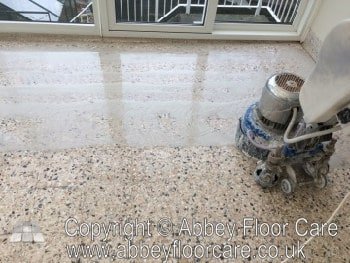
The indoor area was roughly four times larger than the patio, yet it took only about twice as long to grind and hone because it needed less correction at the outset. Its slight incline added to the physical demands of the work. But being indoors meant I could clean and hone the skirting tiles without the weather limitations affecting the patio.

Once both areas had been thoroughly cleaned, I allowed the surfaces to dry fully and ensured they were free from slurry before selecting an impregnating sealer. The penetrating treatment entered microscopic pores to slow absorption without leaving a surface film, which suited the renewed satin appearance and made ongoing care easier. This sequence of cleaning, mechanical grinding and honing, drying, and impregnating sealing is the specialist process described in professional terrazzo tile polishing services.
Removing Around 3 mm Made the Patio Level Again
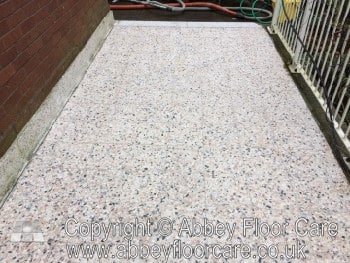
Mechanical resurfacing removed approximately 3 mm from the uneven patio tiles. Across the finished surface, this produced a smoother, more level plane with a honed, non-slip appearance. The measured reduction removed the worn upper layer and restored a more consistent relationship between adjacent tiles.
The restored patio no longer had the same uneven, weathered appearance seen at the start. Its honed finish revealed the terrazzo aggregate and matrix with a consistent matte character, whilst the outdoor impregnating sealer reduced absorption without claiming to prevent future scratching or chemical damage.
The indoor floor moved from a soiled, patchy appearance to a lighter, more coherent honed surface. After cleaning and drying, I applied two coats of impregnating sealer because the indoor terrazzo retained enough porosity to benefit from the added penetrating protection.

The floor looked significantly better because the grinding, honing and sealing addressed the outdoor unevenness as well as the indoor patchiness. Just as importantly, the completed surfaces were easier to clean and maintain than the worn, absorbent finishes present at the beginning.
The Restored Kinver Floor Was Handed Back With Care Notes
At handover, I supplied the customer with microfibre cleaning equipment and suitable chemicals for this cement-bound terrazzo, allowing the restored surface to be maintained without abrasion.
I specified a pH-neutral stone cleaner because both the cement binder and marble chips needed gentle cleaning after resurfacing. Acidic products were to be avoided, as they could etch the acid-sensitive marble chips and damage the restored binder.
Pro Tip: We recommend these products for daily Terrazzo maintenance cleaning.

Fila Pro Floor Cleaner
|

LTP MPG Sealer H20
|

Vileda H2PrO Spin Mop System
|
Correct maintenance was the single most important factor in extending the floor’s life: use pH-neutral cleaning products, remove grit before wet mopping, and arrange resealing at the appropriate interval. For the wider maintenance context, I directed the customer to the terrazzo flooring care and restoration resource.

David Allen — Abbey Floor Care
David Allen has more than 30 years of experience restoring terrazzo and other hard flooring through Abbey Floor Care. This Kinver, Stourbridge case study records how he corrected uneven outdoor tiles, renewed the indoor surface and completed the work with impregnating sealer and a practical maintenance handover.
Recent Posts:
We work throughout the country, just some of our work counties:
Copyright © 2026 Abbey Floor Care. Tile And Natural Stone Cleaning Consultants FAQ - Privacy Policy - Terms And Conditions
Abbey Floor Care is a participant in the Amazon Services LLC Associates Programme, an affiliate advertising programme designed to provide a means for websites to earn advertising fees by linking to Amazon.co.uk. As an Amazon Associate, we earn from qualifying purchases.