
When Travertine Floors Need Professional Restoration Help
Last Updated on July 8, 2026 by David
Travertine floors become harder to clean when surface voids, worn filler, calcium carbonate wear, alkaline residue, sealer breakdown and traffic abrasion begin to act together. Professional restoration identifies whether the problem is trapped contamination, filler collapse, etched stone, worn surface cap or failed protection, then cleans, refines, fills and seals only where the floor actually needs it.
Travertine floors with dullness, repair problems and sealing wear need more than one care decision
Travertine floor care often starts to feel confusing when several symptoms arrive together: dull traffic lanes, open holes, dark grout, patchy colour, loose filler, worn sealer and uneven shine. Homeowners usually notice it first in kitchens, around sinks, by garden doors and across the main walkways.
Travertine is a calcium-carbonate stone formed by mineral spring deposition, which leaves a natural pattern of holes and channels inside the tile. Those holes are part of the stone’s character and are not, by themselves, a sign of failure — but they do affect how cleaning, filling, polishing and sealing should be judged.
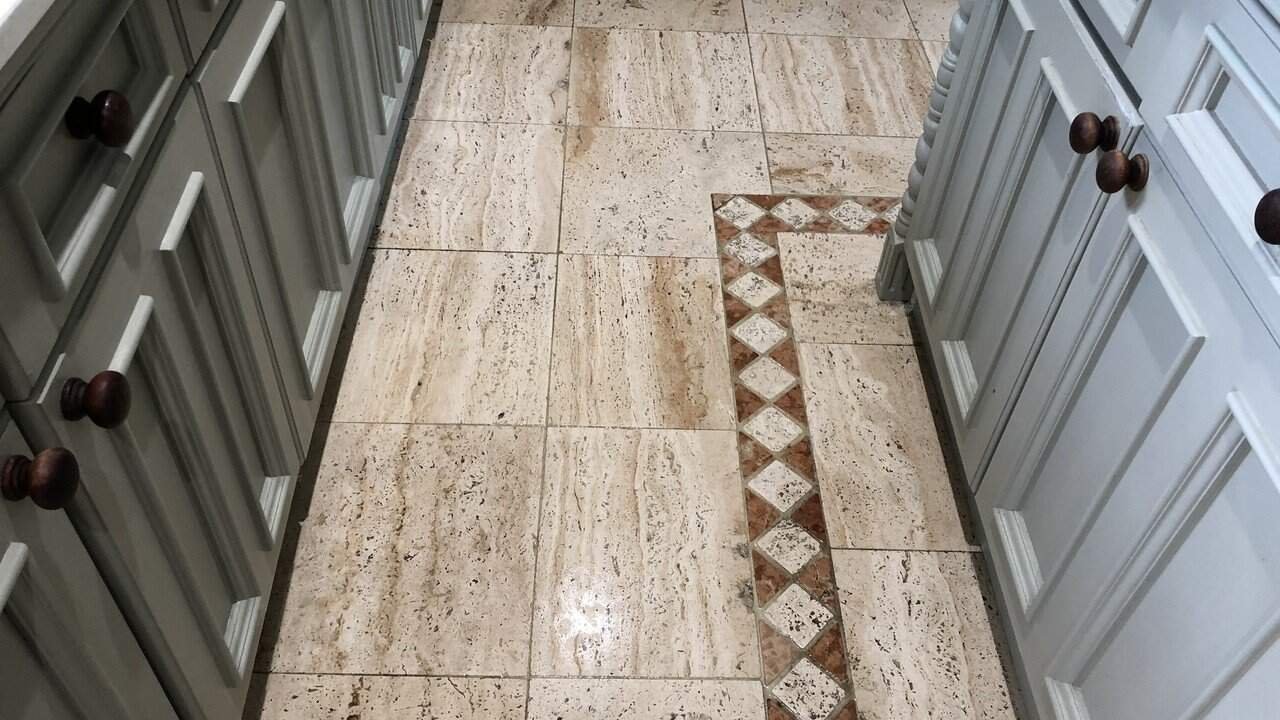
Symptoms are easiest to read when separated by what they show. Dullness that looks worse once dry usually points to residue or sealer wear. Holes that keep reappearing usually point to old filler weakness. Patchy shine often suggests coating wear, while pale etched marks usually indicate acid contact rather than dirt.
Cleaning, repair, polishing and sealing sit on the same decision path — a floor may need any combination depending on what inspection finds. The distinction that matters is whether the visible problem is trapped soil, worn protection, unstable filler, surface abrasion or chemical etching.
Why worn travertine floors develop holes, open patches and dirty filler lines
Travertine forms with gas pockets through mineral-rich deposits, creating the honeycomb structure that gives the stone its natural movement and texture. On a floor, the usable surface often sits as a thin cap over parts of that cavity zone, with denser calcite between the voids.
Cementitious filler applied at manufacture can weaken and drop out over time in busy lanes, exposing pits that hold dirty mop water long after the surrounding stone stays sound — which is why new holes usually show filler failure rather than a floor beyond repair.
Open voids hold soil differently from the stone surface around them.
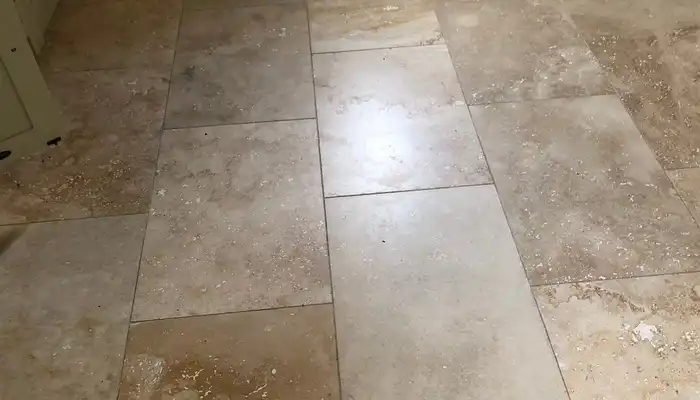
Professional extraction pulls contamination out of these low points rather than spreading it across the surface with a mop. Selective, colour-matched filling then stabilises loose or dirt-holding holes without erasing the stone’s natural character.
Detailed hole-filling methods belong on a dedicated repair guide — see travertine tile repair and small hole filling.
Why worn travertine floors can look dull, shiny or uneven from room to room
Honed, polished, tumbled and traffic-worn travertine all reflect light differently, so one floor can show several surface conditions at once. A honed and filled floor has a smooth satin look while the stone plane, filler and protection are still working together — once grit scratches the busy lanes, that satin drops back and soil begins to sit in the worn texture.
Polished travertine can often be revived, though micro-voids and filler patches mean it shouldn’t be judged against a uniform marble floor. Tumbled travertine is different again: its aged, open texture is part of the intended finish, so a tired tumbled floor usually needs cleaning, extraction, filling and sealing rather than aggressive honing.
Diamond honing only enters the discussion when scratches or wear are too deep for cleaning to correct — the safest approach starts with the least aggressive level that solves the visible problem, since unnecessary cutting can open cavities previously hidden beneath the surface cap.
See a real polishing example in this travertine polishing case study for dull worn floors.
Why dirty travertine floors can stay patchy after normal mopping
Pits, failed filler lines, grout margins and scratched traffic lanes can all hold contamination below the level a mop reaches. Loose soil comes off the tile face easily enough, but dirty cleaning solution runs into low points when water is tired or no extraction stage removes suspended residue.
Grout darkens the same way, and wear patterns follow how the home is used — sink runs, cooker zones, doorways and walkways collect grit and repeated traffic, and the scratched finish that results holds more soil than quieter areas of the same floor.
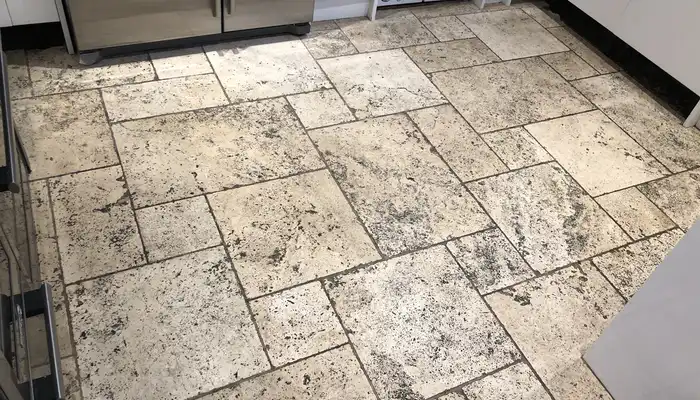
Professional hot water extraction differs from a domestic steam mop because loosened contamination is removed immediately — steam without extraction can soften coatings and push dirty moisture further into holes and worn filler.
Full cleaning guidance is covered in how to clean travertine floors when normal cleaning stops working.
Why travertine floor cleaning must remove ingrained soil without damaging the stone
Stronger household chemicals are not the answer to a dull travertine floor. As a calcium carbonate stone, travertine etches under acidic products, leaving pale marks and roughness that can’t simply be rinsed away — and acidic descalers are unsuitable even for the limescale that UK hard water leaves in pits and grout.
A pH-neutral stone cleaner suits routine maintenance but won’t restore years of embedded dirt or worn sealer. Professional alkaline cleaning releases greasy residue and older contamination from void edges and grout, but thorough rinsing and extraction matter just as much — alkaline residue left to dry can weaken sealer performance and produce the dull, quickly-soiling finish many homeowners notice after repeated cleaning.
That failure cycle typically begins when traffic lanes lose protection, stronger products get introduced, rinsing is incomplete, and the floor dulls again more quickly. Professional restoration breaks the cycle with controlled chemistry, extraction, neutralisation and resealing where needed.
For the full picture on steam cleaning risks, see the professional answer to steam cleaning travertine floors.
When sealing helps a worn travertine floor and when old coatings make it worse
Resealing only helps once the underlying surface problem has been identified — sealing cannot correct dirty voids, loose filler, acid etching or abraded texture, so the floor needs cleaning and assessment first.
Impregnating sealers work below the surface, reducing liquid wetting while keeping a natural look; they depend on clean, dry stone and disciplined rinsing beforehand. Topical film sealers instead create a sacrificial layer that can even out the appearance of busy kitchen floors, suiting homeowners who want easier maintenance.
Peeling, cloudiness, sticky residue or dark soil trapped beneath an old film is not general dirt — it’s failed coating, and more sealer over that condition usually locks the problem in rather than solving it. A water drop test helps during diagnosis: fast darkening suggests weakened protection, uneven wetting points to lane wear, and persistent beading shows protection is still active.
For removing failed coating or choosing new protection, see how to remove old sealer from travertine safely and travertine sealer options for long-term protection.
Travertine dullness, cracks, loose filler and etched marks need different professional care routes
A travertine floor can carry several issues at once, but each symptom points to a different likely cause and a different supporting guide.
Dull traffic lanes usually need more than ordinary cleaning
Fine abrasion, residue build-up and weakened sealer commonly combine to dull walkways and kitchen work zones. Etched patches and lost sheen typically move a floor towards a restoration or polishing assessment rather than another round of domestic cleaning.
Cracks and movement lines call for repair assessment first
Straight cracks or fractured tiles rarely respond to cleaning — they usually point to bedding or movement conditions, so stabilisation and cosmetic filling need a repair-specific assessment before any wider restoration route is chosen.
Open holes and loose filler turn cleaning into a repair issue
Weakened factory fill or previous unsuitable treatment can leave holes that mopping only darkens further. Selective void stabilisation belongs here as repair support; full filling detail sits on the dedicated repair page linked from this hub.
Pale, dull splash marks usually mean etching, not staining
Acidic spills or cleaning products reacting with the calcium-carbonate surface produce pale, rough marks that cleaning cannot remove — this correction route sits with restoration assessment rather than routine cleaning advice.
See these mixed-symptom repairs in practice: travertine restoration in New Malden and restoring a pitted travertine floor in Nantwich.
How travertine floors change after years of wear, cleaning and resealing
A floor that used to clean easily but now looks dull or patchy has usually changed underneath the surface — traffic lanes become more visible, filler loosens, and sealer protection weakens until the old cleaning routine stops giving the same result.
Routine care should still start with grit control before wet cleaning, a pH-neutral cleaner, and careful residue control, since grit is a leading cause of fine scratching in worn lanes. Filled areas and dense stone don’t wear at the same rate either — older factory filler can go matt, recessed or loose while the surrounding tile stays sound, often needing selective repair before resealing looks even.
A restored floor should still look like natural stone, not plastic — the goal is clearer colour, revived grout, stable filler where needed, and a more even finish that stays true to the material.
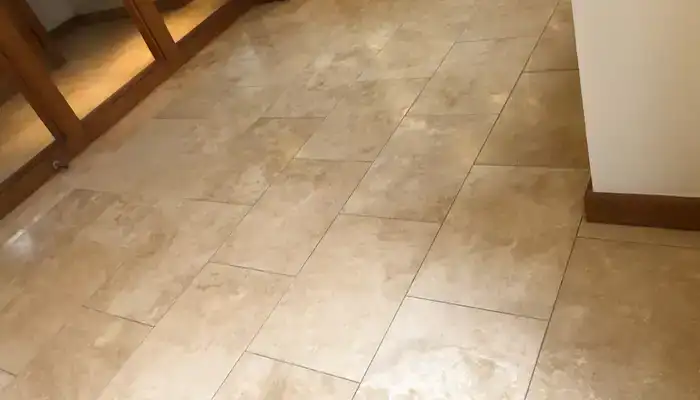
When a travertine floor needs professional diagnosis instead of stronger cleaning products
Persistent darkening, recurring dirty patches, loose filler, etched marks and patchy sealer usually mean the floor has wear, repair or protection issues that household cleaning cannot correct — the next step is diagnosis, not a stronger product.
Reading the pattern comes first: dullness that dries worse suggests residue or abrasion, recessed filler points to void problems, pale marks suggest etching, and patchy shine suggests coating variation. Professional assessment separates these causes, preventing unnecessary honing and unrealistic expectations before any work begins.
Done correctly, restoration produces a strong visual improvement while keeping the natural voids and colour movement that give travertine its character.
Where to go next for travertine cleaning, repair, sealing, polishing or restoration advice
Start with the symptom you can see most clearly. Soil problems need cleaning guidance, open holes need repair guidance, patchy coatings need sealing or stripping guidance, and a dull worn finish may need polishing or restoration evidence.
- Cleaning questions: travertine floor cleaning when normal cleaning stops working. Grout darkening: why travertine grout turns black.
- Repair questions: travertine tile repair and hole filling. DIY restoration: whether you can restore a travertine floor yourself.
- Sealing questions: travertine sealers for long-term protection. Old coating removal: safe old sealer removal from travertine.
- Restoration evidence: a worn travertine kitchen floor restored in Richmond and a worn travertine floor restored in Chippenham.
Abbey Floor Care assesses travertine before acting, because the material, finish, filler condition, previous sealer and cleaning history decide the safest route — the right outcome is a floor that looks clearer, feels easier to maintain and keeps the character that made travertine worth choosing.

David Allen — Abbey Floor Care
David Allen has worked with travertine floors across the UK for over 30 years through Abbey Floor Care. His practical experience with material behaviour, restoration sequencing and long-term floor care informs every article published under the Abbey Floor Care name.
Recent Posts:
We work throughout the country, just some of our work counties:
Copyright © 2026 Abbey Floor Care. Tile And Natural Stone Cleaning Consultants FAQ - Privacy Policy - Terms And Conditions
Abbey Floor Care is a participant in the Amazon Services LLC Associates Programme, an affiliate advertising programme designed to provide a means for websites to earn advertising fees by linking to Amazon.co.uk. As an Amazon Associate, we earn from qualifying purchases.