
Why This Travertine Floor Cleaning and Restoration in Reading Needed More Than Mopping.
Last Updated on September 15, 2026 by David
Dirty, pitted travertine can stay dark and rough no matter how often it is mopped. Soil, grease and cleaning slurry settle inside exposed holes and around damaged filler edges, beyond the reach of routine cleaning. This Silchester case study near Reading follows the controlled alkaline cleaning, rotary agitation, hot water extraction, selective void filling and protective sealing used to restore a level satin surface the homeowner could clean properly.
What the Dark Pits Revealed About This Reading Floor
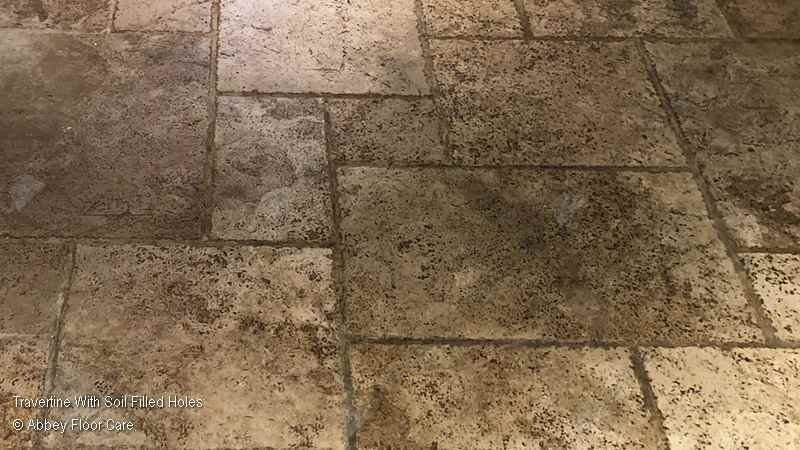
The persistent dark appearance came from soil compacted within exposed cavities that an ordinary mop could not enter. Across the kitchen, hallway, WC and washroom of this Silchester home, the previously smooth satin plane of the honed and filled travertine had become broken and uneven. Missing filler and newly exposed holes interrupted the floor plane, their edges had darkened, and the pale tiles looked dirty again as soon as they dried.
A mop cleaned only the upper tile faces. Even repeated hand-scrubbing could not extract the grease, grit and cleaning residue lodged inside the deeper recesses, leaving the visible tile faces wetter without clearing the deposits held underneath.
Further wet cleaning made the contrast more obvious. Slurry settled around broken filler and compacted inside exposed voids because the mop passed over each opening rather than drawing out its contents. Homeowners seeing this pattern can recognise the wider signs in our guide to travertine floors that stay dirty. Moisture temporarily softened the dark marks, but the soil-filled pits reappeared when the stone dried.
These tiles had originally been honed flat, with many natural holes filled during manufacture. Over time, some factory filling had weakened or disappeared, while wear had broken through thin stone covering hidden cavities. The floor was not generally unstable, but every exposed recess became a collection point for grease, grit and contaminated water.
The worst deterioration followed the busy routes between the hallway, kitchen and utility areas. Foot traffic repeatedly carried fine grit over the same tiles, while cooking and washing added greasy residues. Reading-area homes with narrow hall-to-kitchen routes or open-plan rear extensions often concentrate wear and contamination along these paths.
This was a dirty, pitted travertine floor requiring restoration, not another domestic surface clean. The mop dragged unevenly over broken cavity margins, dark cavities remained after drying, and recently cleaned areas quickly looked soiled again. A steam mop had also been tried, but without extraction it redistributed moisture and contamination. Our explanation of why steam cleaning travertine can fail covers that distinction in more detail. Restoring the floor required extracting the recessed soil, removing failed filling and rebuilding the damaged surface.
Cleaning the Cavities Before Rebuilding the Surface
Reaching the Soil Below the Tile Face
Dirty pits in travertine need more than mopping because the contamination sits below the tile face. We protected the kitchen units, painted surfaces and adjoining areas, then dry-vacuumed loose grit so abrasive particles could not be dragged across the calcium-carbonate stone during wet cleaning.
A professional alkaline solution was applied to break down ingrained grease, cleaning residues and remnants of the old protective coating. Acidic products were excluded because they dissolve calcite and can permanently etch travertine. After a controlled dwell time, a low-speed rotary machine agitated the floor and worked the solution into the open recesses.
Agitation released soil that domestic cleaning had passed over, but the dirty slurry still had to be removed. A wet vacuum and pressurised rinse-and-extraction system captured it after each pass, preventing suspended contamination from settling back into the cavity network.

Several cleaning and rinsing cycles were required before the recovered water ran clear. Residual alkaline cleaner around pit edges could weaken the replacement finish and accelerate dulling. Unlike a steam mop, hot water extraction removes contaminated liquid from the floor. Readers comparing methods can see the wider sequence in our guide to restoring travertine when mopping fails. On this Silchester floor, extraction was essential because the soil was physically trapped below routine cleaning depth.
Deciding Which Openings Actually Needed Repair
Travertine floor restoration does not mean filling every natural feature. Repair was limited to openings that trapped contamination, had unstable edges or could no longer withstand normal foot traffic. Once the floor was clean, we inspected each recess and removed only filler that was detached, crumbling or poorly bonded. A small diamond burr prepared the cavity edges without cutting away sound stone or unnecessarily enlarging the defect.
The selective preparation exposed a firm bonding surface for the replacement filler. Stable factory repairs remained untouched because removing them would have created larger patches and opened more of the stone’s natural cavity network. Attention stayed on the pits that disrupted cleaning or were likely to deteriorate further.
Clean, sound voids that remained visually acceptable were preserved as part of the travertine’s natural character. Homeowners with isolated damage can compare the limits of smaller repairs in our guide to filling small travertine holes safely. Here, contaminated openings extended across several connected rooms, making whole-floor cleaning and professional preparation necessary before filling could begin.
Rebuilding Deep Holes to Restore a Level Floor
Deep holes in a dirty, pitted travertine floor need a rigid repair that restores the missing tile surface. We packed colour-matched resin into the prepared cavities and blended the repair with the surrounding cream and beige stone. Once cured, the resin provided the strength required for regular foot traffic.
Each repair was then levelled flush with the tile face. Raised resin would catch the mop, while a recessed patch would continue holding dirty water and soil. The restored openings therefore became stable, level and cleanable parts of the floor rather than new contamination traps.
Closing Shallow Pits Between the Main Repairs
Smaller pinholes also needed attention before the restored travertine floor could remain clean. A fine cement-based compound was worked into shallow recesses that were too narrow for resin, matching the filler method to the depth and shape of each defect.

Together, the repairs converted soil-catching hollows into level areas without removing the stone’s natural variation. A final rinse cleared the repair residue, followed by sufficient drying time to confirm that the travertine, grout and new filling were ready for sealing. Protective treatment could begin only after the contamination had been extracted and every disruptive opening had been rebuilt flush with the surrounding surface.
The Visible Difference After Filling and Sealing
After restoration, the meaningful change was the removal of disruptive hollows and the return of a continuous satin plane, rather than an increase in shine alone.
Before restoration, dirty water collected in open pits, fibres snagged on failed filler and dark hollows returned after drying. Routine cleaning redistributed soil because it could not lift the compacted contamination below the tile face.
Colour-matched repairs brought the troublesome cavities level with the surrounding tiles. Small, stable natural features remained visible, but the deeper grease- and slurry-holding depressions were closed. The finished floor looked cleaner, more consistent and, in several areas, better than when first laid.
A satin surface coating created a sacrificial film across the honed stone, grout and repaired areas. An invisible impregnating treatment would not have formed the same continuous wear layer over the new filling. Homeowners comparing protection systems can review travertine sealer options and trade-offs. Several controlled coats produced an even finish without concealing the natural tonal variation.

The homeowner could now damp-mop the connected rooms without dragging across rough edges or pushing water into holes. On this Silchester project, successful travertine floor restoration was evident in everyday cleaning as well as appearance.
What New Dark Marks Can Mean After Restoration
A restored travertine floor that starts looking dirty after mopping may have developed new pits, failed filler or wear in its protective film. Rough cavity edges, increased resistance beneath the mop or recesses that remain dark after drying can indicate that contamination is again collecting below the tile face. Temporary darkening while the stone is wet is less concerning than marks that persist once dry.
Filler loss usually reveals itself through rough edges, while poor mop movement along busy routes can point to a thinning sacrificial coating. Broader guidance appears in our travertine cleaning, repair and restoration guide. Establish the cause before using stronger cleaners, because additional heat or harsh chemicals may damage the remaining finish without removing soil trapped inside the recesses.
The important distinction is whether the renewed dirty appearance comes from worn protection, failed repairs or fresh surface contamination. Exposed calcium-carbonate stone can be permanently etched when deterioration is treated as ordinary dirt. Practical routines are covered separately in our travertine floor maintenance guidance.

David Allen — Abbey Floor Care
David Allen has more than 30 years of stone floor restoration experience with Abbey Floor Care. On this Silchester project near Reading, he removed ingrained contamination, corrected failed filler and rebuilt dirt-trapping pits before protecting the restored travertine with a practical satin finish.
Recent Posts:
We work throughout the country, just some of our work counties:
Copyright © 2026 Abbey Floor Care. Tile And Natural Stone Cleaning Consultants FAQ - Privacy Policy - Terms And Conditions
Abbey Floor Care is a participant in the Amazon Services LLC Associates Programme, an affiliate advertising programme designed to provide a means for websites to earn advertising fees by linking to Amazon.co.uk. As an Amazon Associate, we earn from qualifying purchases.