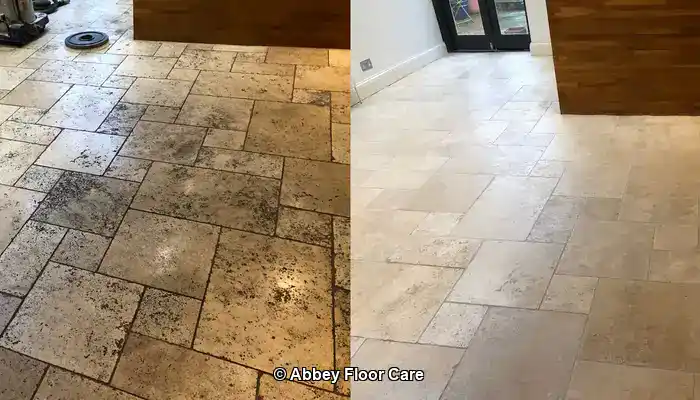
How To Clean Travertine Floors? When Soils Stay Trapped
Last Updated on July 8, 2026 by David
Dirty travertine floors need a controlled cleaning sequence because dark grout edges, dirt trapped in small holes and patchy soiling usually come from residue and moisture sitting below the wipeable surface.
What you need before cleaning a dirty travertine floor safely with the right cleaner and brush
If your travertine has dark grout edges, dirt sitting in small holes or patchy soiling, start with the cleaner and the brush before you add more pressure. Surface dirt, dark spots in natural holes, gritty grout edges, streaks after mopping and dull drying marks usually point to a floor that needs careful preparation, not stronger household chemicals.
Safe cleaner selection starts with an acid-free, pH-balanced stone cleaner for routine maintenance and daily cleaning. It should leave the surface residue-free, carry no etching risk and suit a damp mop rather than a flooded floor. Vinegar, citrus cleaners, bleach, ammonia and bathroom cleaners can damage acid-sensitive stone surfaces and leave pale rough patches that no cleaner will wash away.
Brush choice matters because travertine often has unfilled holes, a pitted surface and filled areas that can loosen under harsh scrubbing. A soft-bristled broom, soft brush attachment, microfibre mop, clean mop bucket, dry towel and soft cloth give better control before water touches the floor. Professional-grade alkaline chemistry may be needed for deep cleaning, but domestic work should begin with the gentlest cleaner that can remove loose surface soiling.
Products often used during deeper cleaning and everyday care

Wet & Dry Vacuum
|

Spin Mop System
|

Deck Scrubber Brush
|
Why steam cleaners, strong chemicals and the wrong brush can make travertine harder to clean
If your travertine looks duller, patchier or more stained after cleaning, the method may be leaving residue, weakening protection or disturbing filled areas. Heat and too much water can soften the sealant layer, seep into stone, move moisture through grout edges and leave staining that becomes more obvious as the floor dries.
The wrong cleaning method can make travertine hold more dirt, not less.
Travertine contains natural cavities, structural holes and voids that belong to its geological character rather than damage. CO₂ formation during mineral spring deposition leaves an inherent feature within the stone, and the capillary network can hold cleaning residue when rinse water has nowhere to go. Travertine is a porous sedimentary limestone formed by mineral spring deposition, so its void structure and variable density need cleaner control, rinse discipline and careful drying during cleaning.
Harsh chemicals create two different risks on dirty stone floors. Acid causes chemical dissolution in the calcite composition, so the homeowner sees cloudy spots, dull areas or pale rough patches after wine, fruit juice or bathroom cleaners touch the surface. Efflorescence is a white powdery surface deposit caused by moisture carrying dissolved minerals to the surface; the homeowner sees pale powder in holes or grout after excessive water, and the correction is moisture control, pH-neutral cleaning, thorough drying and ventilation.
Brush pressure can also change the floor rather than clean it. A soft bristle brush gives gentle agitation and controlled cleaning while helping preserve the thin calcite layer over the void network; a stiff brush can increase abrasion vulnerability and expose deeper cavities. Travertine cleaning needs cleaner control, rinse discipline and drying checks, which are covered in the travertine floor tile cleaning method. Good preparation reduces cleaning residue damage before the main deep clean begins.
How to clean dirt from travertine floors without pushing contamination deeper into the holes
If dark soil stays in the holes after mopping, the floor needs a controlled sequence rather than repeated mopping or heavier scrubbing. Embedded soiling sits in natural holes, dark spots form where trapped dirt and moisture collect, and cleaning residue can settle into unfilled holes as the floor dries. The aim is simple: loosen the soil, keep it suspended, remove it fully and leave the pitted surface easier to maintain afterwards.
Professional cleaning starts by moving furniture, lifting dry grit and vacuuming grout edges before applying water. Foot traffic carries grit into kitchens, hallways and garden entrances, so a soft-bristled broom and vacuum with a soft brush attachment reduce abrasive material before wet cleaning begins. Entry mats and felt pads help after cleaning because they reduce the grit that causes surface wear in the first place.
A controlled cleaner choice protects the floor from both under-cleaning and over-treatment. A pH-neutral stone cleaner suits regular cleaning because it supports pH balance, dries residue-free and avoids etching risk. Professional-grade alkaline chemistry becomes useful during deep cleaning, especially when organic soil removal, controlled application and contamination extraction need more strength than a maintenance cleaner can provide.
- Remove dry soil with a vacuum and soft brush before applying any liquid cleaner.
- Pre-test the chosen cleaner in a hidden area and confirm the surface does not lighten, soften or leave tacky residue.
- Dilute the cleaner according to the soil level and work in small areas so the floor stays evenly damp.
- Allow dwell time so the cleaner can loosen embedded soiling without drying on the surface.
- Use a nylon or soft-bristled brush for gentle agitation across the pitted surface and grout edges.
- Rinse with clean water and remove dirty slurry before it settles back into natural holes.
- Dry the floor with a dry towel or soft cloth, then check for water spots, streaks and remaining dark areas.
Stage 1: Remove Grit Before Wet Cleaning
If your floor feels gritty underfoot, dry soil must come off before any cleaner touches the surface. Loose grit turns into abrasive paste when mixed with warm water, and that paste can scratch the protective surface while the homeowner thinks the floor is being cleaned. It is a small step, but it matters.
Furniture removal gives enough working space to clean edges, corners and traffic lanes evenly. A clean mop bucket, warm water, soft cloths and a microfibre mop should be ready before the floor becomes wet. Mild dish soap is not ideal for ongoing stone care because it can leave film, so a residue-free stone cleaner gives safer control.
Stage 2: Apply the Cleaner Without Flooding the Floor
If your travertine looks darker around grout and low areas, cleaner dwell time matters more than heavy scrubbing. Controlled application keeps the surface damp long enough to loosen organic soil while reducing the chance that too much water will carry dirt deeper. The cleaner should work on the contamination, not turn the floor into a soaking wet surface.
Professional-grade alkaline chemistry breaks down oily soil, food residue and grey traffic film during deep cleaning. Full rinsing must follow because alkaline residue, un-rinsed cleaners and chemical buildup can contribute to sealer degradation, protective layer breakdown and cleaning residue damage. The floor should never dry with active cleaner still sitting in pits or grout lines.
Stage 3: Agitate With the Correct Brush
If dark soil stays inside the holes after mopping, brush pressure must reach the low points without damaging the surface. A soft bristle tool and nylon brush give non-abrasive void cleaning, controlled agitation and cap protection. The brush should move soil into the cleaning solution rather than grind it into the cap and surrounding filler.
Rotary floor machines can assist on larger floors when technicians control mechanical agitation and speed. Professional equipment spreads the cleaning process evenly, while hand brushing remains useful along edges, grout lines and pitted areas where pads struggle. Over-aggressive brushing risks surface preservation problems and can reveal deeper cavities.
Stage 4: Rinse and Extract Before the Slurry Dries
If the floor looks clean while wet but dull again after drying, dirty rinse water has probably settled back into the void structure. Slurry extraction removes suspended soil immediately, and a wet vacuum improves redeposition control by lifting dirty liquid out of cavities. Immediate removal prevents the cleaning stage from becoming a contamination cycle.
A clean water rinse should follow the first extraction pass whenever the floor still feels slippery, tacky or streaky. Rinse control matters in UK hard water areas because water spots and limescale can collect in pits and grout lines as the surface dries. Thorough drying with towels or air movement helps identify whether dark marks are still soil or a separate condition.
Stage 5: Check the Dry Result Before Adding More Cleaner
If the dry surface still shows dark holes, repeat cleaning only after deciding whether the marks are soil, open voids or failed filler. Natural holes and partially filled areas trap dirt more readily than a smooth finish, so some floors need separate assessment rather than another cleaning pass. Filled-and-honed floors usually clean more evenly than tumbled or unfilled surfaces because fewer open cavities remain.
A well-cleaned travertine floor is easier to maintain when soil, residue and dirty slurry have been fully removed from the surface and holes. Correct ongoing maintenance — pH-neutral cleaning, grit removal before wet mopping and careful monitoring of worn protection — is the single most important factor in extending the cleaning result, and the wider travertine care, cleaning and restoration guide explains how cleaning fits with protection, repair and long-term care. Avoid steam cleaning after the deep clean because heat and moisture can weaken protection and encourage staining.
The floor will look significantly better after proper cleaning because embedded soil has been loosened, rinsed and extracted instead of spread across the surface. In many cases the appearance improves because residue, traffic film and old cleaning buildup no longer mask the stone. A honed and filled travertine floor has a smooth, consistent satin surface. Unfilled or tumbled travertine retains visible voids. These may be filled or left open, but even when cleaned, the voids remain visually matt against the surrounding surface.
Why dirty water can stay in travertine holes even after the floor looks clean
A travertine floor can look cleaner on the surface while dirty rinse water remains trapped in holes, low areas and grout edges. This happens when wiping removes the visible film but leaves deep contamination inside cavities, where moisture and loosened soil dry back into dark marks. In my experience, this is one of the main reasons travertine hole contamination returns quickly after an incomplete clean.
Wiped-clean appearance means the tile face looks brighter while the pitted surface still holds grey water below the surface line. The homeowner may see temporary improvement during cleaning, then darker holes, streaks or shadowed grout as the floor dries. That usually means the rinse stage moved soil, but did not extract it.
Properly rinsed and extracted result means hot water, cavity cleaning and an extraction method remove dirty liquid before it settles. Professional equipment improves void penetration and slurry removal because it lifts deep contamination from holes rather than relying on a mop alone. The floor regains clarity more evenly and stays cleaner longer because the dirty water has left the stone.
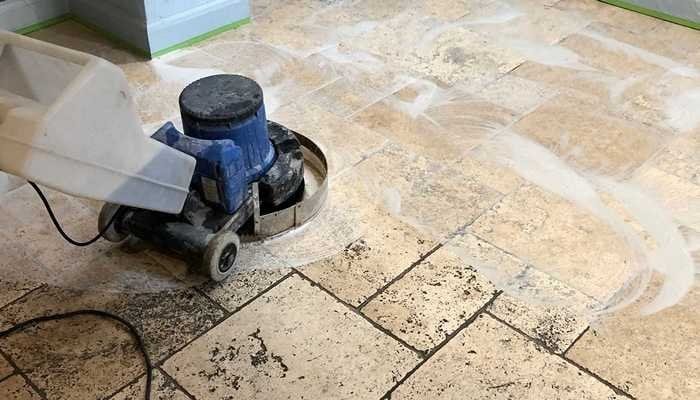
Professional hot water extraction works best when it follows controlled agitation and a clean water rinse. The equipment pulls slurry from the void structure before redeposition can dull the floor again. Floors at this stage need drying checks before any judgement about sealing, repair or further cleaning.
Where to go next if cleaning shows worn protection, open holes or maintenance issues
If your travertine still absorbs water quickly, stays dark in open holes or feels rough where filler has loosened, the floor needs a different care route after cleaning. Worn protection can show as rapid water absorption, open voids can stay dark after cleaning, and loose filler can leave rough pockets that catch soil again. The right next step depends on what the clean floor shows once fully dry.
Sealing supports cleaning rather than replacing it. Both impregnating and topical sealers are used on travertine, and topical sealers are often chosen to unify the appearance between stone and grout and simplify maintenance, depending on homeowner preference. The travertine sealer selection guide helps when the cleaned floor shows worn protection, but the cleaning method still depends on safe cleaner choice, controlled agitation, full rinsing and slurry removal.
Open holes, dark grout and recurring soil each point to a different care route after cleaning. Open voids may explain why soil returns quickly, black grout needs its own cleaning and prevention route, and old maintenance buildup may need specialist assessment before any further treatment is considered. The travertine hole filling and repair guide and the travertine grout blackening guide explain those next steps without turning this cleaning method into a repair or sealing article.
Maintenance cleaners should match the protection already on the travertine

Fila Pro Floor Cleaner
Impregnated surfaces
|

LTP Floorshine
Topical sealers
|
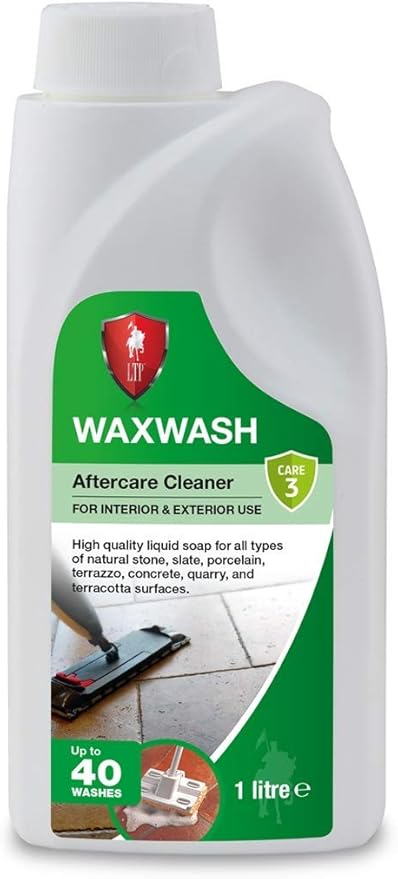
LTP Wax Wash
Waxed finishes
|
A maintenance handover should tell the homeowner which cleaner to use, how often to damp mop, when to rinse, and what signs mean the floor needs reassessment instead of repeated cleaning. This page stays within travertine cleaning: wider stone, tile or cross-material comparisons are outside its scope because travertine’s natural void structure, hole contamination and cleaner response need their own controlled method. The broader travertine flooring care hub is the best next route when cleaning exposes more than surface dirt.

David Allen — Abbey Floor Care
David Allen has restored and cleaned travertine floors across the UK for over 30 years through Abbey Floor Care. This method guide reflects the controlled process he uses to clean dirty travertine safely, from cleaner selection and brush control through to rinsing, extraction and maintenance guidance.
Recent Posts:
We work throughout the country, just some of our work counties:
Copyright © 2026 Abbey Floor Care. Tile And Natural Stone Cleaning Consultants FAQ - Privacy Policy - Terms And Conditions
Abbey Floor Care is a participant in the Amazon Services LLC Associates Programme, an affiliate advertising programme designed to provide a means for websites to earn advertising fees by linking to Amazon.co.uk. As an Amazon Associate, we earn from qualifying purchases.