Blue Lias Flagstone Floor Cleaning and Sealing — Shepton Mallet, Somerset
Last Updated on March 7, 2026 by David
At a Glance
- Problem: Decades of mopping created a slurry-weakened surface layer that absorbed soil faster than normal cleaning could remove it.
- Solution: Alkaline deep cleaning with rotary agitation and slurry extraction, followed by neutral impregnating sealer and liquid wax.
- Result: Historic Blue Lias flagstones restored to clarity with a durable satin finish that supports easy long-term maintenance.
Can an old Blue Lias Limestone Floor be successfully cleaned and sealed?
Blue Lias limestone flagstone floors often appear permanently dirty because years of cleaning residue and embedded soil soak into the porous surface and resist normal mopping. The homeowner in this Shepton Mallet property noticed exactly this problem: dull patches across the kitchen, hallway and dining room that never seemed to improve despite regular cleaning. Slurry-weakened surface layers and trapped wax residues had turned the stone into something that behaved like blotting paper, absorbing soil faster than it could be removed. Limestone cleaning in historic Somerset homes therefore focuses on controlled decontamination rather than aggressive resurfacing. Careful alkaline cleaning and protective sealing allow the original patina of Blue Lias flagstones to remain visible while restoring clarity and improving long-term maintainability.
This is a case study of a Blue Lias Cleaning Shepton Mallet project, completed in May 2022
My client was searching for a Limestone cleaning polishing and sealing service for a well-worn Blue Lias flagstone floor in Shepton Mallet, Somerset.

Blue Lias Limestone Flagstone Condition Assessment in Shepton Mallet
Blue Lias limestone flagstones in this 18th-century Somerset property showed the typical wear patterns seen in long-serving kitchen floors where decades of mopping have softened the upper surface. Calcium Carbonate composition makes limestone chemically sensitive, yet the greater challenge here was physical rather than chemical: soil, wax residues and kitchen grease had penetrated the stone through natural capillary absorption pathways. These absorption pathways run through fossil structures and sediment layers within the limestone, meaning contamination spreads far deeper than the visible surface.
Slurry-Weakened Surface Layer development had also occurred after many years of routine washing. This softened top layer behaves like blotting paper and quickly absorbs soil and moisture even after the floor has been cleaned. Fossil Voids and natural pits within Blue Lias flagstones trapped further contamination along the tile edges and grout lines, creating patchy dark zones across the kitchen and hallway. Detailed diagnosis of limestone surface behaviour helps explain why floors can appear permanently dirty despite regular maintenance, a topic explored further in Why Your Limestone Floor Looks Dull or Patchy — And Why It’s Probably Not Dirt. Accurate inspection at this stage ensures the correct cleaning approach is selected without damaging the historic character of the stone.
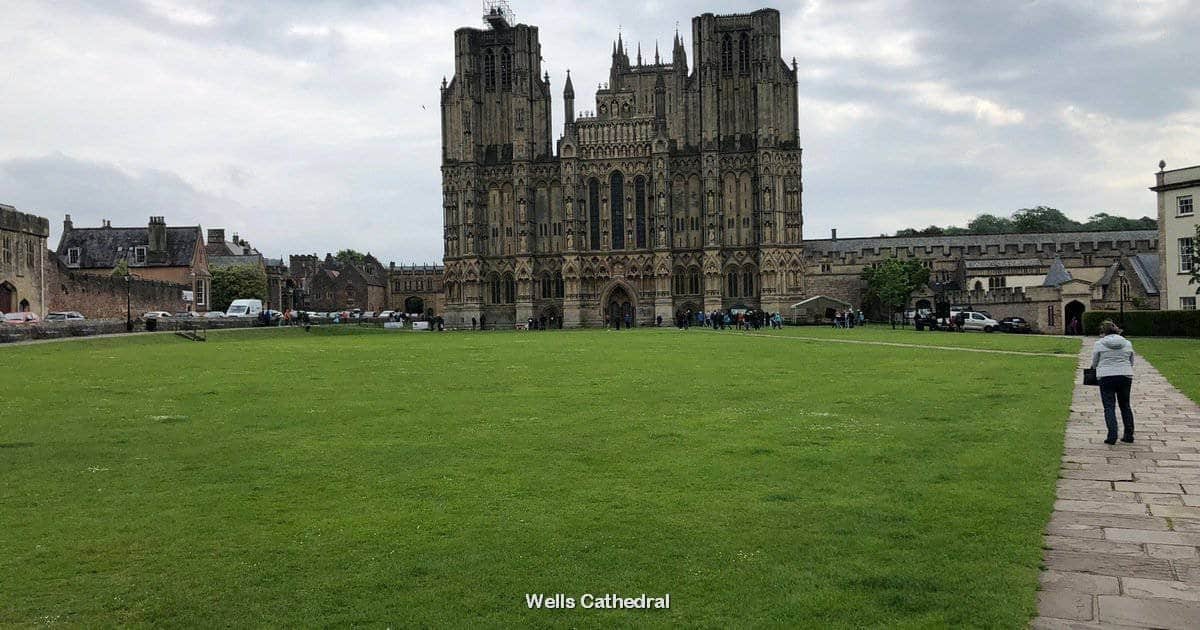
Blue Lias limestone has been used across Somerset for centuries and appears in churches, manor houses and historic buildings including Wells Cathedral. Fossil-rich sediment layers and iron-rich mudstone deposits create the distinctive colour variation that gives Blue Lias flagstones their unique appearance.

Blue Lias flagstone wear patterns become visible as traffic gradually abrades the surface and exposes sediment lines and fossil structures. The floors in the kitchen, dining room and hallway had suffered significant wear and flaking, with some areas losing up to two centimetres of surface material over many decades. Replacement tiles installed more recently still retained a smoother surface, illustrating the difference between original historic stone and later repairs.

Alkaline Deep Cleaning of Blue Lias Limestone Flagstones
High-Alkaline Cleaner chemistry breaks down grease, wax residues and ingrained soil without attacking the Calcium Carbonate structure of limestone. A broad-spectrum alkaline stripper was applied to soften historic coatings that had built up across the surface of the floor. Acidic cleaners were strictly avoided because limestone reacts instantly with acids and suffers permanent surface damage known as acid etching.
Rotary Floor Machine agitation released contamination from the stone using heavy-duty scrubbing brushes suited to the uneven texture of Blue Lias flagstones. Scrubbing action lifted residues from fossil pits, grout edges and surface depressions that trap dirt during everyday use. Mechanical agitation combined with alkaline chemistry allowed deep cleaning without aggressive grinding or sanding that could remove historic surface character.
Wet Vacuum / Slurry Extractor equipment removed the contaminated slurry immediately after scrubbing. Limestone surfaces with strong capillary absorption can re-absorb dirty water very quickly, so slurry extraction must take place before moisture penetrates back into the stone. Professional limestone restoration methods rely heavily on this rinse-and-extraction process, a cleaning strategy described in greater depth in Limestone Floor Restoration Best Practices for UK Homes. Removing residues fully ensures sealers bond correctly with the substrate and prevents rapid re-soiling after treatment.
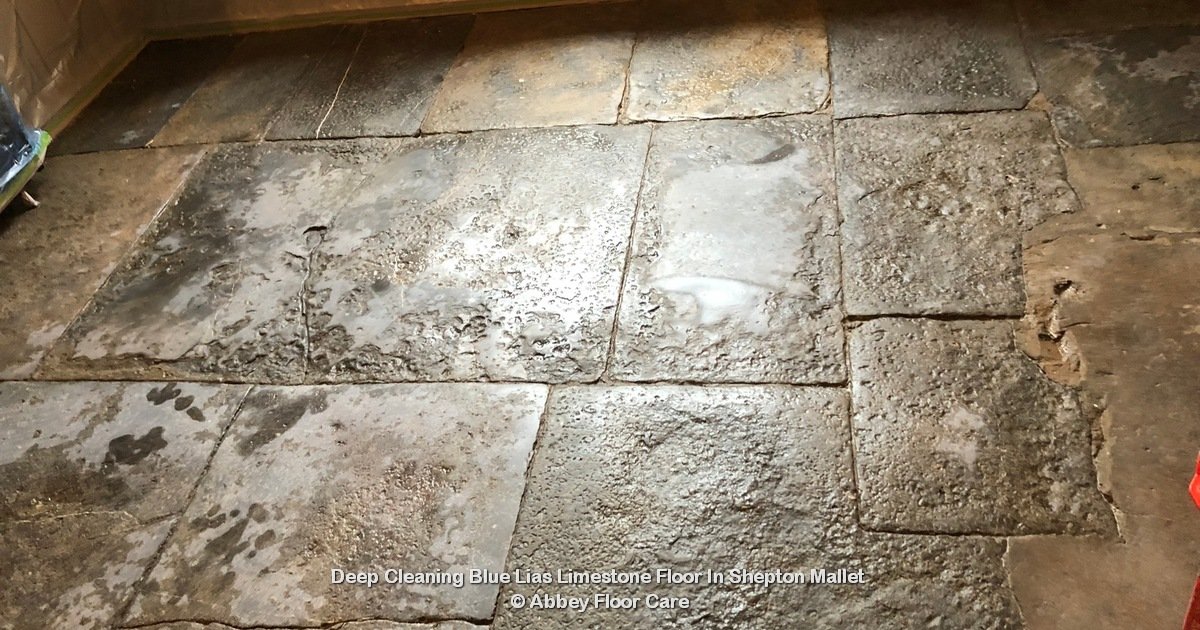
Moisture-Controlled Limestone Cleaning Strategy for Porous Flagstones
Capillary Absorption within Blue Lias limestone makes water management essential during professional cleaning. The stone was therefore treated in small sections rather than washing the entire floor at once. Working in stages allowed the cleaning solution to loosen residues while preventing excessive moisture from soaking into the porous structure.
Drying behaviour across the limestone also provided diagnostic feedback about the stone’s condition. Areas that dried unevenly revealed zones of higher porosity where slurry-weakened layers had developed. Controlled rinse cycles followed by rapid extraction allowed the floor to dry progressively while the cleaning process continued across the property.
Sealing Blue Lias Flagstone Floor Tiles
Impregnating Sealer protection was selected after testing several sealing options on small sample areas of the stone. Colour-enhancing treatments and stone oils darkened the Blue Lias flagstones too heavily because the shale-rich structure absorbs enhancing agents very strongly. The homeowner preferred the lighter appearance of the freshly cleaned limestone and therefore chose a neutral impregnating sealer that would maintain the natural tone.
Impregnating Sealer technology works by penetrating the pore structure of limestone and lining the capillary channels that normally absorb liquids. The sealer does not create a visible surface coating and therefore preserves the traditional appearance of historic flagstones. A detailed overview of limestone sealing principles can be found in Limestone Floors in UK Homes: Care, Behaviour & Long-Term Considerations. Multiple coats were applied to ensure the porous stone was fully saturated with protection.

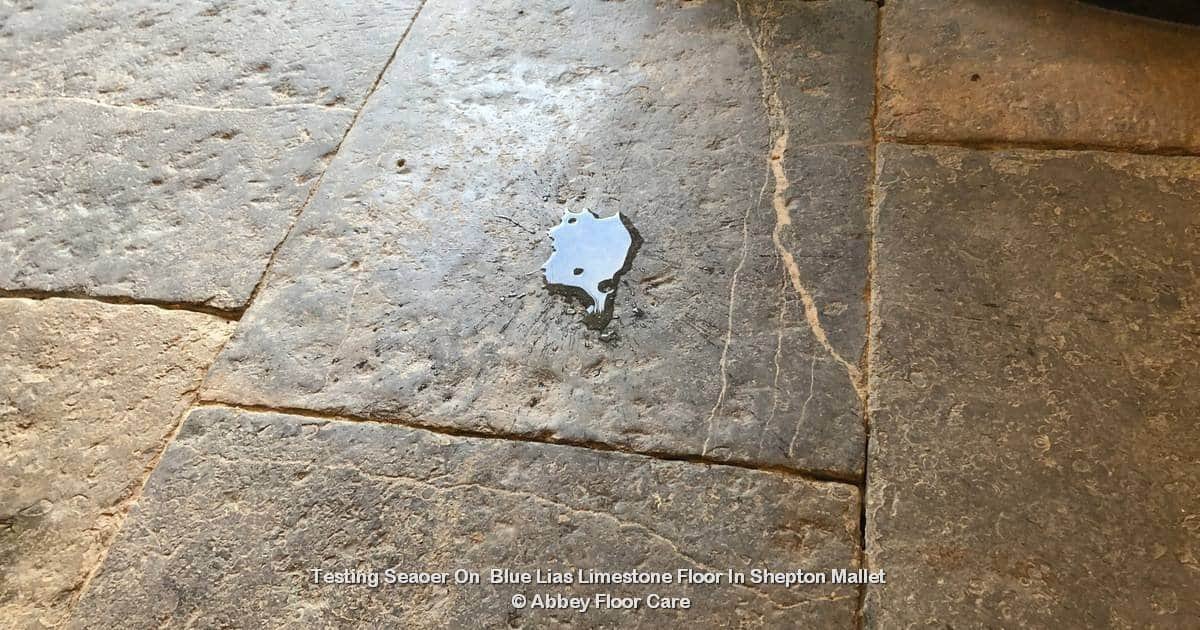
Water Droplet Test verification confirmed the stone had absorbed sufficient sealer to resist liquid penetration. A small pool of water was placed on the surface and left for twenty minutes; the absence of a ghost mark after wiping confirmed that the impregnating sealer had saturated the limestone correctly.
Waxing Blue Lias Limestone Floor Tiles
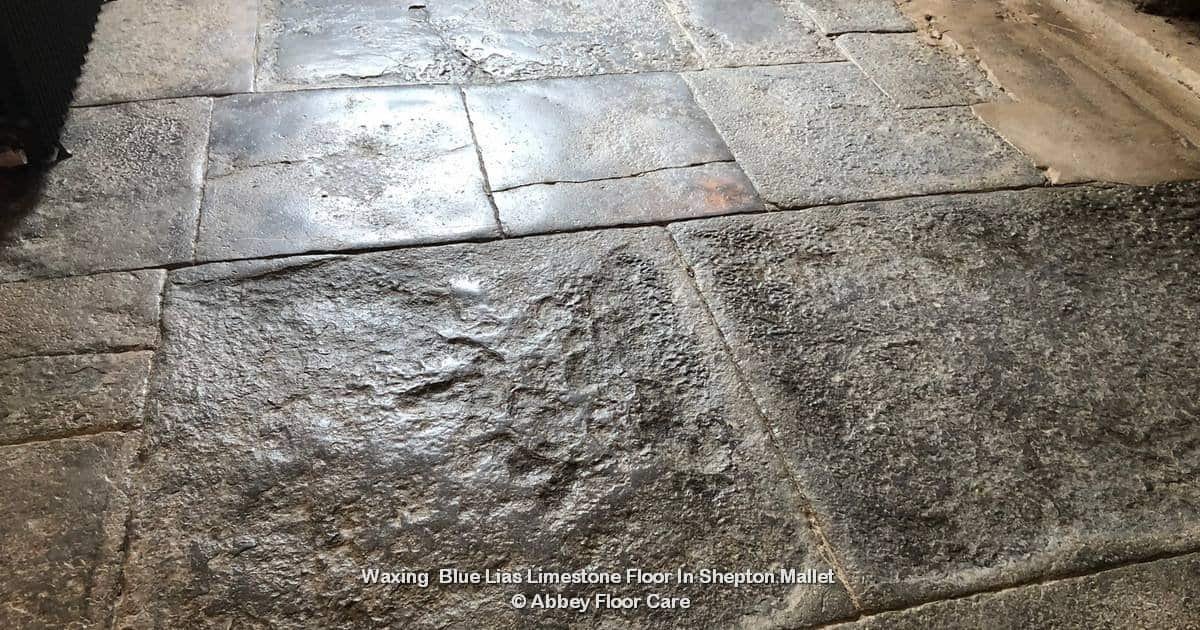
Liquid wax surface protection adds a sacrificial wear layer above impregnating sealers in busy kitchen environments. Kitchens expose limestone floors to oils, cooking spills and frequent traffic, so a wax finish provides additional resistance while creating a soft satin sheen. Unlike impregnating sealers that sit within the stone, wax coatings remain on the surface and can be renewed periodically.
Topical wax coatings were applied in two thin layers using microfiber cloths and allowed to dry between coats. The surface was then buffed using a rotary machine and soft polishing brush to create a gentle satin finish that complements the character of Blue Lias flagstones.
Grout Repairs On Flagstone Floors
Lime grout repair stabilised several small areas where original pointing had deteriorated over time. Historic Blue Lias floors are commonly installed with lime mortar joints that remain slightly breathable and flexible within older properties.
Colour-matched grout was used to fill several small gaps where earlier repairs had introduced cement grout or where pointing had been lost. Cement dyes allowed new grout to blend with the surrounding stone while maintaining visual consistency across the floor.

Limestone Maintenance Strategy After Professional Cleaning
pH-neutral stone cleaner maintenance protects limestone sealers and prevents rapid re-soiling. Standard household cleaners often contain acidic or strong alkaline ingredients that degrade sealers and damage calcium carbonate surfaces.
Wax maintenance cycles restore surface protection in high-traffic areas where the sacrificial layer gradually wears. Adding small amounts of liquid wax to warm water during occasional maintenance mopping helps maintain the satin finish and prolongs the lifespan of the protective coating.
The finished Blue Lias limestone floor regained clarity and texture while preserving the worn character that gives historic Somerset flagstones their appeal.
Local Information
Shepton Mallet is a historic market town located in the Mendip district of Somerset, around sixteen miles west of Bath and eighteen miles south of Bristol. The town sits near the Mendip Hills, an area well known for its limestone geology and long history of quarrying and stone building.
Blue Lias limestone has been widely used throughout this region in traditional architecture, farmhouses and historic churches. Restoring limestone floors within properties such as this Shepton Mallet home helps preserve an important part of Somerset’s architectural heritage.
Recent Posts:
We work throughout the country, just some of our work counties:
Copyright © 2025 Abbey Floor Care. Tile And Natural Stone Cleaning Consultants FAQ - Privacy Policy - Terms And Conditions
Abbey Floor Care is a participant in the Amazon Services LLC Associates Programme, an affiliate advertising programme designed to provide a means for websites to earn advertising fees by linking to Amazon.co.uk. As an Amazon Associate, we earn from qualifying purchases.