
Sandstone Floor Cleaning and Restoration in UK Homes
Last Updated on January 26, 2026 by David
Sandstone floors are chosen for their natural, grounded feel and character. At first, they usually look warm and balanced. Over time, many homeowners notice that the floor no longer behaves as expected — it stays dull, marks easily, or never quite looks clean, no matter how careful the cleaning.
If that sounds familiar, it does not mean the floor has failed, and it rarely means you have done anything wrong. These changes are usually the result of how sandstone behaves in real homes, particularly older UK properties.
Why sandstone floors often become difficult to keep clean
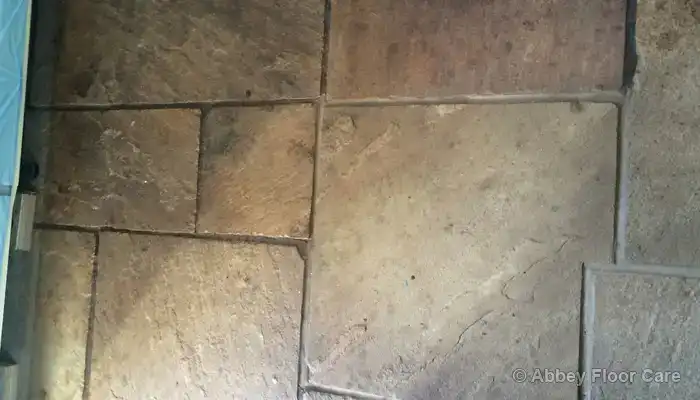
Sandstone and flagstone are porous, layered stones. Most are supplied with naturally riven or textured surfaces that feel authentic underfoot but mechanically trap dirt. Once the original protective treatment wears away, soil settles into the surface rather than sitting on top of it.
In many older homes, sandstone floors were laid without a modern damp-proof membrane. Moisture can move up through the stone and evaporate at the surface, carrying fine particles with it. This is one reason patchiness, dark areas, or whitening can appear even when spills are cleaned quickly.
What homeowners usually notice first
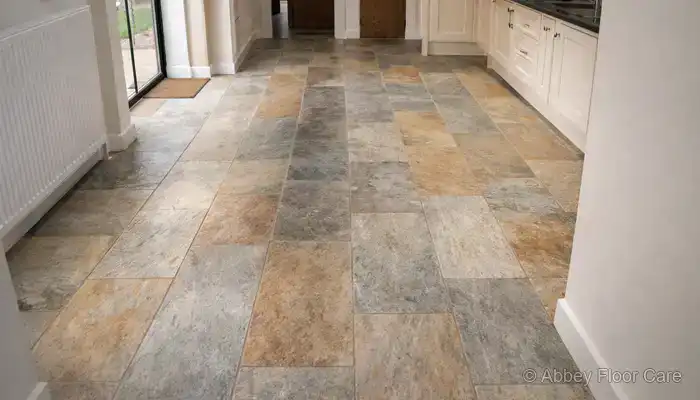
Most people do not notice a single dramatic change. Instead, the floor slowly becomes harder to live with. It may look clean immediately after mopping, then dull again once dry. Traffic areas often darken first, while edges and corners appear lighter by comparison.
In kitchens and hallways, the stone can begin to feel slightly sticky or rough underfoot. In living areas, the colour variation that once felt warm can start to look uneven or grubby. These are not cleaning failures — they are signs that the stone’s surface is holding contamination below the reach of routine cleaning.
Why does routine cleaning stop working on sandstone
Once dirt becomes embedded in sandstone’s pores and surface texture, mopping alone cannot remove it. In some cases, routine cleaning products leave residues that attract more soil, making the floor appear to re-soil quickly.
This is often the point where homeowners feel stuck. The floor looks worse despite more effort, and stronger products feel tempting. Unfortunately, harsh cleaners, acids, or steam usually make sandstone behave less predictably over time, not better.
Most homeowners are never told that sandstone requires a specific type of cleaner and a gentler cleaning approach. Using the wrong products is one of the most common reasons sandstone floors become dull, patchy, or difficult to live with over time.
pH-neutral stone cleaners and low-abrasion cleaning tools are essential for all sandstone floors. Without them, routine cleaning either fails to remove embedded soil or gradually damages the stone and any protective treatment that remains.
The products shown below are examples of cleaners and tools that meet these basic requirements. Specific brands may vary, but the category is not optional if sandstone is to remain stable, calm in appearance, and realistically maintainable in everyday use.
Suitable products for routine sandstone floor cleaning

Fila Pro Floor Cleaner
|

LTP MPG Sealer H20
|

Vileda H2PrO Spin Mop System
|
What professional cleaning and restoration actually changes
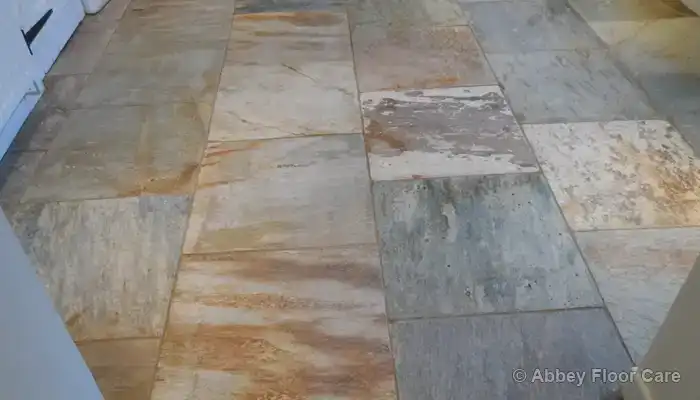
Professional sandstone cleaning focuses on safely removing ingrained contamination, rather than scrubbing harder or coating over the problem. The goal is not to make the stone look new, but to return it to a cleaner, calmer version of itself that is easier to live with.
Where appropriate, breathable impregnating sealers are used to reduce the rate at which the stone absorbs dirt and moisture. In some situations, gentle surface refinement may help textured stone release soil more effectively. These decisions are always led by the stone’s condition, not a standard formula.
Setting realistic expectations for sandstone floors
Sandstone will always show some variation. Historic marks, natural bedding lines, and colour shifts are part of its character. Professional restoration improves cleanliness and maintainability, but it does not erase the stone’s history.
The most successful outcomes are those where the floor feels calmer, more hygienic, and easier to maintain — without losing the natural qualities that made sandstone appealing in the first place.
How this page fits within our sandstone guidance
This page acts as the central reference point for sandstone floors across UK homes. From here, you can explore detailed guides, decision pages, and real restoration case studies that relate to your situation — without being pushed into instructions that may not suit your floor.
If your sandstone floor looks dull, patchy, or hard to keep clean, the most helpful next step is to understand why it behaves that way. Once that makes sense, the right path forward usually becomes much clearer.
- For homeowners weighing up whether specialist help is actually worthwhile: Is it worth getting sandstone floors professionally cleaned.
- For a clearer understanding of how sandstone restoration is approached in real homes: How sandstone floors are restored in domestic homes
- For guidance on choosing cleaners that are safe for routine sandstone care: The safest products for routine sandstone cleaning
- For additional context where heritage or older sandstone floors are involved: Caring for heritage sandstone floors.
- For a real-world example showing how one sandstone floor was cleaned and stabilised: Sandstone floor cleaning case study (Codicote, Hitchin)

Article by: David Allen – Abbey Floor Care. Sandstone, natural stone and tile specialist with over 30 years of hands-on experience in UK homes.
David’s work focuses on how sandstone floors behave over time — why they become difficult to keep clean, how moisture and surface texture affect appearance, and why some changes are normal rather than faults. His writing helps homeowners understand what they see in their floors without sales pressure, product pushing, or technical jargon.
Recent Posts:
We work throughout the country, just some of our work counties:
Copyright © 2026 Abbey Floor Care. Tile And Natural Stone Cleaning Consultants FAQ - Privacy Policy - Terms And Conditions
Abbey Floor Care is a participant in the Amazon Services LLC Associates Programme, an affiliate advertising programme designed to provide a means for websites to earn advertising fees by linking to Amazon.co.uk. As an Amazon Associate, we earn from qualifying purchases.