Is It Worth Getting Sandstone Floors Professionally Cleaned?
Last Updated on January 29, 2026 by David
Is It Worth Getting Sandstone Floors Professionally Cleaned?
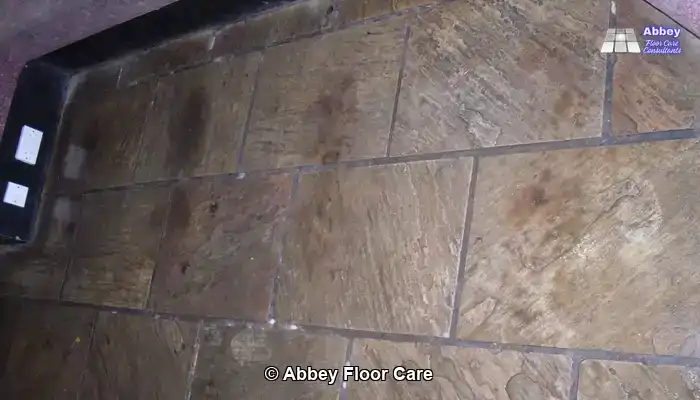
If you live with a sandstone floor, you may recognise the cycle. You clean it carefully, it looks better for a short while, and then the dullness and darker patches creep back. No matter how often you mop, the floor never quite looks settled or consistently clean.
This usually isn’t about effort or neglect. Sandstone behaves very differently from smooth tiles. Its surface is naturally open and often riven, which means everyday dirt doesn’t just sit on top — it works its way into the texture and stays there.
Why sandstone often looks dirty even when it’s been cleaned
Sandstone is made from compacted grains, not a sealed surface. Those tiny gaps between grains and the uneven texture give dirt plenty of places to lodge. When moisture is added during cleaning, fine soil is often redistributed rather than removed.
That’s why the floor may appear patchy or darker in high-traffic areas. What you’re seeing isn’t fresh dirt arriving overnight, but older contamination becoming visible again as the surface dries.
Why routine cleaning reaches a natural limit
Regular mopping works well on sealed, flat surfaces. On sandstone, it tends to move moisture and fine dirt around rather than lifting it out. Over time, residue from previous cleaning can exacerbate the problem, making the stone look cloudy or slightly sticky.
This is also why scrubbing harder rarely helps. The dirt isn’t sitting on the surface waiting to be wiped away — it’s held within the stone’s texture.
Why do some floors seem to change from room to room
Sandstone floors rarely behave evenly across a whole house. Areas near doors, kitchens, or garden access points often darken faster. In older properties, moisture movement from below can also affect how different sections dry and appear.
This variation can make the floor feel unpredictable, even when the same cleaning routine is used everywhere.
What professional cleaning changes — and what it doesn’t
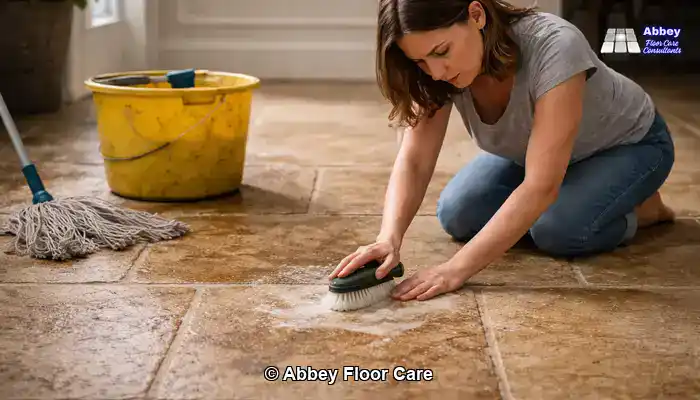
Professional cleaning focuses on removing what routine cleaning can’t reach. The aim is to lift ingrained soil from within the stone’s texture so the stone can return to a more even, natural appearance.
What it doesn’t do is turn sandstone into something it isn’t. The surface remains textured. Historic marks remain part of the stone’s character. The difference is that the floor looks calmer, cleaner, and easier to live with.
Why sealing often determines whether cleaning lasts
Once sandstone has been properly cleaned, its future appearance depends heavily on how it interacts with moisture. In many UK homes — particularly older ones — floors are designed to breathe. When moisture is trapped, issues such as whitening, patchiness, or rapid re-soiling can occur.
Breathable sealing works with the stone rather than against it. It reduces the rate at which dirt and moisture are absorbed without blocking natural vapour movement. This is often what makes the biggest difference to how long a freshly cleaned floor stays looking settled.
So is professional cleaning worth it?
For many homeowners, the turning point comes when they realise the floor isn’t failing because they’re doing something wrong. It’s behaving exactly as sandstone does when dirt has built up over time, and the surface can no longer release it easily.
Professional cleaning doesn’t promise perfection. What it offers is a reset — a floor that looks more even, feels more manageable, and no longer fights back when it’s cleaned.
If you want to understand more about how sandstone floors behave over time, you can dig deeper here: Sandstone floor cleaning and restoration in UK homes.
The important thing is knowing that the frustration you’re seeing has a clear explanation — and that the stone itself isn’t the problem.
Recent Posts:
We work throughout the country, just some of our work counties:
Copyright © 2026 Abbey Floor Care. Tile And Natural Stone Cleaning Consultants FAQ - Privacy Policy - Terms And Conditions
Abbey Floor Care is a participant in the Amazon Services LLC Associates Programme, an affiliate advertising programme designed to provide a means for websites to earn advertising fees by linking to Amazon.co.uk. As an Amazon Associate, we earn from qualifying purchases.