
Dull Terrazzo Floors Need Maintenance, Not Stronger Cleaners
Last Updated on November 21, 2026 by David
How Terrazzo Construction Affects Wear and Cleaning
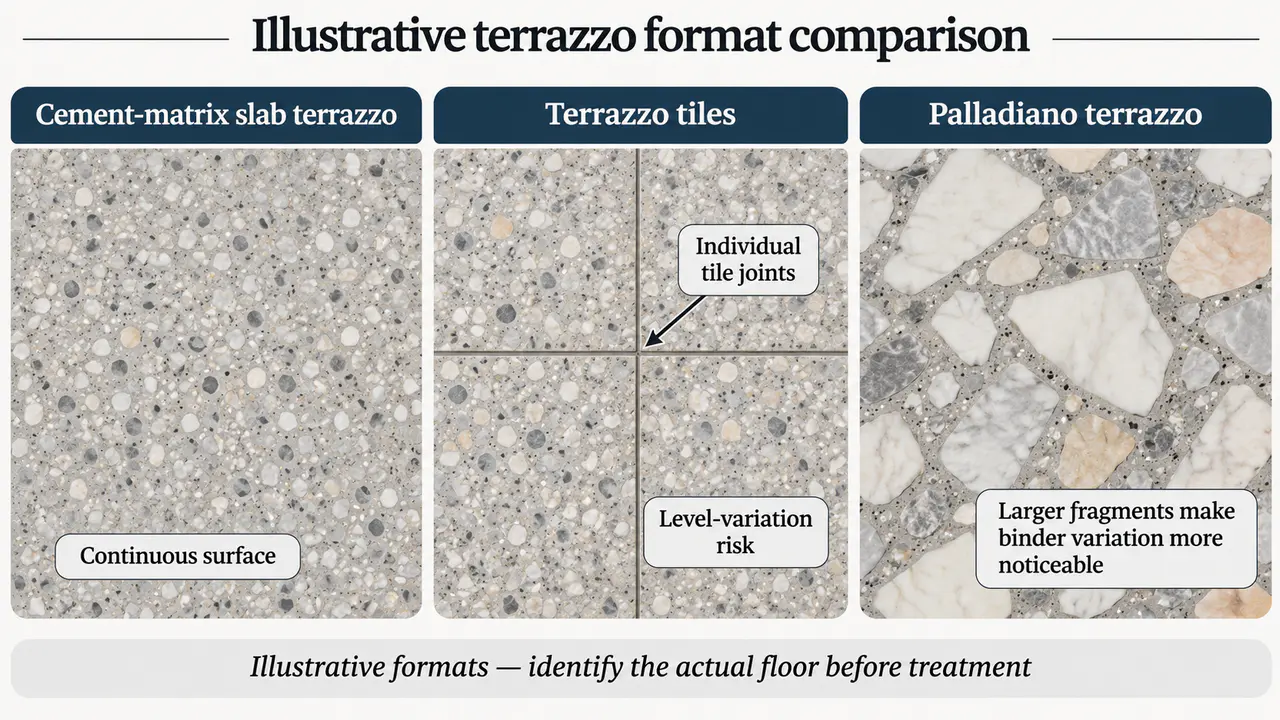
Traditional domestic terrazzo often contains marble chips within a cement-based binder, but installations differ in their construction, age and previous treatments. These differences affect the areas to inspect and how a floor should be maintained. Most of the advice below concerns cement-and-marble terrazzo; resin-bound systems, including epoxy terrazzo, require their own manufacturer-approved care guidance.
Cement-Matrix Slab Floors
Older properties can contain terrazzo formed as a continuous floor. Without individual tile edges, a poured surface may appear uniform, yet entrances, walking routes and sheltered areas can develop different levels of soil retention and wear. Compare affected and less-used areas in consistent light, allowing the floor to dry before judging the finish.
Terrazzo Tiles
Modular terrazzo tiles introduce joints and individual edges. Their condition may vary from tile to tile, and contamination can accumulate around joints or changes in surface height. A patchy appearance after cleaning does not by itself establish that the tiles or cement binder are deteriorating.
Larger-Fragment and Factory-Made Terrazzo
Palladiano-style terrazzo incorporates larger decorative fragments, which can make differences in the surrounding binder easier to notice. Factory-made terrazzo units may have more consistent manufactured dimensions, but their condition still varies with use, previous treatment and maintenance. Identify the actual floor and finish rather than assuming all terrazzo needs the same cleaning method.
Why Some Marks Remain After Normal Cleaning
A persistent dark patch or dull area can be caused by several different conditions: soil trapped in an old coating, absorbed staining, scratches, etching or a change in the cement-based surface. Even when marks look similar, the appropriate next step may be different.
Cleaning can remove contamination, but it cannot replace missing material or reverse an etched surface.
Cement-based terrazzo may have pinholes, worn areas or surface pores that retain contamination. Its marble aggregate and cement binder are also sensitive to unsuitable chemicals. However, colour alone cannot establish whether a stain has entered the material, whether the binder is damaged or whether the mark sits on an existing protective treatment.
Start with compatible cleaning and reassess once the area is dry. A mark that improves may involve removable contamination; a mark that remains needs further identification, not automatic grinding, stripping or sealing. If the surface feels sandy, breaks up, or has loose or moving sections, stop aggressive cleaning and seek professional assessment.
The Essential Terrazzo Maintenance Routine
A simple, repeatable routine addresses the everyday causes of dullness and scratching without introducing unnecessary treatment risks.
- Remove dry grit first. Use a soft dust mop or suitable hard-floor vacuum attachment before introducing water.
- Clean with a compatible product. Choose a low-residue, normally pH-neutral cleaner approved for the terrazzo and any known coating or sealer; follow the product’s dilution and rinsing instructions.
- Blot spills promptly. Lift liquid with a clean absorbent cloth, then clean as appropriate for the identified floor and finish. Do not leave standing water around cracks, joints or repairs.
- Maintain protective household equipment. Clean entrance mats and mop heads, and check furniture pads for embedded grit.
Use a well-wrung mop rather than flooding the floor, lift dirty water instead of redistributing it and allow the surface to dry before assessing its appearance. For broader material guidance, see our terrazzo flooring care guide.
How to Prevent Scratches from Grit and Furniture
Loose sand and grit carried indoors can abrade terrazzo under foot traffic. This is especially noticeable along busy routes and around entrances. A reflective surface may reveal fine scratches readily, but the appearance of a dull lane does not prove abrasion is the only cause.
Remove Dry Grit Before Wet Mopping
Vacuum with a suitable hard-floor head or use a soft dust mop before damp cleaning. An aggressive carpet beater bar or dirty cleaning pad may drag abrasive particles across the surface. Change or clean equipment when it begins to retain grit.
Keep Entrance Mats Clean
Entrance mats can capture grit and moisture before they reach the floor, provided they are suitable for the surface and regularly cleaned. A heavily soiled mat may transfer particles back into the room. Check its backing and edges to ensure they are not marking the terrazzo.
Protect Against Furniture Movement
Lift furniture rather than dragging it. Use appropriate pads beneath legs where suitable, and inspect them for wear or trapped debris. A pad containing grit can itself become a source of scratching.
Choosing and Using the Right Terrazzo Cleaner
For routine care, select a low-residue cleaner whose manufacturer confirms compatibility with your terrazzo and its existing protection. A normally pH-neutral stone cleaner is a sensible starting point for many cement-and-marble floors, but the label alone does not guarantee suitability for an unidentified coating.
Avoid vinegar, acidic descalers and abrasive scouring products on cement-and-marble terrazzo. Acids can etch the marble aggregate and affect the cement binder. Bleach and unsuitable strong cleaners should not be used as routine substitutes for compatible floor care. Specialist alkaline cleaning may be appropriate for particular contamination, but it is conditional on the floor, product instructions and controlled removal of residues.
Do Not Overdose Detergent
A tacky feel, mop streaks or cloudiness may indicate cleaner residue, but they can also have other causes. Follow the specified dilution and rinsing directions. Adding more product does not necessarily clean more effectively.
Change Dirty Mop Water and Pads
Dirty water and contaminated pads can redistribute soil, leaving a film over an otherwise cleaned surface. Refresh water and cleaning materials as needed, remove the dirty solution and avoid flooding the floor. Judge any remaining marks only after the surface has dried.
Managing Spills and Understanding Sealer Protection
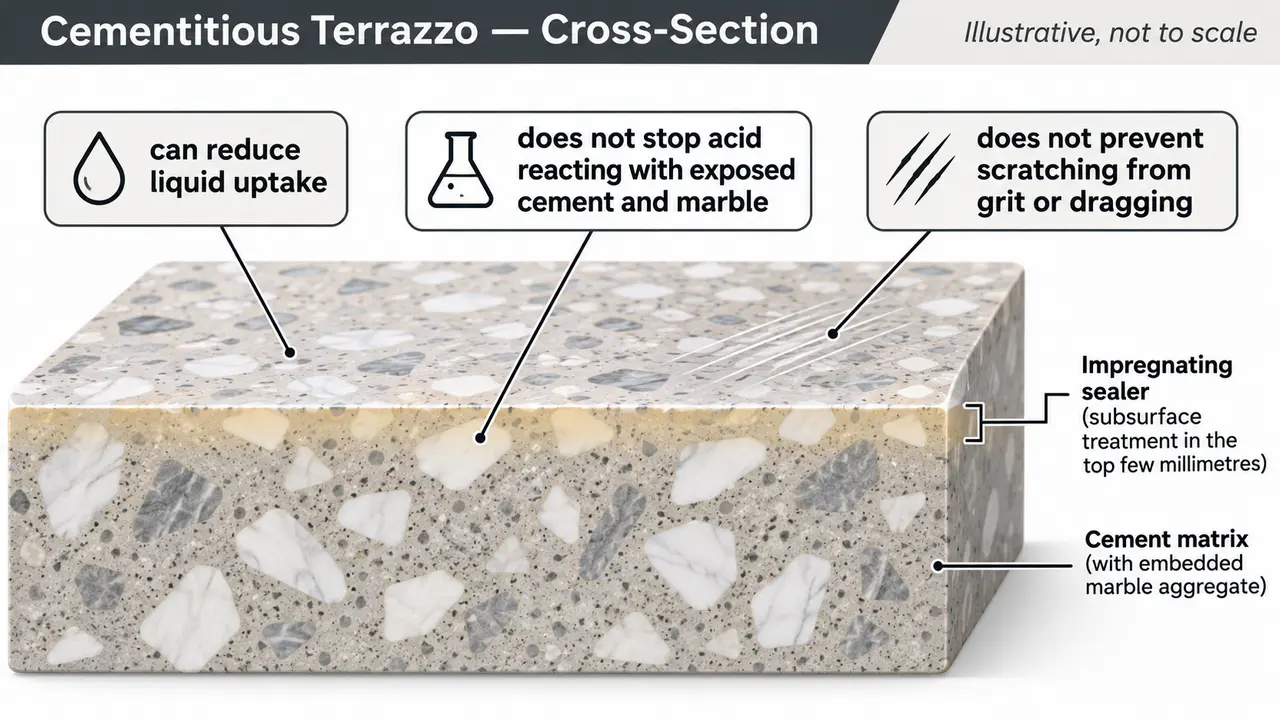
Blot spills promptly rather than letting liquid sit on porous or worn areas. Acidic foods and drinks can etch marble-containing terrazzo even when the floor has a protective treatment. The nature of a spill matters: a colour change and a dull or rough surface mark may require different assessments.
Why Sealing Does Not Make Terrazzo Damage-Proof
A compatible impregnating sealer may reduce liquid uptake and make maintenance easier without forming a substantial surface film. Its performance depends on the product, the terrazzo’s condition and correct application. It does not make the floor waterproof, acid-proof, scratch-proof or immune to staining.
Protection against absorption is different from protection against abrasion. Grit and furniture movement can still mark the surface, while acidic contamination may still cause etching. Existing topical coatings and waxes require different maintenance decisions from impregnating products; gloss alone does not identify the treatment.
If you are considering renewal, our guide on how often terrazzo should be sealed explains why the interval depends on the existing treatment, floor condition and use rather than a fixed calendar schedule.
When Dull Patches Need Professional Assessment
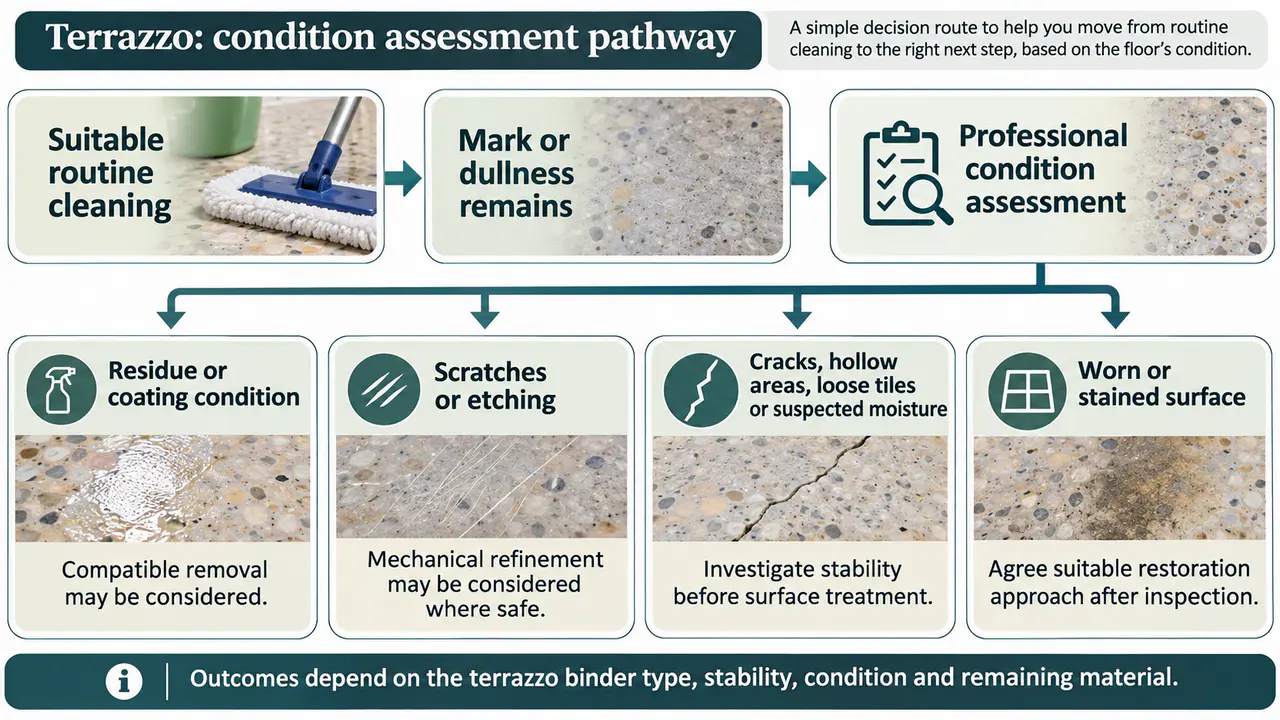
Marks that persist after suitable cleaning may be surface residue, absorbed contamination, scratches, etching, coating change or wear. Some conditions overlap. A patch that remains dull after cleaning does not automatically justify polishing, honing or grinding.
Check the Condition Before Choosing Treatment
- Clean cautiously with a compatible method and allow the area to dry.
- Compare colour, reflection and texture with the surrounding terrazzo in consistent light.
- Record changes such as roughness, scratches, persistent dark patches, cracks or a visible film, without assigning a cause from appearance alone.
- Seek specialist assessment if the mark persists, recurs or involves loose, cracked or deteriorating material.
Cleaning can remove soil; a coating may need a different treatment; physical wear may require assessed surface refinement. Mechanical work permanently removes material, so construction, stability and available surface thickness should be considered first. In particular, dark traffic lanes do not prove cement-binder degradation.
Before escalating domestic cleaning, read our guide to terrazzo deep-cleaning limitations. Unidentified old adhesive or loose material should not be scraped, sanded or ground without appropriate assessment.
How Often Should Terrazzo Be Deep Cleaned?
There is no single deep-cleaning schedule suitable for every terrazzo floor. A busy entrance may collect grit and contamination more quickly than a lightly used room, and existing coatings or damage can change what cleaning achieves.
Decide whether deeper cleaning is warranted from the actual condition, routine-care results and the type of contamination. If the floor remains clear and easy to maintain, periodic specialist treatment should not be treated as automatically necessary. If dullness, ingrained soil or coating changes persist after correct routine cleaning, identify the cause before choosing an intensive treatment.
Consistent grit removal, compatible damp cleaning, clean entrance mats and prompt spill care are more useful everyday priorities than repeatedly applying stronger chemicals or extra polish.
Pro Tip: We recommend these products for daily Terrazzo maintenance cleaning.
Disclosure: As an Amazon Associate, Abbey Floor Care earns from qualifying purchases at no extra cost to you.



David Allen — Abbey Floor Care
David Allen has worked with terrazzo and other hard flooring across the UK for more than 30 years through Abbey Floor Care. His guidance combines practical maintenance knowledge with an understanding of cement matrices, decorative aggregates and the conditions that affect long-term floor care.
Recent Posts:
We work throughout the country, just some of our work counties:
Copyright © 2026 Abbey Floor Care. Tile And Natural Stone Cleaning Consultants FAQ - Privacy Policy - Terms And Conditions
Abbey Floor Care is a participant in the Amazon Services LLC Associates Programme, an affiliate advertising programme designed to provide a means for websites to earn advertising fees by linking to Amazon.co.uk. As an Amazon Associate, we earn from qualifying purchases.