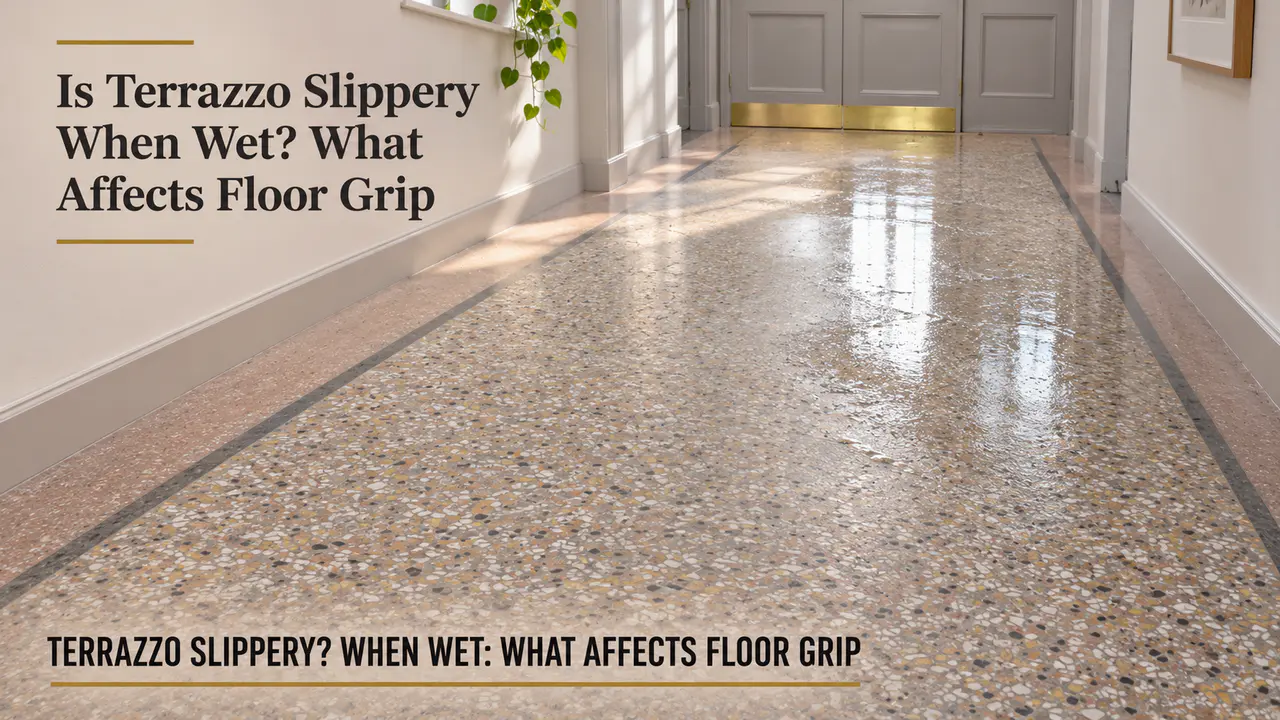
Terrazzo Slippery? When Wet: What Affects Floor Grip
Last Updated on November 17, 2026 by David
Is terrazzo slippery when wet? A smooth surface can lose grip because of water, residue, polish or a coating. That does not, by itself, mean the floor has permanent damage.
A Smooth Terrazzo Floor Can Feel Slippery Without Being Damaged
When a smooth terrazzo floor feels slippery underfoot, compare that sensation with the floor’s appearance and the surrounding surface before assuming damage. Slipperiness alone does not confirm terrazzo damage.
Cement-matrix terrazzo consists of a grey cement binder around decorative marble chips, and it does not have a single fixed performance level. UK domestic floors may be monolithic slabs in period properties, modular tiles from later installations, or traditional patterns with larger fragments. Each can present a different surface condition.
If the feel has changed but there is no visible wear, powdering or loss from the matrix, moisture or contamination is more likely than deterioration. Binder weakness is more concerning where there is also persistent dullness, rough patches or dark traffic lanes. That distinction separates a temporary wet-surface issue from a condition that needs specialist assessment.
Wet Footwear Loses Grip on a Smooth Surface
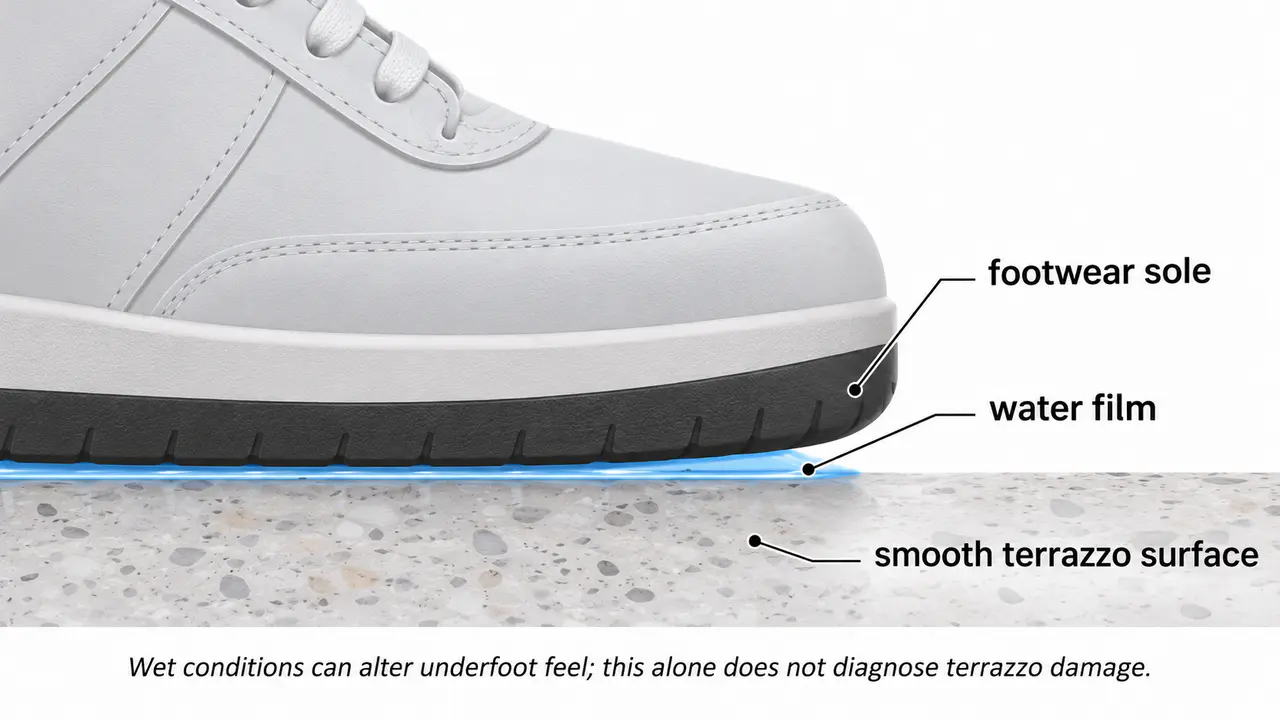
Water can sit between footwear and a smooth terrazzo surface. The same area may therefore feel secure when dry, yet less certain after wet weather or mopping. A thin water film changes the contact between the sole and the finish; it does not automatically show that the cement matrix has failed.
Water can reduce grip on a smooth surface without proving the terrazzo is damaged.
A dry-versus-wet comparison matters here. If a polished area loses traction only when wet, the surface interaction may have changed. If it feels poor in both conditions and is also rough or visibly worn, that points more towards a wider finish or substrate concern. Footwear tread, footfall and standing water all affect the result.
Check Where the Slippery Patches Appear
A single slippery patch can send the diagnosis in the wrong direction, so look at its position and pattern before changing the surface. Areas beside a doorway, along a kitchen route or within a recently treated zone may share a source that a widespread change would not.
A short diagnostic sequence helps separate localised contamination from a general finish issue:
- Locate each patch, then compare its shape with nearby doors, work areas and traffic routes.
- Review any recent changes to cleaning, dilution, polish or coatings.
- Check around the affected area for moisture entry, grease, soil and standing water.
- Compare both feel and appearance with an unaffected dry section.
Localised slickness after a product change often suggests residue or a surface film. Consistent wet behaviour across the floor may instead reflect the finish itself. A professional assessment can distinguish contamination from a broader condition without relying on appearance alone.
A High Shine Can Feel Less Secure Underfoot
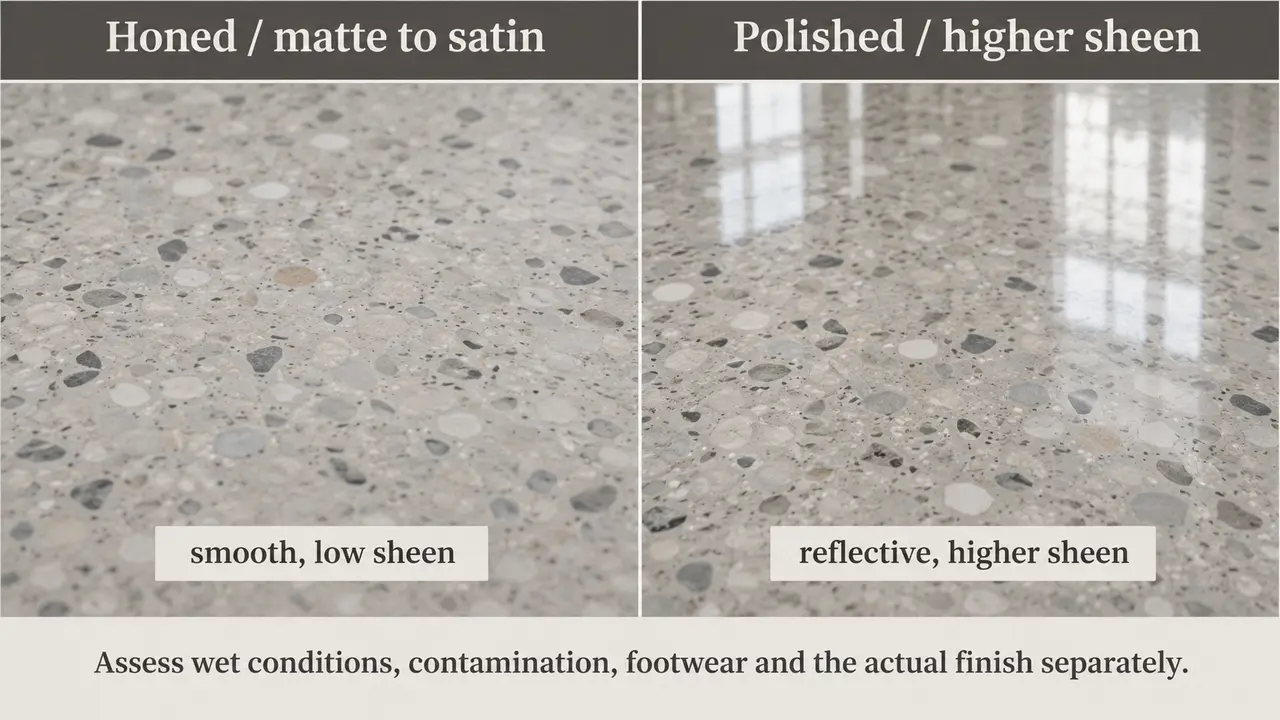
Polished terrazzo produces a reflective surface, and its wet feel can differ from that of a honed finish. A low-angle view is useful for judging the level of sheen. Honed terrazzo has a smooth, matte finish, whilst a mechanically polished surface presents the aggregate and matrix as one reflective plane under natural light.
Visual quality and suitability are separate considerations. A sitting room may accommodate a highly reflective finish, but an entrance exposed to rain needs closer thought around wet slip resistance, traction and regular footfall.
Cleaner Film Can Leave the Floor Slippery
A terrazzo floor can feel slick after mopping whilst still appearing clean. Detergent, grease and films left by repeated mopping may remain difficult to see under even lighting. Once wet, those residues can make the altered feel far more apparent and may mimic a sudden change in the matrix.
A pH-neutral stone cleaner supports acid-free, cement-safe routine maintenance where the dilution leaves a residue-free surface. The guidance on safe off-the-shelf terrazzo cleaners helps distinguish suitable products from chemistry that creates etching risk or residue buildup.
Slippery Film Can Remain After a Topical Coating
A topical coating becomes part of the immediate walking surface. A recently applied wax, polish or other film can therefore explain a change in traction without indicating sudden deterioration beneath it. Look for altered gloss, uneven wear, or a sticky-to-slick transition across the treated area.
Older surface films can trap contamination and wear at different rates, producing inconsistent sheen and localised grip. Timing is revealing: where traction changes after application, assess the coating condition before attributing the issue to the terrazzo itself.
Terrazzo Is Not Slip-Proof After a Topical Coating
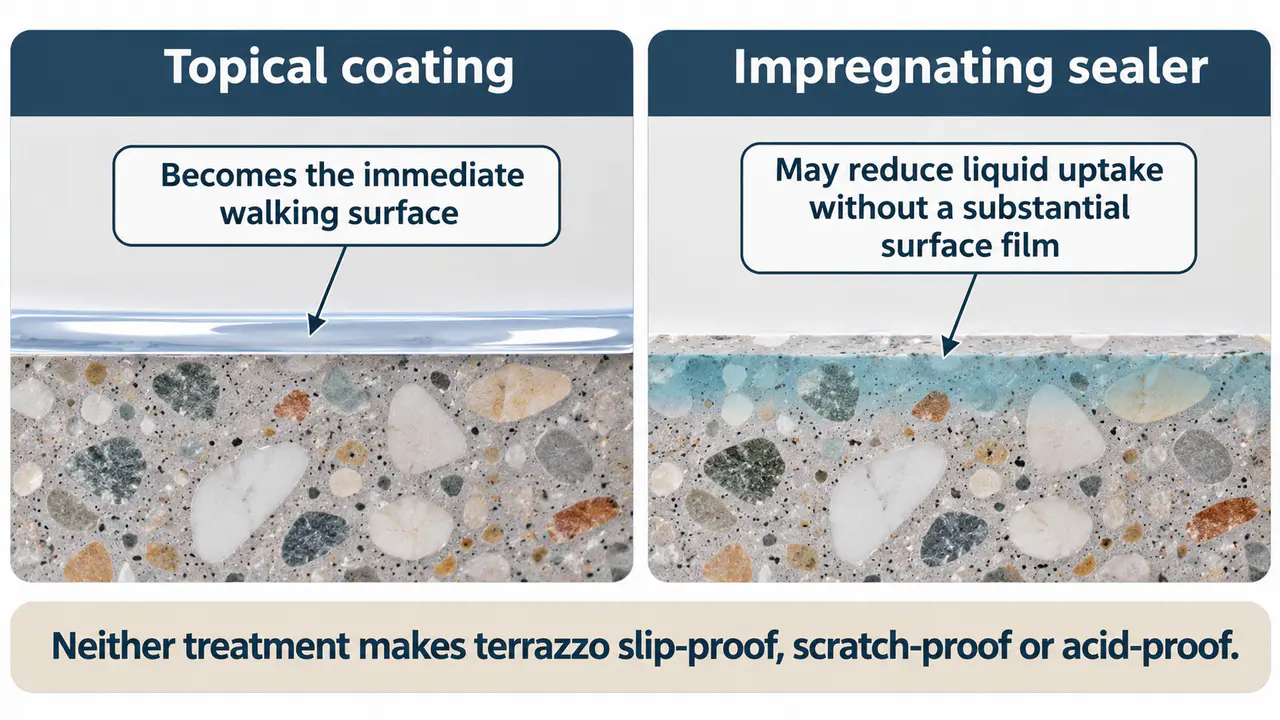
Assuming a sealed terrazzo floor is slip-proof can create a false sense of security. Protection against liquid absorption does not establish traction. A penetrating product may reduce liquid penetration, but grip still depends on the complete finish, surface profile, contamination level and wet conditions.
The proposed system should be assessed for the actual setting, including footwear, moisture exposure and footfall. Guidance on choosing wax or sealant for terrazzo helps separate absorption control from an anti-slip treatment decision.
Rainwater Makes Entrance Areas Higher Risk
Rainwater and grit make an entrance a changing surface condition, particularly over smooth polished areas. Slippery patches concentrated by doors after wet weather often result from tracked moisture and soil, rather than a uniform change across the whole floor.
Clean, suitable entrance matting reduces the water and abrasive grit brought indoors on footwear. Prompt removal of standing water also shortens the time that a water film remains in place. Comparison with an interior zone can show whether the entrance has the stronger pattern.
Hard water can leave mineral residue that changes how the surface feels after drying and rewetting. A risk assessment should therefore consider the doorway, mat condition, drainage, surface sheen and traffic pattern together, rather than judging safety from shine alone.
Busy Public Floors Need Measured Slip Checks
Publicly accessible terrazzo floors should not be assessed from appearance alone, or from broad claims about polished finishes. Workplaces, commercial buildings and schools need observation under normal moisture, footwear and footfall conditions, because a visual impression cannot represent the full risk.
A pendulum test value provides a measured reference for dynamic slip risk through a pendulum slip test using a 4S rubber slider and heel-strike simulation. BS 7976-2, HSE guidance and UKSRG interpretation can place wet slip potential within an appropriate slip resistance band. But PTV 36 should not be treated as a universal guarantee for every setting.
Specialists may also consider EN 16165, slider 96, a ramp test or DIN 51130 where the assessment calls for them. Barefoot testing, surface profile and micro-roughness can all affect interpretation, so the result should support a site-based risk assessment rather than replace it.
A Surface Change Can Be Permanent
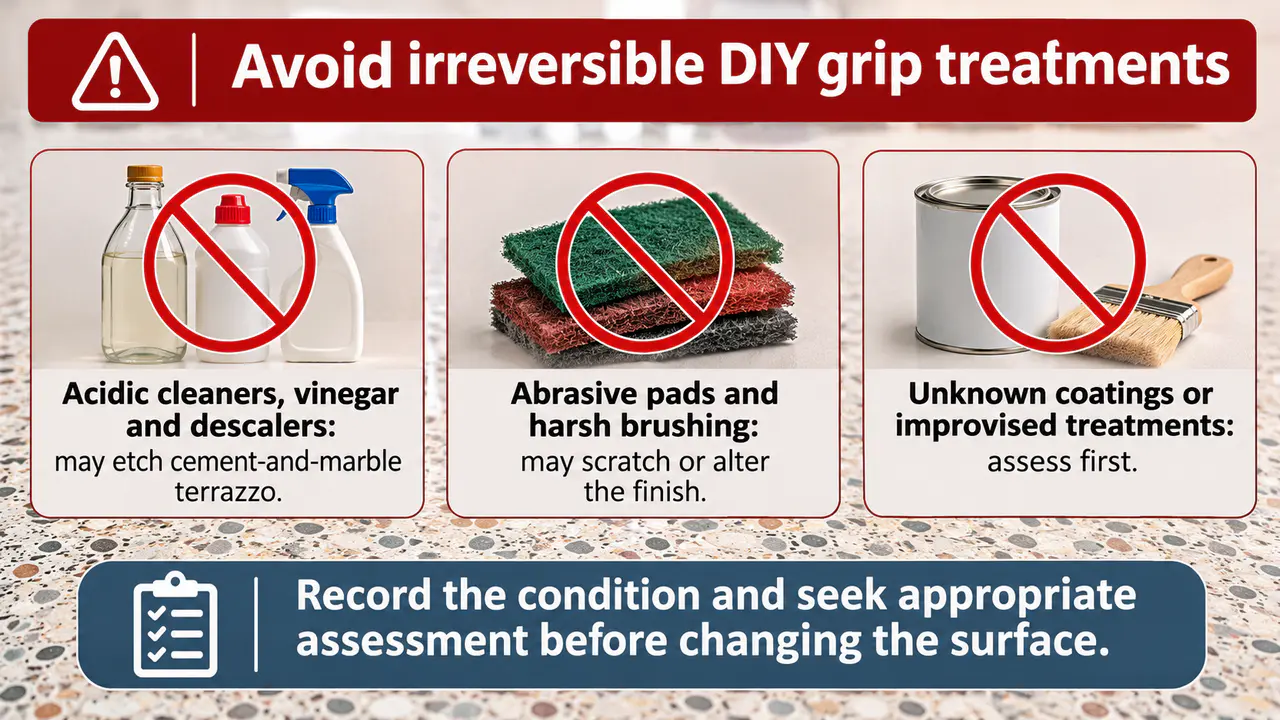
Attempts to create grip using abrasive pads, acidic chemicals or improvised treatments can permanently alter terrazzo before the cause is understood. Record the existing sheen, contamination pattern and aggregate condition before considering any corrective surface change.
Acid etching is the chemical dissolution of the cement matrix and acid-sensitive chips. A homeowner may notice pale dull marks, surface roughening or loosened decorative particles that remain after cleaning. Controlled mechanical assessment and, where appropriate, specialist resurfacing address the altered layer rather than adding further chemical exposure.
Uncontrolled abrasion removes material unevenly. It can leave scratches, inconsistent texture or a finish that performs differently from one area to the next. A specialist reviews the observed surface profile to establish whether the issue is residue, finish, wear or damage, because sanding without that diagnosis can worsen the actual condition.
Crazing is a fine network of surface micro-cracks caused by binder shrinkage, moisture loss or matrix stress. It can appear as fine lines across the cementitious surface and may indicate weakened surface integrity. Assessment establishes whether the cracks are superficial or connect with structural movement before any filling or refinishing decision is made.
Sudden temperature change causes thermal shock when high heat or steam makes the cement matrix and marble aggregate expand at different rates. Micro-cracking, sealant failure and bond breakage may follow. Improvised heat or steam treatments should not be used to alter grip.
Simple Habits Help Control Everyday Slip Risk
Everyday slip risk is easier to control when spills, grit and greasy contamination are dealt with where they collect, before they spread over the terrazzo surface. Prompt spill removal, alongside attention to changing wet or contaminated conditions, helps limit risk without changing the finish.
A sudden change in feel should lead to a review of recent cleaning, moisture or surface-product changes, rather than being accepted as normal use.
Pro Tip: We recommend these products for daily Terrazzo maintenance cleaning.

Fila Pro Floor Cleaner
|

LTP MPG Sealer H20
|

Vileda H2PrO Spin Mop System
|
Correct ongoing maintenance protects the cement matrix and decorative chips by limiting grit abrasion and residue accumulation.
Use suitable products and follow broader terrazzo flooring care and restoration guidance for related repair, maintenance and finish considerations.

David Allen — Abbey Floor Care
David Allen has diagnosed terrazzo wet-slip conditions across the UK for more than 30 years with Abbey Floor Care. His work separates water films, residue, coatings and cement-matrix deterioration, helping homeowners understand the specific condition before any permanent surface change is considered.
Recent Posts:
We work throughout the country, just some of our work counties:
Copyright © 2026 Abbey Floor Care. Tile And Natural Stone Cleaning Consultants FAQ - Privacy Policy - Terms And Conditions
Abbey Floor Care is a participant in the Amazon Services LLC Associates Programme, an affiliate advertising programme designed to provide a means for websites to earn advertising fees by linking to Amazon.co.uk. As an Amazon Associate, we earn from qualifying purchases.