Porcelain Tile Floor Never Looks Clean Enough
Last Updated on May 2, 2026 by David
Why porcelain tiles still look dull, streaky or dirty even after proper cleaning
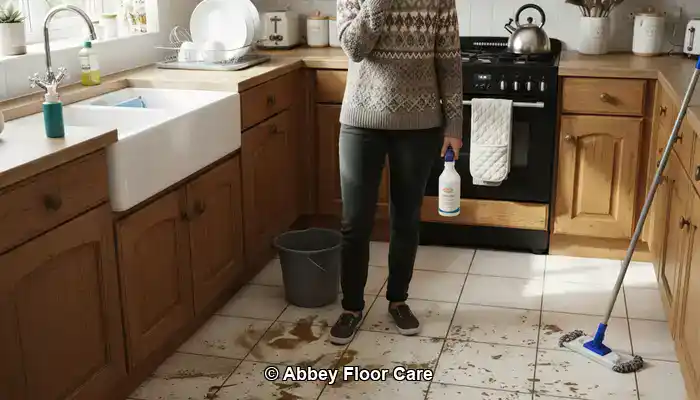
If porcelain still looks dull or smeary after a proper clean, the cause is almost always grout behaviour, surface residue, or finish response. Not tile failure. That distinction matters, because the floor you see is a system — tile faces, grout joints, surface texture, cleaning residues, installation films, and how light reflects across all of it.
Grout Darkening Changes How The Whole Floor Reads
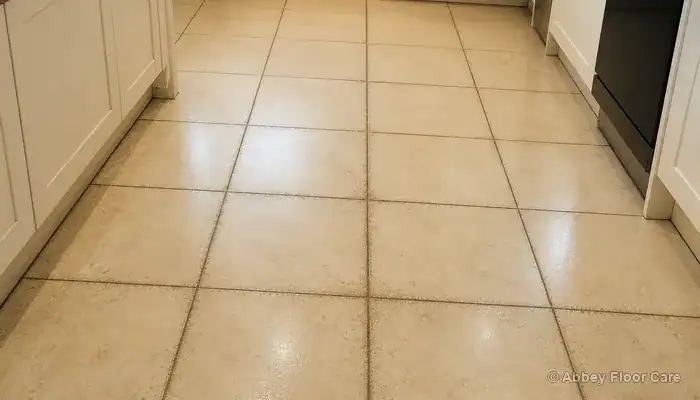
If your porcelain floor looks grubby along every joint, it’s usually the grout driving the problem. Cement-based grout contains connected pores that readily absorb dirty water, grease, detergent residue, and rinse slurry. The joints darken first. And they outline every tile.
That visual grid matters more than people expect. Even clean tiles can look tired when surrounded by uneven, darkened joints. The eye reads the whole installation as dirty, simply because of the contrast.
Mopping tends to make this worse. Dirty water is spread, then pushed into the joints, where it dries and builds up. Where grout is structurally sound but visually poor, the solution belongs to the grout — not the tile. The porcelain grout restoration case study shows how much impact that has. The key point is simple: the tile can be clean while the floor still looks dirty.
Residue Films Create Streaks On Dense Tile Faces
If you’re seeing cloudy streaks after drying, that’s usually a surface film rather than fresh soil. Detergent residue, minerals from hard water, diluted grease, or leftover cleaner can dry as a thin layer that interferes with light reflection.
Smooth and polished porcelain show this quickly. Even a slight film becomes visible under side light. The floor may feel perfectly clean underfoot — yet still look smeary. Very common in kitchens and bathrooms.
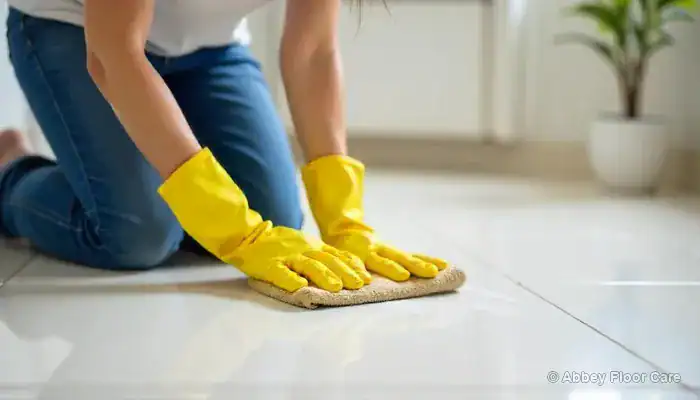
More cleaner doesn’t fix this. In fact, it often makes it worse. Residue builds layer on layer unless it’s properly removed, which is why cleaner choice and rinse behaviour matter. See modern cleaner safety for porcelain tiles for that detail. Ongoing maintenance — pH-neutral cleaning, grit removal, and correct timing for any protection — is what actually keeps the floor looking right.
Installation Haze Can Make New Porcelain Look Permanently Cloudy
If a new floor has never looked clean, the issue is often installation haze sitting above the surface. Polymer-modified grout residues leave a cloudy or slightly matt film, especially on darker tiles.
This is a defined defect. Fine cement particles and polymer binders remain on the surface after grouting. What you see is a persistent haze that doesn’t behave like normal dirt.
The important part — the tile hasn’t absorbed anything. The film is sitting on top. It hardens, then traps further contamination during everyday cleaning.
Factory Finish Controls How Porcelain Shows The Same Dirt
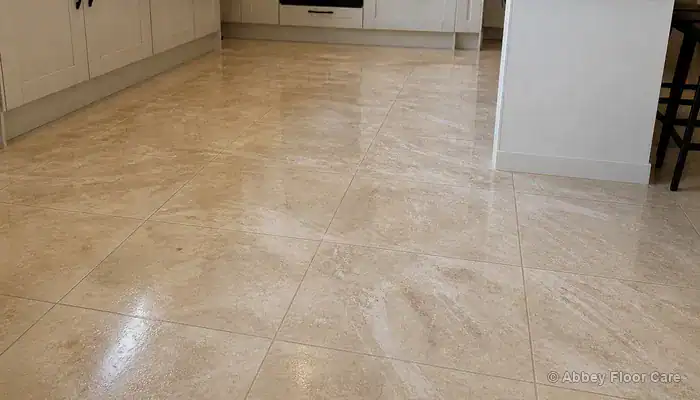
Two floors cleaned the same way can look completely different. The reason is the finish.
Matt porcelain tends to show drag marks as a flat grey cast. Textured porcelain holds soil in shallow recesses. Polished porcelain shows streaks and reduced clarity because reflection is part of the design.
And glazed surfaces need care. Abrasive pads can permanently mark them. Once that surface layer is affected, the change is no longer just dirt.
Polished Porcelain Dullness Is Not The Same As Dirt
If polished porcelain looks dull in traffic areas, it may not be contamination at all. Fine abrasion from grit and daily use reduces clarity, so light reflects less evenly.
This is where cleaning reaches a limit.
Porcelain burnishing refers to controlled clarity improvement on suitable polished surfaces. It’s not universal, and it doesn’t apply to all finishes, but it explains why a floor can stay dull even after thorough cleaning.
Sealer Mistakes Add Another Layer To The Diagnosis
If porcelain looks sticky, cloudy, or rapidly re-soils after being sealed, the surface may be holding product that shouldn’t be there. Dense porcelain generally doesn’t absorb sealer. It sits on top instead.
That creates a soil-catching film.
This is classed as sealer failure — either misapplication, breakdown, or rejection by the surface. The visible signs are tackiness, patchy shine, or uneven dullness. Where that’s the case, the next step is identifying the layer before doing anything else. The safest route is safe porcelain sealer stripping guidance, because tile and grout behave differently.
Why porcelain tiles never actually absorb dirt the way you think they do
Porcelain doesn’t absorb dirt in the way most people assume. Its fired body is dense and vitrified, so it resists absorption far more than the surrounding grout.
The confusion comes from what you’re actually looking at. A floor includes grout, texture, residue films, and installation materials. Not just the tile.
When a porcelain floor looks stained, the mark is usually sitting on the surface, caught in texture, held by grout, or trapped in a film above the tile.
Why some porcelain surfaces seem to hold dirt even when they feel smooth
Some porcelain surfaces hold residue in microscopic texture, even when they feel smooth. That texture can catch fine soil, cleaning residue, and mineral deposits.
Smooth-feeling porcelain can still hold residue in microscopic surface channels.
That’s why a tile can feel clean but still look dull from an angle. It’s not a thick layer — it’s light scatter caused by very fine contamination.
True micro-porous porcelain is rare but does exist. You’ll recognise it by persistent darkening that returns quickly after cleaning.
Why two porcelain floors cleaned the same way can look completely different
Different finishes behave differently. That’s the short version.
Matt porcelain tends to show drag marks and uneven drying. It can make harmless residue look like ingrained dirt.
Textured porcelain traps soil below the surface level. A mop cleans the high points but leaves contamination underneath.
Polished porcelain highlights everything — streaks, fine scuffs, reduced clarity. Because reflection is part of the finish, even minor changes become visible.
Same method. Different result.
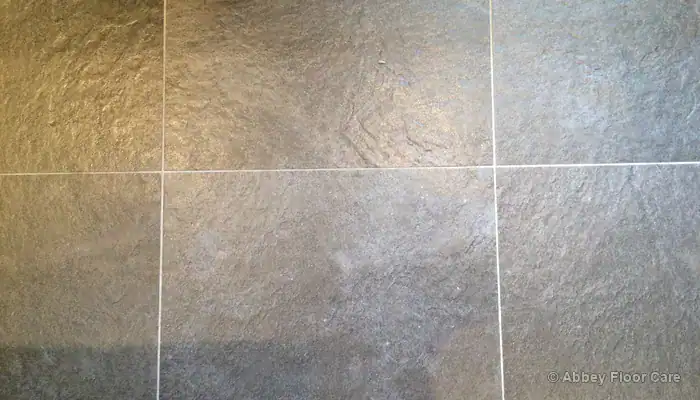
Why dirt spreads, settles or comes back depending on how your floor is built
If your porcelain tile looks clean in places but grey in others, contamination is moving through the system. Grout, texture, and residue films all play a role.
Grout is usually the weak point. It absorbs what the tile rejects.
Textured surfaces add a second holding area. Soil is dragged across the surface, then settles into low points where mopping doesn’t fully remove it.
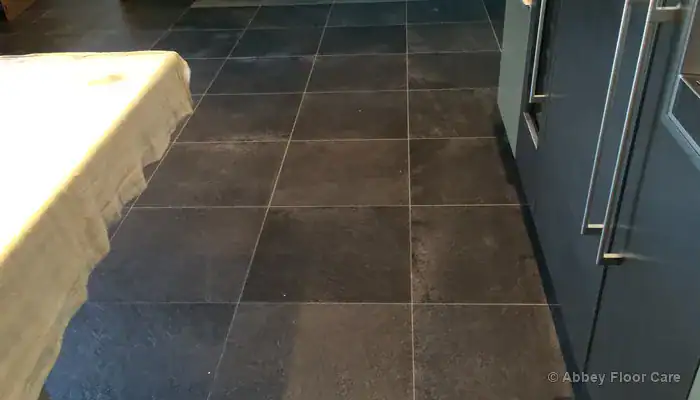
Why normal cleaning keeps making the floor look worse instead of better
Repeated mopping can make a floor look worse when contamination is being redistributed rather than removed.
The mechanism is straightforward. The mop lifts light soil, mixes it with cleaner, spreads it across the surface, pushes it into grout and texture, then leaves a thin film as it dries.
And that film builds over time.
Mopping often moves residue around instead of taking it off the floor.
Heavy detergents and washing-up liquid make this worse by leaving sticky residues. Where cleaner choice is the issue, porcelain cleaner and finish safety explains the chemistry behind it. Done properly, maintenance should reduce residue, not layer it.
Why sealing sometimes causes more problems than it solves on porcelain
Sealing dense porcelain often creates problems because the product can’t absorb. It sits on the surface instead.
That creates a film. And that film attracts soil.
Grout is different — it remains porous and can benefit from protection. But that doesn’t make sealing a blanket rule for porcelain.
If you’re seeing tackiness, cloudy patches, or rapid re-soiling after sealing, the issue is likely product sitting on the surface. In that case, porcelain tile resealing guidance helps separate what belongs on grout and what doesn’t belong on the tile at all.
Why haze, dullness and patchy colour keep appearing across the floor
These problems keep coming back when the visible symptom is treated instead of the underlying layer.
Grout haze is an installation residue. Residue films come from cleaning. Patchy colour often comes from grout condition rather than tile condition.
Each one needs separating before correction.
Traffic dulling on polished porcelain is another factor. That’s physical change, not removable dirt.
Where grout colour is inconsistent but structurally sound, resin-based colour treatment can restore the visual frame. The porcelain grout colour restoration evidence shows how much difference that makes.
Why the floor never stays looking clean for long after mopping
If your porcelain tile looks clean after mopping but dull again the next day, the underlying issue hasn’t been removed.
What you’re seeing is residue cycling, grout contamination, or texture holding soil below the surface.
Grit plays a part as well. On smooth finishes, it contributes to fine dulling over time. Combined with residue films, it accelerates the problem.
If the pattern keeps repeating, the issue has moved beyond routine cleaning. It needs proper diagnosis.
Why some problems will not improve no matter how many times you clean
Cleaning has limits. Once the issue is no longer loose soil, more cleaning won’t change the result.
The useful checks are straightforward:
- Streaks only appear after drying — that’s residue film.
- Grout darkens again quickly — that’s absorption.
- Polished areas stay dull — that’s surface wear.
- Cloudiness has been there since installation — that’s haze.
At that point, the question isn’t how often you clean. It’s what you’re actually looking at.
Specialist porcelain restoration guidance explains where cleaning stops and correction begins.
Where to go next once you understand what your porcelain floor is showing you
The next step depends on the symptom. Grout darkening, residue haze, sealer film, polished dullness — they each belong to a different route.
Grout issues lead to restoration. Sealer film leads to stripping and reassessment. Cleaner streaking leads to maintenance correction. Surface dullness leads to finish-specific evaluation.
Structural issues are separate again. Cracked joints, loose tiles, chipped edges — these point to movement or impact, not surface contamination. In those cases, porcelain tile repair guidance is the relevant path.
Match the symptom to the route. That’s what keeps the diagnosis clear.

David Allen — Abbey Floor Care
David Allen has worked with porcelain, ceramic and stone floors for over 30 years through Abbey Floor Care, diagnosing why floors look dull, streaky or hard to clean before any treatment route is chosen. His approach focuses on finish identification, grout behaviour and residue diagnosis, helping homeowners understand whether the issue is soil, haze, sealer film, grout deterioration or surface dulling.
Recent Posts:
We work throughout the country, just some of our work counties:
Copyright © 2026 Abbey Floor Care. Tile And Natural Stone Cleaning Consultants FAQ - Privacy Policy - Terms And Conditions
Abbey Floor Care is a participant in the Amazon Services LLC Associates Programme, an affiliate advertising programme designed to provide a means for websites to earn advertising fees by linking to Amazon.co.uk. As an Amazon Associate, we earn from qualifying purchases.