Porcelain Tile Floors Suddenly Turn Patchy
Last Updated on May 23, 2026 by David
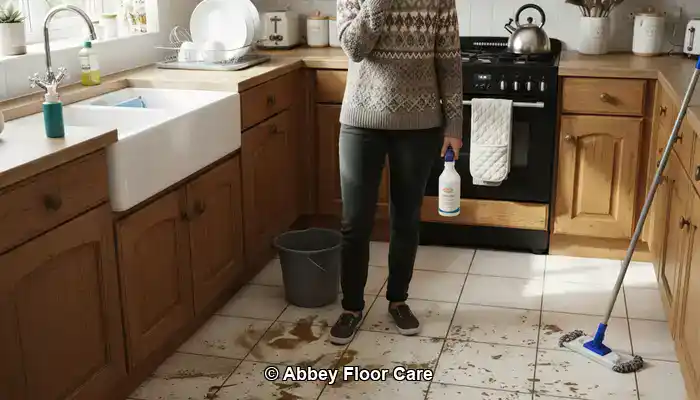
Porcelain floors often look low-maintenance for years and then suddenly start appearing patchy, dull or strangely difficult to clean evenly. That catches a lot of homeowners out. Porcelain is highly vitrified with extremely low porosity, so contamination usually sits on the surface or within grout lines rather than soaking into the tile body itself.
Once you understand how different porcelain finishes behave over time, it becomes much easier to recognise why some floors stay clear for decades whilst others quickly develop haze, residue and uneven appearance.
Why porcelain floors change slowly until the surface suddenly looks worn and uneven
Patchy Appearance Across Busy Areas
If your porcelain tile shows dull traffic lanes, cloudy patches or uneven reflection after cleaning, the surface condition has already started changing. Floors often look perfectly normal in low-use areas whilst entrances, kitchens and hallways slowly develop visible contrast because contamination builds gradually across the surface instead of appearing overnight.
In modern UK homes, porcelain floors usually start showing these changes where foot traffic is heaviest. Large format tiles with minimal grout lines can disguise wear patterns for quite a while because the uninterrupted surface reflects light evenly. But once residue starts accumulating, the difference between cleaner and more contaminated areas becomes obvious very quickly. We see this regularly in kitchens with underfloor heating because warmed surfaces speed up evaporation and leave mineral films behind after mopping.
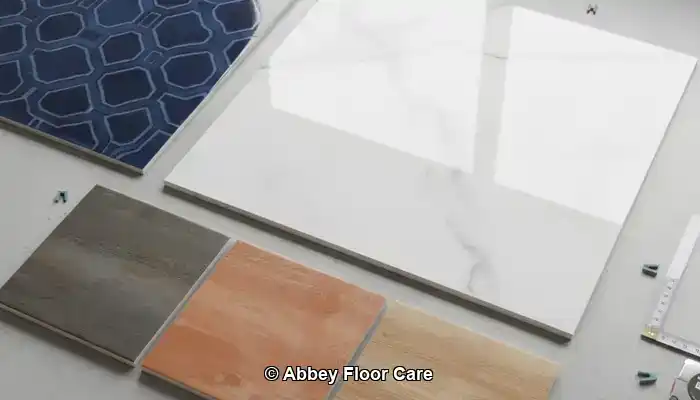
Patchiness also causes confusion because porcelain behaves differently depending on the factory finish. Matt surfaces scatter light naturally, polished finishes reflect sharply, and textured finishes trap contamination inside tiny surface variations. Two porcelain floors in the same property can age in completely different ways even when maintained with identical products.
Many homeowners only notice the problem properly after resealing or deep cleaning because partial residue removal makes the contrast stand out more. Floors treated repeatedly with surface sealers often develop a satin appearance in some areas and a cloudy or hazy finish elsewhere because older coating layers dry unevenly across the tile surface. Initially, reducing the soil improves the appearance. Then the surface coating itself starts attracting contamination and the floor dulls again.
Cloudy Residue That Returns After Cleaning
If your porcelain floor dries with streaks or cloudy patches, the problem is usually residue sitting on the surface rather than dirt trapped inside the tile body. Many floors appear clean whilst wet and then turn dull again after drying because detergent films and installation residue only become visible once the moisture evaporates.
Polymer bonding from modern grout products is one of the most common causes on recently installed floors. Installation residue creates a tenacious film that survives ordinary mopping, especially on polished porcelain with strong reflective clarity. In natural daylight, the surface clouding often looks worse because low-angle light exposes uneven film build-up across the floor.
Residue problems also increase when incorrect cleaning chemistry is used repeatedly. High-alkaline cleaner products designed for degreasing and deep cleaning can emulsify organic soil very effectively, but without proper extraction they often leave surfactants behind on dense porcelain surfaces. Biological contamination products, mould removers and kitchen degreasers frequently create this cycle because loosened soil ends up spread across the floor rather than fully removed.
Transit coatings from manufacturing and transport can contribute as well. Some imported porcelain arrives with a temporary wax coating designed to protect the porcelain surface during delivery and installation. Once installation residue combines with this wax layer, the floor becomes dull, patchy and difficult to clean evenly unless the coating is fully removed. At that stage, the floor normally needs controlled extraction rather than another layer of sealer.
Large-format porcelain installations are particularly vulnerable because minimal grout lines reduce visual interruption and make every streak mark stand out. A professionally restored and correctly sealed floor is usually far easier to clean and maintain because contamination is no longer spreading across residue films during routine mopping.
Darkening Around Grout Lines
If your grout lines keep darkening after mopping, the discolouration usually comes from contamination sitting within the joint material rather than the porcelain itself. Light-coloured tiles beside dark grout can also develop visible colour bleeding when excess pigment and installation residue spread across the surface during cleaning.
Modern cement-based grout remains more absorbent than the surrounding porcelain tile. Soil absorption inside grout joints creates gradual staining because grease, moisture and detergent residue collect inside microscopic voids over time. Bathrooms and utility rooms show this especially clearly because repeated moisture exposure accelerates contamination and scale formation.
Dark grout beside pale tile surfaces creates additional contrast problems because residue movement becomes highly visible under kitchen lighting and daylight reflection. Homeowners often assume the tile is damaged when the issue actually relates to contamination trapped inside the joint material. Floors affected by colour bleeding frequently regain clarity once residue films are removed and the grout is protected properly.
Epoxy grout behaves differently because the resin-based structure creates a non-porous finish and waterproof barrier around the joint. However, epoxy grout residue can leave a stubborn haze across porcelain tiles after installation if manufacturer removal instructions are ignored. Dedicated cleaner products are often required because the residue bonds tightly to the surface during curing.
Uneven Shine And Optical Clarity Loss
If your polished porcelain reflects light unevenly, the problem is usually connected to surface dullness and residue accumulation rather than permanent structural damage. Factory polish on porcelain is created during manufacture through mechanical refinement, so changes in optical clarity are normally caused by what is sitting on the surface rather than changes inside the tile.
Traffic wear gradually creates micro-abrasion across busy areas, especially where grit is carried in from outdoors. Optical clarity loss becomes far more noticeable under direct lighting because reflective surfaces scatter light unevenly across worn sections. That is why kitchens and hallways often look dramatically worse at night once spotlights expose every dull patch.
Some polished porcelain floors can regain appearance through ultra-fine refinement and gloss restoration techniques designed specifically for factory-finished surfaces. Diamond burnishing systems using ultra-fine grit pads improve surface polish and reflective clarity without altering the tile structure itself. In my experience, burnishing-eligible polished porcelain often shows measurable gloss improvement once residue is removed and controlled refinement is carried out properly.
Correct maintenance becomes critical once a reflective floor starts dulling because repeated aggressive cleaning usually makes the problem worse rather than better. pH-neutral tile cleaner products with mild surfactants and residue-free formulations maintain optical clarity far more effectively during routine cleaning because they preserve pH balance and avoid unnecessary film build-up. Practical maintenance routines for difficult porcelain floors are discussed in why ceramic and porcelain floors often look dirty even when they are clean, particularly where repeated mopping keeps making the appearance worse.
Textured Surfaces That Trap Soil
If your textured porcelain never looks completely clean, contamination is usually sitting inside the high-low surface pattern rather than inside the tile body itself. Anti-slip finishes and heavily textured surfaces improve grip in wet rooms and entrances, but they also trap grease, residue and mineral films far more aggressively than smooth porcelain.
Textured porcelain always needs individual assessment because some finishes contain deep grooves that physically retain contamination after ordinary mopping. Soil trapping becomes especially obvious on outdoor porcelain and riven-effect surfaces exposed to leaf tannins, organic staining and hard water deposits. Wood tannins from nearby trees regularly create stubborn marking because rainwater spreads the staining across the textured surface before drying.
Brush-in jointing compound residue is another common issue on external porcelain installations. Congested texture patterns trap grout and installation residue inside low points, leaving behind a hazy appearance that survives routine cleaning. The floor may look cleaner whilst wet and then become patchy again after drying because residue remains below the visible surface.
Mechanical agitation usually becomes far more important on textured finishes because ordinary mops cannot reach deep recesses consistently. Silicon carbide brush systems with heavy-duty bristle action remove contamination from deep grooves far more effectively than flat cleaning pads because the agitation reaches inside textured patterns without damaging the tile finish.
Floors affected by this kind of contamination normally improve dramatically after correct cleaning and extraction because the original texture becomes visible again instead of being masked by residue. Once trapped contamination is removed properly, the surface stays cleaner for longer and routine maintenance becomes much easier.
Why porcelain reacts differently from ceramic and natural stone over time
Porcelain stays resistant for much longer because the surface is denser and less absorbent than ceramic or natural stone. The manufacturing process creates a vitrified body with extremely low water absorption, meaning contamination usually remains on the surface rather than soaking deeply into the tile structure.
Ceramic tiles normally contain a softer and more porous body beneath the glaze, so wear or surface damage can expose absorbent material underneath. Porcelain tiles are fired at higher temperatures, creating a harder and more uniform composition that resists staining and moisture movement far more effectively.
Natural stone surfaces behave differently again because their mineral structure often contains genuine porosity and interconnected micro-pores. Porcelain does not react in the same way, which is why sealing advice borrowed from stone restoration frequently becomes misleading on vitrified floor tiles. The distinction between porcelain and mineral-based flooring materials is explained further in porcelain vs natural stone flooring in Edinburgh, especially where maintenance expectations become confused.
Why some porcelain tiles absorb marks whilst others stay resistant for years
Repeatedly sealing resistant porcelain surfaces often creates more residue problems instead of preventing them. Fully vitrified porcelain with a dense body and minimal surface porosity rarely benefits from mandatory protection because spills and contamination cannot penetrate easily into the tile structure.
Some polished finishes behave differently because the factory refinement process can expose microscopic openings across the surface. These micro-pores slightly increase absorption risk, particularly on lighter polished tiles where oils and dark liquids become visible more quickly. Penetrating protection products are occasionally used on these surfaces to reduce absorption and create a water repellent barrier without leaving a visible coating.
Microscopic surface openings determine whether porcelain absorbs contamination or resists it.
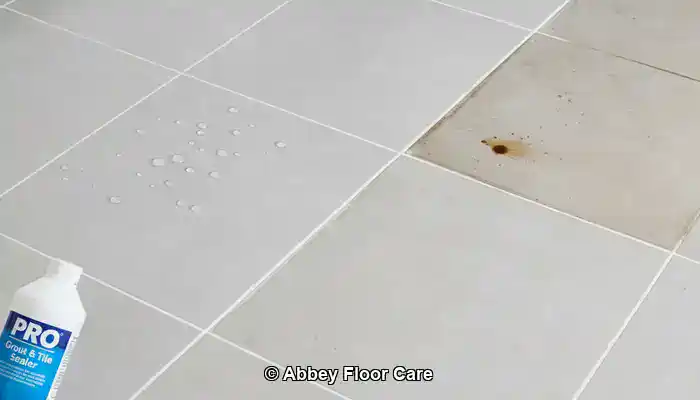
Porosity testing is usually more reliable than visual judgement alone. A damp sponge, water droplets or marker pen applied to an offcut can sometimes reveal whether moisture beads on the surface or slowly absorbs over time. Manufacturer guidance matters as well because some nano-sealed porcelain products already contain factory-applied protection from the manufacturing process.
Why sealing helps certain porcelain floors but causes problems on others
Surface sealers behave very differently depending on whether the porcelain surface can actually receive protection. Dense vitrified tiles with almost no absorption often reject coatings completely, leaving residue, streak marks and rapid re-soiling across the floor surface after drying.
Polished porcelain sometimes benefits from light penetrating protection because the refined surface may contain slight micro-porosity after factory finishing. Water-based porcelain sealer products are generally preferred because they cope better with residual moisture and reduce the risk of heavy surface films on dense surfaces.
Textured porcelain presents a different challenge because deep surface patterns trap soil aggressively. Satin-finish topical sealer products are occasionally used to reduce contamination build-up and improve maintenance on heavily textured finishes, particularly where wet areas require additional non-slip protection.
Fully vitrified porcelain normally requires no sealing at all because the non-porous surface already resists staining naturally. Polyurethane topical sealer and acrylic coatings designed for dense surfaces can create bonding problems when applied unnecessarily, especially on floors exposed to heavy traffic and frequent wet cleaning.
Why dirt keeps returning no matter how often the floor is cleaned
If your porcelain tile keeps looking dirty again shortly after mopping, contamination is usually cycling across the surface rather than soaking into the tile. Residue films trap fresh dirt after every clean because the floor never fully dries residue-free between maintenance cycles.
Dark grout beside light tile surfaces often exaggerates the problem because colour bleeding and grout staining become highly visible under kitchen lighting. Cement-based joints absorb contamination more easily than porcelain, so repeated washing can spread soil across the floor whilst leaving the joint material darker after drying.
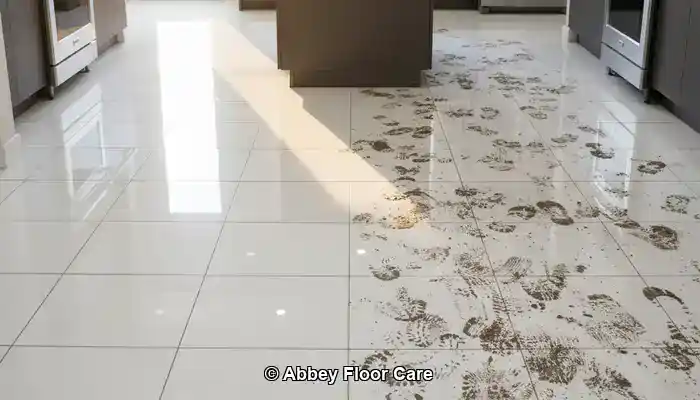
Textured finishes make the situation worse because grease and detergent films settle inside shallow recesses that ordinary mops cannot reach properly. The floor often improves significantly after professional extraction because the contamination is removed instead of redistributed. Once residue build-up is controlled correctly, porcelain surfaces become much simpler to maintain consistently.
Why strong cleaning products often make porcelain floors harder to maintain
Aggressive cleaning chemicals gradually shorten the life of grout protection and increase surface dullness on porcelain floors. High-alkaline cleaner products use surfactants, emulsification and alkaline pH chemistry to break down organic soil and biological contamination, but repeated exposure often leaves sticky films behind after deep cleaning.
Strong degreasing products also accelerate sealer degradation around grout joints because repeated chemical exposure weakens protective barriers over time. Protection loss increases contamination ingress around the edges of joints and textured areas, particularly where maintenance relies on heavy detergent use instead of proper extraction.
Stronger cleaning chemistry often increases residue and dullness instead of removing it.
Acidic cleaner products create different problems when used unnecessarily. Acidic pH chemistry removes mineral films, calcium deposits and limescale effectively in wet areas with hard water, but repeated use across ordinary porcelain floors can disturb grout surfaces and encourage uneven appearance. Daily maintenance works best with pH-neutral tile cleaner products because mild surfactants clean effectively without leaving heavy residue or increasing long-term dullness.
Why some porcelain floors should never be sealed again once residue builds up
If your porcelain floor develops cloudy residue after sealing, the surface may never have needed protection in the first place. Dense vitrified porcelain with low absorption often cannot accept additional coating layers properly, so new products dry across the surface instead of bonding correctly.
Non-Receptive Surfaces
Factory-finished porcelain usually relies on its own dense surface structure for stain resistance. Additional coatings can trap contamination beneath the film and create rapid re-soiling because grease and detergent residue bond to the surface layer instead of being removed during cleaning.
Textured And Micro-Porous Finishes
Some textured and lightly absorbent surfaces behave differently because small surface openings increase contamination retention. Penetrating protection products may occasionally reduce absorption on these finishes, particularly where wet areas or outdoor installations experience heavy contamination and colour staining.
Grout Protection Versus Tile Protection
Grout lines often benefit from protection even when the tile itself does not. Topical grout sealer products create a surface barrier through quick spray application, whilst epoxy grout colourant systems provide colour restoration and joint protection through a durable waterproof coating. Once the correct distinction is made between protecting grout and coating the porcelain surface itself, the overall appearance of the floor usually improves dramatically.
Why cloudy patches and grout haze keep returning after treatment
Polymer grout haze creates a bonded surface film that survives ordinary cleaning and returns as cloudy patches after drying. Installation residue left behind after grouting often forms a tenacious film across porcelain tiles because polymer bonding increases adhesion during curing.
Failed coating layers create similar problems because residue lock-in prevents proper extraction during maintenance. Surface clouding becomes especially visible on polished floors and large format porcelain because uninterrupted reflective areas expose every streak and patch once daylight reaches the floor.
Incomplete extraction allows bonded residue to spread back across the surface.
Two-stage removal methods are often required where haze formation combines with older coating build-up. Alkaline stripper products use polymer dissolution and chemical stripping to break down adhesive residue and surface films during Stage 1 treatment, whilst acidic gel cleaner products use controlled dwell and surface adhesion to target remaining grout haze and limescale removal. Floors treated correctly usually regain clarity and become much easier to maintain because residue is removed rather than redistributed.
Why routine maintenance controls how long porcelain floors keep their finish
If your porcelain tile loses clarity faster in busy walkways, grit and residue are accelerating surface wear. Dry soil particles create abrasion under foot traffic, particularly near entrances where contamination is repeatedly walked across reflective surfaces throughout the day.
Correct maintenance protects appearance because residue-free cleaning prevents film build-up across the tile surface. pH-neutral maintenance, regular grit removal before wet mopping and controlled resealing intervals around grout lines all reduce contamination retention significantly over time. Crucially, correct ongoing maintenance is the single most important factor in extending the floor’s usable life.
Wet areas need additional attention because hard water leaves mineral deposits and white residue after evaporation dries on the surface. Daily shower spray products help with soap scum prevention and mineral control because light spray application limits build-up before heavy residue layers develop. Maintenance advice for difficult porcelain floors is covered in will modern cleaners damage the finish on porcelain tiles, especially where routine products are gradually affecting surface appearance.
Why home cleaning reaches a point where the floor stops improving
Repeatedly increasing detergent strength usually means the floor has moved beyond routine cleaning and needs proper diagnosis instead. Floors affected by residue build-up, grout contamination or coating failure often look temporarily cleaner whilst wet and then turn dull again once the surface dries.
Different conditions produce different visual patterns, which is why random product changes rarely solve the underlying issue. Surface films usually create streaking and cloudy reflection, whilst contaminated grout produces localised darkening around tile edges and joints.
After cleaning and drying, a few simple observations often reveal whether the problem relates to contamination or failed protection:
- Place clean water droplets on several areas of the floor.
- Observe whether the water beads evenly or darkens certain sections.
- Check whether dull patches disappear temporarily whilst wet and return after drying.
- Look for residue lines around grout joints and textured areas.
Uneven absorption often indicates protection loss around grout lines rather than inside the porcelain itself. Pendulum slip test evidence also becomes important on heavily treated floors because shiny effect coatings and incorrect sealant layers can alter slip resistance in wet conditions without improving maintenance performance.
Why correct porcelain advice prevents expensive sealing and maintenance mistakes
Incorrect porcelain advice usually creates avoidable residue problems long before the tile itself starts failing. Generic recommendations borrowed from ceramic tiles and waterproofing systems often encourage unnecessary coating products on surfaces that already resist staining naturally.
Correct guidance depends on identifying the exact finish type first. Full-body porcelain with through-body colour and uniform composition behaves differently from single-body porcelain with a surface colour layer, whilst textured finishes require different maintenance decisions again because contamination retention varies dramatically between surface patterns.
Advice about restoration also needs realistic context because porcelain floors respond differently from absorbent materials. Factory-finished reflective surfaces may benefit from controlled gloss restoration and ultra-fine refinement, but appearance improvement normally comes from residue removal, correct cleaning chemistry and accurate maintenance instead of heavy surface alteration.
Reliable information becomes particularly important before resealing because incorrect products often create the very problems homeowners are trying to avoid. Detailed guidance about difficult porcelain maintenance and recurring residue issues is explored further in why porcelain tiles look dirty, dull or hard to clean, especially where previous treatments have already complicated the surface condition.
David Allen has more than 30 years of experience restoring and maintaining porcelain tile floors across the UK through :contentReference[oaicite:0]{index=0}. His work focuses on explaining how factory finishes, grout contamination and incorrect sealing products affect long-term appearance, maintenance and surface clarity so homeowners can avoid expensive treatment mistakes.
Recent Posts:
We work throughout the country, just some of our work counties:
Copyright © 2026 Abbey Floor Care. Tile And Natural Stone Cleaning Consultants FAQ - Privacy Policy - Terms And Conditions
Abbey Floor Care is a participant in the Amazon Services LLC Associates Programme, an affiliate advertising programme designed to provide a means for websites to earn advertising fees by linking to Amazon.co.uk. As an Amazon Associate, we earn from qualifying purchases.