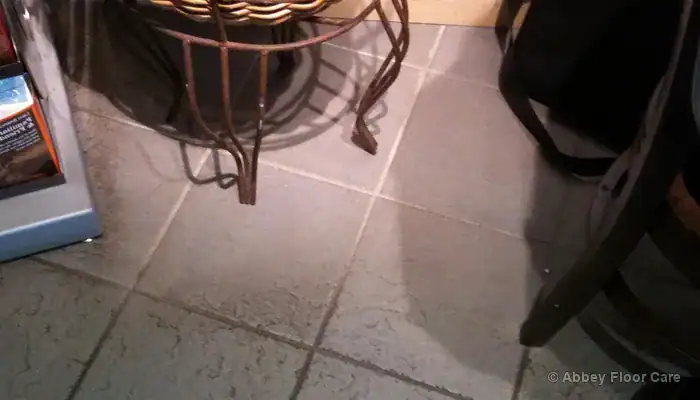
Restoring Grout Floors Starts With The Joints
Grout that darkens, turns patchy, or looks dirty again soon after cleaning is usually telling you something about the joint itself, not the tile. The tile may release soil, but the grout is taking in moisture, residues, body oils, grease, and fine dirt into a weaker, more open structure. Once you recognise that behaviour, the difference between routine soiling, deeper contamination, surface wear, failed protection, and when to involve a specialist becomes far easier to read.
Use these links to match your grout problem to the right explanation.
Why grout darkens, turns patchy, and never looks clean for long
If your grout keeps turning dark, patchy, or grubby soon after cleaning, the issue is usually sitting inside the joints rather than on the tile face. Tiles are denser and tend to release soil easily. Grout doesn’t. It’s intentionally more absorbent and mechanically weaker, which is why it shows wear, residue, and contamination first.
Visible Darkening After Cleaning
If grout dries darker than the surrounding tile, it’s holding something the tile is not. Water, dissolved detergent, body oils, cooking grease, soap residue, and fine soil move into small internal pathways within the grout. It may look brighter while wet, but as it dries, that contamination shows itself again.
Cement-based grout is not a sealed barrier. It’s a porous jointing material designed to fill gaps and accommodate slight movement. That flexibility is useful—but it also allows contamination to sit within the structure long before the tile surface shows any wear.
Internal Absorption And Drying Patterns
If certain grout lines consistently look worse than others, moisture movement is usually involved. Liquid doesn’t just sit on the surface—it’s drawn inward through connected voids. That capillary action explains why darkening can travel along a joint or remain visible even when nearby tiles appear clean.
Hard water, soap residues, and repeated wet mopping all leave material behind as moisture evaporates. Over time, especially in kitchens, bathrooms, and hallways, that cycle repeats. You see dullness, greying, brown staining, or uneven colour. The real issue is how the grout handles moisture and what it leaves behind.
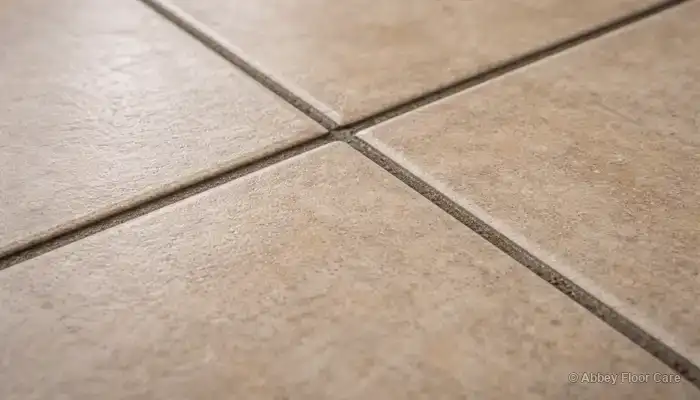
Residue That Locks New Dirt Into The Joint
If grout looks clean straight after mopping but dull again within days, residue is likely drying inside the joint. Detergents and surfactants can leave a thin, sticky film within the pore structure. That film attracts fresh dirt. And the cycle repeats.
It’s often mistaken for poor cleaning habits. In reality, it’s material behaviour. As grout becomes more absorbent, it holds more residue below the surface. A detailed safety discussion belongs on a dedicated guide such as safe grout cleaning mistakes to avoid, because the wrong product choice can accelerate this cycle rather than stop it.
Long-Term Change In The Grout Surface
If grout once cleaned well but now seems permanently grubby, the surface itself may have changed. The densest outer layer of cured grout slows absorption. Once that layer is worn away—through abrasion, acidic cleaners, bleach, poor installation washing, or repeated harsh scrubbing—the exposed material underneath becomes far more absorbent.
The improvement comes when the treatment matches the condition. Correct intervention targets what’s happening inside the grout, not just what you can see on the surface. And once restored and properly protected, the floor becomes much easier to maintain.
Why grout behaves differently from the tiles around it
Grout absorbs moisture and soil differently because it’s softer, more open, and more exposed. Dense ceramic, porcelain, or stone tiles tend to shed water. The grout line, by contrast, acts almost like a collection channel between them. Same floor, same cleaning routine—very different results.
Cement-based grout forms a hardened matrix of cement, aggregate, pigment, and water. Within that structure are fine internal voids. They allow for slight movement across the installation. But they also allow moisture, dissolved minerals, cleaning residues, and fine soil to settle below the surface.
The recognition point is straightforward: when the tile wipes clean but the grout remains dull or darker, the joint is behaving exactly as designed. This isn’t tile failure—it’s grout doing its job, just showing its weakness over time.
Why grout suddenly starts absorbing dirt much faster than before
What we often see here is a change in surface condition. Repeated scrubbing or aggressive cleaning removes the dense top layer that once slowed absorption. The shift can feel sudden. Grout that used to clean reasonably well starts looking rougher, darker, and dirtier much faster.
That thin upper layer matters. Once it’s gone, the underlying structure is more open. The visible signs are a sandy texture, uneven drying, and rapid re-soiling. More scrubbing doesn’t fix it—it accelerates it.
Once the dense top layer is gone, grout absorbs soil much faster.
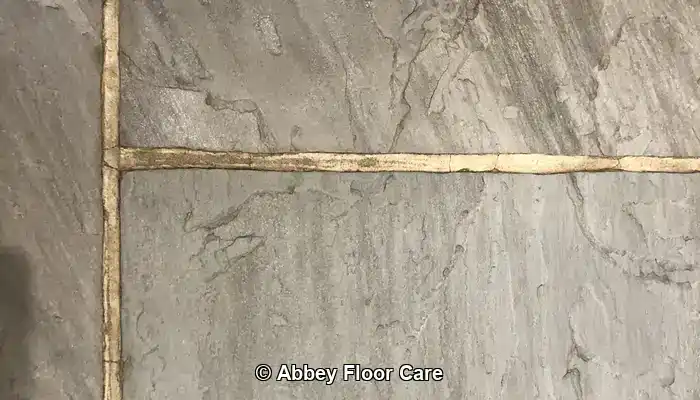
Moisture movement becomes more obvious at this stage. Liquid enters quickly, carrying soil and residues with it. The key diagnostic sign is speed—how fast the grout looks dirty again after cleaning.
Why some grout stays consistent while other areas change colour
Epoxy grout behaves differently because contamination tends to sit on the surface rather than penetrate. You may see one area remain uniform whilst another nearby becomes grey or blotchy. That contrast usually comes down to grout type, wear level, and how much absorption is possible.
Cement-based grout changes colour when moisture and residues move into the joint. High-traffic areas—walkways, kitchens, splash zones—wear faster and absorb more. So they darken first. It’s not uneven cleaning. It’s uneven exposure.
Stable grout dries evenly and keeps a consistent tone. Unstable grout doesn’t. It shows darker bands, mottled patches, or rapid re-soiling. That distinction matters before deciding what the next step should be.
Why dirt and cleaning residue keep coming back after mopping
If your grout looks clean after mopping but turns dull again within days, residue is almost certainly being left behind. Water evaporates. Detergent, soil, and surfactants don’t. They stay inside the grout and become a base layer for the next cycle of dirt.
This is the classic “never stays clean” pattern. It’s not about effort. It’s about where the residue ends up—and whether it can be removed fully.
In damp areas, mould and mildew can layer on top of this. Poor ventilation keeps the joint wet for longer, allowing biological growth to return. Proper maintenance helps stabilise things after professional work, and safe grout cleaning guidance explains why pH-neutral products matter and why bleach or acid can make matters worse.
Why normal cleaning often makes grout look better briefly, then worse
Strong cleaners can brighten grout temporarily whilst weakening the surface that protects it. It looks like progress. It isn’t always.
Acidic products can react with cement-based grout, breaking down the binder. The visible signs are colour loss, roughness, and faster darkening after the next clean. At that point, the solution depends on condition—not strength of cleaner.
A cleaner-looking result can still leave grout more absorbent than before.
Abrasive scrubbing has a similar effect. You remove a thin layer, reveal fresher material, and the grout looks brighter—for a while. But the exposed surface absorbs more. A page focused on removing grout haze from tiles is the right place for haze-specific issues, because haze is separate from long-term grout darkening.
Why sealing sometimes fails and grout quickly becomes dirty again
Sealer failure usually shows up as uneven absorption. Darker traffic lanes, patchy wetting, or staining that returns too quickly. The sealer may still be present in places—but it’s no longer working evenly.
Protection works by slowing moisture and soil entry. When that control breaks down, the grout begins absorbing again. The correction depends on whether the joint is clean, dry, and structurally sound.
Sealing cannot reverse deeper issues like contamination, erosion, or cracking. That’s the boundary. A separate guide on which grout sealing method protects best explains the protection side once the cause has been identified.
Why grout problems keep returning even after you think they’re fixed
If grout problems return after treatment, the original cause is still active. The surface may improve briefly, but deeper contamination, residue, or structural change remains.
Residue returns when detergent films stay inside the joint. Failed protection returns when sealing no longer controls absorption. Mould returns when moisture conditions don’t change.
That’s the key distinction—appearance versus condition. A floor that looks dirty quickly isn’t always getting dirty quickly. Sometimes it never fully recovered in the first place. For colour-led solutions, grout colour sealing for dirty grout sits beyond diagnosis and into corrective treatment.
Why some floors stay stable while others keep deteriorating over time
Stable grout behaves predictably. It dries evenly, holds its colour, and doesn’t re-soil quickly. That stability comes from a sound surface condition and controlled absorption.
Deteriorating grout does the opposite. It absorbs faster, dries unevenly, and holds onto residues. The difference often comes down to wear, chemistry, and moisture cycling.
Good maintenance makes the biggest difference—pH-neutral cleaning, removing grit before mopping, and resealing at the right time. Washing-up liquid is a common mistake. It leaves surfactant residue behind, and the cycle starts again.
How to tell when grout problems are below the surface, not just on it
When dark shadowing remains after proper drying, the issue is below the surface. Surface dirt disappears quickly when removed. Embedded contamination doesn’t.
The pattern matters more than the colour. How it looks wet. How it dries. Whether the same areas return. These are the clues that guide the next step.
- Darkness remains after the tile looks clean and dry.
- The same grout lines re-darken faster than others.
- The joint feels rougher or more open.
- Water darkens the grout quickly instead of sitting briefly on the surface.
Colour alone isn’t enough to diagnose the cause. It could be residue, biological growth, worn structure, or failed protection. The next step should match the cause, not just the appearance.
Where to go next if your grout still looks wrong after understanding the causes
The next decision should follow the cause, not the frustration. A dark joint, a chalky joint, and a patchy sealed joint may look similar—but they belong to different stages.
This page stays at diagnosis level deliberately. The correct method belongs on the right follow-on page. For many homeowners, the next step is the homeowner guide to safe grout cleaning, because product choice often creates the problem in the first place.
Where the issue is service-based, pages like professional grout cleaning and sealing in Glasgow sit outside this diagnostic hub. And for specific outcomes, protection, haze removal, or colour correction each have their own dedicated guidance.
The floor becomes easier to clean once the cause is properly addressed. That’s the shift—moving from chasing symptoms to dealing with what’s actually happening inside the grout.

David Allen — Abbey Floor Care
David Allen has spent over 30 years diagnosing and restoring tiled floors with Abbey Floor Care, including grout problems where the visible issue begins inside the joint rather than on the tile surface. His work focuses on separating surface dirt from deeper grout behaviour so homeowners understand when cleaning, sealing, recolouring, or repair belongs on a dedicated next-step page.
Recent Posts:
We work throughout the country, just some of our work counties:
Copyright © 2026 Abbey Floor Care. Tile And Natural Stone Cleaning Consultants FAQ - Privacy Policy - Terms And Conditions
Abbey Floor Care is a participant in the Amazon Services LLC Associates Programme, an affiliate advertising programme designed to provide a means for websites to earn advertising fees by linking to Amazon.co.uk. As an Amazon Associate, we earn from qualifying purchases.