
Dirty Ceramic Tile Floors Need The Best Ceramic Tile Cleaner
Last Updated on October 1, 2026 by David
Which Ceramic Tile Cleaner Fits Your Everyday Routine?
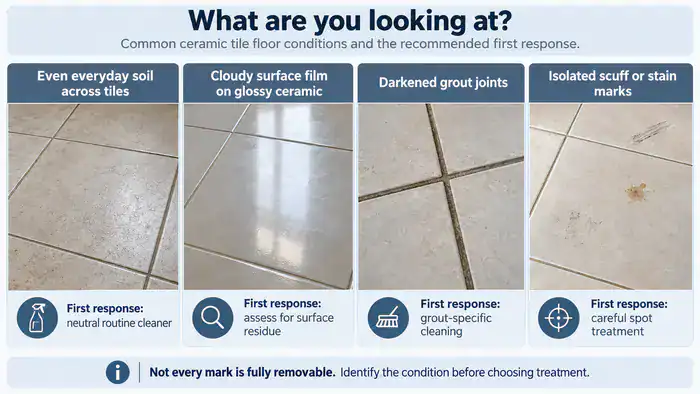
If your ceramic tile looks dirty after routine mopping, inspect the tile face and grout lines under the same light before selecting a cleaner. General surface soil tends to sit evenly across the installation, whereas a cloudy film, dark joints or isolated marks usually call for a different cleaning decision.
Everyday floor soil commonly leaves light footprints, kitchen dust and traffic marks across the glazed surface. A pH-neutral cleaner with mild surfactants suits this pattern, as it supports regular cleaning without a strong odour or an added surface film. Using a microfibre cloth and a thoroughly rinsed mop can also show whether simple residue removal changes the appearance.
Cloudy installation residue has a distinct appearance from ordinary dirt. A pale cement film can sit across the tile face after fitting, whilst polymer-bound installation residue may form a stubborn matt or milky film, particularly when viewed at a low angle. Modern UK new-build kitchens and bathrooms often combine large-format rectified porcelain with ceramic tile, so incomplete post-installation cleaning can affect wide areas as well as narrow grout joints.
When the tile face appears clean, grout condition often provides the clearest buying clue. Dark or patchy joints suggest discoloured grout, where absorbed soil and repeated mopping have altered the frame around the tile rather than the factory surface. A cleaner chosen only for the tile face may therefore leave the floor looking much the same, because the visible issue remains in the joints.
Mineral deposits tend to show as white marks, rings or a rough edge around taps, shower screens and wet-room thresholds. Hard water encourages calcium deposits and limescale. These signs need to be considered separately from grease on kitchen tiles, particularly around a cooker or splashback.
Textured and anti-slip finishes raise another selection issue because their grooves can hold crumbs, grit and cleaning residue after a quick mop. A product that performs well on a smooth glazed surface may not reach these recesses, and excessive scrubbing can raise the risk of abrasion. Readers comparing options can use this guide to deep ceramic tile floor cleaning to understand why surface texture changes the assessment.
Why a Promising Cleaner Can Still Fail on Your Floor
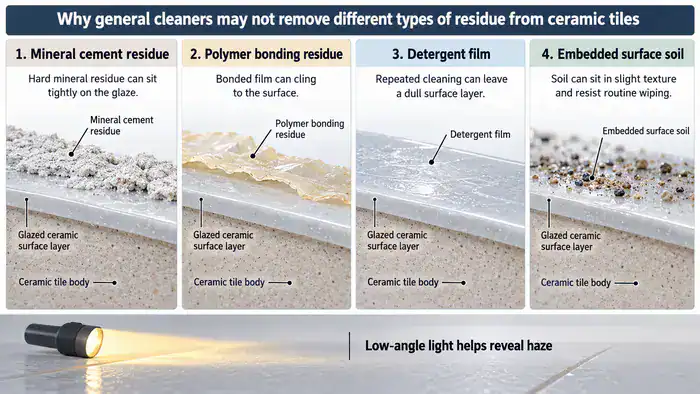
If your ceramic tile still looks hazy after cleaning, the residue may not be what it first appears to be. Looking across the tile from a low angle can reveal why the same cleaner does not work equally well on both. Cement residue creates a mineral film on the tile face, whereas polymer bonding leaves an organic component that holds installation residue tightly against the glaze.
Cleaner performance depends on the residue type and surface condition, not the label alone. An alkaline first stage supports polymer dissolution and coating removal, while a later acidic stage deals with remaining cement film and mineral films; acid alone cannot break down the polymer component effectively. This two-stage process separates chemical stripping from mineral dissolution rather than asking one product to perform incompatible tasks.
A cleaner cannot overcome a residue it is not suited to remove.
Repeated detergent use can lead to a residue lock-in cycle, making the floor look dirty again after mopping. Concentrated detergent leaves a film, that film attracts fresh soil, and incomplete rinsing encourages redeposition across grout joints and textured grooves. A wet vacuum or slurry extractor gives professionals better contamination control because it removes dissolved residue rather than simply moving it around.
When assessing a heavy-duty or intensive product, check its dilution rate, dwell time, compatibility statement and expected coverage rate. A specialist diagnosis of dull ceramic tile floors can distinguish remaining film from a finish-related appearance issue before another cleaner adds further residue.
What Damage Can Follow the Wrong Cleaner?
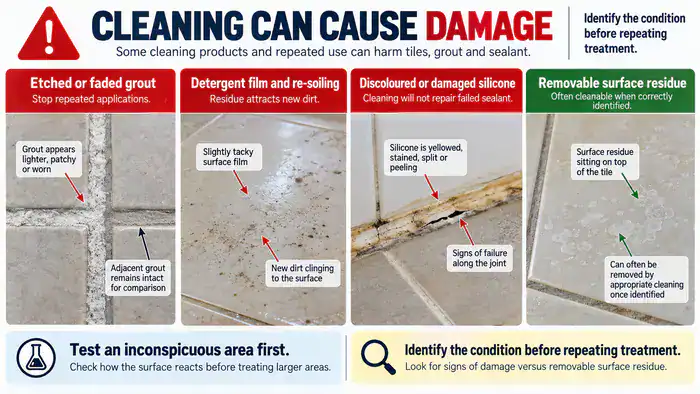
Using the wrong cleaner can leave a ceramic tile floor looking worse, not cleaner. Compare the affected grout with an undisturbed joint before deciding that the tile itself has deteriorated. A film that appears removable suggests residue, while a lasting colour change may point to grout staining or chemical degradation.
Limescale forms from calcium carbonate in hard water. A suitable descaler may deal with mineral deposits, but repeated acidic pH exposure can weaken cementitious grout and dull sensitive finishes. A professional assessment becomes more appropriate where mineral films remain after compatible cleaning or extend through numerous grout joints.
Mould spores create biological contamination in damp grout and silicone, appearing as black or green marks around shower cubicles, wet rooms and bathroom tiles. A spray cleaner may improve the surface, but recurring mould indicates a damp environment, poor ventilation or compromised joints rather than a need for a stronger household chemical. Distinguish temporary surface contamination from grout or silicone deterioration before choosing a deep clean.
Glazed ceramic generally has a factory-fired, non-porous surface, so it should not be abraded with gritty powders, harsh pads or improvised sandpaper. Loose dust, small particles and fine scratches all increase abrasion risk on glazed finishes, whereas vacuuming, sweeping and gentle mopping help protect the permanent surface. Persistent grout colour loss, where grout appears faded or discoloured, may need specialist cleaning, recolouring or repair rather than another bottle. Recurring contamination or visibly weakened joints also call for a specialist route.
Which Cleaner Fits the Soil You Actually See?
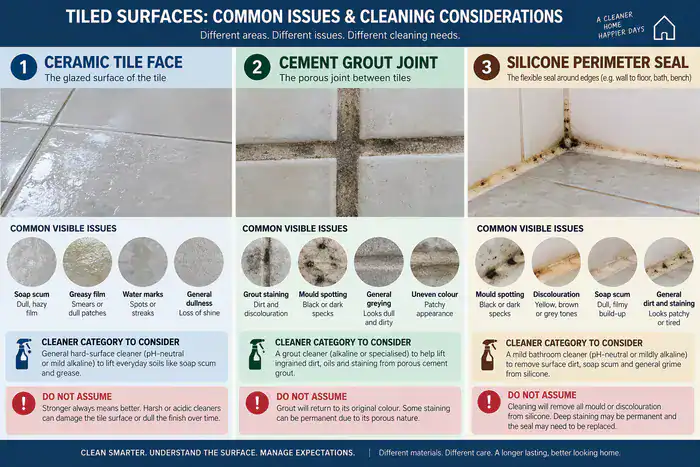
Soap scum, stained grout and mould-affected joints need different next steps. Look closely at whether the residue sits on the ceramic tile face, within the grout or along the silicone bead. Establishing the location clearly helps avoid treating every mark as ordinary dirt.
Pro Tip: We recommend these products for daily Ceramic Tile maintenance cleaning.

Fila Pro Floor Cleaner
|

LTP Grimex
|

Vileda H2PrO Spin Mop System
|
- Routine surface soil: Use a pH-neutral product like Fila Pro Floor Cleaner to maintain everyday cleanliness without leaving behind cleaner residue.
- Soap scum & body oils: Use an alkaline cleaner/degreaser like LTP Grimex to emulsify fatty acid deposits and bathing residue without risking acid damage to cementitious grout.
- Heavy grease & ingrained dirt: Use LTP Grimex at a stronger dilution rate to break down deep-set floor grime, old detergent films, and traffic marks.
Readers looking for a heavy duty or industrial-strength option should compare the soil, finish and grout condition before buying. This heavy-duty ceramic tile cleaner comparison helps distinguish intensive cleaning needs from contamination requiring professional assessment.
How to Weigh Cleaner Value Beyond the Bottle Price
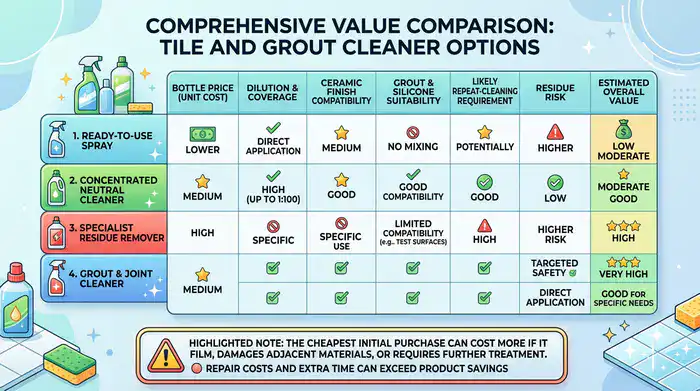
A low bottle price does not necessarily mean good value. Assess the whole floor and grout together to establish whether the cleaner suits the installation or is likely to create rework. Compatibility with a glossy, matt or textured finish matters, as do the condition of grout joints and surrounding silicone.
Product value also comes down to coverage rate, dilution, labour and the likelihood of repeated applications. A ready-to-use spray may be suitable for daily maintenance, whilst a concentrated degreaser may offer better value for a controlled deep clean. Neither compensates for an incorrect diagnosis. A ceramic tile floor cleaning service can evaluate the installation when the floor needs more than routine maintenance.
Good ongoing maintenance removes grit before wet mopping, limits detergent film and keeps ceramic tile floors simpler to care for. Avoid bleach and strongly acidic supermarket products, as they can degrade grout colour and protective systems. The ceramic and porcelain floor-care hub provides broader guidance on cleaner selection, maintenance planning and related floor-care decisions.
A correctly cleaned floor can look significantly better than one carrying residue, and sound grout can make the installation look better than when first installed. Professional cleaning also makes the floor easier to maintain. But correct pH-neutral cleaning and early grit removal remain the most important factors in extending its useful life.

David Allen — Abbey Floor Care
David Allen has more than 30 years of experience with Abbey Floor Care, helping UK homeowners assess ceramic tile cleaning products and professional cleaning requirements. His work focuses on separating surface soil, grout contamination, installation residue and joint deterioration, so readers can select an appropriate cleaning or renovation pathway.
Recent Posts:
We work throughout the country, just some of our work counties:
Copyright © 2026 Abbey Floor Care. Tile And Natural Stone Cleaning Consultants FAQ - Privacy Policy - Terms And Conditions
Abbey Floor Care is a participant in the Amazon Services LLC Associates Programme, an affiliate advertising programme designed to provide a means for websites to earn advertising fees by linking to Amazon.co.uk. As an Amazon Associate, we earn from qualifying purchases.