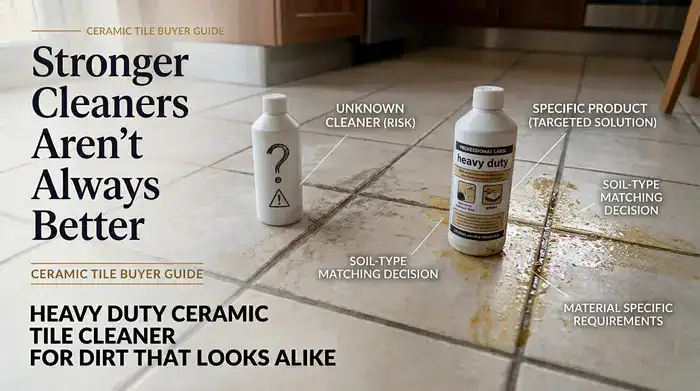
Heavy Duty Ceramic Tile Cleaner For Dirt That Looks Alike
Last Updated on September 30, 2026 by David
A heavily soiled ceramic tile floor needs a cleaner matched to the actual deposit. The wrong product can darken grout, make residue more obvious, or damage the tile’s permanent finish. Cement-based film, kitchen grease, tracked-in dirt, and stained grout can look similar at first glance, but each calls for a different buying decision.
Choosing a Cost-Effective Heavy-Duty Cleaner Without Risking the Tile
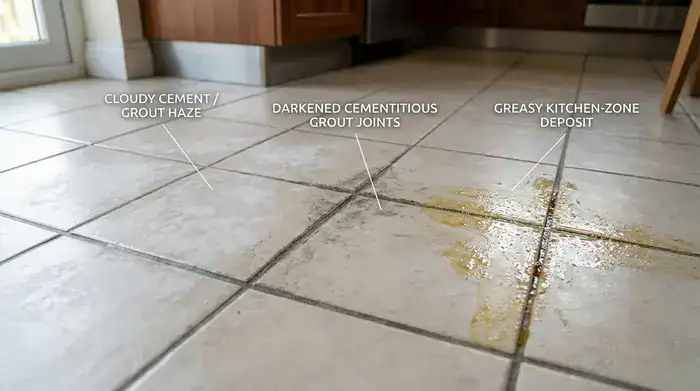
If your ceramic tile shows a cloudy cement-based film, darkened grout, or a greasy kitchen patch, assess each area under the same lighting before selecting a heavy-duty cleaner. A floor may appear uniformly dirty, yet the tile face, grout joints, and cooking areas can each have very different starting conditions.
A cloudy film over otherwise clean tiles usually suggests cement-based installation residue. It may dry matt, pale, or streaky, particularly on the large-format rectified porcelain often used in modern UK kitchens and bathrooms. Newly installed floors can also retain stubborn polymer-modified grout haze that ordinary maintenance cleaner will not remove, so it should be assessed and treated with the appropriate grout haze remover.
Dark or uneven joints usually indicate a grout-led issue, not evidence that the ceramic tiles themselves have absorbed staining. Discoloured grout can make an entire floor look neglected, especially where patterned tiles have narrow joints or foot traffic repeatedly deposits soil along kitchen routes.
Kitchen grease leaves a different pattern. There may be a darker band close to the cooker, splashback, or worktop while adjacent tiles remain comparatively clear. This build-up often appears as a dull film that quickly returns after a damp cloth or general floor product has spread it rather than lifted it away.
Textured and anti-slip finishes add another complication. Riven surfaces, embossed patterns, and wet-room tiles can hold visible dirt in their recesses, whilst smooth glossy tiles show streaking and drying marks more readily. The comparison needs to account for the finish, grout coverage, room use, and age of the contamination, rather than relying on terms such as industrial or maximum strength.
A cost-effective choice avoids both an unnecessarily aggressive product and one that is too weak. Establish whether the main issue is cement residue, dark joints, greasy soil, or a textured surface before comparing concentration, intended use, and compatibility statements.
Readers considering wider ceramic and porcelain behaviour can use the ceramic and porcelain floor care hub to view the visible issue in the context of the full installation. That wider perspective helps prevent a grout-led appearance from being mistaken for a failing tile surface.
Why the Wrong Cleaner Can Damage the Finish at Once
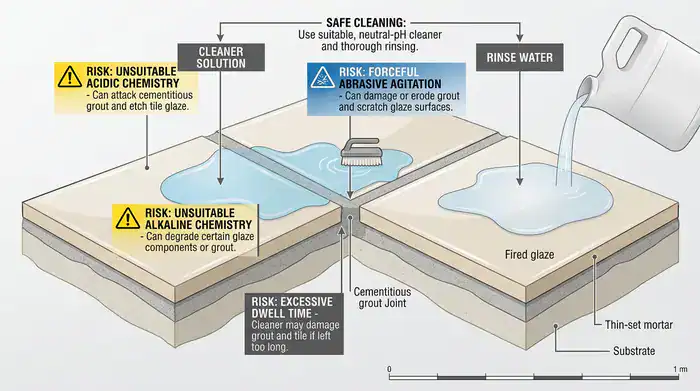
A factory-fired glaze can still appear sound whilst unsuitable chemistry, extended contact, or forceful agitation alters the surrounding grout. Compare a small area first, then inspect both the tile face and the joints. Glazed ceramic has a hard, vitreous, non-porous surface, whereas cementitious joints are more vulnerable to colour change, residue retention, and chemical wear.
A high-alkaline cleaner is suited to organic soil because alkaline pH, surfactants, and degreasing action can emulsify cooking oils, traffic film, biological contamination, and mould-related grime. But its strength needs control. Excessive dwell time, concentrated product, or poor rinsing can leave alkaline residue around porous joints and create a new surface film.
An acidic cleaner is intended for mineral deposits, not grease. Acidic pH supports mineral dissolution where grout haze, calcium deposits, hard-water films, or limescale treatment need a targeted approach, but repeated acid exposure can weaken grout colour and texture. Acid alone can also struggle with polymer bonding in modern installation residue, which requires a different assessment.
The product must match the deposit, not simply be the strongest available.
Product directions should identify the intended soil, compatible tile finish, dilution ratio, dwell time, and rinsing requirements. When product claims do not clearly separate organic soil from mineral residue, buyers can also consult this ceramic tile cleaner comparison guide.
Professional assessment is more useful where several deposits overlap. An alkaline first stage may suit grease, for example, whilst a later and carefully selected acidic treatment addresses mineral film. The assessment should also consider surrounding materials, coloured grout, hard water, and any existing coating before a cleaner is chosen.
Which Cleaning Risks Are Acceptable—and Which Are Not
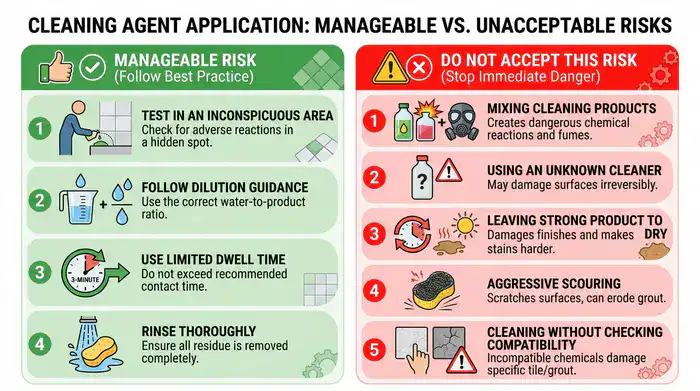
Choosing the strongest cleaner without checking the surface can create an avoidable issue, particularly where textured grooves and grout joints retain residue that affects appearance and underfoot safety. A manageable buyer risk is testing a compatible product in an inconspicuous area and assessing the dry result rather than the wet appearance.
Manageable risk means the test area retains its colour, sheen, and texture after the stated contact time and thorough removal. Textured ceramic still needs careful evaluation because grooves can hold soil, foam, and rinse residue. A product that loosens dirt but leaves a tacky film has not resolved the purchasing problem.
A warning sign is any small-area test that changes the tile appearance, lightens coloured grout, leaves a white deposit, or reduces confidence in the floor’s anti-slip performance. R11 wet-room surfaces rely on surface grip, and residue build-up can reduce that practical performance even where the tile remains structurally sound.
Heavily soiled joints also need care, as repeated aggressive scrubbing can widen the visible contrast between clean tile and damaged grout. Readers who remain unsure can compare the symptoms with common causes of dull-looking ceramic floors before purchasing another product.
Professional advice becomes the safer option if testing leaves streaking, persistent residue, altered colour, or uncertainty about slip performance. A cleaner cannot rectify cracked joints, missing grout, damaged glaze, or installation movement, so those signs should stop further product escalation.
What the Soil and Surface Demand from a Cleaner
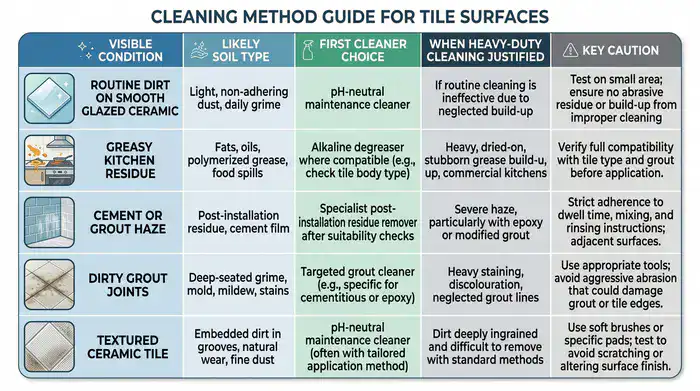
Ordinary soil on a sound, smooth ceramic installation will usually respond to a pH-neutral tile cleaner rather than a heavy-duty concentrate. A balanced pH, mild surfactants, and a residue-free formulation support routine cleaning without etching risk or progressive damage to grout protection.
The visible deposit should guide the next choice of category. Grease and biological contamination point towards controlled alkaline degreasing. Mineral films point towards carefully specified acidic chemistry. And post-installation clouding may require specialist treatment, as polymer residue behaves differently from loose dust.
- Identify whether the deposit appears greasy, mineral, cement-based, biological, or like ordinary traffic soil.
- Check the tile finish, grout colour, joint condition, and any coating or wax before comparing products.
- Use a mild pH-balanced option for routine soil, moving to a specialist category only where the deposit requires it.
- Stop the selection process and seek assessment if the surface changes, residue remains, or physical damage is visible.
Unglazed ceramic needs a separate level of care because its porous surface can absorb contamination and may require sealing decisions that do not apply to glazed tile. A matt appearance does not necessarily mean a tile is unglazed, particularly with modern ceramic and porcelain-effect finishes.
Professional deep cleaning becomes appropriate where soil is embedded in textured recesses or porous joints and ordinary products repeatedly leave traffic film. A safe ceramic tile deep-cleaning approach should cover mechanical agitation, extraction, and surface protection without suggesting that one chemical suits every floor.
How to Compare Cleaner Options Against Your Tile
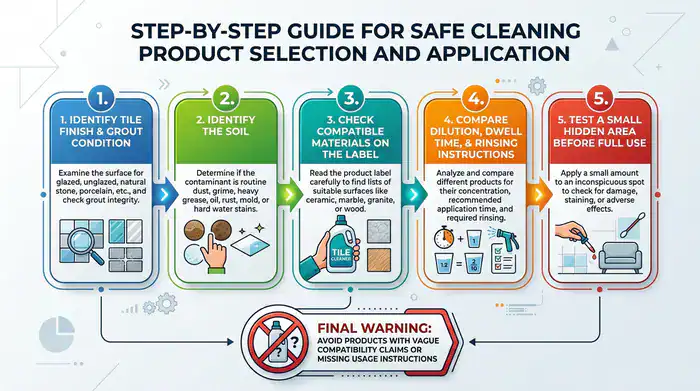
A useful cleaner comparison starts with the tile in front of the buyer. Inspect the finish, grout condition, and soil type before measuring one product against another. Product directions should state compatible materials, dilution, dwell time, rinsing, and testing requirements; broad claims about maximum strength offer little evidence of suitability.
Options that overlook textured or anti-slip surfaces, coloured grout, hard-water residue, or previous coatings should be rejected. A suitable ceramic tile cleaning solution matches the deposit and finish, whilst allowing dissolved soil to leave the floor rather than dry back into the joints.
Once heavy contamination has been dealt with, routine care should return to pH-neutral cleaning. Avoid bleach, strongly acidic supermarket products, washing-up liquid, and abrasive contact, as they can strip grout colour, leave detergent film, or scratch the glaze. Removing loose grit before wet mopping also extends the life of the installation.
Correct maintenance makes a restored floor easier to manage, and a professionally cleaned and properly protected installation can look significantly better than it did before intervention. Broader guidance on continuing care and related ceramic decisions is available in the ceramic and porcelain flooring care hub, whilst buyers considering residue or coatings can review whether wax or sealant suits ceramic tiles before proceeding.

David Allen — Abbey Floor Care
David Allen brings more than 30 years of Abbey Floor Care experience to ceramic tile cleaning decisions across the UK. His buyer-led guidance focuses on matching cleaner chemistry to soil type, tile finish, grout condition, and the limits of what cleaning can safely correct.
Recent Posts:
We work throughout the country, just some of our work counties:
Copyright © 2026 Abbey Floor Care. Tile And Natural Stone Cleaning Consultants FAQ - Privacy Policy - Terms And Conditions
Abbey Floor Care is a participant in the Amazon Services LLC Associates Programme, an affiliate advertising programme designed to provide a means for websites to earn advertising fees by linking to Amazon.co.uk. As an Amazon Associate, we earn from qualifying purchases.