
Loose Tiles Need Ceramic Tile Repair In West End Edinburgh
Last Updated on October 2, 2026 by David
Ceramic Tile Repair in West End Edinburgh
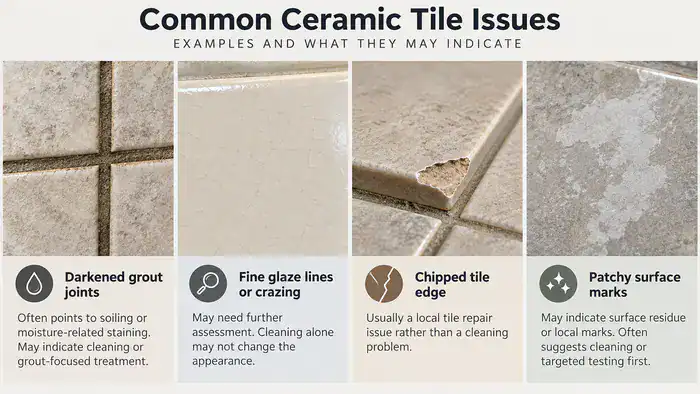
If your ceramic tile in West End Edinburgh shows darkened joints, fine glaze lines, or patchy surface marks, compare the grout with the surrounding tile in the same light before deciding that the tile itself needs repair. A tile that appears sound beside visibly tired joints may point to a local grout issue rather than damage to the tile face.
Changes concentrated in grout joints tend to look quite different from isolated marks across a glazed surface. Porous cement-based grout can retain soil from footwear, cooking areas and wet-room use. As a result, homeowners may see darker lines, uneven colour or a dirty-looking border around tiles that are otherwise intact.
Discoloured grout often appears as brown, grey or patchy joint colour following the installation pattern. It may occur around kitchen splashback tiling, hallway thresholds, bathroom floors or vestibule flooring. Even where the tile finish remains stable, it can make the whole area look worn.
Fine lines across the tile face need to be considered separately from joint discolouration. A hairline glaze crack may follow an impact point, a tile edge or a wider pattern, whilst surface chipping leaves a small visible break that is different from residue sitting on the factory finish.
West End Edinburgh homes include Georgian and Victorian townhouses, traditional tenements and period conversions, where tiled routes often link entrance vestibules, kitchens and bathrooms. Later alterations can place tiled areas across an older solid floor and a newer extension base. A crack or loose patch near a threshold therefore deserves clear documentation, rather than assumptions about the cause.
Photographs should show the full area as well as close views of the affected joint, tile edge or glazed surface. Abbey Floor Care can use those details to establish whether the enquiry concerns ceramic tile repair, a grout-focused renovation, or a referral for a wider substrate assessment.
From Assessment to Clean Finish
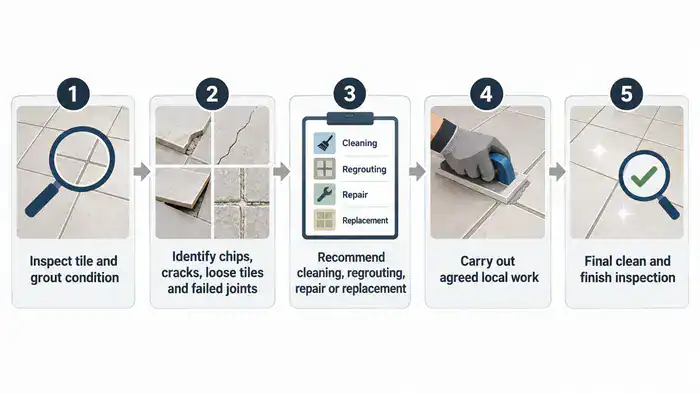
For a West End ceramic tile repair service, Abbey Floor Care can arrange for a ceramic tile repair specialist to assess chips, cracks, loose tiles and failed grout joints, then advise on local repair, regrouting or like-for-like replacement. Homeowners with relevant experience may consider a minor, contained repair. But loose tiles, recurring cracks, wet-area failures, moisture beneath the surface and multiple affected tiles require professional assessment and repair through a suitable tile repairing service.
A careful replacement sequence starts with removing the damaged tile without unnecessarily disturbing the surrounding layout. The base is then checked to confirm it is clean, stable and level before the new tile is fitted. The replacement should follow the existing tile pattern and joint width, with grout finished neatly and residue removed from the tile surface. Once complete, the area should be checked for an even finish, and the contractor should explain the curing period and when normal use can resume.
Replacement decisions must also take account of the permanent factory-fired glaze. Abrasion cannot recreate that kiln-fired finish, and an exposed porous tile body can retain dirt where damage has penetrated the surface. In those cases, a visibly compromised tile may need replacement rather than sanding or refinishing.
Expected Results from Ceramic Tile Repair

Expecting every ceramic tile mark to disappear can create unrealistic expectations. Instead, look across the finished surface from a low angle and compare the tile glaze with the grout joints, judging each improvement separately. The final result depends on the tile finish, the physical condition of the joint and the severity of the original damage.
Sound but cosmetically failed joints may respond particularly well to grout recolouring where enough sound material remains to support the treatment. Proper preparation and surface cleaning are needed before epoxy application, allowing colourant adhesion to create a durable, non-porous finish over the existing joint and improve colour uniformity without changing the factory surface of each tile. Recolouring cannot rebuild missing grout, correct movement beneath a tile or disguise a loose installation. A contractor should therefore distinguish cosmetic joint failure from physically compromised grout before agreeing the scope.
Grout recolouring can renew the frame around sound but cosmetically failed joints.
Physically damaged tiles need a different approach, because cracks, chips or deep scratches affect the visible ceramic finish itself. A like-for-like tile replacement can restore the area substantially when a suitable spare or close match is available, although discontinued ranges, batch variation and changes in adjacent colour can affect how invisible the repair appears.
A repaired floor can look significantly better once the contractor addresses the actual source of the visible issue rather than applying a surface patch. Joint colour may become more consistent, the area can regain clarity, and a stable replacement can restore everyday usability. Structural conditions may still limit a perfect visual match.
Professional work can also make the installation easier to clean and maintain, as sound joints leave fewer open gaps for soil and moisture. Ceramic glaze itself does not normally need sealer, whilst suitable grout protection may reduce absorption where the joint and room conditions justify it.
Ceramic Tile Damage in West End Edinburgh Homes
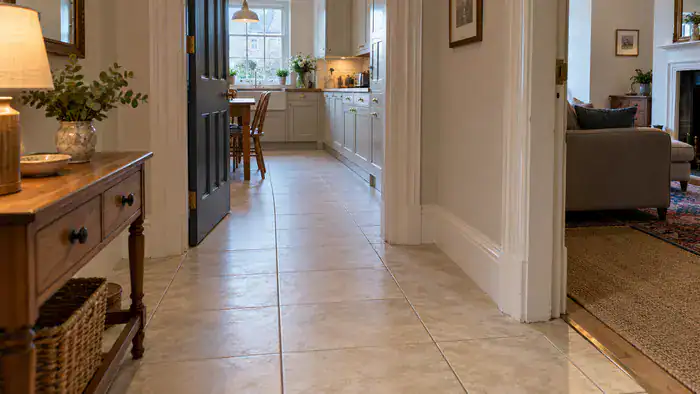
A chipped, cracked or loose ceramic tile can be affected by the layout of a West End Edinburgh property, where period layouts, modernised service areas and occupied rooms can all affect access and scheduling. Abbey Floor Care has restored a wide range of ceramic tile types for more than 30 years in homes, hotels and heritage buildings nationwide, supporting clear ceramic tile repair advice.
For ceramic tile repair in West End Edinburgh, occupied-home service planning is central. Clear explanations, sensible preparation and care around the surrounding floor shape the experience as much as the repair itself. A reliable contractor will explain which furniture or fittings need moving, how the work area will remain controlled and when the room can return to normal use.
Period townhouses and tenement flats often have narrow approaches, shared access routes and rooms that need to remain in use throughout the day. Respectful preparation protects adjacent flooring, skirting, kitchen units and bathroom fittings, whilst helping the homeowner understand whether the enquiry concerns one tile, several joints or a wider installation issue.
Communication matters especially where a visible defect sits beside an older repair or later alteration. A contractor should identify matching limitations, explain whether spare tiles are available and state clearly where the evidence points towards a referral for subfloor preparation, damp penetration or more extensive substrate adhesion work.
West End service quality involves more than arriving with generic tile materials. It means recording the local property context, keeping the repair scope proportionate, protecting the room during preparation and leaving the surrounding area clean enough for the homeowner to assess the finished work properly.
When a Tile Defect May Be Part of a Wider Problem
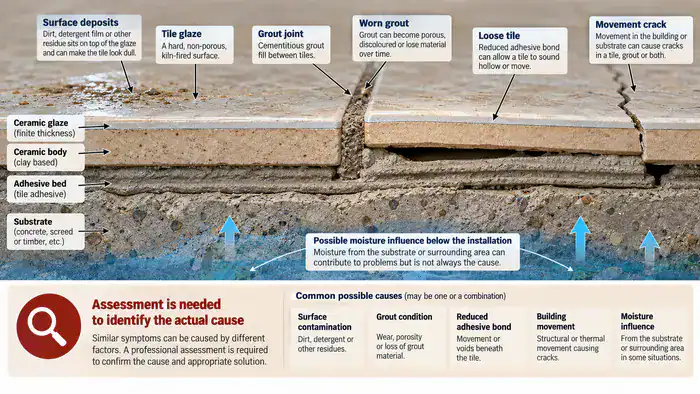
A visible ceramic tile defect may be confined to one joint or form part of wider care involving textured finishes, grout condition, hard-water deposits or installation residue across the room. Broader ceramic and porcelain floor-care guidance becomes useful when the repair question extends beyond one visible defect.
West End Edinburgh properties can combine busy hallway routes, kitchen thresholds, bathroom floors and newer rear extensions, so a visible repair should be considered within the context of the whole tiled installation. The ceramic and porcelain floor-care hub provides wider material guidance before a homeowner chooses the most suitable service route.
The immediate enquiry can still remain focused on ceramic tile repair near the affected West End room. Clear photographs, the property type, and a description of whether the defect is in the tile or grout help keep the referral proportionate.
What to Note When Ceramic Tile Damage Needs Repair
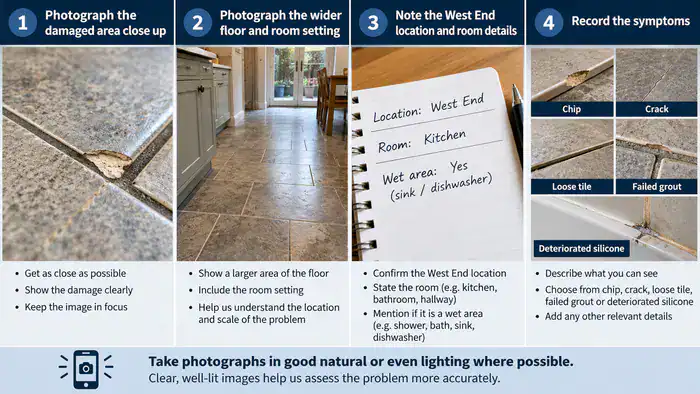
Visible ceramic tile damage, including any deteriorated silicone around the installation, is easier to assess when its location and setting are clear. Before contacting Abbey Floor Care, record the West End Edinburgh location, visible symptoms and room or wet-area setting. A close photograph should show the defect, whilst a wider image should show its relationship to thresholds, fittings and surrounding joints.
Useful enquiry information includes whether the tile feels loose, whether a crack has returned, whether grout has fallen away and whether water reaches the area during normal use. These details help distinguish a local tile replacement from regrouting, a silicone concern or a referral for movement and substrate investigation.
Bathrooms, shower rooms and wet rooms need particular care around flexible joints. Mould-colonised silicone often requires full silicone replacement, including removal of the old bead, joint cleaning and a new application, because repeated surface treatment cannot restore a deteriorated sealant profile.
Mould-resistant silicone is appropriate for wet-area renewal where the joint needs a flexible sealant and waterproof barrier around a bath, shower tray, basin or floor-to-wall change. The choice reflects movement and moisture exposure, rather than a general treatment for every ceramic installation.
Abbey Floor Care can review the photographs, location and room context before confirming whether a suitable West End ceramic tile repair specialist can address the work or whether another contractor should assess an underlying issue. This approach respects the difference between a contained cosmetic concern and damage requiring broader investigation.
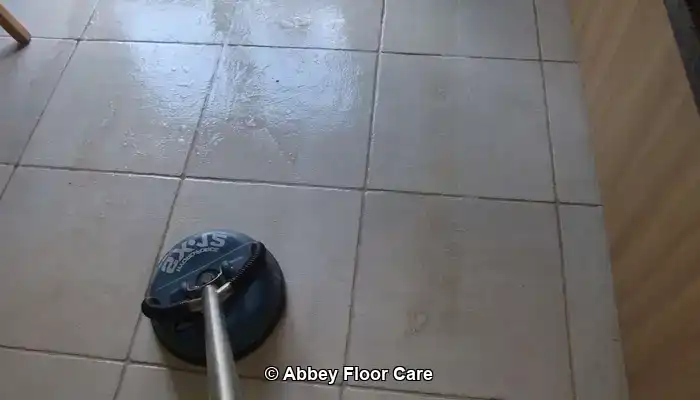
Correct ongoing maintenance helps ceramic tile installations retain clean joints and reduces residue accumulation after repair. Homeowners should avoid abrasive pads and harsh acidic or bleach-based products, as these can damage grout colour, increase surface marking or leave residues that attract further soil.
Pro Tip: We recommend these products for daily Ceramic Tile maintenance cleaning.

Fila Pro Floor Cleaner
|

LTP Grimex
|

Vileda H2PrO Spin Mop System
|
Removing grit before wet mopping and using a pH-neutral tile cleaner supports longer-lasting grout and keeps the repaired area simpler to maintain. The right local assessment identifies the work required before any repair is agreed, so the next step is to contact Abbey Floor Care with the West End Edinburgh details and photographs.

David Allen — Abbey Floor Care
David Allen has advised on ceramic tile repair and grout restoration across the UK for more than 30 years through Abbey Floor Care. His experience helps West End Edinburgh homeowners distinguish damaged glaze, loose tiles, failed joints and wet-area sealant problems before choosing an appropriate local repair or referral route.
If you would like to apply to become the contractor for this area, please use the contact form.
Copyright © Abbey Floor Care.
We are proud to be your local stone floor cleaning, polishing, and restoration specialists for homes and commercial properties in Central Scotland.
With years of experience working with all types of stone floors, our friendly and professional stone floor cleaning services can’t be beaten on price or service.
FAQ - Privacy Policy - Terms And Conditions
Abbey Floor Care is a participant in the Amazon Services LLC Associates Programme, an affiliate advertising programme designed to provide a means for websites to earn advertising fees by linking to Amazon.co.uk. As an Amazon Associate, we earn from qualifying purchases.