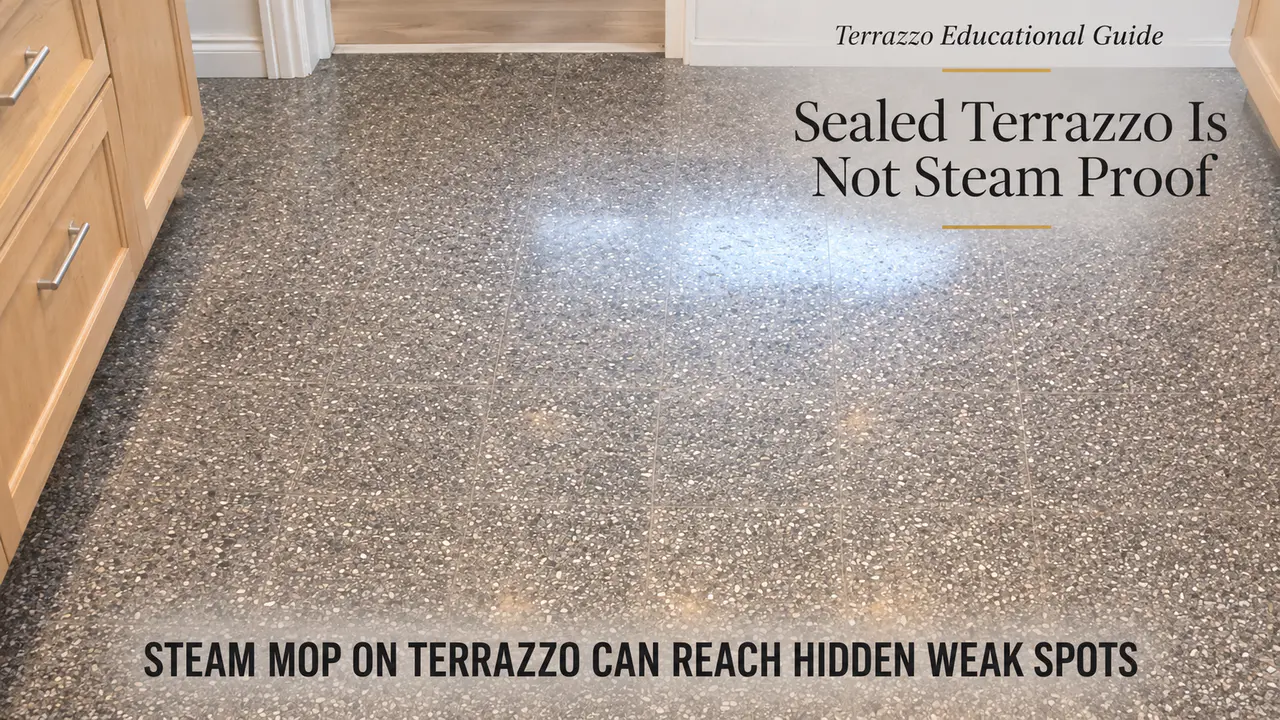
Steam Mop On Terrazzo Can Reach Hidden Weak Spots
Last Updated on November 20, 2026 by David
A steam mop is not the best default choice for a terrazzo floor. Unless the floor and protective-treatment manufacturers explicitly approve steam cleaning for your particular system, use controlled damp mopping with a compatible, low-residue cleaner instead.
This is a precaution, not a claim that one use will ruin terrazzo. The difficulty is knowing how concentrated heat and moisture will affect the floor’s existing finish, porous areas, joints and repairs. A gentler routine avoids those uncertainties without compromising everyday cleaning.
Why terrazzo needs more than a “sealed floor” label
Most traditional domestic terrazzo in the UK consists of marble chips held in a Portland cement binder. It is not an entirely non-absorbent sheet of stone: liquid uptake varies with the original mix, surface condition and existing protection. Worn binder, pinholes, cracks and joints can provide routes for water to enter.
A steam mop introduces hot moisture at the surface. How much remains there depends on the equipment, setting, pad condition and how it is used. An appliance described as suitable for “sealed hard floors” does not, by itself, establish compatibility with your terrazzo and its treatment.
Some terrazzo has a resin binder rather than cement. If yours is resin-bound, including epoxy terrazzo, obtain system-specific cleaning guidance rather than assuming that advice for cement-and-marble floors applies.
Does sealing make steam cleaning safe?
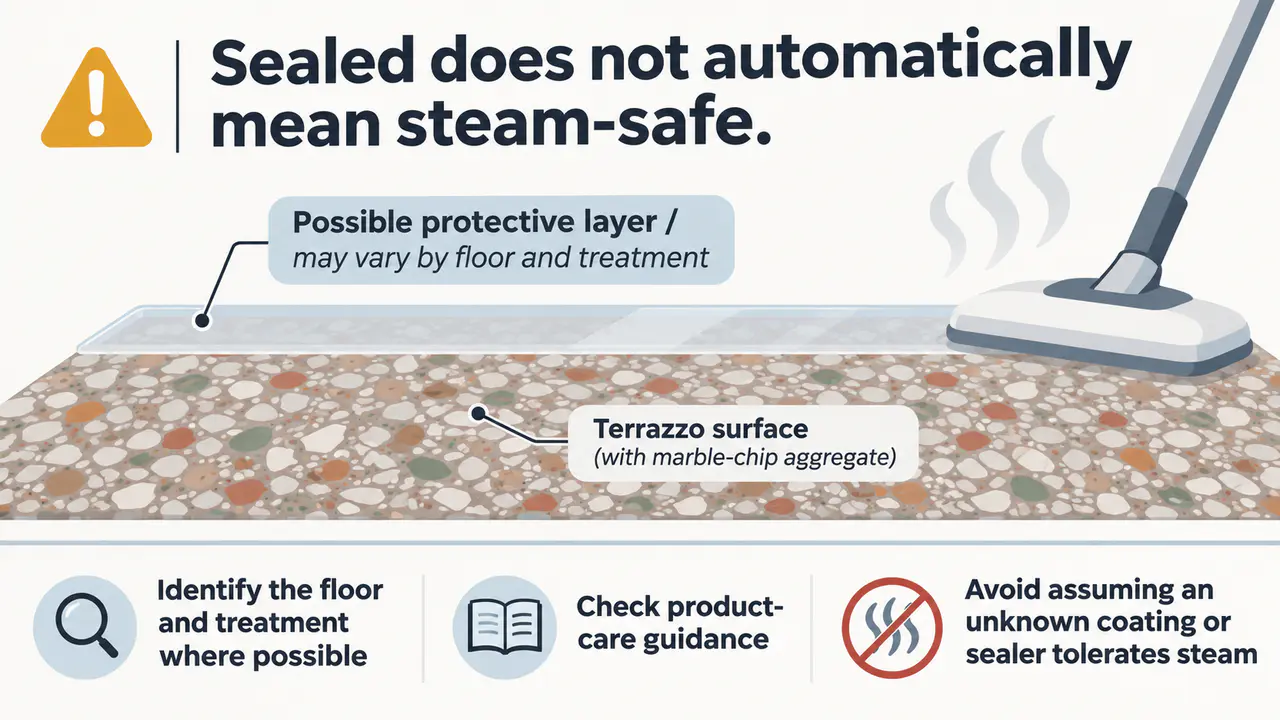
Not automatically. “Sealed terrazzo” can describe different protective treatments, and none should be assumed to make an unknown floor steam-safe.
- Impregnating sealers may reduce liquid uptake without creating a substantial surface film. They do not make cracks watertight or prevent scratches and acid etching.
- Topical, film-forming sealers sit on the surface and may change its sheen. Their tolerance of heat, moisture and cleaning products depends on the particular system.
- Older waxes, polishes and unidentified treatments make compatibility harder to establish. An uneven appearance may reflect these layers rather than damage to the terrazzo beneath.
Check both the floor-care instructions and the protective treatment’s maintenance guidance. If the treatment is unknown, a hidden-area trial cannot establish long-term compatibility with repeated steam cleaning. Damp cleaning is the more cautious choice.
The safer way to clean terrazzo routinely
- Remove loose grit first.
Use a soft dust mop or a vacuum with a suitable hard-floor attachment. Grit can abrade the cement binder, exposed marble chips and surface coatings. - Choose a compatible cleaner.
Use a low-residue, normally pH-neutral stone cleaner whose instructions confirm suitability for your terrazzo and finish. Measure the dilution: extra detergent can leave a dull or sticky film. - Use a well-wrung mop.
Clean with controlled moisture rather than flooding the floor. Pay particular attention around cracks, joints and damaged repairs, and remove standing water promptly. - Lift the dirt rather than spreading it.
Rinse or replace dirty pads and change the water as needed. Follow the cleaner’s rinsing instructions; if residue remains, remove it with clean water and a well-wrung mop. - Let the floor dry before normal use.
Keep people off wet areas to reduce slip risk. Clean spills promptly and use entrance mats to limit incoming grit.
Avoid vinegar, acidic bathroom cleaners and descalers on cement-and-marble terrazzo: acids can attack both the binder and marble chips. Also avoid bleach, unsuitable strong cleaners and residue-forming maintenance products. Do not add cleaning chemicals to a steam mop unless its instructions expressly permit them; appliance permission alone still does not establish floor compatibility.
What if ordinary mopping leaves the floor dull or dirty?
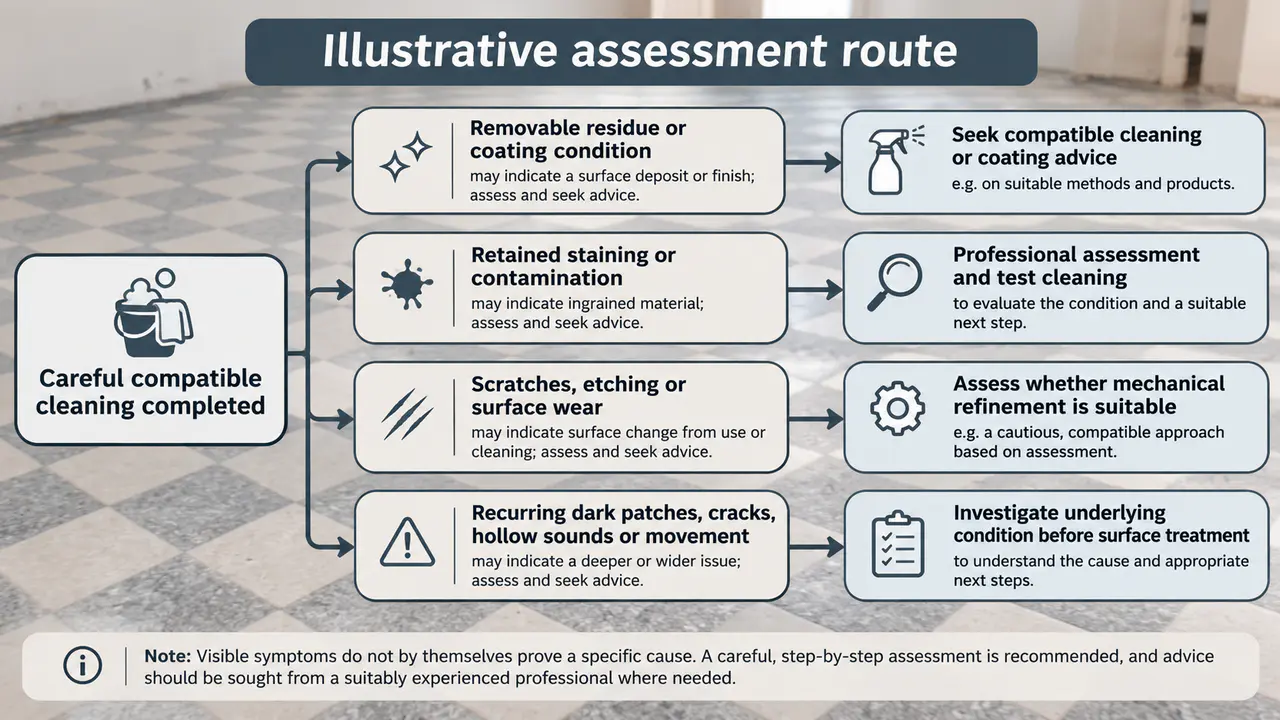
Increasing heat is not a reliable way to solve persistent dullness. The next step depends on what remains after careful cleaning.
| What you notice | Possible explanation | Useful next step |
|---|---|---|
| Sticky patches or mop streaks | Detergent residue or an accumulated surface treatment | Check dilution and rinsing; identify any coating before attempting removal. |
| Persistent dark traffic lanes | Retained soil, absorbed staining, coating residues or wear | Arrange a small, compatible test clean before deciding whether further treatment is needed. |
| Dull marks, scratches or rough patches | Etching, physical wear or surface deterioration | Have the surface assessed. Cleaning cannot replace material already lost. |
| White deposits or recurring dark patches | Cleaning residues, salt deposits, moisture-related effects or other causes | Identify the cause and assess relevant floor and subfloor conditions before coating or sealing. |
Professional deep cleaning may use an appropriate alkaline cleaner for particular contamination. Alkalinity is not automatically damaging: compatibility, dilution, contact time and thorough extraction or rinsing matter. This controlled process is different from repeatedly using an unsuitable concentrated household cleaner.
If the problem is physical wear or etching, suitable honing or polishing may help. Grinding and honing permanently remove material, so floor stability and available terrazzo thickness must be assessed first. Persistent dullness alone is not a reason to grind a floor.
Already used a steam mop? What to do next
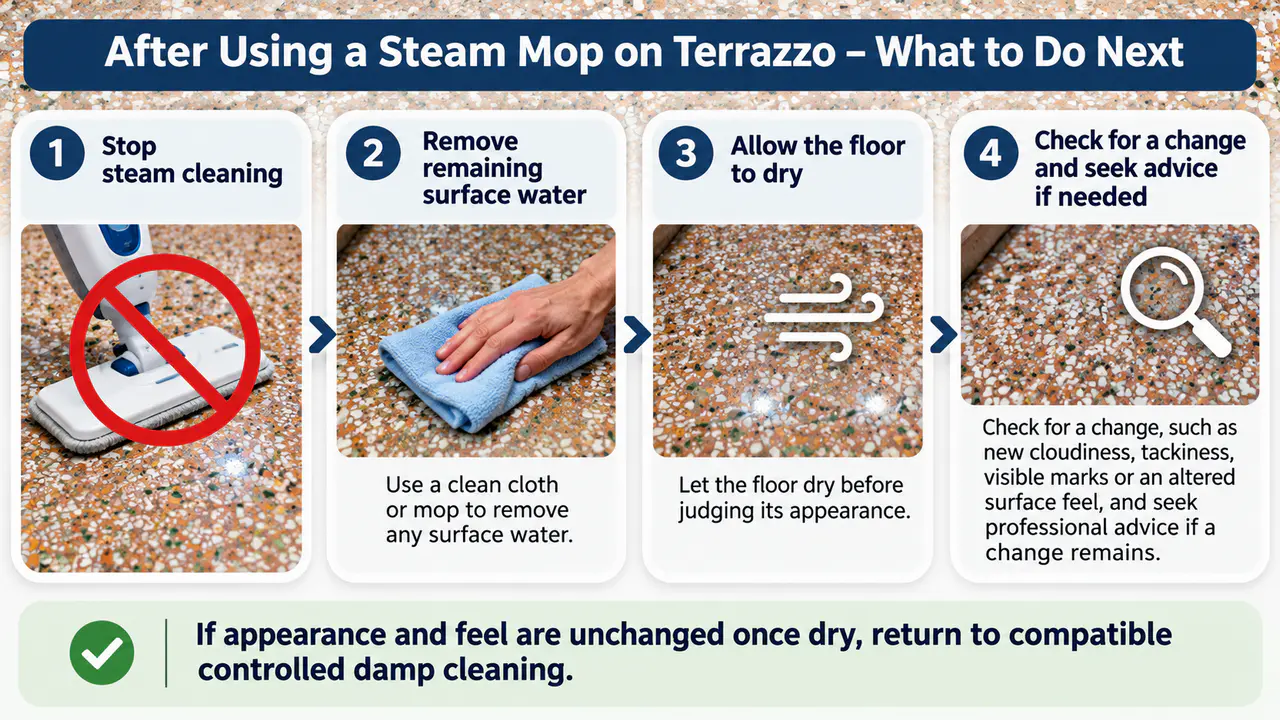
Do not assume the floor is damaged. Stop steam cleaning, allow the surface to cool, remove any remaining water with a clean cloth or mop, and let it dry before judging its appearance.
If the floor looks and feels unchanged, return to compatible routine damp cleaning. If you notice new cloudiness, tackiness, patchiness or a lifting coating, avoid adding polish, stripper or sealer to disguise it. The existing treatment needs identifying before corrective work is chosen.
Loose tiles, moving repairs, opening cracks or a sandy surface also warrant assessment rather than more aggressive cleaning. These signs do not establish a cause, and they should not automatically be attributed to the steam mop.
The practical decision
For most homeowners, there is little reason to introduce steam into routine terrazzo care. Remove grit, use a correctly diluted compatible cleaner and keep mopping moisture controlled. If that no longer gives an acceptable result, find out whether the issue is contamination, a coating or actual wear before choosing a stronger treatment.
Pro Tip: These are safe products you can use for daily Terrazzo maintenance and sealing when needed.
Disclosure: As an Amazon Associate, Abbey Floor Care earns from qualifying purchases at no extra cost to you.



David Allen — Abbey Floor Care
David Allen of Abbey Floor Care has more than 30 years of hands-on floor restoration experience. His experience includes cleaning, restoring and protecting terrazzo, with attention to the cement binder, existing finishes and appropriate maintenance methods.
Recent Posts:
We work throughout the country, just some of our work counties:
Copyright © 2026 Abbey Floor Care. Tile And Natural Stone Cleaning Consultants FAQ - Privacy Policy - Terms And Conditions
Abbey Floor Care is a participant in the Amazon Services LLC Associates Programme, an affiliate advertising programme designed to provide a means for websites to earn advertising fees by linking to Amazon.co.uk. As an Amazon Associate, we earn from qualifying purchases.