Victorian Tile Restoration Cost Hides Real Risks
Last Updated on July 6, 2026 by David
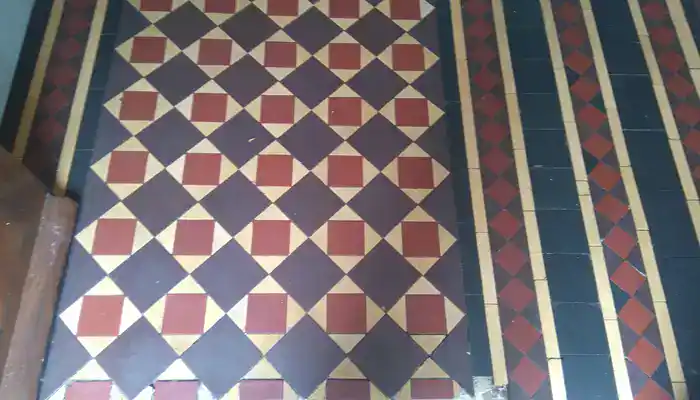
Minton tile restoration costs can feel confusing. The same Victorian hallway looks like one job, yet every quote seems to allow for different amounts of repair, cleaning, tile matching and finishing. In practice, the price usually follows the hidden condition of the floor: old waxes, acrylic coatings, unstable tiles, worn joints, missing pattern pieces, unglazed clay surface wear, no DPM moisture rise and the need for breathable sealers all affect labour, risk and final value.
Why Victorian tile restoration quotes can vary when the floor looks like one job
If your Victorian tile floor looks like one job but each quote describes different work, the difference usually starts with what each contractor has noticed. From the doorway, a hallway may look broadly dull, dirty or patchy. Once worn colour, loose areas, old grout gaps, missing pieces and surface build-up are separated out, though, they become individual cost drivers. A low quote often treats the floor as one uniform clean. A more detailed quote may be pricing several small problems, each needing a different level of care.
Why visible wear makes Minton tile restoration quotes vary
If you are trying to judge Minton tile restoration cost, the first question is what visible problems the quote is actually pricing. A Victorian tiled hallway can look like one tired floor from the doorway, yet hide several separate quote drivers once you look closer: worn colour, uneven old repairs, damaged grout lines, missing tiles, loose sections and old surface build-up. A low figure may be allowing for a general clean only. A more detailed price may be allowing for several visible defects that affect the likely result and the long-term value of the work.
If your Minton floor has dull red, buff or black areas that no longer look even, the issue may be more than surface dirt. Historic hallway floors often show decades of traffic wear, neglect, patchy colour and damaged high-use areas, especially between the front door, stairs and main rooms. That matters when comparing quotes because the contractor has to price realistic improvement, not promise a flat, new-looking finish that the original floor can no longer deliver.
Heavy foot traffic changes the value judgement because it separates what restoration can improve from what age has permanently marked. Gentle wear hollows and softened traffic lanes are part of the floor’s history. Surface grime, residues and tired coatings can often be lifted visually. Quotes differ when one contractor prices a quick freshen-up and another allows time to improve colour balance while being honest about the permanent character of the tiles.
Surface build-up that affects restoration cost and finish value
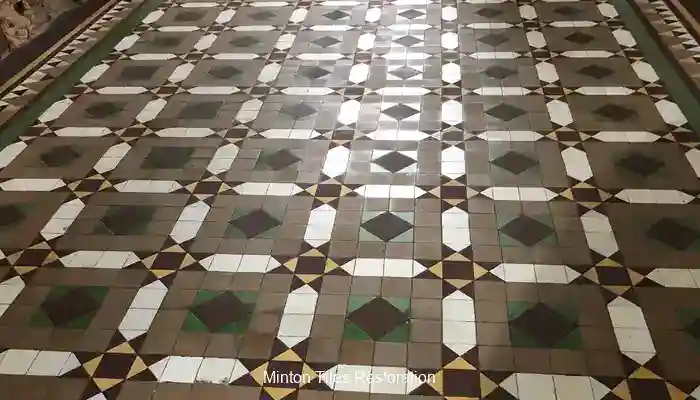
If your floor looks shiny in some places, dull in others or sticky after mopping, old coatings may be part of the price. Wax build-up, acrylic sealers, old maintenance products, grime and residues can make Victorian and Minton tiles appear darker, flatter or more stained than the tile body really is. This affects restoration cost because removing build-up safely is more involved than washing the floor, and poor removal can leave the finished surface patchy.
Old surface layers also make value harder to judge before the work starts. A contractor may not be able to confirm whether the colour is sound, faded, worn or stained until the coating has been assessed properly. A careful quote may therefore include allowance for sealer remover, soften-and-scrub work, residue control and final maintenance guidance. A cheaper quote that overlooks this layer can seem good value until the floor dries unevenly or old coating remains visible around borders, corners and edges.
Missing tiles, pattern continuity and the value of a matched repair
If your hallway has small gaps, mismatched patches or missing border pieces, the repair cost may be higher than the size of the damage suggests. Replacement work affects the value of a Minton floor because the pattern is judged as a complete design, not as individual tiles. Matching reproduction tiles, reclaimed pieces, source replacement tiles, existing pattern lines, missing pieces and pattern continuity all matter. One wrong colour, size or angle can draw the eye more than the original gap.
Tile matching adds cost because the job is not just filling a space. The contractor must consider colour, thickness, edge wear, grouted finish, repairs around the missing area and how the new or reclaimed piece will seamlessly integrate with surrounding tiles. Evidence-led examples such as worn Victorian tiles and Minton floor restoration show why repair visibility matters as much as the repair itself, because a technically sound repair can still reduce visual value if the original pattern is not respected.
Damaged grout lines that change a restoration quote
If the grout lines are cracked, powdery, missing or heavily discoloured, the quote may be pricing more than a cosmetic clean. Old grout, open grout gaps, deterioration and dark joints make a Victorian tiled floor look tired, but they also affect how finished and stable the restored floor will appear. Refresh grout or regrout work changes the cost because the joints need improvement without making historic lines look too wide, too bright or too modern.
Joint work becomes a bigger value factor when it sits beside loose, chipped or cracked tiles. Matching grout has to support the original layout visually, while the work must avoid surface smears, obvious bands or damage to nearby tile edges. A quote that simply says “regrout” is not always comparable with one that allows for selective old grout removal, fine joint control and sympathetic colour matching.
Loose tiles, raised edges and risk priced into the quote
If individual tiles move, sound hollow or sit proud of the surrounding floor, the price may include risk rather than decoration. Loose tiles, raised areas, sunken patches, cracks and moving edges can all affect what a contractor is prepared to guarantee. Even when the visible area is small, instability can influence the cost because it changes how carefully the floor can be cleaned, repaired and finished.
Loose tile instability also affects whether the finished restoration represents good value. A floor can be made cleaner, brighter and more attractive, but moving sections may still fail if they are ignored. The more honest quote may look higher because it includes repair areas, regrout decisions and restoration limits that are not obvious from a single photograph.
Moisture signs and breathable finishes in the cost decision
If your hallway shows white deposits, damp-looking patches or peeling old coatings, the finish choice can affect both cost and value. Original Victorian tiles were often fitted without a DPM, so damp, salts, drying time, winter rainfall and damp meter readings can matter before any sealing decision is made. A moisture-active floor cannot be priced like a dry modern installation with a simple surface coating.
Breathable protection adds value when the floor is still managing moisture because the sealer allows the floor to breathe — moisture can still move through it as it was designed to. Fully breathable impregnating sealer, water vapour movement, surface moisture checks, floor dry confirmation and stain repellency are pricing variables because they determine whether the finish is suitable. The hidden risk of inappropriate shiny finishes is explored in Victorian tile sealer problems often start below, and that risk is one reason cheaper finish-led quotes need careful reading.
Why coatings, loose tiles, grout work and tile matching alter the restoration price
If two Minton floors look similarly tired, the restoration cost can still be very different once the hidden labour is priced. Old waxes, acrylic sealers, residues, grime and sealer layers can disguise the real tile surface, while loose tiles and fragile edges make aggressive work risky. Victorian encaustic and geometric tiles are clay-fired at high temperature — their fired surface is chemically stable but physically vulnerable to abrasion and incompatible with acidic cleaning.
The price changes when hidden labour is needed, not when the tiles simply look old.
Worn joints alter the quote because refresh grout or regrout work has to respect old grout gaps, surrounding tiles and the fine joint character of the original floor. Missing pieces create another pricing variable because matching reproduction tiles or reclaimed replacements must follow the existing pattern, colour and thickness closely enough to protect the floor’s value. Colour-return examples such as patchy Victorian tile cleaning that reveals Minton colour show why the visible result depends on condition, not just square metres.
When a low Minton tile restoration quote risks poor value
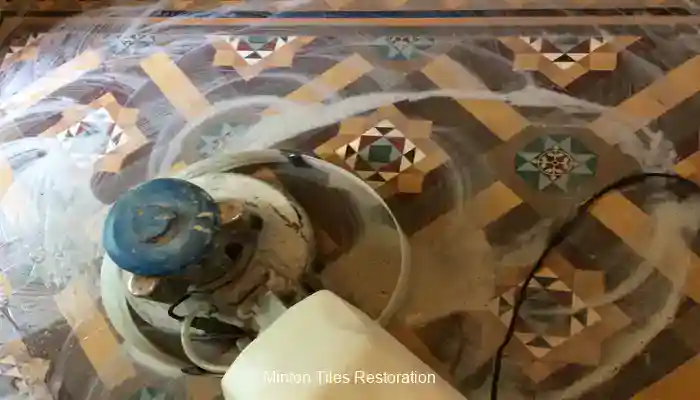
A cheap Victorian tile restoration quote can become expensive when it leaves out the problems that protect the floor’s long-term value. Simple cosmetic improvement may be enough for a stable floor with light residue and sound joints. Careful restoration needs more allowance for old coatings, loose sections, matching grout, missing pieces and realistic finish limits. High-risk work begins when a quote promises dramatic change without explaining what can be improved and what cannot be reversed.
Contractor capability matters because poor decisions on unglazed clay, old floors with no DPM, cracked joints and replacement pieces are often difficult to undo. A sound specification should separate cleaning, repair limits, coating removal, joint work and finish expectations rather than bundle everything into a vague promise. The safer method boundaries are set out in how to restore Victorian floor tiles safely, and those boundaries help you judge whether a low price is genuinely efficient or simply under-specified.
How to compare Minton tile restoration cost with replacement value
If you are weighing restoration cost against replacement, the real question is which option protects the floor’s value with the least unnecessary disruption. Restoration keeps the original pattern, colour variation, worn character and period layout while improving the floor enough for normal use. In my experience, the best value often comes from preserving sound original material and replacing only the missing pieces that interrupt the design.
Replacement can solve severe damage, but it can also introduce mismatch, disturbance and loss of original detail. Replacement depends on tile availability, matching reproduction tiles, source replacement tiles, existing pattern accuracy, grouted finish and whether the new work will seamlessly integrate with the old floor. The decision should compare long-term value, not just today’s invoice, because original Minton floors carry character that a new surface rarely recreates convincingly.
What a trustworthy Victorian tile restoration quote should explain
Before you accept a Victorian or Minton tile restoration quote, check whether it explains the floor’s value problem as clearly as the price. A useful quote should connect the visible condition with the allowance being made, so you can understand why one contractor is cheaper, dearer or more cautious than another. Use this diagnostic sequence before agreeing the work:
- Check whether the quote names the visible condition: worn colour, old coatings, damaged joints, loose areas, missing pieces or moisture signs.
- Check whether repair limits are stated honestly, especially where dishing, long-term wear or colour variation will remain visible.
- Check whether tile matching is described through colour, size, thickness, pattern continuity and how replacement pieces will blend.
- Check whether joint work is separated from general cleaning, including old grout, matching grout, grout gaps and surrounding tiles.
- Check whether coating removal and finish choice are explained without promising a new-looking surface.
Quote quality improves when the contractor explains condition, repair limits, matching work, old surface build-up and likely finish in plain language. The broader diagnostic and care context is covered in the Victorian and Minton tile cleaning hub, and that helps separate a properly specified restoration quote from a generic cleaning price. Colour loss guidance such as Victorian tile colour loss often is not permanent also shows why honest expectations matter before you decide whether the quoted cost represents good value.

David Allen — Abbey Floor Care
David Allen has worked with Victorian tile floors across the UK for over 30 years through Abbey Floor Care. His practical experience with material behaviour, restoration sequencing and long-term floor care informs every article published under the Abbey Floor Care name.
If you would like to apply to become the contractor for this area, please use the contact form.
Copyright © Abbey Floor Care.
We are proud to be your local stone floor cleaning, polishing, and restoration specialists for homes and commercial properties in Central Scotland.
With years of experience working with all types of stone floors, our friendly and professional stone floor cleaning services can’t be beaten on price or service.
FAQ - Privacy Policy - Terms And Conditions
Abbey Floor Care is a participant in the Amazon Services LLC Associates Programme, an affiliate advertising programme designed to provide a means for websites to earn advertising fees by linking to Amazon.co.uk. As an Amazon Associate, we earn from qualifying purchases.