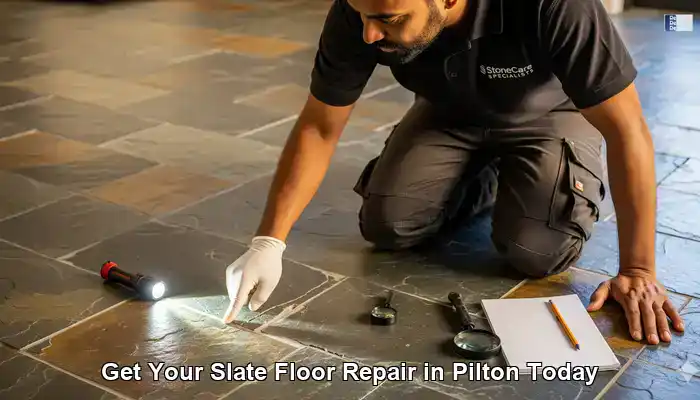
Slate Floor Repair Diagnosis in Pilton: Reading the Signs
Last Updated on July 2, 2026 by David
Slate floor repair concerns usually start when cracks, chips, flaking, dull patches, uneven colour, worn grout, raised edges, old sealers, or damaged tiles stop behaving like ordinary dirt. Layered stone, riven texture, moisture movement, failed sealant, traffic wear, cracked pointing, and visible height differences can make the same floor hard to read. Professional diagnosis separates surface cleaning issues from structural change before any repair route is chosen.
Slate floors in Pilton homes often need diagnosis before repair because similar-looking marks can come from traffic abrasion, layer separation, trapped moisture, coating accumulation, grout failure, or uneven stone tiles.
When slate cracks, chips, flakes, fades or leaves worn grout that cleaning cannot explain
Slate floor problems often begin with a simple uncertainty: the floor looks marked, uneven, or damaged, but it is not obvious whether the issue sits on the surface or has altered the stone itself. Cracks, chips, loose grit, pale pathways, dark grout joints, height differences, and tired patches can all appear on one older floor, especially in kitchens, hallways, garden entrances, and period property routes where footfall concentrates. The first diagnostic step is to separate visible dirt from signs that the slate surface, grout, pointing, or old protective layer no longer behaves evenly.
Cracks And Chips That Keep Catching The Eye
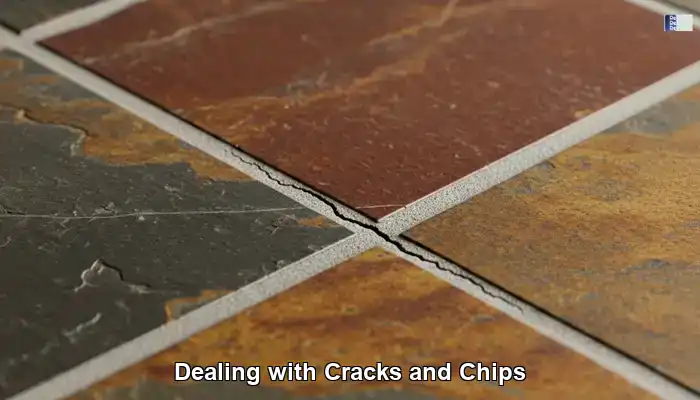
Cracked and chipped slate tiles usually draw attention because the damaged edge sits lower than the surrounding surface, casting a small shadow and trapping dark soil during every mop. What starts as a hairline fracture can become a prominent dark line as dirt works its way into the break.
The important point is recognition: a visible crack or chipped corner does not automatically mean the whole floor needs replacing, but it does move the floor beyond a normal cleaning question. Because a riven surface already has natural ridges and troughs, it can be genuinely difficult to tell whether a rough patch belongs to the original texture or to later damage.
Raised edges, uneven stone tiles, and slight height differences can make the floor feel less predictable underfoot, particularly near thresholds and doorways. Those signs matter because they may later influence whether repair material, grout repair, colour matching, or a replacement slate tile becomes relevant.
Flaking, Grit And Thin Layers That Seem To Come Away
Flaking slate creates a different sort of concern because the surface can feel as though it is shedding. Fine, gritty debris may appear straight after sweeping, or thin, wafer-like pieces may lift away from the corner of a tile. Homeowners often read this as dirt returning, but the practical clue is in the texture: soil wipes away, while a weakened surface keeps feeling open, gritty, or uneven underfoot.
Peeling layers and rough flakes tend to appear near areas exposed to water, heat, or repeated movement — external doors, utility rooms, and kitchen traffic lanes place more stress on a floor than a quiet room, so the same slate installation may look sound in one area and tired in another. A flaking surface does not mean the slate itself lacks durability; it means the symptoms need reading in context, including the stone type, the finish, the old coating, the grout condition, and whether moisture has influenced the area.
Fading, Dull Patches And Colour Changes That Do Not Wash Out
Faded slate can look clean but still disappointing because the colour no longer has depth. Pale, chalky-looking lanes commonly trace the exact paths people walk through a home, where fine grit carried in on shoes has worn away at the upper surface like sandpaper over time. The homeowner may keep changing cleaning products because the floor still looks dirty, but dull patchiness can remain after cleaning because the problem is not always removable soil — it may be the visible result of surface wear, old sealant failure, or uneven protection.
Colour variation is especially confusing on riven slate because natural mineral tones already vary from tile to tile. Welsh slate, Indian slate, Chinese slate, and Brazilian slate can each respond differently to age, moisture, wear, and old sealers, so some tiles stay dark while others fade or shift depending on the light in the room. That pattern matters diagnostically because true natural variation usually looks settled and consistent, whilst wear-related fading follows a repeated shape — clustering around chair routes, sink zones, and doorways rather than spreading evenly.

Worn Grout, Dark Joints And Uneven Edges
Worn grout changes the way a slate floor reads because the joints can dominate the room before the tiles themselves look badly damaged. Dark grout lines may come from contaminated mop water, worn joint surfaces, recessed pointing, or moisture held at the edges, and recessed joints cast their own small shadows — so even a reasonably clean floor can look tired. What we often see is the tiles brightening slightly after mopping while the grout itself stays dark.
Raised tile edges and uneven slabs add another layer to the decision. Older floors — particularly in UK cottages, farmhouses, and extended kitchens — may carry slight movement, variable bedding, or installation height differences that a smooth modern floor would never show. A breathable sealer can protect a suitable surface, but it cannot remove a trip hazard or flatten stone tiles without changing the floor. Those signs belong in the diagnosis because unevenness, worn pointing, and old floor movement can influence whether home care remains enough or professional assessment becomes sensible.
Cleaning That Stops Giving A Reliable Answer
Routine cleaning loses its diagnostic value the moment the same marks return to the same places. A mop can lift loose soil, but it cannot prove whether a crack is stable, whether a flaking area is still shedding, whether old sealers are holding residue, or whether pale pathways come from surface wear. The floor may look as though the cleaning routine itself has failed, when the real issue sits in the condition of the slate, the grout, or the protective finish underneath.
Correct maintenance still matters because pH-neutral cleaning, grit removal before wet mopping, and resealing at the right interval extend the life of slate by reducing abrasion and protecting the surface character. A professionally restored and correctly sealed floor is significantly easier to clean and maintain than a worn or incorrectly treated one. Steam cleaning should be avoided because heat and moisture can soften old coatings, drive water into riven texture, and leave the surface harder to read afterwards; practical routine-care principles are covered in the slate cleaning and maintenance guide where ongoing care is the reader’s main need.
Why the same slate floor can show wear, patchiness and loose edges in different places
A slate floor can look pale in one walkway, dark around the joints, and rough at an edge even when the whole room receives the same cleaning routine. Slate wear rarely spreads evenly across a floor because traffic, moisture, coating age, and stone origin place different loads on different areas. Busy walkways create pale pathways, loose grit increases microscopic breakdown, and surface dulling develops where footfall repeatedly abrades the upper colour. Edge build-up from old sealers can hold residue in recessed areas, while open joints can hold trapped water and create chalky residue or finish unevenness after drying.
Layered slate structure is the deeper reason these symptoms vary. Slate is a fine-grained metamorphic rock that cleaves along natural planes; its layered structure prevents mechanical polishing, limits restoration to cleaning and sealing, and makes the stone sensitive to aggressive cleaning chemistry. Mineral planes, cleavage separation, geological formation, and structural characteristic all matter because weak boundaries can open into layer separation, lamination loss, flaking, and local structural breakdown.
Slate problems often look uneven because the floor does not fail evenly.
Moisture movement can connect several symptoms that seem unrelated. High moisture levels, sealing too early, substrate moisture, vapour movement, and insufficient drying period can leave trapped water below a surface film or trigger chalky residue. Sealer failure is the loss of bond, permeability balance, or protective function in an old slate finish. The homeowner sees dull patches, dark edge build-up, uneven sheen, residue holding in the texture, or areas that look patchy again soon after cleaning. Professional correction removes unstable coating where needed, allows the floor to dry properly, and reseals with a compatible breathable finish once the slate is clean and stable. A deeper diagnostic explanation of why some slate floors fade, darken, or stay patchy is available in the guide to slate floors that change colour from inside the stone, which keeps the focus on damage cause rather than cleaner selection.
When slate damage is more serious than ordinary surface dirt
Repeated scrubbing of flaking slate can make the true condition harder to read, because loose edges, peeling layers, and widened cracks produce fresh debris as fragile edges are aggravated. Surface dirt normally shifts, lightens, or changes position after careful cleaning. Physical change returns in the same shape and position once the floor dries, especially where a flaking surface, moisture stress, heat exposure, weakened surface, or seal failure has already affected the riven texture.
Coating accumulation creates another threshold because topical excess, edge build-up, application residue, and finish unevenness can hide the true slate surface. A floor may look dark in recessed areas, pale in traffic lanes, and glossy at the edges because old sealant and waxes no longer wear evenly. That pattern matters because adding more product on top can worsen adhesion, trap contamination, and leave the floor less stable visually.
Moisture-related warning signs need careful handling because trapped water can lift residues, encourage chalky deposits, and keep grout looking dark after the rest of the floor dries. Surface breakdown that widens, sheds grit, or returns after normal cleaning belongs with damage diagnosis rather than routine cleaning; the dedicated guide to slate floors that keep shedding grit gives deeper context for that specific symptom. Accurate diagnosis helps the floor look significantly better after the correct professional route, and in many cases the restored appearance improves dramatically compared with the original installation.
How visual diagnosis shows whether slate needs home care or professional assessment
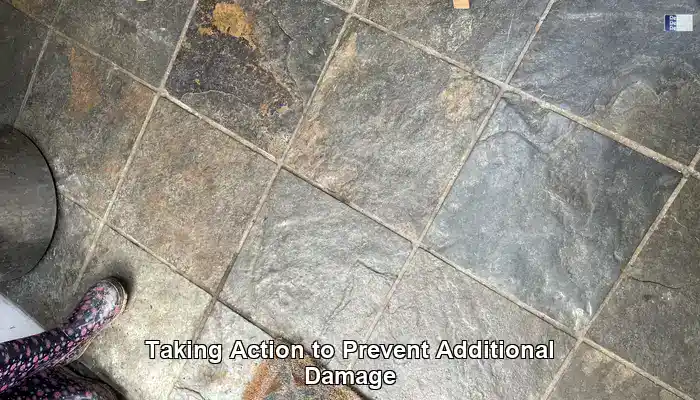
If cracks, chips, dark grout, worn lanes, failed coatings, or uneven tile height appear together, the floor needs reading as a whole rather than as separate marks. Visual diagnosis reads the whole slate floor before treatment because those symptoms influence each other. Raised slabs, old floor movement, pointing condition, damp proof membrane limits, and breathable sealer requirements all matter where stone tiles show height differences or a possible trip hazard. A fine-honed slate floor has a smooth, consistent surface that diffuses light evenly, whilst an impregnating sealer leaves the natural riven texture unchanged, and a topical sealer adds a low surface sheen.
Diagnostic checking should stay observational rather than instructional, because this page helps the reader identify the condition before choosing a remedy. The following sequence gives a safe recognition framework:
- Visible cracking and chipped edges indicate whether damage follows impact, subfloor movement, or isolated edge wear.
- Flaking, peeling layers, and loose grit indicate whether the surface itself continues to shed after cleaning.
- Recessed grout and dark joints indicate whether contaminated water, worn pointing, or moisture at the edges changes the floor’s appearance.
- Dull patchiness and colour variation indicate whether high traffic areas, surface wear, colour fading, or old coating accumulation follow a repeated pattern.
- Uneven tile height indicates whether raised edges, old slabs, or installation movement need professional assessment before any finish decision.
- Repeated return after cleaning indicates whether the problem behaves like removable soil or a deeper slate condition.
Professional assessment becomes more likely when several signs appear together rather than as one isolated mark. Flexible bedding, compatible filling material, sanded grout, grout repairs, colour match, replacement slate tiles, and localised tile replacement all depend on what the diagnosis finds; those are remedy decisions rather than cleaning steps. Correct assessment also protects longevity because pH-neutral care, dry grit removal, and dry completely before resealing principles preserve permeability, adhesion, and the protective layer that helps slate stay cleaner longer.
Where to go next when slate symptoms point beyond routine cleaning
If cracks, chips, flaking, dull patchiness, uneven colour, dark grout, or height differences keep returning after normal cleaning, the next page should match the actual condition. Cracks, chips, flaking, dull patchiness, uneven colour, dark grout, and height differences do not all need the same response, so cleaner selection and cross-material advice would blur the diagnosis. Broader slate behaviour, old floor moisture, riven surface limits, breathable sealer choices, and long-term repair concerns are brought together in the main slate floors guide for UK homes at the point where the reader needs wider context.
Correct next steps depend on whether the floor behaves like a maintenance issue, a coating problem, a moisture concern, or a structural change. Professional restoration will make the floor significantly easier to clean and maintain after the right diagnosis, but raised edges, active fissures, and deep structural movement need careful judgement before any cosmetic improvement is promised. A clear diagnosis gives the homeowner the practical result that matters most: confidence about whether home care remains sensible or specialist assessment is the safer route.

David Allen — Abbey Floor Care
David Allen has spent more than two decades diagnosing and restoring natural stone and tile floors in UK homes. His work focuses on explaining what the floor is doing before recommending a treatment route, so homeowners can understand the difference between cleaning, sealing, repair and restoration.
If you would like to apply to become the contractor for this area, please use the contact form.
Copyright © Abbey Floor Care.
We are proud to be your local stone floor cleaning, polishing, and restoration specialists for homes and commercial properties in Central Scotland.
With years of experience working with all types of stone floors, our friendly and professional stone floor cleaning services can’t be beaten on price or service.
FAQ - Privacy Policy - Terms And Conditions
Abbey Floor Care is a participant in the Amazon Services LLC Associates Programme, an affiliate advertising programme designed to provide a means for websites to earn advertising fees by linking to Amazon.co.uk. As an Amazon Associate, we earn from qualifying purchases.