
Slate Floor Cleaning And Sealing Saved Colour
Last Updated on June 17, 2026 by David
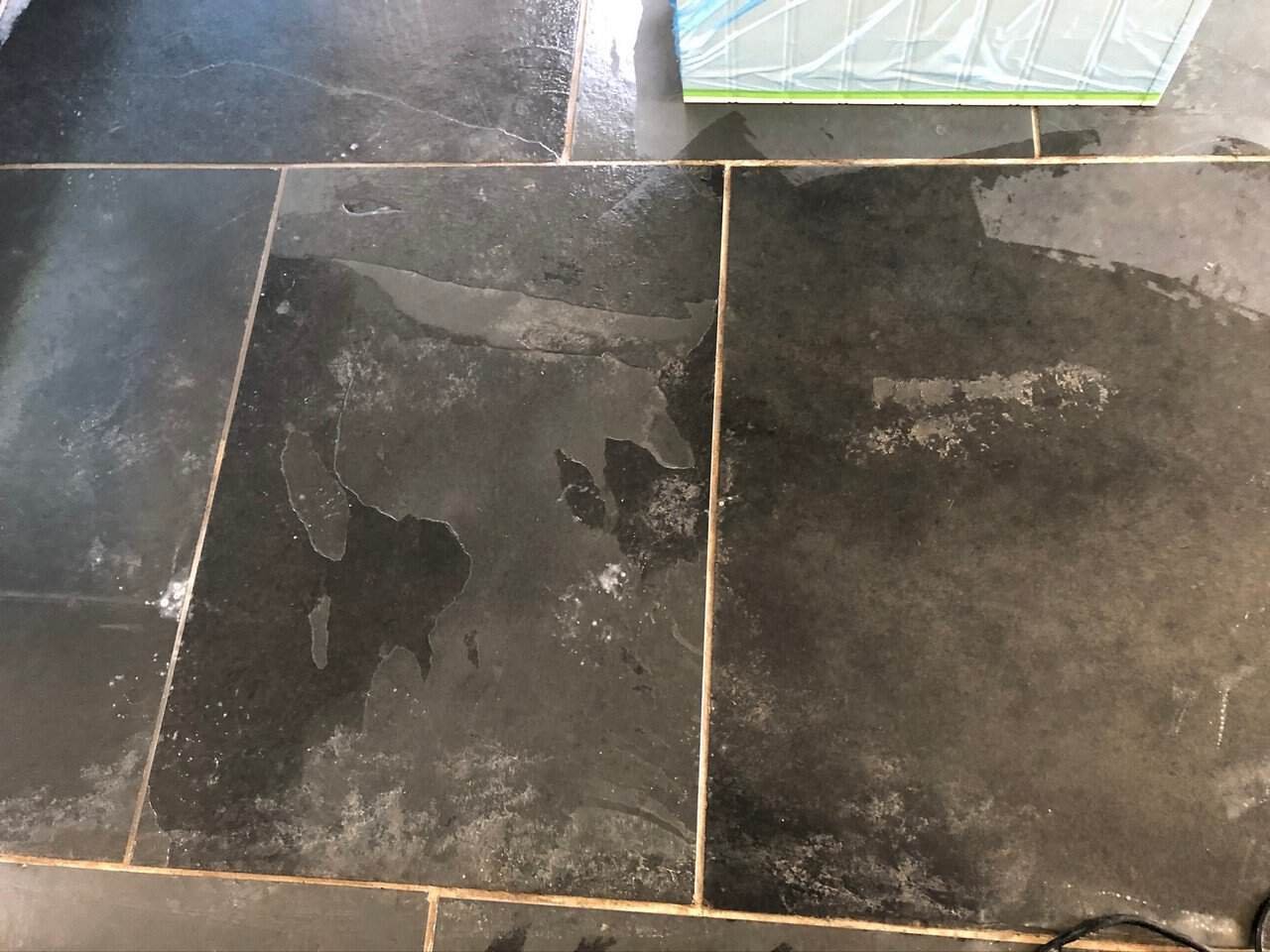
The older tiles still had character worth saving.
Heavily soiled slate tiles in Priddy had lost their colour, definition and natural character
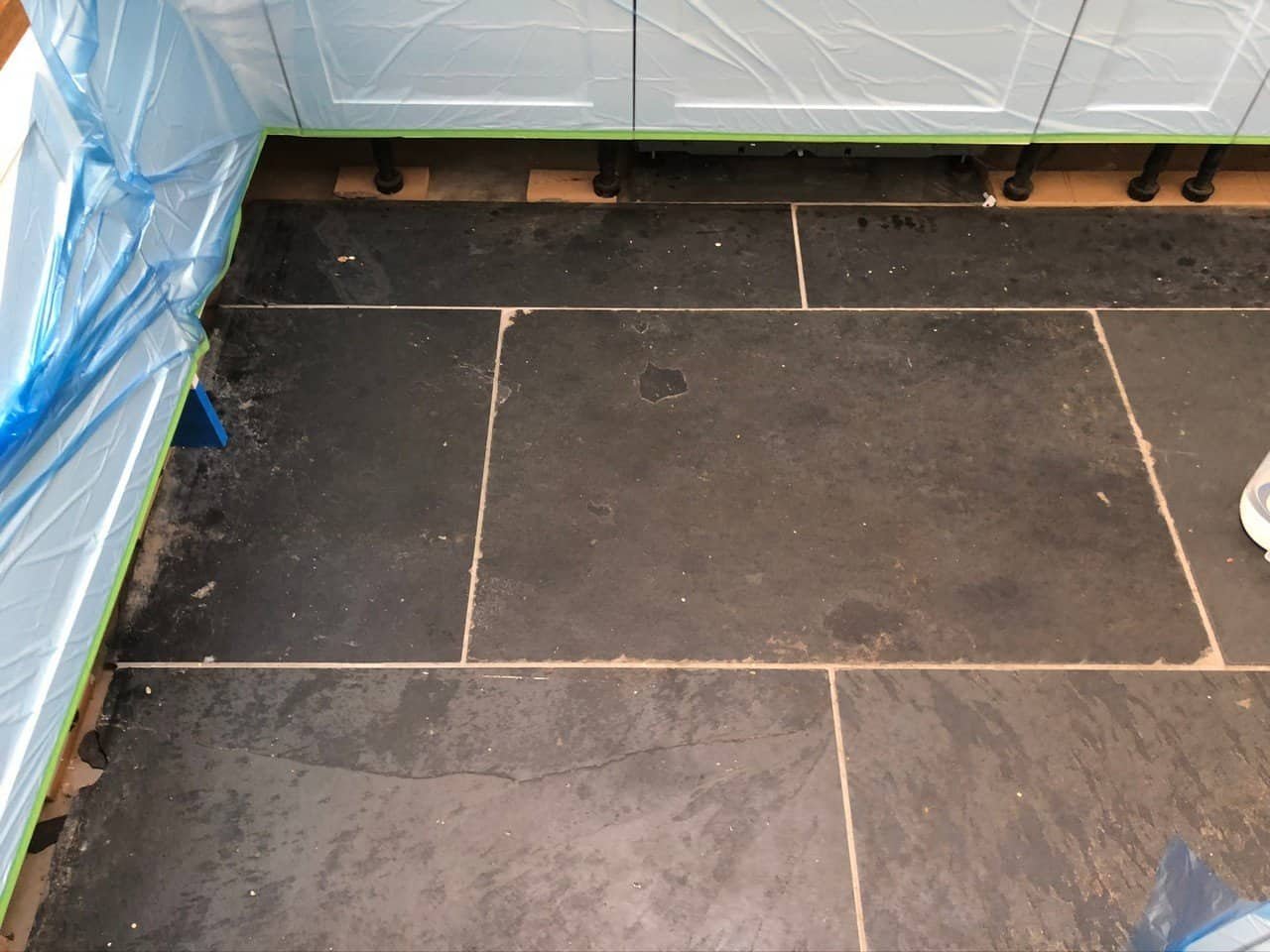
The Floor Looked Tired Rather Than Failed
If your slate looks heavily soiled, flat and colourless even though the tiles are still sound, the floor may be hiding its original character rather than failing. In Priddy, the homeowner was looking at a kitchen and hallway floor that had become dull, dark through the joints and visually tired along the main walking routes. The tiles were not breaking up across the room, and the layout still worked well for the property. But the floor no longer looked like a feature.
The Priddy slate had lost much of the colour variation that usually makes an older floor attractive in a rural Somerset home. The tile faces looked muted, the grout lines had darkened, and the naturally split surface no longer caught the light with any life. Regular cleaning had stopped making a meaningful difference, so the floor felt old and worn before anyone looked closely at the individual tiles.
The homeowner described the slate as looking old, very dirty and dull, with grout coming loose in places. That mattered. It separated a floor that looked neglected from one that had genuinely reached the end of its useful life. This project began with a sound base, but the visible surface condition had hidden the floor’s original definition.
The Priddy Setting Made The Wear More Visible
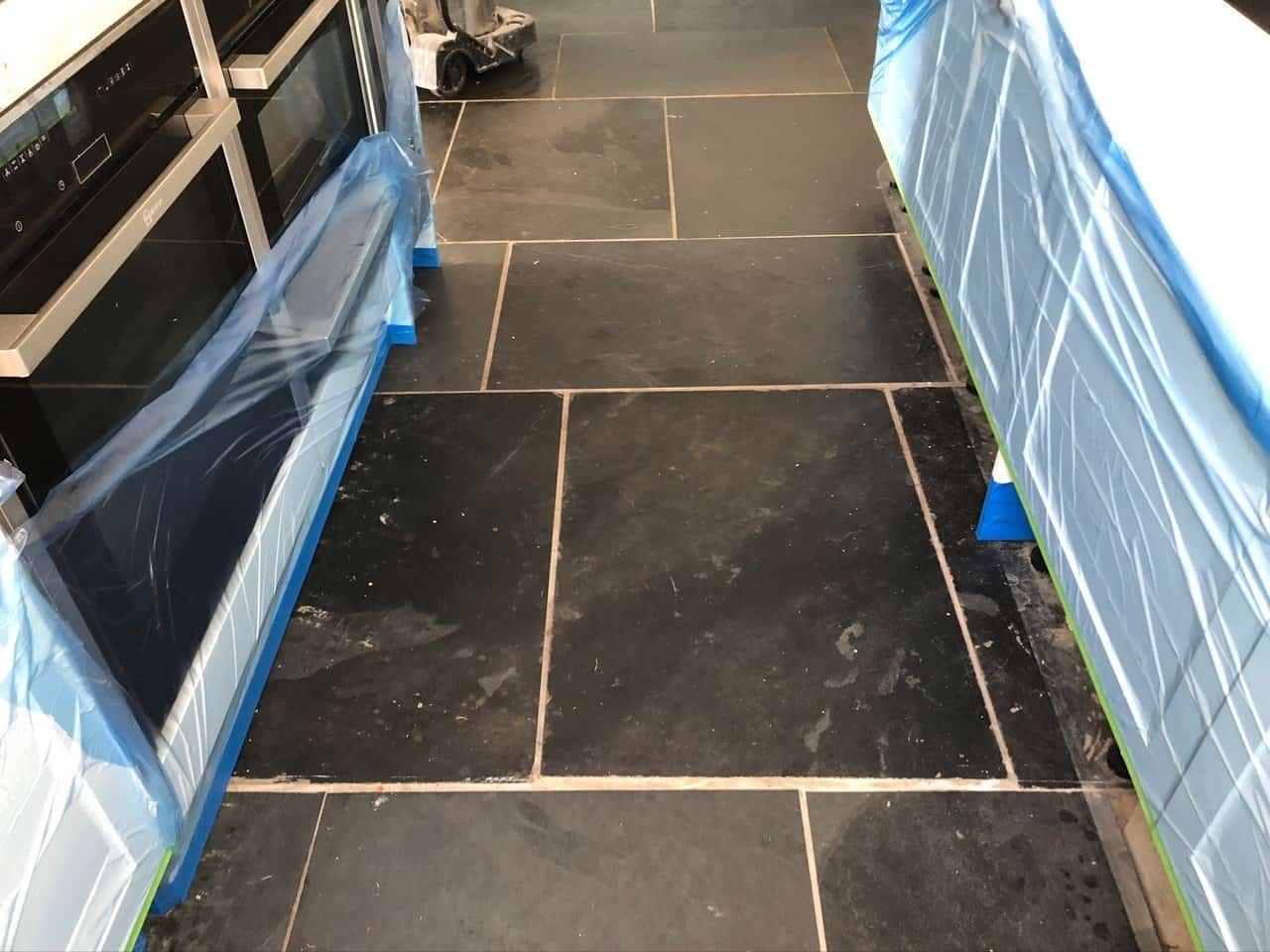
Priddy properties are mainly rural Mendip homes around the BA5 Wells postcode area, with older stone cottages, detached farmhouses, converted barns and some later detached houses rather than dense terraces. Slate floors in these homes are most often found in entrance halls, boot rooms, kitchens, utility areas and open-plan kitchen-dining spaces, where the floor has to cope with daily routes in from gardens, yards and parking areas. In older cottages and farmhouses, the slate may sit over less modern subfloors, while converted barns and newer extensions often create larger mixed-use family rooms with direct outdoor access. This makes the floor part of the working fabric of the house, not just a decorative surface.
The main challenge in Priddy homes is that rural foot traffic brings in grit, soil and moisture from lanes, gardens and outbuildings. Over time, that can dull the slate, darken grout lines and leave uneven wear through the busiest routes. Older stone-built properties can also hold more background moisture at floor level, so cleaning and sealing need to respect how the building and the slate floor breathe.
The kitchen and hallway setting made every dull patch more obvious because the floor sat in a practical route through the home. Garden grit, damp shoes and daily movement had marked the busy lanes more than the quieter edges. What we often see here is not a neat, even patina, but an uneven loss of colour and definition that makes the whole room feel less cared for.
The Older Surface Still Had Character Worth Keeping
The naturally split slate surface still gave the floor its age, texture and local character. The tiles had ridges, troughs and natural colour changes rather than a flat manufactured look, so the visible problem was the layer of soil and dullness sitting over that character. The right outcome had to keep the textured finish intact, not make the floor look newly replaced.
The surface texture gave the Priddy floor much of its appeal because it suited the older rural setting. A completely flat appearance would have looked wrong in this type of home, especially where the floor worked alongside kitchen use, hallway traffic and outdoor access. The client wanted the floor brought back to life, not stripped of the age that made it belong in the property.
The visual loss showed most clearly where the original colour variation should have stood out. Darker and lighter stones had blurred into one tired field, and the grout lines no longer framed each tile clearly. A floor that should have anchored the room had become background noise.
The Homeowner Needed Proof That The Floor Could Be Improved
The before condition made this a clear cleaning and sealing project rather than a replacement case. The slate still covered the kitchen and hallway properly, and the overall floor layout remained useful. The problem was that the finish, soil level and worn-looking surface had stopped the floor from contributing to the appearance of the home.
The first impression was emotional as much as practical, because a tired stone floor can make an otherwise improved room feel unfinished. The homeowner had a working floor, but it no longer gave the depth, colour and permanence that slate should provide. That was why the project had to show a visible transformation from dull and contaminated to clean, defined and protected.
The case also needed to stay realistic about what the floor was. Natural variation in slate is a feature, not a fault, and older rural floors rarely look like uniform showroom tiles. The target was a floor that looked significantly better, read as clean again and kept its authentic surface character.
Old sealer and trapped grime were leaving the floor flat, tired and hard to keep clean
Sealer build-up and trapped grime can make a slate floor look dirty again soon after cleaning because contamination sits in the surface and grout. On the Priddy floor, there was coating accumulation, edge build-up and uneven finish where old protection had broken down in some areas but remained as topical excess in others. Practical reasons for dull slate after mopping are covered in why slate floors stay dull after cleaning, and the same pattern was visible in this project.
Old sealer can trap grime and make sound slate look far worse than it is.
The textured surface made the flat appearance more stubborn because recessed areas held application residue and soil below normal mop contact. The floor was not simply dusty. Its old protection, surface contamination and darker grout were working together to hide the original definition. That combination explained why ordinary cleaning had stopped producing a clean-looking result.
Careful cleaning revived the slate without flattening the older riven surface
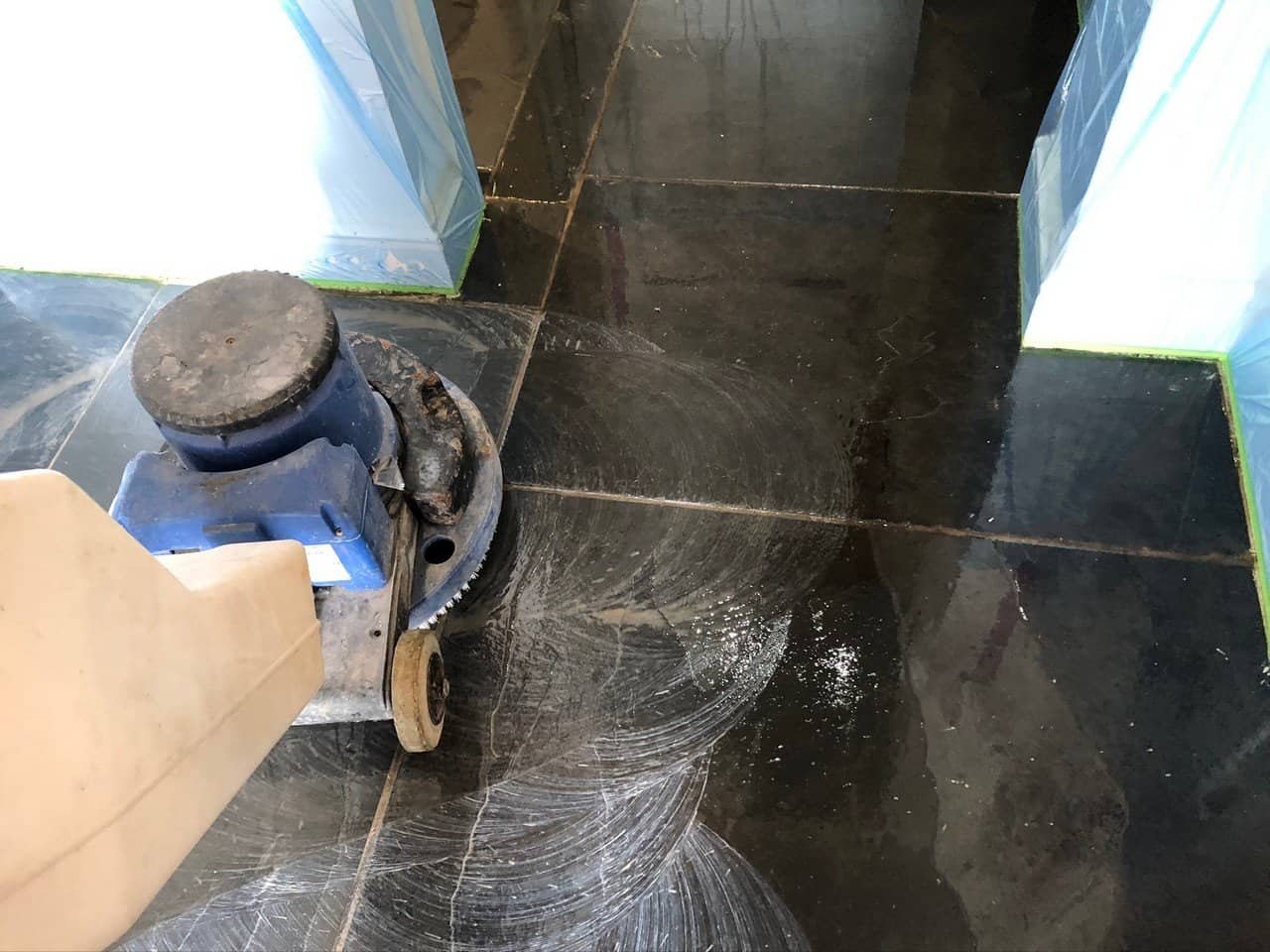
Rushing the cleaning on older riven slate can lift dirt, but it can also damage the character that makes the floor worth saving. The Priddy floor was treated as a completed case study, not a DIY method, so the work followed the floor’s condition rather than a fixed recipe. Slate is a fine-grained metamorphic rock that cleaves along natural planes; its layered structure prevents mechanical polishing, limits restoration to cleaning and sealing, and makes it sensitive to aggressive cleaning chemistry.
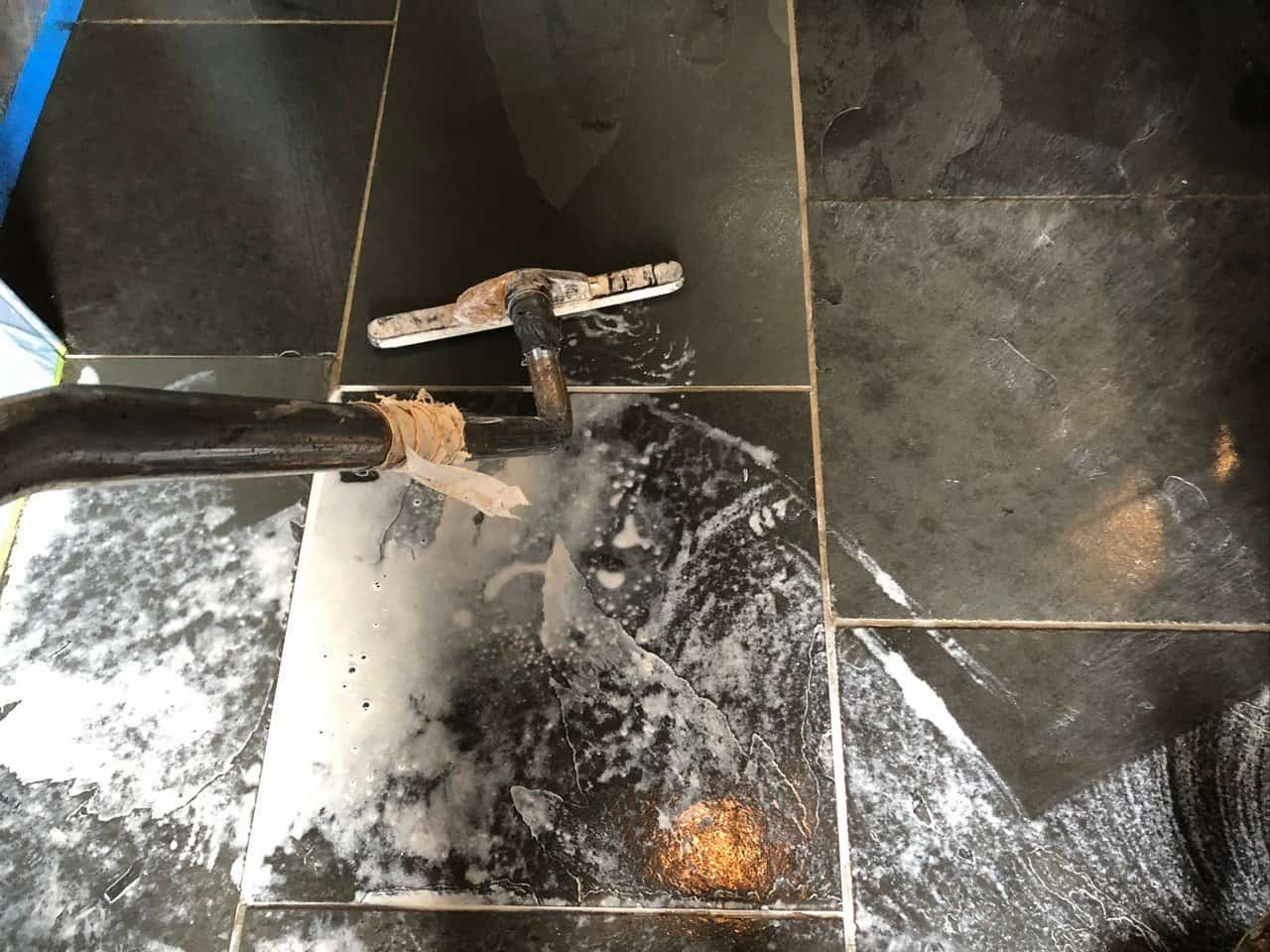
Controlled alkaline cleaning loosened organic soil through degreasing, emulsification and surfactants working at an alkaline pH. The cleaning solution was given suitable dwell time, then the softened dirty solution was agitated with a slow-speed machine and rinsed thoroughly with clean water so residue did not remain on the floor. The aim was grease removal and contamination release without scrubbing away the older textured finish.
Slurry extraction then removed the loosened residue before it could settle back into the riven surface. A wet vacuum, pressurised rinse and capture process, and careful contamination control lifted the slurry, fresh rinse water and remaining soiled residue from the surface and grout. Similar case evidence can be seen in slate floor cleaning that saved a sound Corris floor, where residue removal also mattered more than aggressive surface change.
Before and after: stronger slate colours, cleaner grout and a protected historic finish
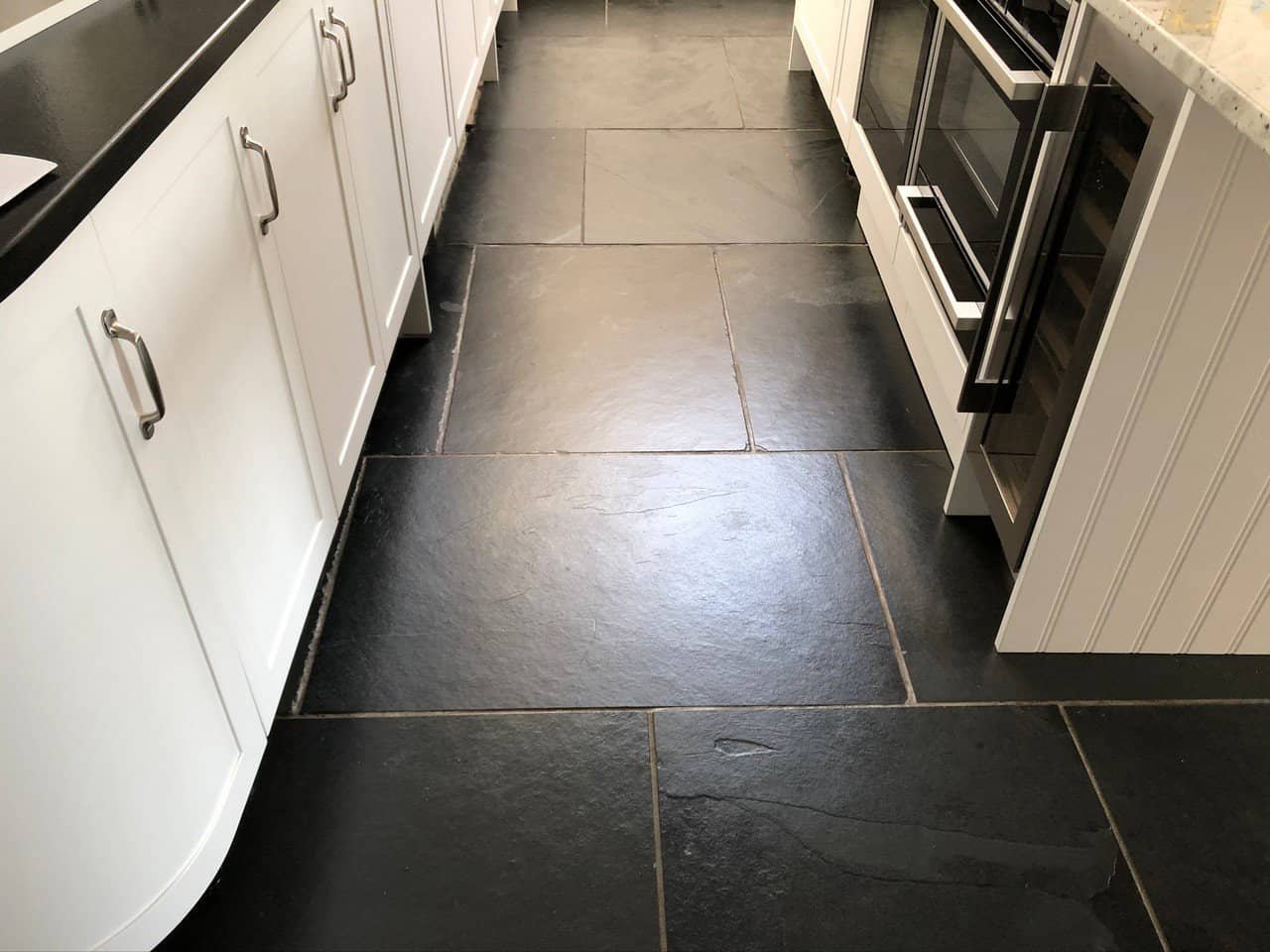
Before cleaning, the slate looked muted and tired. After cleaning and sealing, the colours, grout definition and historic character read clearly again. The tile faces had lost contrast, the grout lines looked dark, and the floor no longer acted as the strong visual feature expected in a kitchen and hallway. The surface looked fundamentally sound, but the old finish made it appear far worse than it was.
After cleaning, the floor regained colour depth, clearer tile edges and a low-sheen protective finish that still suited the older property. A urethane coating was used over a dry substrate requirement to give high-durability wear resistance, a controlled gloss sheen and a richer wet-look finish without turning the floor into a separate sealing guide. David Allen’s 30 years of stone floor experience supported the judgement needed to balance colour revival with character retention.
The restored floor became significantly easier to clean and maintain because grime was no longer sitting in failing residue and open-looking joints. Correct ongoing maintenance — pH-neutral cleaning, grit removal before wet mopping and resealing at the right interval — is the single most important factor in extending the floor’s life, with broader routines covered in how to clean and seal a slate floor. Steam cleaning should be avoided because heat can soften protective films and force moisture into the textured surface.
Why this Priddy slate floor needed cleaning and sealing rather than a separate repair process
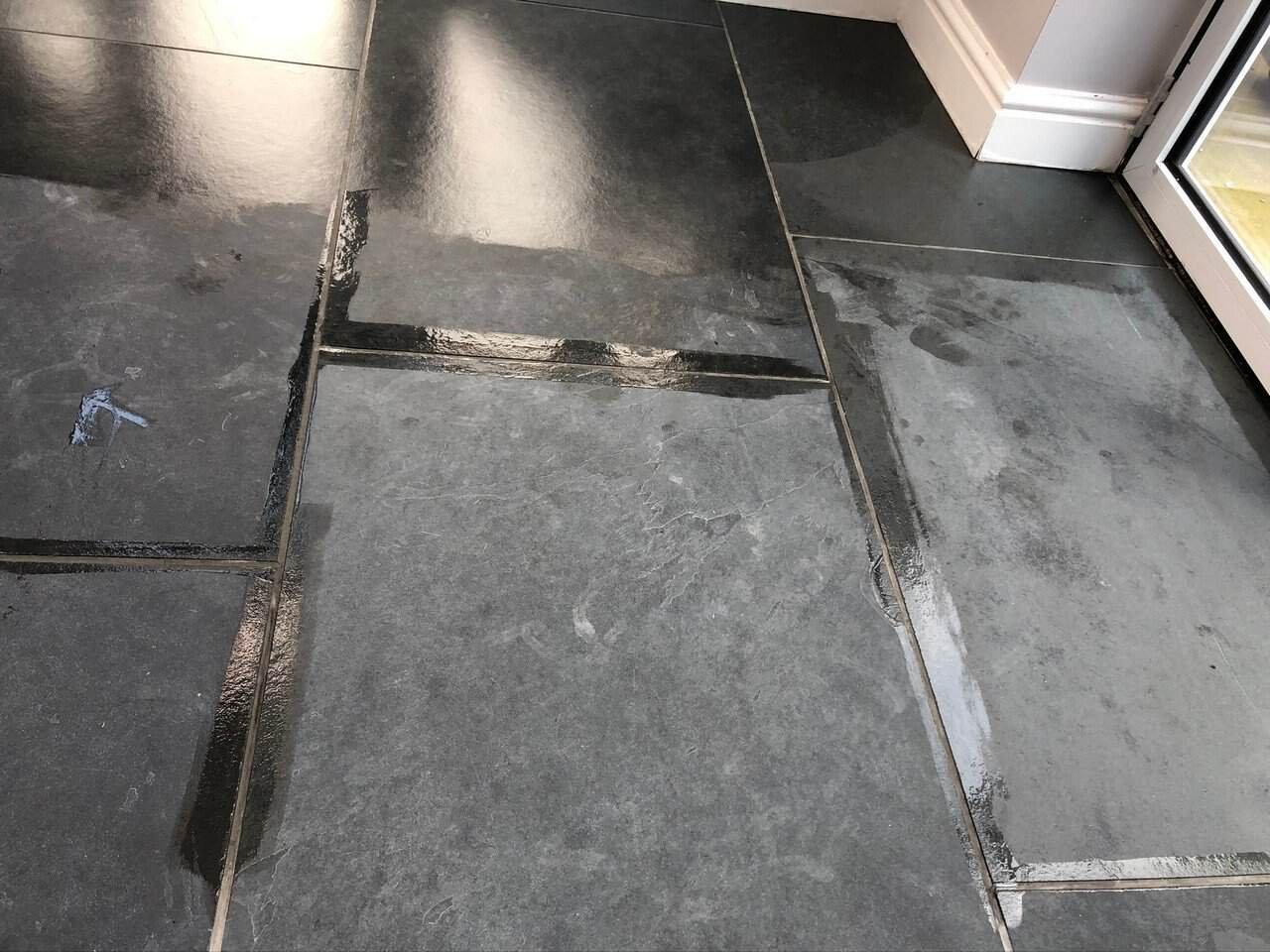
This project belongs under slate cleaning and sealing because the floor needed controlled cleaning, protection and lifecycle context, not a separate repair workflow. The loose-looking grout and tired surface were part of the same visible condition: old coating accumulation, recessed grime and worn protection had made the floor hard to read. The work corrected appearance and cleanability without turning the case into replacement, grinding or independent repair advice.
The protective finish was chosen to reduce rapid re-soiling after the cleaning had exposed the true condition of the slate. Impregnating sealers maintain a natural finish, while topical systems are used where a colour-enhanced or low-sheen finish is required. That distinction matters because old surface film and new protection behave differently. Broader slate behaviour, cleaning, sealing and lifecycle decisions are explained in slate floors in UK homes, including how different installations respond over time.
The Priddy result proves the value of matching the intervention to the real problem. The floor looked dramatically improved, stayed authentic to the home and became simpler to care for because the work focused on cleaning and sealing the existing surface rather than imposing a separate restoration process.

David Allen — Abbey Floor Care
David Allen has restored stone and tile floors across the UK for over 30 years through Abbey Floor Care. This Priddy case study shows how controlled slate cleaning and sealing corrected a dull, heavily soiled kitchen and hallway floor while preserving its older textured character.
Recent Posts:
We work throughout the country, just some of our work counties:
Copyright © 2025 Abbey Floor Care. Tile And Natural Stone Cleaning Consultants FAQ - Privacy Policy - Terms And Conditions
Abbey Floor Care is a participant in the Amazon Services LLC Associates Programme, an affiliate advertising programme designed to provide a means for websites to earn advertising fees by linking to Amazon.co.uk. As an Amazon Associate, we earn from qualifying purchases.