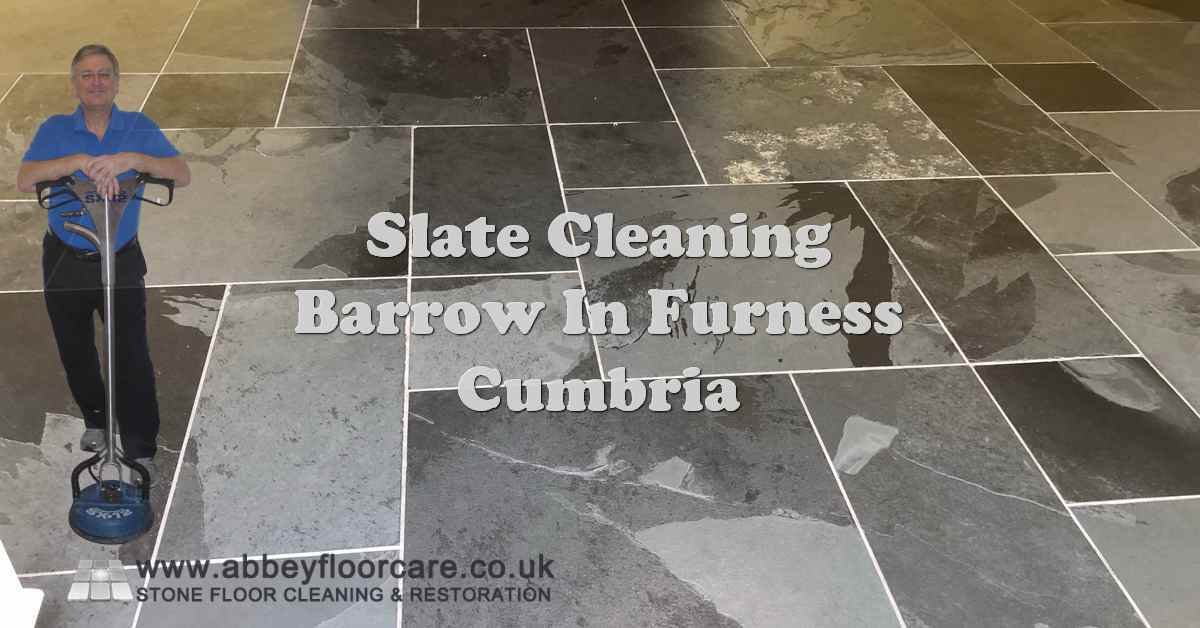
Slate Floor In Barrow Looks Permanently Grey Despite Cleaning
Last Updated on July 1, 2026 by David
Why the Barrow in Furness slate tiles stayed dull and grey no matter how often they were mopped
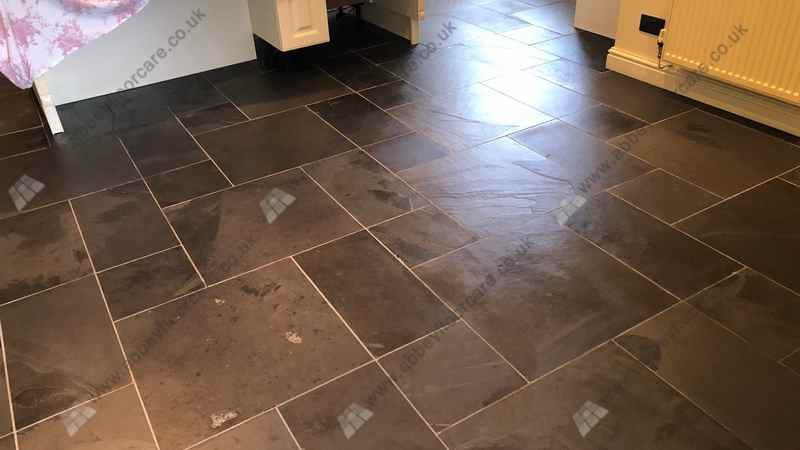
The slate tiles in the Barrow in Furness kitchen and dining space had reached a stage where routine mopping no longer made any visible difference. The homeowner quite reasonably expected regular cleaning to maintain a fresh surface, yet the floor remained consistently flat, grey and visually tired even after repeated attention. Foot traffic had gradually altered how the stone reflected light, and the natural variation that once gave the tiles character had been visually suppressed over time.
Each clean gave a brief sense of improvement, but it never lasted. Within a short period, the same dull tone returned across both kitchen and dining areas. The kitchen showed it first, though the dining zones weren’t far behind. What you end up with is a surface that simply stops responding in a predictable way to normal maintenance, which is where frustration tends to build, because the effort clearly isn’t matching the result.
Grout lines did not help matters either, as they continued to hold darker build-up within the joints. That darker build-up in the joints began to contrast against the faded slate, and the faded slate reduced the natural variation across the surface. This combination created a slightly uneven, patchy appearance across the floor. Even after cleaning, the contrast lingered, and the floor continued to look as though it needed attention again not long afterwards.
How worn slate, open pits and soiled grout made ordinary cleaning stop working
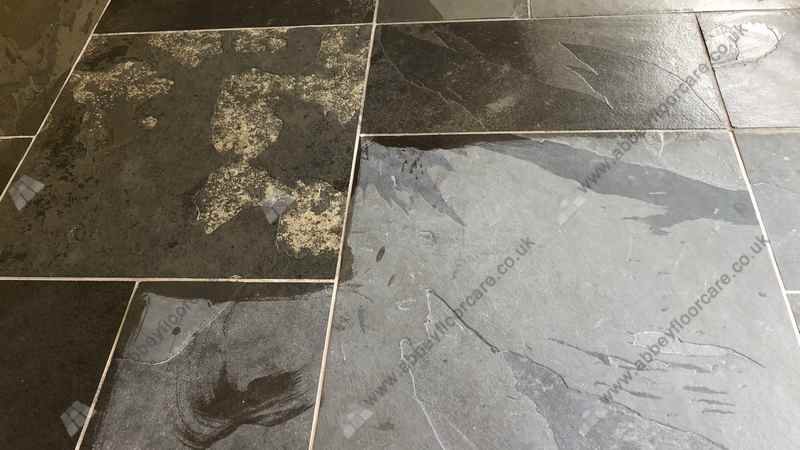
Worn slate surfaces in Barrow in Furness kitchens often develop small open pits that sit below the reach of everyday mopping, so soil remains in place even after cleaning. Those pits collect fine debris that settles into the riven surface texture, where naturally split layers of stone create a finish that doesn’t behave like a smooth tile. Over time, this trapped soil builds alongside grout darkening, producing a steady, persistent grey cast across the whole floor.
A controlled deep clean using a high-alkaline cleaner works by breaking down organic soil and loosening built-up residues that standard detergents tend to leave behind in porous slate. It relies on alkaline pH activity to release contamination before extraction, but the key point is always the rinse. If residues are left behind, they simply continue attracting dirt, so removal is just as important as the cleaning itself.
In some cases, structural issues such as Filler Collapse also play a part, where failed factory filler leaves small voids that begin to trap additional dirt and moisture. This changes how the surface behaves day to day, because it no longer acts like a stable, sealed floor. Combined with the riven structure of the slate, those voids allow soil to sit deeper than normal cleaning can realistically reach.
Removing that embedded contamination requires controlled agitation followed by repeated extraction cycles using a wet vacuum system designed for slurry removal. This prevents dirty water from settling back into grout lines or surface pits as it dries. Further context on how these floors lose clarity over time is also covered in more detail within this slate cleaning guidance resource, which explains how surface structure and soil interaction evolve in domestic environments.
What changed once the slate started responding properly to cleaning again
Once the slate in Barrow in Furness began responding evenly after deep cleaning, the real check was consistency. Water behaved more uniformly across the floor, and drying patterns became noticeably more even. Pressurised rinse and capture methods were used to flush remaining residues through the surface, while a wet vacuum / slurry extractor lifted suspended contamination before it could resettle. That combination is often what confirms the floor is no longer holding onto compacted soil.
The application of a topical urethane sealer then changed how the surface performed under everyday use, forming a protective layer that reduced how easily soil could bond to the tile. This film improved surface consistency and slowed down how quickly dirt became visually embedded, particularly in high-traffic kitchen areas. In practical terms, the floor simply stopped grabbing onto soil in the same way during normal movement.
Compared with the original condition, routine maintenance became far more predictable. Dirt stayed on the surface rather than working its way into pits or grout lines, so light mopping was enough to maintain appearance. A more detailed explanation of long-term sealed slate behaviour is available in the slate care and behaviour overview, which outlines how maintenance routines adapt after restoration.
When slate cleaning needs more than another round of household mopping
There comes a point where repeated mopping in Barrow in Furness simply stops shifting the appearance of slate floors because the stone no longer releases soil through normal household cleaning. Instead, contamination sits below the level that water and detergent can effectively reach, and that trapped contamination produces a persistent dull finish no matter how often the floor is cleaned. At that stage, more of the same effort tends to maintain the problem rather than resolve it.
Specialist cleaning and a Tailored Maintenance Handover help reset how the surface behaves after restoration, so the correct balance between cleaning method and protection is maintained going forward. It also reduces the likelihood of rapid re-soiling returning. Further guidance on maintaining that balance can be found within the slate maintenance behaviour guide, which explains how routines should adapt once the floor has been properly restored.
Products Used In This Guide

David Allen — Abbey Floor Care
David Allen has over 30 years of experience restoring natural stone floors across the UK, including slate cleaning projects in Barrow in Furness where heavy soil build-up and surface dulling were corrected through controlled cleaning and sealing. This case study shows his approach to diagnosing wear patterns and restoring practical cleanability to domestic slate installations.
Recent Posts:
We work throughout the country, just some of our work counties:
Copyright © 2025 Abbey Floor Care. Tile And Natural Stone Cleaning Consultants FAQ - Privacy Policy - Terms And Conditions
Abbey Floor Care is a participant in the Amazon Services LLC Associates Programme, an affiliate advertising programme designed to provide a means for websites to earn advertising fees by linking to Amazon.co.uk. As an Amazon Associate, we earn from qualifying purchases.