Slate Restoration For A Floor That Mopping Could Not Fix
Last Updated on June 26, 2026 by David
Tiles stayed dull and grey after years of regular mopping in this New Malden home
The Homeowner’s Visible Problem
If your slate stays dull and grey after regular mopping, the issue is no longer ordinary surface dirt. The homeowner in this New Malden project had tried for years to keep the floor looking presentable, but every clean ended the same way: once the surface dried, the tiles looked flat, cold and tired again.
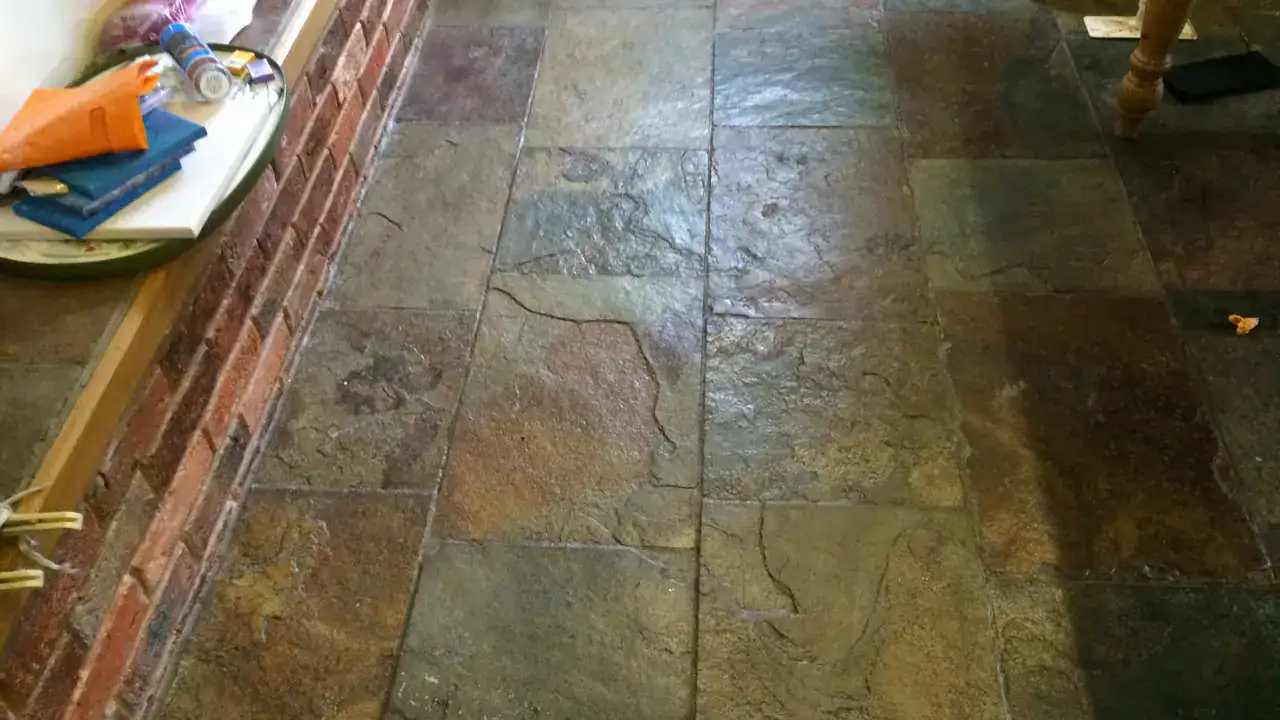
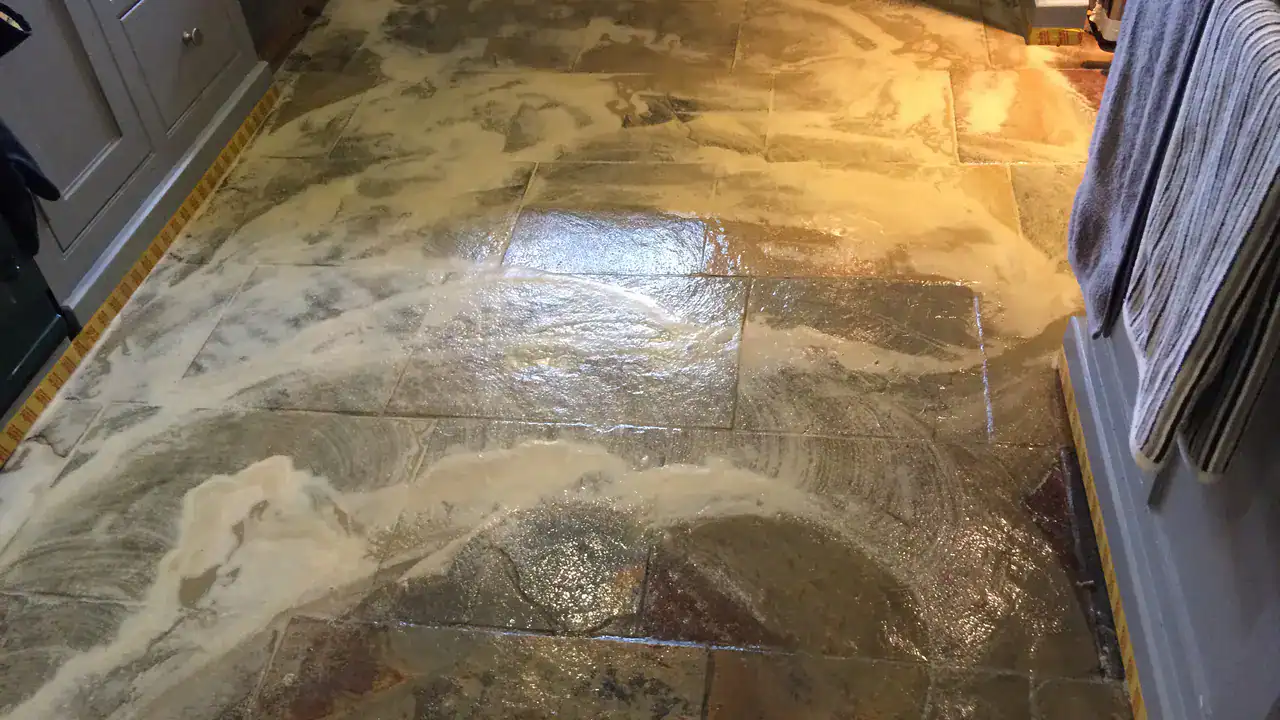
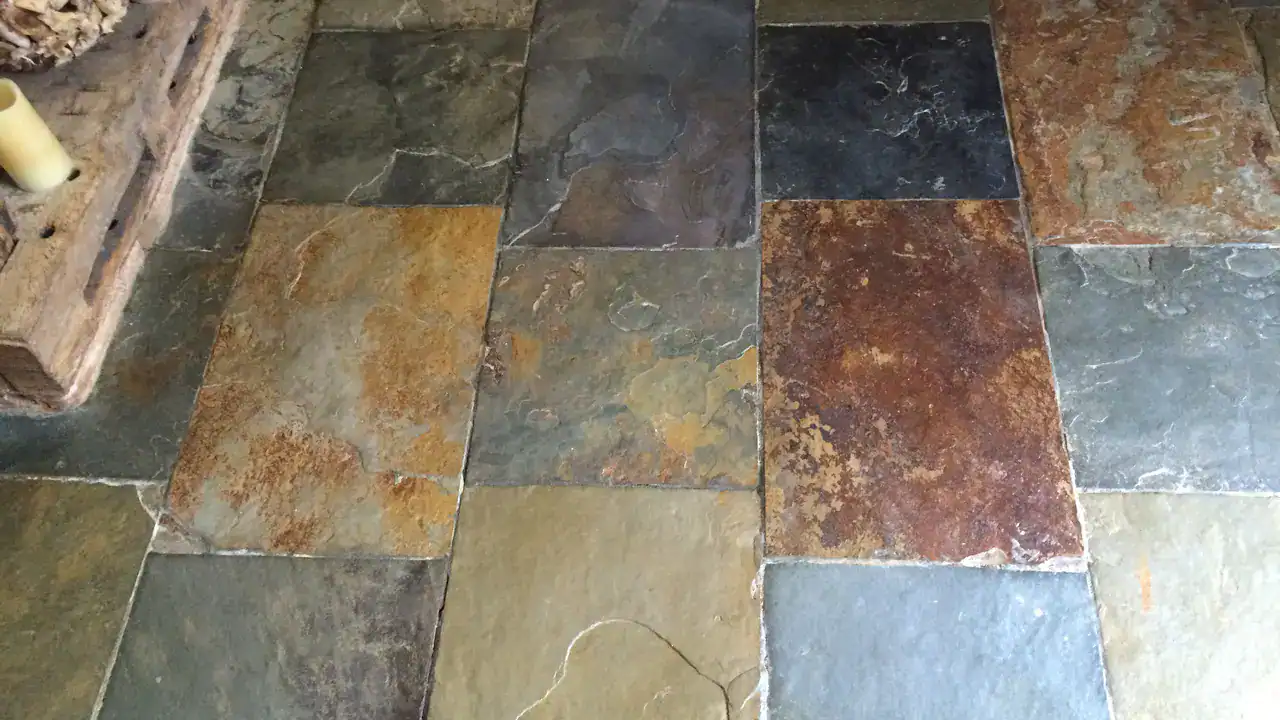
The Kund Multicolour floor had originally shown strong purples, greens, coppers and greys across its naturally split surface. Kund Multicolour is an Indian slate quarried in Rajasthan, characterised by its striking mineral variation and a mechanically cleft face that creates pronounced ridges and troughs across each tile. This was not one stain or a single localised spill mark. It was a broader loss of warmth across the working floor, with darker residue sitting in the low areas of the cleft texture and a grey film across the higher ridges.
The riven surface made that dullness easier to see because each tile had ridges, troughs and natural cleavage marks that caught the light in different ways. Areas that should have looked rich and varied instead looked worn down, particularly along the traffic routes where footfall, grit and damp mopping had affected the surface most.
The floor also had the appearance of old product sitting on the stone rather than clean, fresh slate. Patchy areas showed around tile edges, along grout lines and inside the deeper texture where normal mopping could not reach, so the homeowner was using clean water but seeing no lasting improvement.
The New Malden Property Setting
New Malden, in the KT3 postcode district, has a mixed suburban housing stock that includes Victorian and Edwardian terraces, Edwardian semis, 1930s semi-detached family houses, detached homes in wider plots, period conversions and newer flats. Slate floors are most often found in entrance halls, kitchen-diners, utility rooms, garden-facing rear rooms and modern rear extensions where older houses have been opened up for family living.
In extended homes, slate often runs through the kitchen, breakfast space and back-door route to the garden, so it becomes one continuous working floor rather than a lightly used decorative surface. Grit and moisture arrive at the busiest doorway. Older subfloors, family traffic and mixed-use kitchen-dining layouts can leave slate looking dull, patchy or ingrained long before the floor is structurally beyond recovery.
The slate in this home behaved like a practical family floor, not a lightly used feature surface. The kitchen and ground-floor routes carried daily movement, so the homeowner noticed the dullness most where cleaning should have made the clearest visible difference.
The Grout And Texture Condition
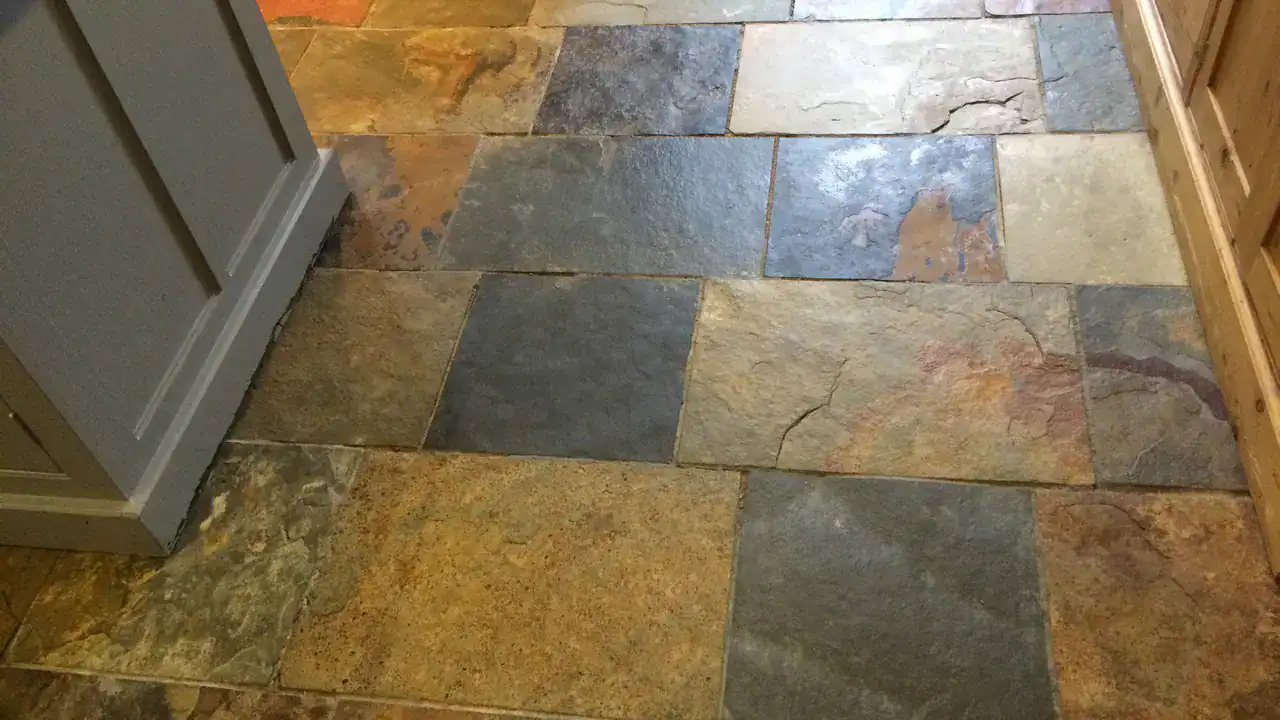
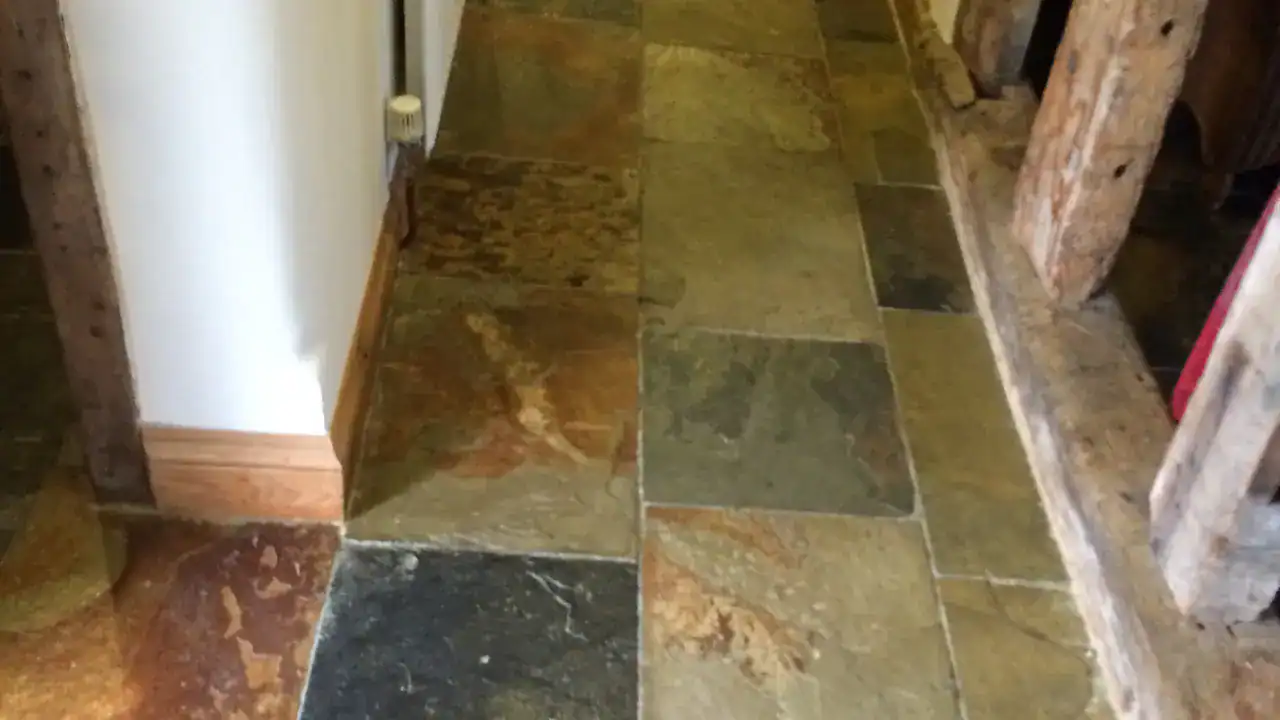
The grout lines had become part of the problem because several joints were dark, weakened or missing. Failed grout meant water could move along tile edges, soil could collect below the face of the joint, and some areas had started to fall out instead of staying firm enough to protect the slate edges.
Those affected joints made the whole floor look older than it was. Dark lines interrupted the colour of the stone, and missing sections created small traps where mop water, grit and residue could settle during every cleaning attempt.
The mechanically split surface also increased the visible contrast between cleanable high points and darker recessed areas. That natural texture is part of the character of Kund Multicolour slate, but it also creates nooks and crannies where old wax, soiling and application residue can remain visible long after the open surface has been wiped.
The Visible Signs Before Restoration
The old wax finish had created a traditional mid-lustre appearance at some point in the floor’s life. By the time of this project, that heritage appearance had gone because periodic maintenance had left uneven wax application, renewal marks and a surface that no longer looked clear after cleaning.
The homeowner could see a clear difference between the wet and dry appearance. While damp, parts of the slate temporarily looked deeper in colour, but once dry the patchy grey film returned. This wet-dry colour shift is a reliable diagnostic sign: it tells you the stone itself retains its colour but the surface treatment is no longer working correctly. The floor was not responding consistently across the full area.
The affected surface looked especially uneven where edge build-up met the textured finish. These zones made the floor appear dirty even after careful cleaning, and a broader explanation of why some slate looks faded while other slate stays vibrant helps separate genuine colour loss from residue and sealer failure. The New Malden floor showed both a tired surface and old treatment layers, which is why the project had to be recorded as restoration rather than ordinary cleaning.
Before-And-After Evidence From The Floor
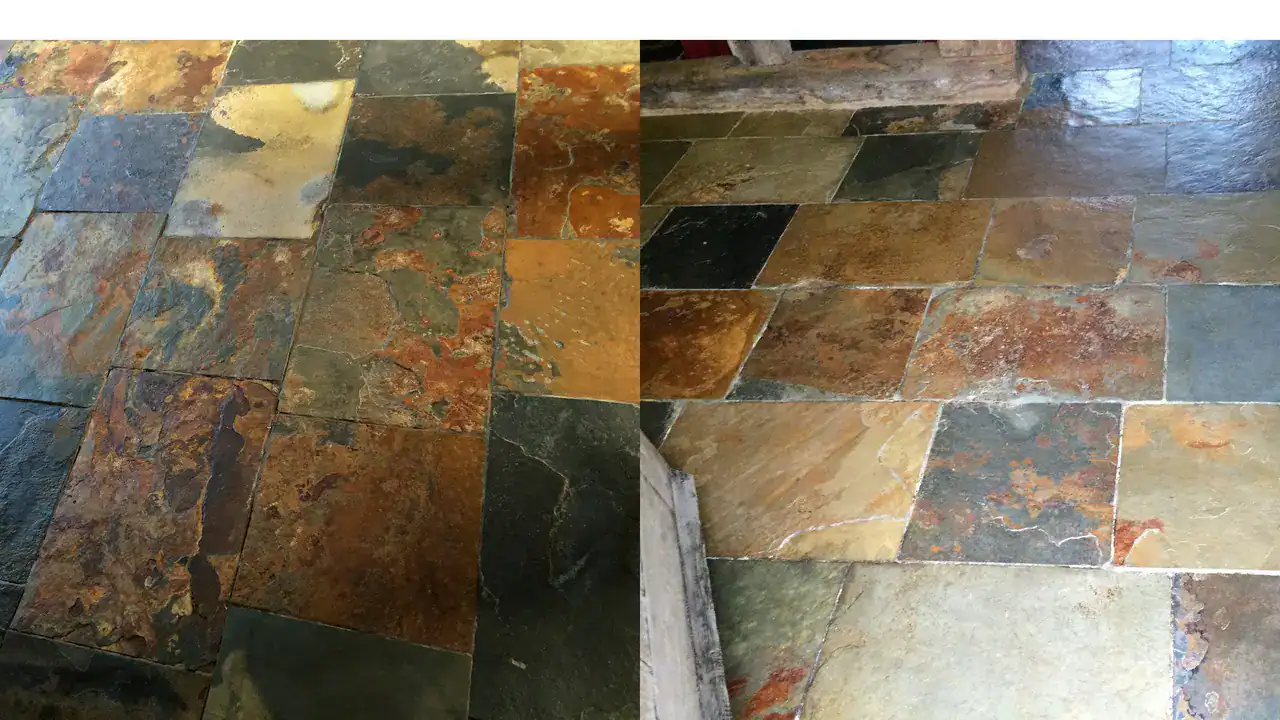
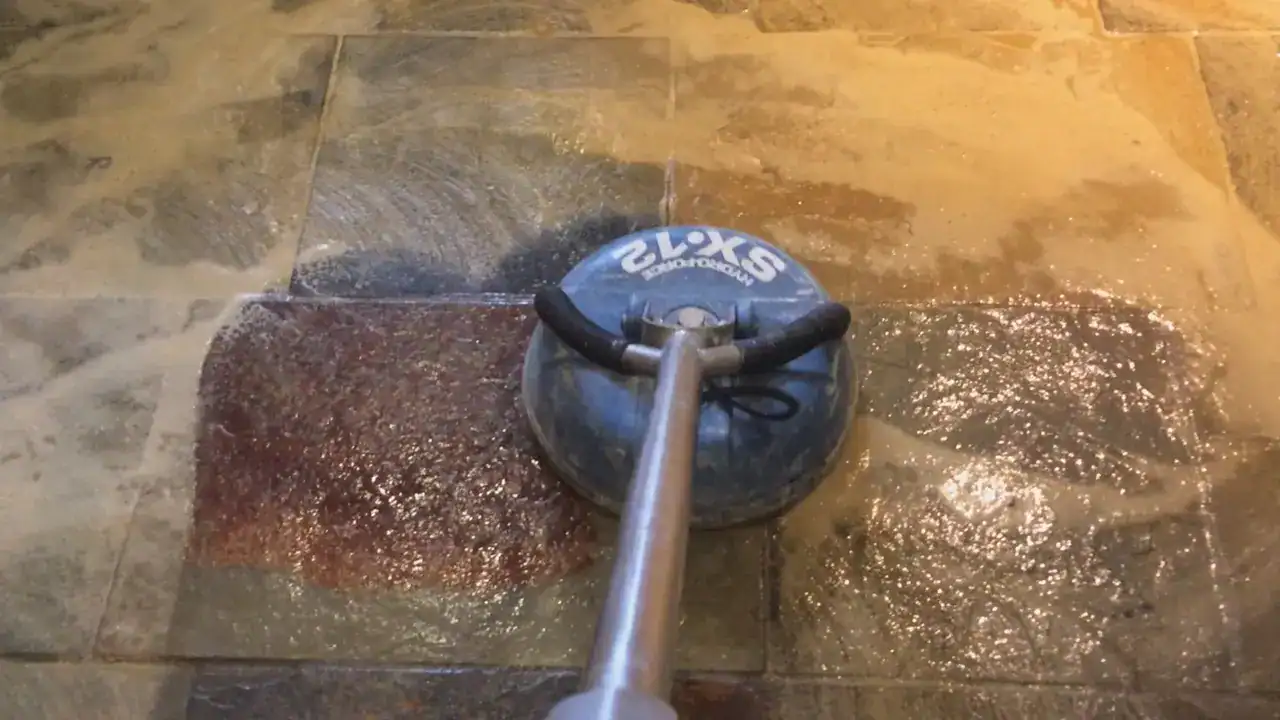
The before evidence showed a sound slate floor that had become visually tired through years of use and repeated cleaning attempts. The surface was not beyond recovery, but the grey cast, dark joints and uneven tone meant the homeowner could not judge the floor’s true colours from its pre-restoration appearance.
The restoration evidence mattered because multicolour slate changes dramatically once the dull layer is removed and the surface is protected correctly. The floor looked significantly better through the right cleaning and sealing sequence, and in many cases a restored slate floor looks better than when first installed because the natural mineral colours are finally activated consistently for the first time.
This project remained a single New Malden case study rather than a general method article. Similar work on patchy slate colour corrected in Barnes shows the same need to read the floor condition before choosing the finish, but this page records what happened on this specific Kund Multicolour installation. The visible goal here was a richer, cleaner, more stable surface that no longer returned to grey after every clean.
Why the slate kept looking tired even after every clean
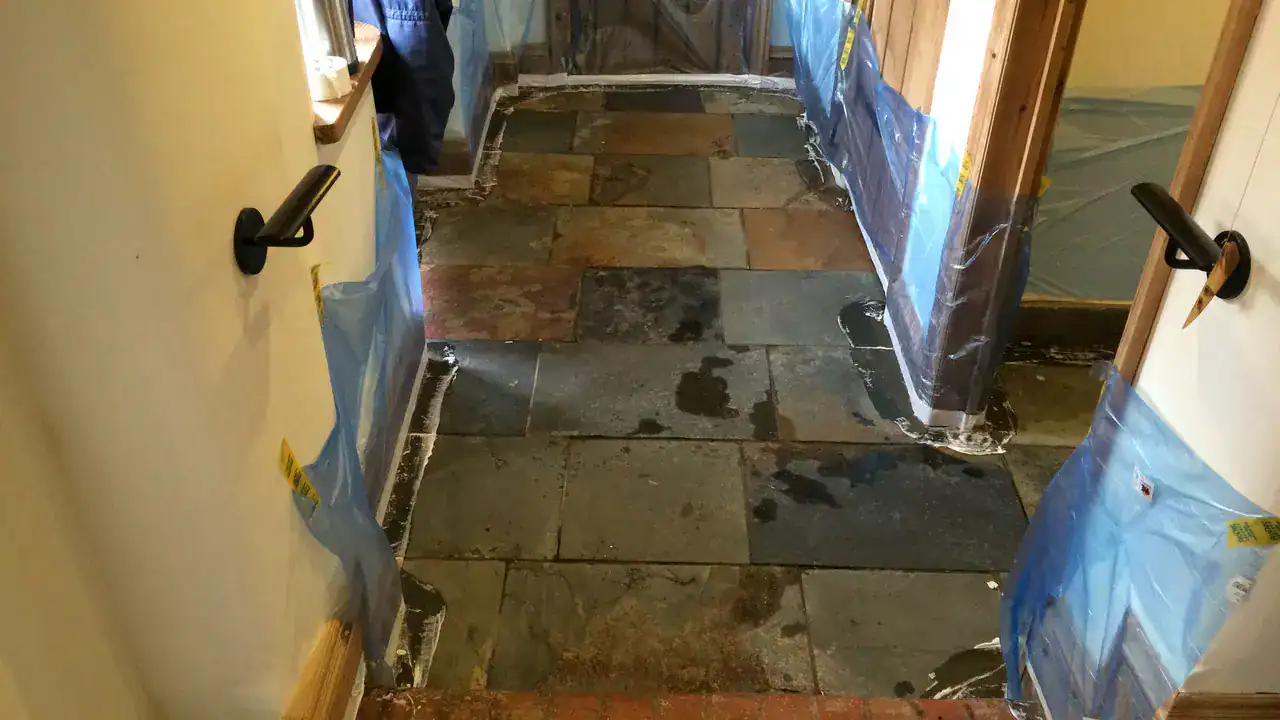
Old wax left inside a textured slate surface does not clear with ordinary mopping. The mop removed loose soil from the tile ridges, but softened wax dissolution had already left tacky residue in the recessed cleft areas, so each damp wash reactivated the grey film across the texture rather than removing it.
Kund Multicolour slate is a fine-grained metamorphic rock that cleaves along natural mineralogical planes. Its layered structure means it cannot be mechanically polished back to a fresh surface the way marble or limestone can. Restoration is therefore limited to chemistry, controlled cleaning and sealing — which means the choice of products and their sequence determines the outcome entirely.
Moisture retention inside the deep riven texture added a second risk. Slate that holds moisture below a new protective layer can produce cloudiness, chalky patches or sealer failure within weeks of the work completing. Before we applied any finish, we confirmed the stone was dry through a simple water-drop absorption test: droplets beading on the surface indicate the stone is ready; droplets darkening and absorbing indicate the stone is still releasing moisture and sealing must wait.
The failed grout joints introduced a third problem. Open joints allowed water to travel laterally beneath tile edges during every cleaning attempt, which meant the floor absorbed moisture below the surface even when the visible face appeared dry. Until we repaired those joints, no cleaning or sealing treatment could hold long-term, because water ingress would continue to destabilise the stone and any new finish applied over it.
Removing old wax without damaging soft cleft slate or failed grout
Using the wrong strength of treatment on soft cleft slate can loosen weak grout or damage the stone edges. The wax and old sealer had to come off, but the natural cleavage, textured finish and weakened joints still had to remain intact throughout the process.
Controlled stripping used LTP Solvex, a solvent-based stripper formulated to dissolve wax and oil-based coatings from natural stone without the aggressive alkaline action that can bleach or etch a softer slate face. We applied the product in stages across the floor, allowed it to dwell, and then worked it into the cleft texture with a low-speed rotary fitted with a black stripping pad. The softened wax lifted into a dirty emulsified solution that we then extracted immediately with a wet vacuum, preventing the dissolved residue from draining back into the surface texture and drying there again.
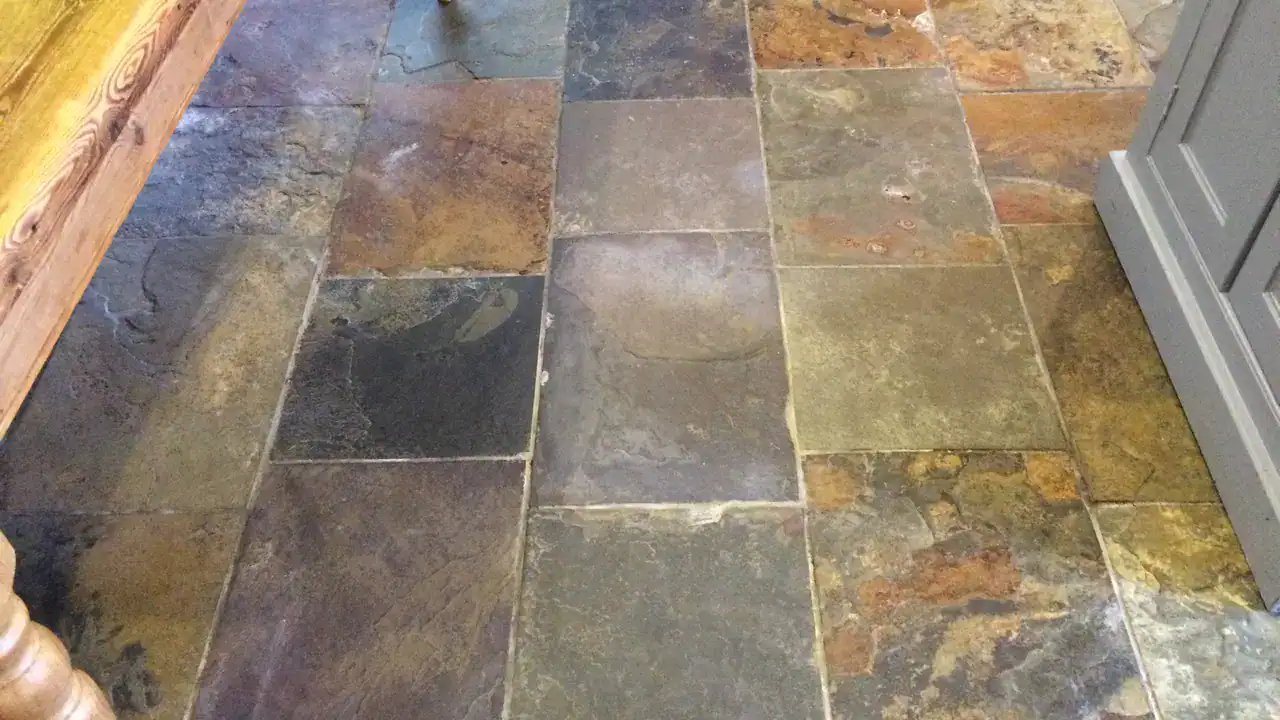
In the areas with the heaviest wax accumulation — typically where previous coats had built up thickest, near doorways and along traffic routes — we needed multiple applications of LTP Solvex before the stone began to show its true colour underneath. Treating these zones in passes rather than forcing a single aggressive application protected the slate edges and the adjacent weakened grout from chemical stress.
Pressurised rinse and capture followed the stripping stage using hot water delivered through enclosed spinning heads at controlled pressure. This combination drove stubborn dissolved residue out of the deeper cleft recesses while the enclosed head recovered the dirty solution before it could spread. We repaired the grout joints at this stage, once we had cleared the old contamination around the joint edges and the stone edges were clean enough to accept fresh material properly.
The repair and cleaning sequence followed the principles in professional slate floor restoration techniques, where the key judgement is removing contamination thoroughly while protecting the floor’s original texture. Leaving wax in the low points would have undermined everything that followed. Completing the sequence correctly produced a clean, stable surface ready for the absorption test and then sealing.
The floor became easier to clean because the surface finally responded properly
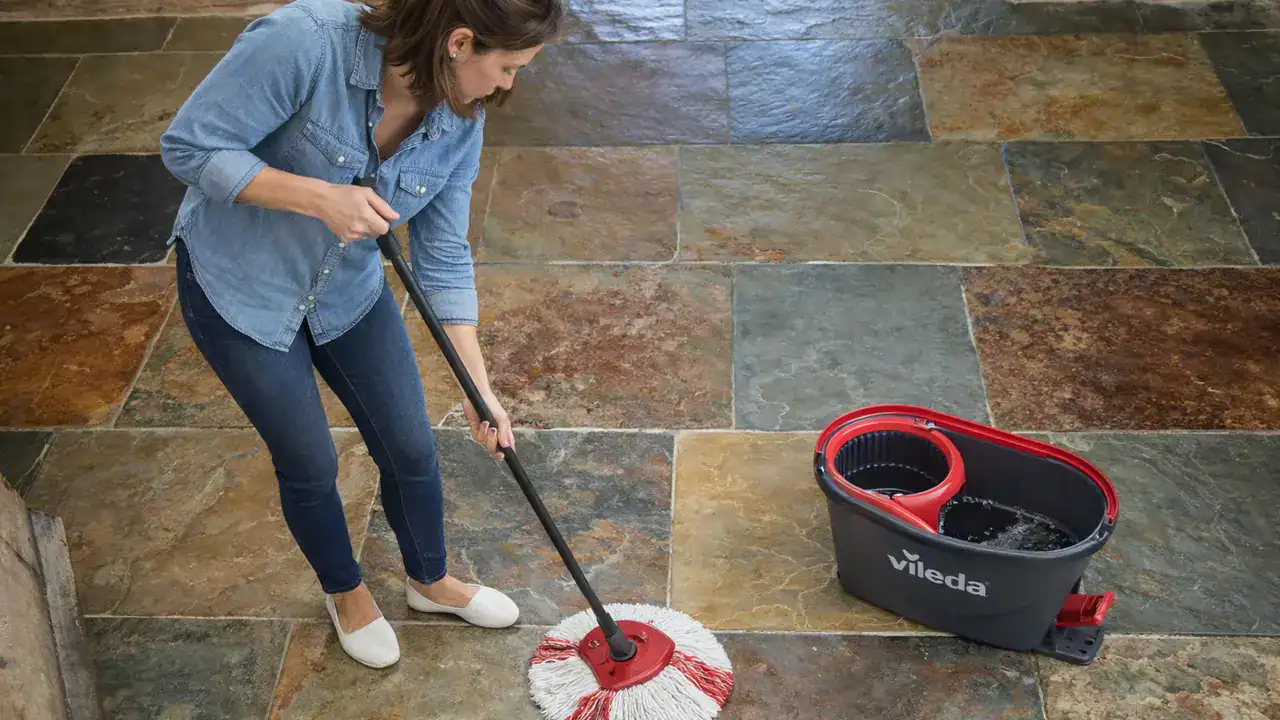
If your slate floor responds properly to mopping after restoration, the difference shows in normal use, not just in photographs. The New Malden floor no longer dried back to the same cold grey cast, and the restored colour looked steadier and more consistent across the busy routes.
We sealed the floor using two products in combination. We applied a colour-enhancing impregnating sealer first, working it into the open pores of the cleaned slate to deepen the mineral tones and provide below-surface protection without adding any surface film. An impregnating sealer sits inside the stone rather than on top of it, which means the natural riven texture remains fully visible and the finish does not peel, crack or trap moisture as a topical coating can. On Kund Multicolour slate, this treatment activated the purples, greens and copper tones that had been buried under old wax residue for years.
We then applied a finishing coat of LTP Clear Wax over the sealed surface to add a low natural sheen and provide the topmost layer of daily protection. Clear wax applied over a correctly sealed slate floor gives the surface a warm, traditional appearance without the build-up risk that came from decades of wax-only maintenance. Because the impregnating sealer had already stabilised the stone, the wax layer only needed to be thin and even — which also makes future maintenance simpler, because a well-wrung mop on a correctly finished surface does not reactivate old residue in the way that wax alone on a porous floor does.
We closed the job with handover advice focused on keeping that balance stable. Correct ongoing maintenance, including dry grit removal before damp mopping, pH-neutral cleaning products and resealing at the right interval, extends the life of both the stone and the finish. Slate floors that stay dull after cleaning need finish-safe products rather than aggressive cleaners that strip the protective layer and return the floor to the same condition it was in before restoration.
Where to find more help with slate floor cleaning and restoration in New Malden
The outcome of this New Malden project was straightforward: we removed old wax, repaired failed grout, restored the mineral colour through correct sealing, and the homeowner’s daily cleaning routine finally produced a visible result. The floor had not changed structurally — it had been sound throughout — but it now looked and behaved the way Kund Multicolour slate is supposed to.
Slate floors in New Malden and the wider Kingston area vary considerably in origin, age, treatment history and condition. Abbey Floor Care’s approach to assessment separates wax residue, failed grout, moisture-related whitening and surface wear before we confirm any cleaning or restoration route, because the wrong sequence — sealing before stripping, or stripping without repairing joints — leaves a floor in a worse position than before work started.
The wider behaviour of UK slate floors is covered in slate floors in UK homes, including why Welsh slate, Burlington Slate, Black Oil Slate Efflorescence and slate in shower enclosures can behave differently from a dry domestic kitchen floor. Related project examples such as slate cleaning and sealing that saved colour and slate cleaning that saved a sound floor show why the assessment stage matters as much as the restoration work itself.

David Allen — Abbey Floor Care
David Allen has restored natural stone floors across the UK for over 30 years with Abbey Floor Care. This New Malden case study records how dull Kund Multicolour slate, old wax build-up, failed grout and uneven colour were corrected through controlled cleaning, local repair and appropriate sealing.
Recent Posts:
We work throughout the country, just some of our work counties:
Copyright © 2025 Abbey Floor Care. Tile And Natural Stone Cleaning Consultants FAQ - Privacy Policy - Terms And Conditions
Abbey Floor Care is a participant in the Amazon Services LLC Associates Programme, an affiliate advertising programme designed to provide a means for websites to earn advertising fees by linking to Amazon.co.uk. As an Amazon Associate, we earn from qualifying purchases.