
Natural Slate Floor Care: The Safe Way to Clean Slate Without Damaging It (West Dunbartonshire Guide)
Last Updated on July 1, 2026 by David
Slate floors have graced homes across West Dunbartonshire for generations, from traditional stone cottages in Alexandria to period properties in Dumbarton and Clydebank.
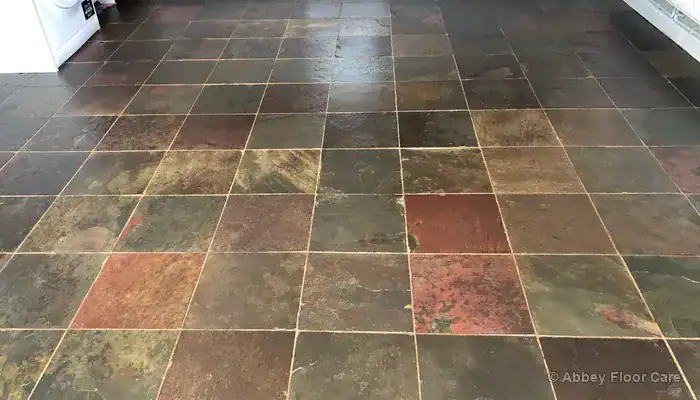
Their natural texture and deep, layered colour make them one of the most striking flooring choices available — but that same natural character means slate needs a different kind of care to the ceramic or vinyl most of us grew up with.
If you’ve searched online for “natural” ways to clean slate, you’ve probably come across advice to reach for vinegar or lemon juice. Stop right there. This is one of the most damaging pieces of misinformation circulating for natural stone care, and if you’ve already tried it, don’t worry — but it’s worth understanding why before your next clean.
The Science: Why “Natural” Doesn’t Mean Acidic
Vinegar and lemon juice feel like sensible, eco-friendly choices because they’re natural and chemical-free. The problem is that both are acidic, and slate — like most natural stone — reacts badly to acid.
When an acidic liquid sits on slate, it begins to dissolve the mineral structure at the surface in a process called etching. You won’t always see it instantly, but over repeated exposure it shows up as dull patches, a rougher texture, or a surface that no longer holds its sealant properly. Once the protective seal starts breaking down, the stone becomes far more vulnerable to staining and moisture penetration — the opposite of what you were trying to achieve.
The good news is that “natural” and “safe for slate” aren’t mutually exclusive. You simply need to look for pH-neutral cleaning, not acidic cleaning.
Step-by-Step Guide: The Safe, Eco-Friendly Way to Clean Slate
Step 1: Dry Soil Removal
Before any water touches the floor, sweep or vacuum thoroughly. This matters more in West Dunbartonshire than in drier parts of the country — mud tracked in from walks near Loch Lomond or grit from wet pavements in Dumbarton and Clydebank can act like sandpaper under a wet mop, scratching the surface as you clean. A soft-bristled broom or a vacuum with a hard-floor brush head is ideal.
Step 2: The Safe Solution
Mix warm water with a few drops of a pH-neutral cleaner — either a dedicated stone soap or a liquid Castile soap. Both lift dirt effectively without the acidity that damages slate. Avoid the temptation to add “a bit extra” for a deeper clean; too much soap leaves a residue that dulls the surface over time.
Step 3: Controlled Mopping
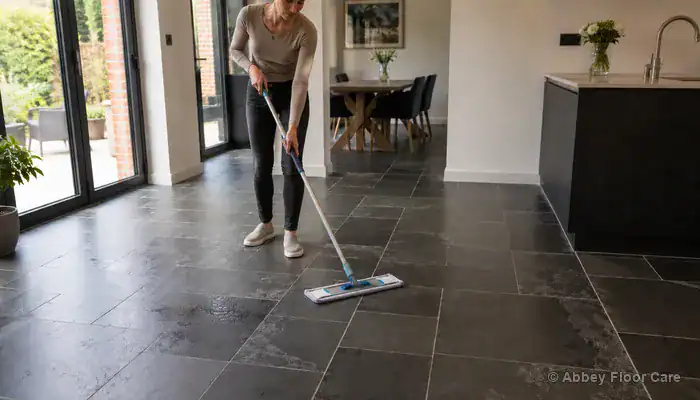
Use a well-wrung mop and work in manageable sections rather than flooding the floor. Standing water can seep into grout lines and, on tiled installations, work its way beneath the tile backing — a particular risk in older Scottish properties where subfloors weren’t always designed with modern sealed slate in mind.
Step 4: The Secret Step — Buffing Dry
This is the step most guides skip entirely. Left to air-dry, slate often develops faint water spots as moisture evaporates unevenly across its textured surface. Buffing with a dry, soft towel immediately after mopping removes this risk and brings out the stone’s natural lustre — the difference between a floor that looks “clean” and one that looks genuinely cared for.
Dealing with Stubborn Stains Naturally
For grease or oil marks, make a paste from baking soda and a little water. Baking soda is alkaline rather than acidic, so it lifts stains without etching the stone. Apply it to the mark, leave it to sit for a few hours (or overnight for older stains), then wipe away with a damp cloth.
For grimy grout lines, a soft-bristled brush — never steel wool or scouring pads — will lift dirt without scratching the surrounding slate. Abrasive pads might feel satisfying in the moment, but they leave fine scratches that dull the stone permanently and become magnets for future dirt.
Local Maintenance: Surviving the West Dunbartonshire Weather
Scottish weather is, by any measure, tough on floors. A few habits make a genuine difference to how well a slate floor holds up between deeper cleans:
- Heavy-duty doormats at every entrance — particularly if your household is regularly out walking near Loch Lomond or along the Clyde. Grit and mud are the single biggest cause of surface wear on slate.
- A “shoes off at the door” habit during the wetter months, which in West Dunbartonshire is most of the year.
- Prompt drying after wet weather. Damp properties are common in older stone-built homes across the area, and excess moisture is the enemy of both slate and its sealant.
- Regular resealing checks. A quick water-drop test — dripping a small amount of water onto the surface and watching whether it beads or soaks in — tells you whether your sealant is still doing its job.

When to Call Abbey Floor Care (The Professional Threshold)
Routine cleaning keeps a slate floor looking its best day to day, but some jobs go beyond what any homeowner should attempt with household products. It’s worth being upfront about where that line sits:
- Deep scratches or chips in the stone itself, which need professional-grade filling and polishing to blend invisibly.
- Stripping old, yellowed acrylic sealers — a job that requires the right chemistry and equipment to avoid damaging the slate underneath.
- Diamond-pad polishing, used to restore shine and even out wear on floors that have lost their lustre over years of use.
- Deep sealing, which needs the floor stripped back to bare, clean stone first — not simply mopped and dried.
If your slate floor in West Dunbartonshire is looking tired despite careful cleaning, or you’re unsure whether it needs a reseal, Abbey Floor Care offers professional assessment and restoration across Dumbarton, Clydebank, Alexandria and the surrounding area. Get in touch for honest advice on whether your floor needs a professional’s touch — or just a better cleaning routine.
If you would like to apply to become the contractor for this area, please use the contact form.
Copyright © Abbey Floor Care.
We are proud to be your local stone floor cleaning, polishing, and restoration specialists for homes and commercial properties in Central Scotland.
With years of experience working with all types of stone floors, our friendly and professional stone floor cleaning services can’t be beaten on price or service.
FAQ - Privacy Policy - Terms And Conditions
Abbey Floor Care is a participant in the Amazon Services LLC Associates Programme, an affiliate advertising programme designed to provide a means for websites to earn advertising fees by linking to Amazon.co.uk. As an Amazon Associate, we earn from qualifying purchases.