
Problems With Slate Floors Start Inside The Stone
Last Updated on June 6, 2026 by David
Faded, uneven, or patchy slate usually tells you the floor’s surface, absorbency, old sealer, or natural layers have changed. It is rarely just ordinary dirt. Slate is a porous, fine-grained, layered stone, so traffic wear, riven texture, moisture behaviour, coating residue, and origin-dependent density all influence how the colour holds, darkens, or starts to look flat after cleaning.
Colour change is far easier to understand once the floor is read as a material system, not as a surface that simply needs a stronger cleaner.
Why your slate floor changes colour, fades, or looks uneven as it gets older
If your slate floor has started to look faded, uneven, or patchy, the first job is to separate normal ageing from signs that the surface is changing in a more serious way. A floor can look tired because the original colour has been softened by wear, because old sealer has broken down in patches, or because some areas are absorbing moisture and soil more readily than others. From across the room, those problems can look much the same. They do not mean the same thing.
Colour loss on slate often starts where people walk most. Hallways, kitchen routes, doorways, and the space around a table usually change first because grit under shoes slowly abrades the upper surface. The floor may still be structurally sound, but the traffic lane begins to look paler, flatter, or greyer than the quieter edges.
Faded traffic lanes are easy to mistake for ingrained dirt. In many cases, the surface has been worn away by foot traffic, taking the pigment with it. That is not dirt waiting to be scrubbed off. Stronger cleaning may lift loose soil, but it cannot replace colour that has been removed from the top of the stone.
Uneven colour also appears where old coatings have worn at different speeds. Many UK slate floors carry acrylic sealer build-up, especially around tile edges, skirting lines, and low-use corners. The middle of the room may look dry and flat, while the edges remain dark, glossy, or slightly yellowed because they still hold layers of old finish.
A patchy appearance can develop even when the whole floor is cleaned at the same time. One tile may darken quickly while the next stays pale because slate is not a manufactured surface with identical absorbency from tile to tile. Natural colour variation is part of its character, and riven slate often shows stronger variation because ridges, troughs, and exposed mineral layers catch the light differently.
Older slate floors can show several visual signals at once. Pale walking routes, darker tile edges, dull areas beside mats, white mineral marks near damp zones, and blackened grout lines may all sit on the same floor. The useful clue is not simply that the floor looks faded; it is where the fading appears, how sharply it changes, and whether it follows use, moisture, sunlight, or old coating patterns.
Moisture-related colour change often looks different from traffic wear. Damp slate usually darkens rather than fades, but repeated wetting and drying can leave the surface looking blotchy, cloudy, or uneven. Kitchens, utility rooms, entrances, and older ground floors are common places for these changes because water, cleaning residue, and outside grit meet in the same area.
Absorbency is a major clue when a slate floor no longer looks consistent. Unsealed or poorly sealed tiles may darken quickly after mopping, while better-protected areas stay closer to their normal colour. A professionally restored and correctly sealed floor is significantly easier to clean and maintain than a worn or incorrectly treated floor because the surface no longer takes in moisture and soil so readily.
Surface scratches usually show as a dull veil rather than obvious single lines. Pet claws, chair legs, grit, and abrasive pads can create fine marking that scatters light across the tile face. On smooth slate, that may read as haze. On riven slate, it often appears as pale highlights on raised ridges.
Sunlight can make colour change harder to interpret. Exposed areas near patio doors, roof lights, and large kitchen windows may fade differently from shaded areas beneath furniture or rugs. That contrast can make a floor look poorly cleaned even when the real pattern follows UV exposure and protected zones.
Grout condition can also make slate tiles look more faded than they really are. Contaminated wash water settles into porous joints, so the grout darkens while the tile surface looks paler by comparison. The floor then loses contrast in one place and gains too much contrast in another, creating a patchy overall impression.
Loose edges, cracks, chips, and flaking change the interpretation again. A floor with lifting layers or damaged edges is no longer showing simple surface dullness; it is showing a condition that needs closer assessment before cleaning, sealing, or coating is assumed to be enough. Localised repair issues such as broken edges and movement symptoms are handled separately in slate floor repair diagnosis, because structural symptoms should not be treated as routine fading.
Riven slate can look especially uneven because its natural split surface reflects light in many directions. A ridge may look pale and dry while the trough beside it looks dark, even though both belong to the same tile. That visual movement is part of the stone’s character, but heavy wear exaggerates it until the floor starts looking tired rather than naturally varied.
Welsh slate often keeps its colour and surface definition longer because it is generally denser and less absorbent than many imported domestic slates. Softer Indian, Chinese, or variable Brazilian slate may show marking, absorbency, and colour change sooner, especially in busy kitchens or entrances. The same family routine can therefore produce very different results on two floors that are both correctly described as slate.
Old sealers can make a worn floor look worse by trapping soil and moisture unevenly. Edges, grout lines, and low spots can hold degraded coating while the walking route has already lost protection. The result is a floor that looks faded in the centre, dirty at the edges, and patchy after every clean.
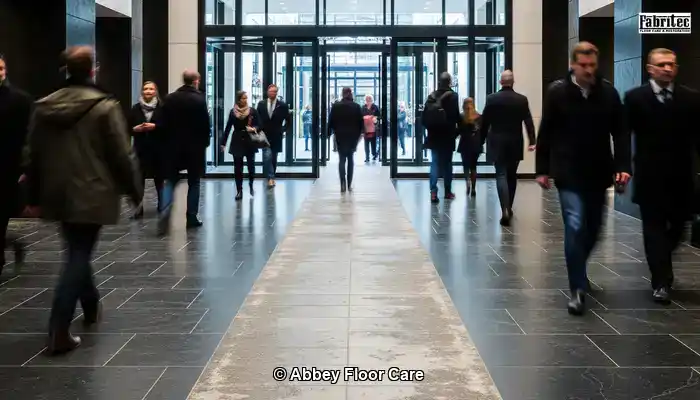
Traffic patterns tell a useful story because they usually follow how the home is used. A narrow pale route from the door to the kitchen, a dull patch where chairs move, or a grey zone beside an outside entrance all suggest abrasion and soil movement rather than random staining. The floor will look significantly better after the correct professional restoration, and in many cases better than when first installed, because new slate is often left unsealed or sealed with the wrong finish.
Normal ageing should still leave the floor looking coherent. A mature slate floor may become softer in tone, slightly less sharp in contrast, and more varied in texture without showing loose layers, powdery patches, or rapid darkening after every wash. Those stable changes belong to long-term use rather than immediate failure.
Problem ageing feels less predictable. The floor may clean up briefly, then turn dull again; a patch may darken every time water touches it; or pale marks may keep spreading in the same busy area. Those signals mean the floor’s absorbency, coating condition, surface wear, or moisture behaviour is now controlling appearance more than ordinary housekeeping.
Understanding the first visible pattern prevents the wrong response. More water, stronger chemicals, abrasive pads, or steam can make a faded slate floor look temporarily different while pushing moisture, residue, or scratching further into the surface. The right starting point is recognising what the floor is showing before assuming it only needs more aggressive cleaning.
Why slate from one home can behave differently from slate in another
Slate is not one uniform floor material, so two floors can react differently even when they are cleaned and cared for in the same way. Dense Welsh slate often resists water absorption and traffic wear better, while softer imported tiles may mark faster, absorb more readily, and show colour change sooner.
Geological origin governs the stone’s density, mineral layering, porosity, and surface response. Welsh, Indian, Chinese, and Brazilian slate can all look attractive, but their behaviour under moisture, grit, sealer, and wear is not identical. A floor that darkens evenly in one home may stay flat and patchy in another because the stone itself is different.
Natural split texture adds another layer of variation. Ridges and troughs increase surface area, hold soil mechanically, and make colour look deeper or paler depending on the angle of light. That is why origin-dependent behaviour and riven surface character need to be understood before judging whether a slate floor is faded, dirty, worn, or simply naturally varied.
Why dull patches can keep coming back after the floor has been cleaned
Repeatedly scrubbing dull patches can make the homeowner chase the wrong problem when the cause sits below the visible face of the slate. The floor may look cleaner for a short time, then turn flat again as residue, moisture, or ingrained soil reappears in the same low areas.
Returning dullness usually means the visible surface is not the whole story. Riven troughs, worn traffic lanes, grout edges, and old coating layers can hold contamination after ordinary mopping has removed loose soil. Stronger cleaning can spread that residue unless dissolved slurry is lifted away before it dries back.
Dullness that returns is usually a sign, not just leftover dirt.
Moisture trapped between fine slate layers can also create a cloudy or uneven look. The stone’s natural cleavage planes allow it to split into sheets, but weak boundaries can hold moisture, cleaning residue, and fine soil differently from the tile face. That is why professional judgement matters before assuming more scrubbing is the answer.

Why the surface finish decides which cleaning methods are safe
Surface finish is the reason one slate floor can tolerate a cleaning approach while another is slowly damaged by it. A fine-honed slate floor has a smooth, consistent surface that diffuses light evenly, while riven slate keeps its natural ridges and troughs.
If your slate has a riven finish, the texture needs moisture control, gentle agitation, and extraction rather than flat abrasive contact. Steam cleaning is especially risky because heat can soften topical sealer films and force moisture into surface relief and weak layer boundaries.
If your slate has a topical coating, the cleaning risk changes because the visible finish may be old sealer rather than exposed stone. Harsh alkaline residue, bleach, or repeated wet cleaning can weaken the film and leave patchy shine, water marks, or dull traffic lanes.
If your slate has a worn smooth finish, micro-scratching and chemical etching-like dullness can scatter light across the surface. The wrong tool may make the floor look cleaner for a day while slowly increasing the faded appearance.
Why soil settles into slate instead of sitting neatly on the surface
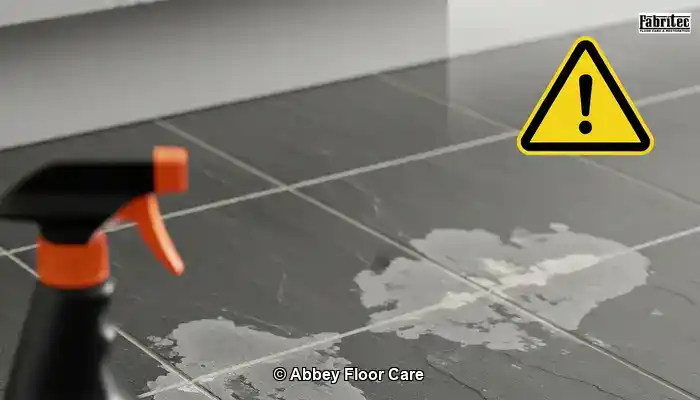
If your slate still looks tired after mopping, the soil may be sitting in texture, grout edges, and worn low points rather than on the surface. Riven surface texture creates ridges, troughs, open edges, and tiny shaded areas where dirty water can collect.
Mechanical soil trapping makes a slate floor look dull even when the mop water seems clean. Traffic pushes fine grit into low points, and porous grout absorbs contaminated wash water beside the tiles. A rotary machine may be part of professional deep cleaning, but the important principle is extraction: loosened slurry must not be left to dry back into the texture.
Worn traffic lanes exaggerate the same effect because raised ridges lose colour first while troughs remain darker. That contrast makes the floor look uneven, especially across kitchens, entrances, and older farmhouse rooms where outside grit is carried indoors.
Why safe cleaning depends on understanding how slate actually responds
Safe cleaning starts with how the slate responds, not with the strength of the product used on it. Moisture that lingers means water control matters; residue that returns means rinse quality matters; texture that holds soil means agitation must reach the surface without over-scrubbing.
Cleaning chemistry can change appearance as well as remove soil. Strong acidic or strongly alkaline products may affect colour, degrade sealer, or leave residues that keep attracting dirt. Slate-safe cleaning therefore depends on controlled dwell time, thorough rinse, and extraction rather than simply choosing a more powerful cleaner.
Steam cleaning is a common example of a method that sounds gentle but can behave badly on slate. Heat, pressure, and moisture can soften coating films and push water into riven texture, so routine care is better understood through why slate floors can still look tired after cleaning. The floor’s response tells you more than the product label.
Why some slate darkens beautifully while other areas stay flat or patchy
Patchy darkening often reveals uneven absorbency, old coatings, or surface wear rather than a simple lack of shine. Slate can respond beautifully to colour-enhancing sealer, but only where the mineral surface is clean, dry, and able to receive the finish evenly.
If your slate shows rich darkening, remaining mineral pigment is being activated and the surface is accepting the finish in a controlled way. Dense Welsh slate may deepen dramatically with minimal absorption, while more porous Indian slate may need more careful saturation to avoid uneven tone.
If your slate shows flat or blotchy darkening, sealer build-up, contaminated seals, old varnish, metalized polish, or uneven wear may be blocking the surface. Patchiness is therefore a diagnostic clue: some areas are receiving the finish, while others are still governed by residue, abrasion, or inconsistent porosity.
If your slate shows dark edges and pale centres, traffic has probably worn the walking route while coating has survived near the margins. That pattern is common on older UK domestic floors with old acrylic sealer build-up around tile edges.
Why flaking, whitening, and loose layers are not always cleaning problems
Flaking and whitening are warning signs that can be misread as dirt when the slate is actually showing surface breakdown or trapped moisture. Loose layers, powdery pale areas, and lifting edges do not behave like ordinary soil because the problem is no longer only on the surface.
Layer separation follows the natural structure of slate. Fine mineral sheets split along cleavage planes, and weaker boundaries in softer stone can open under moisture, impact, freeze-thaw stress, or long-term neglect. That behaviour is called delamination, but it should not be framed as general fragility; correctly maintained slate remains a durable domestic floor material.
Realistic outcome setting matters where layers have already lifted. Cleaning may improve surrounding appearance, but separated sheets, deep structural fissures affecting surface integrity, or active moisture movement need stabilisation or repair judgement before appearance is discussed. The floor will look significantly better after suitable intervention, but loose layers are not solved by repeated washing.
Why long-lasting slate care is about controlling moisture, grit, and routine habits
Longer slate life comes from controlling the daily conditions that slowly change the floor: grit, moisture, residue, and repeated habits. Grit removal before wet mopping protects raised riven edges from abrasion and slows the pale traffic-lane effect.
Correct ongoing maintenance helps slate hold colour, remain easier to clean, and avoid residue build-up in texture and grout. pH-neutral cleaning, limited water, prompt spill removal, and resealing at the right interval are more important than chasing shine with stronger products. Correct ongoing maintenance — pH-neutral cleaning, grit removal before wet mopping, and resealing at the right interval — is the single most important factor in extending the floor’s life.
Steam cleaning should be avoided because heat and moisture can soften surface films and drive water into texture, joints, and weak layers. A worn slate floor needs controlled moisture behaviour, not moisture overload. Practical routines are covered in cleaning and sealing a slate floor, where care stays tied to the stone’s behaviour.
When a slate floor has reached the point where cleaning alone cannot explain the problem
If cleaning gives the same poor result again and again, the floor has probably moved from routine care into diagnosis. Recurring dullness, uneven colour, whitening, flaking, rapid water darkening, or patchy sealer response means the visible surface is only part of the issue.
- Check whether dullness returns in the same traffic lane after the floor dries.
- Look for uneven darkening where some tiles absorb water faster than others.
- Notice whitening, powdery areas, or loose layers that do not move with cleaning.
- Compare pale centres with darker edges, especially where old coating may remain.
- Watch whether grout re-soils quickly because contaminated wash water is settling into joints.
Repeated failure after cleaning points towards surface wear, coating residue, moisture behaviour, or layer separation rather than poor housekeeping. Before you try another stronger cleaner, realistic expectations matter because the explanation must match the material condition before any restoration route is chosen.
Where to go next once you understand what your slate floor is telling you
Once the cause is clearer, the next step is choosing the right route rather than repeating the same cleaning, sealing, or restoration assumption. A floor that only holds soil in texture needs a different conversation from a floor with failed coatings, loose layers, moisture marks, or patchy absorbency.
Cleaning limits belong with cleaning guidance, coating behaviour belongs with sealing guidance, visible damage belongs with repair guidance, and long-term care belongs with routine maintenance control. Broader material context is covered in slate floors in UK homes, which explains how slate behaves over time, how finishes affect care, and why diagnosis should come before treatment.
Understanding the cause protects the floor from the wrong response. A clear reading of colour, texture, moisture, and layer behaviour makes the next decision more accurate and helps the slate regain clarity without losing its natural character.
Maintenance Advice
Products we recommend for slate maintenance:
Cleaning products: Fila Pro Floor Cleaner, LTP Floorshine.
Equipment: Vileda H2PrO Spin Mop System.
David Allen — Abbey Floor Care
David Allen has worked with slate floors across the UK for over 30 years through Abbey Floor Care. His practical experience with material behaviour, restoration sequencing and long-term floor care informs every article published under the Abbey Floor Care name.
19 Willow Rd,
New Malden
KT3 3RS
(01372)-664-337
We work throughout the country, just some of our work counties:
Copyright © Abbey Floor Care. Natural Stone Floor Restoration in Surrey and South West London FAQ - Privacy Policy - Terms And Conditions
Abbey Floor Care is a participant in the Amazon Services LLC Associates Programme, an affiliate advertising programme designed to provide a means for websites to earn advertising fees by linking to Amazon.co.uk. As an Amazon Associate, we earn from qualifying purchases.