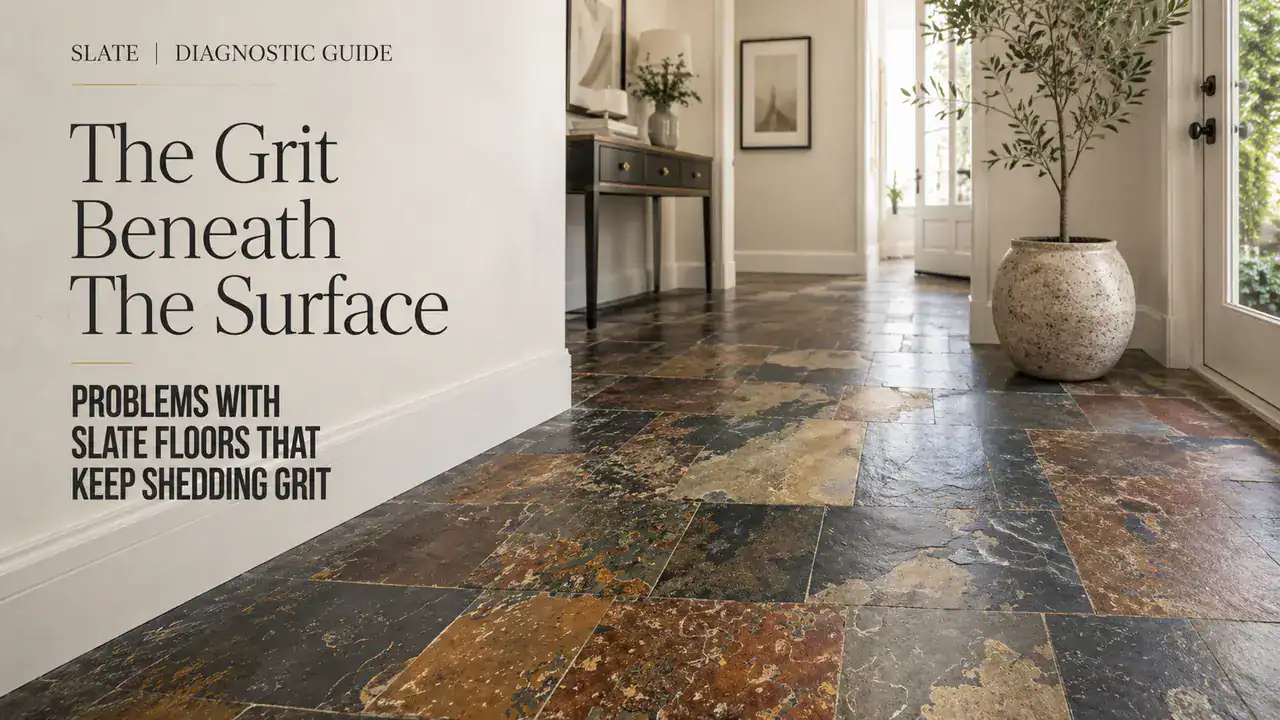
Problems With Slate Floors That Keep Shedding Grit
Last Updated on June 18, 2026 by David
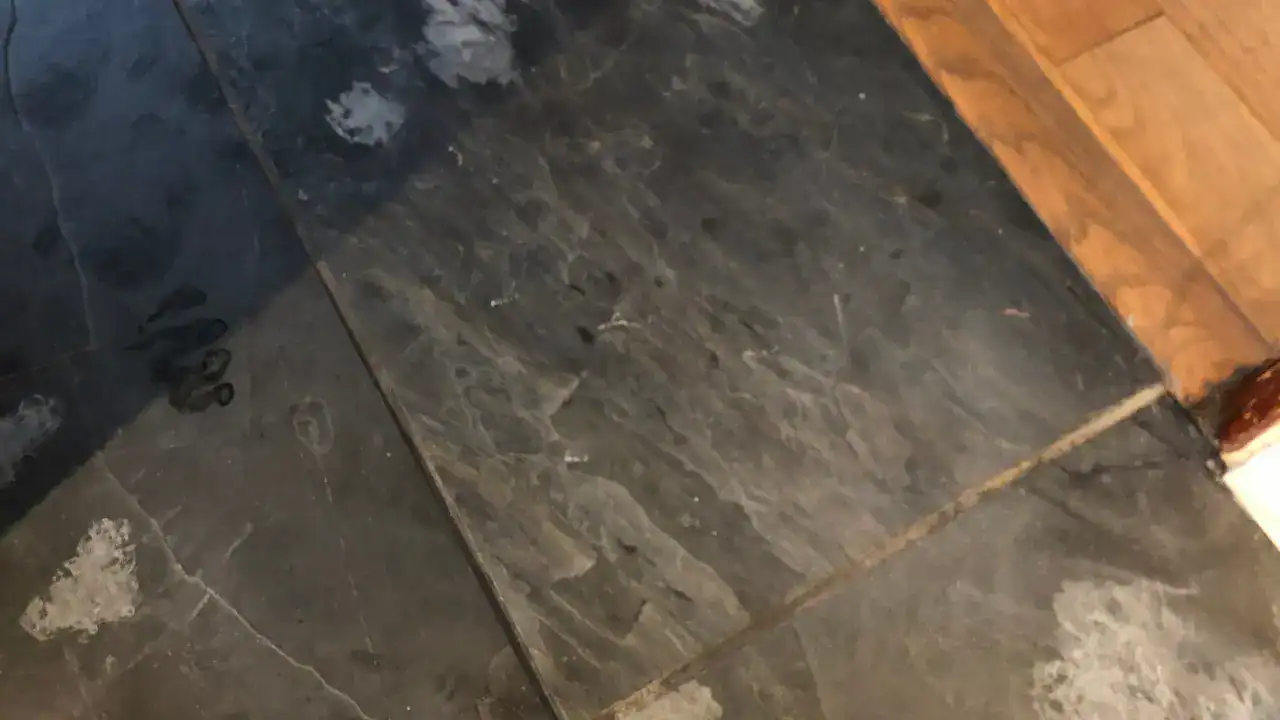
Why your slate floor is flaking, shedding grit or peeling even after cleaning
Visible Flakes That Look Like Thin Stone Pieces
If your slate floor is flaking after cleaning, the loose pieces may look more like tiny chips than normal grime. Homeowners often notice this after mopping, when fresh fragments appear once the floor dries. It makes the clean look as though it has failed.
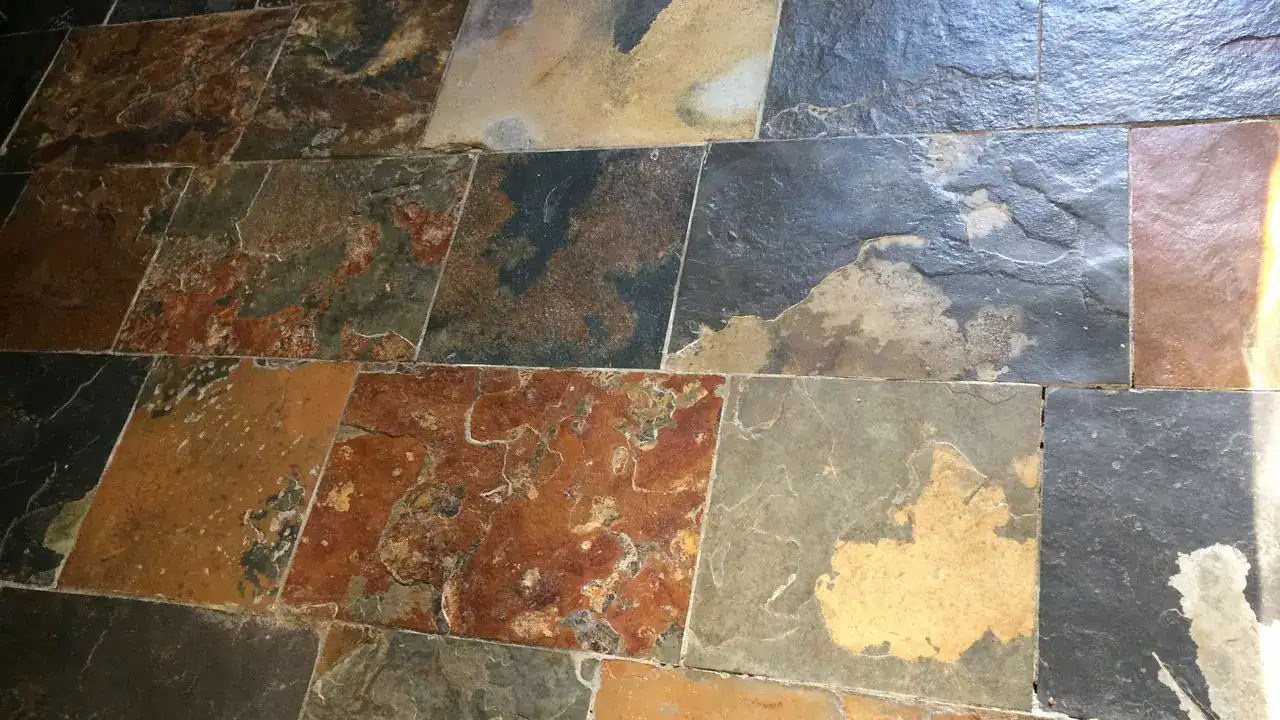
If your floor keeps leaving flakes, grit or powder behind, this helps separate ordinary dirt from visible surface breakdown.
Those flakes matter because they show that something on the surface is releasing material. The visible clue is the shape of the debris. Stone-like pieces usually feel crisp or gritty between the fingers, whilst peeling finish tends to feel thinner and more film-like. Delamination is the technical name for layer separation, but the homeowner clue is simpler: the floor keeps producing fresh fragments rather than merely holding dirt.
Loose surface layers need identifying before any repair route is chosen. The same visible problem can come from the tile itself, an old coating, or powder forming as a sealer degrades. When a floor sheds debris in busy walkways, kitchen routes or beside external doors, the pattern matters because each location points towards a different cause.
Gritty Debris That Returns After Mopping
If your slate leaves grit underfoot after it has dried, the issue is usually more than a dirty mop. Grit can come from outdoor soil, loose particles caught in the textured finish, or fine material released from the upper surface.
Powdery surface residue often shows as dull dust, pale smears or a chalky film sitting in riven lows and grout lines. It can appear after repeated cleaning because water moves the loose material around, then leaves it behind as the floor dries. The result is familiar: cleaning difficulty, surface contamination and colour loss that leave the floor looking tired even after washing.
Recurring gritty debris is not the same as one dirty wash. Ordinary grime reduces with careful cleaning. Fresh powder formation comes back because the surface or coating is still breaking down. And where the debris appears mainly in high-traffic areas, loose grit may be abrading the raised texture and creating pale, chalky pathways.
Peeling Patches That Look Like Failed Finish
Peeling patches on slate often look like skin, varnish or a thin film lifting from the tiles. One area may look rich whilst another looks flat because old sealant has worn unevenly across recessed areas, edges and busy routes.
Finish failure can imitate stone failure because coating fragments can look like flakes. Edge build-up near skirting boards, topical excess around grout lines and application residue in low areas all create finish unevenness that a homeowner may read as stone damage. The distinction matters. A peeling coating is dealt with differently from loose slate layers.
Patchy colour after washing can also mislead the eye. Wet slate usually looks richer than dry slate, so a floor may look improved during cleaning and then turn pale again as moisture evaporates. This pattern is common where faded slate behaviour, colour reduction and surface dulling are already present; related colour patterns are covered in why some slate looks faded while other slate stays vibrant.
Rough Areas That Feel As If The Surface Is Wearing Away
Rough patches on slate are important because touch often confirms what appearance only hints at. If the floor feels scratchy in the same places where it looks pale, it is usually showing surface wear, not just cleaning residue.
Surface shaling describes old shaling where the upper texture loosens and sheds. The homeowner sees roughness, a smoother finish developing on raised points, and dark or black slate losing richness in the busiest areas. Coarse pads, milling, industrial diamonds, slurry and a weighted buffer belong in professional assessment language, not homeowner trial work, because aggressive action can permanently change the surface.
Loose surface material does not always mean the whole floor is failing. Localised shedding beside doors, under chairs or along kitchen routes may reflect grit, furniture movement, scuffing and normal footfall damage acting on a textured finish. Wider loose layers across several tiles suggest a more serious pattern, especially where cracking, chipping or moisture penetration is also visible.
Dark Grout, White Marks And Uneven Drying That Confuse The Diagnosis
Grout lines can make slate problems look worse because dirty water settles in the joints and dries as dark lines. A homeowner may think the tiles are still dirty when the real clue is that the joints, edges and recessed areas are holding contamination.
White marks need careful reading. They may be salt trace, hard-water mineral deposits, over-applied impregnator whitening or residue left after cleaning. Vinegar, bleach and limescale remover can make matters worse because acidic cleaners and harsh household products can strip sealant, change colour and cause permanent surface damage on natural stone. A neutral cleaner and controlled moisture are safer for observation, while a full maintenance routine is set out in how to clean slate floors when they stay dull.
Correct ongoing maintenance protects slate by removing grit before wet mopping and reducing the abrasion that creates pale pathways. A two-bucket system, a well-wrung mop and pH-neutral cleaning help the floor stay cleaner for longer because dirty water is not dragged back into the textured finish. In my experience, grit removal before wet cleaning, resealing at the right interval and consistent maintenance are the single most important factors in extending the life of slate floors.
Why the same flaky or gritty patches keep coming back
Recurring flaky or gritty patches usually mean the trigger is still active beneath or on top of the slate surface. The floor may be shedding along mineral planes, holding trapped water under a coating, or releasing old application residue from edge build-up and recessed areas.
Cleaning removes debris, but it cannot stop a cause that is still active.
Slate forms with a layered structure, and those natural cleavage planes create delamination risk where a weak boundary starts to separate. Moisture entrapment adds high moisture levels, trapped water and vapour movement, which can leave chalky residue or sealer failure if the floor is sealed too early. Sealer build-up can also hide the true surface under topical excess. That is why repair decisions should follow diagnosis rather than guesswork; related repair thresholds appear in slate floor repair in Pilton.
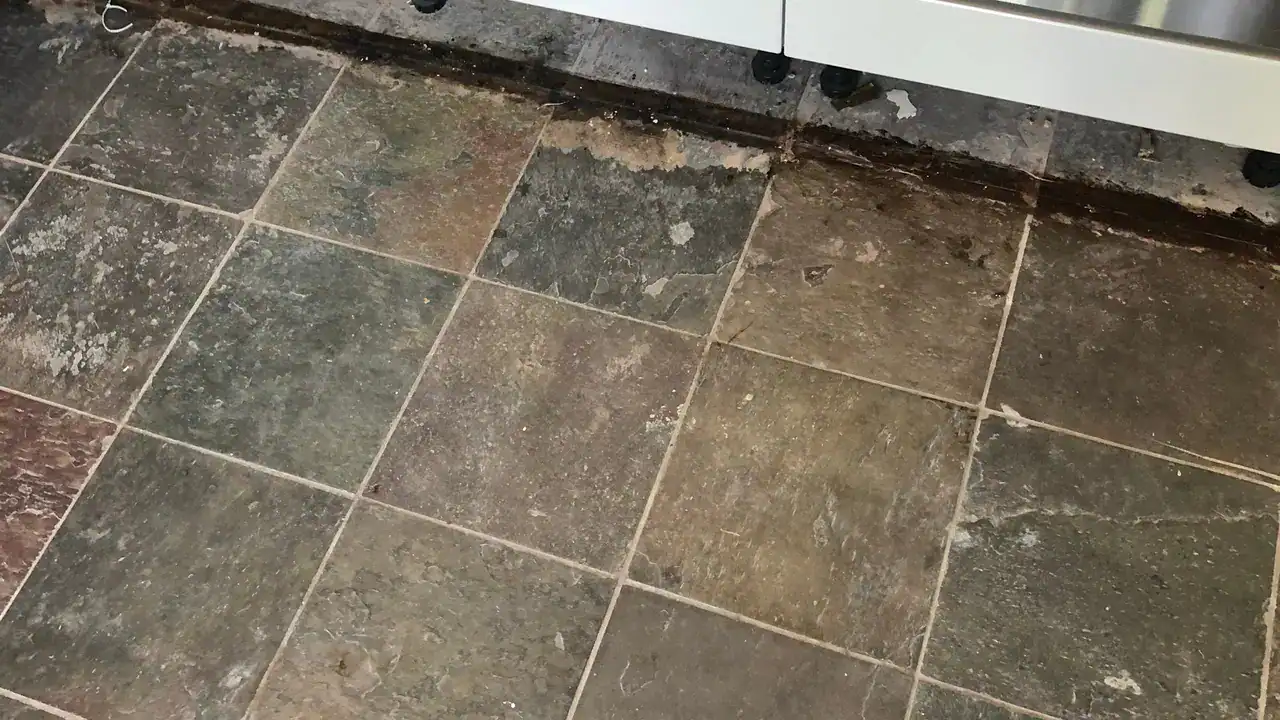
If the same gritty patches return after cleaning, the trigger may be below or within the surface rather than on top of it
Why guessing the cause can make a slate floor worse
Scrubbing, steaming or stripping a slate floor before the cause is known can turn a visible problem into lasting damage. A manageable residue issue may become surface breakdown if friction drags loose grit across the riven texture and widens microscopic damage in high-traffic areas.
Steam-induced sealer failure is a maintenance error where steam cleaning creates heat damage, moisture penetration and coating degradation. The homeowner sees surface peeling, protective layer loss and greater flaking risk because the softened film loses grip. The floor becomes unstable.
Traffic wear creates pale pathways, surface dulling and colour reduction in busy walkways. Spalling creates a flaking surface, peeling layers and weakened surface areas where moisture stress or heat exposure encourages layer separation. The floor will look significantly better after professional restoration where the cause is correctly identified, and a professionally restored and correctly sealed floor is significantly easier to clean and maintain than a worn or incorrectly treated floor.
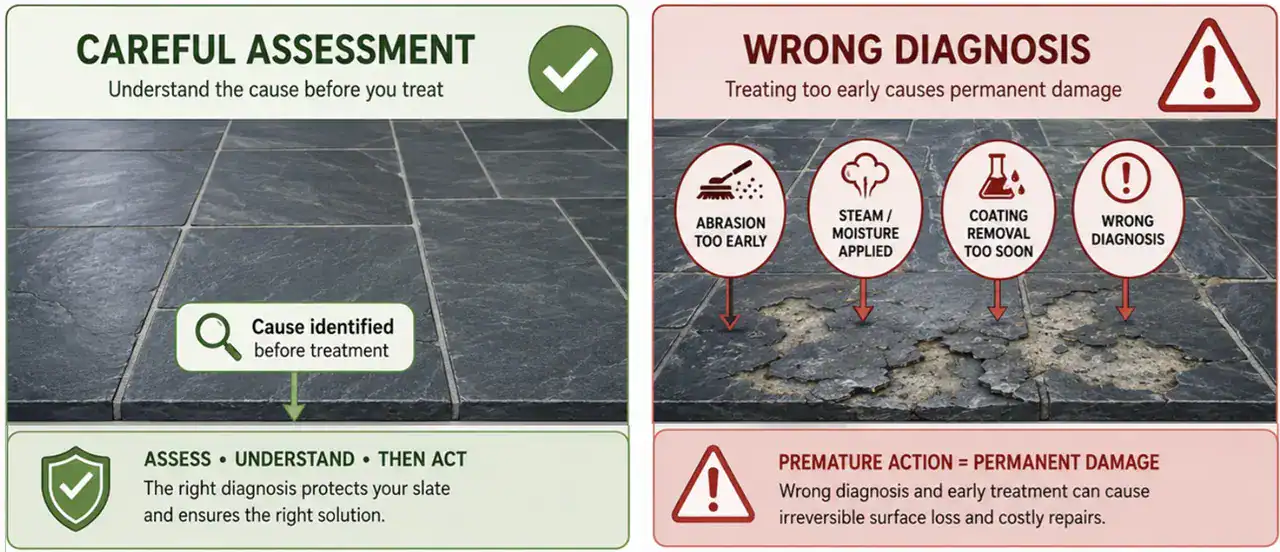
If the cause is guessed, cleaning, steam or abrasion can turn a manageable slate problem into lasting surface damage
How the pattern of damage shows whether wear, moisture or coating failure is to blame
A damage pattern across traffic routes, damp edges, grout lines or old coating areas often reveals what is really causing the slate to fail. The safest diagnosis starts by matching what the homeowner sees with where the condition appears.
- Check whether pale pathways follow high-traffic areas, because loose grit and footfall damage usually create surface wear.
- Check whether whitening sits near edges or grout, because failed grout can allow water migrating through joints to leave salt whitening.
- Check whether the floor darkens slowly as it dries, because substrate moisture and trapped water can mimic staining.
- Check whether patchiness follows old coating zones, because over-applied impregnator can leave whitening, dead seal and excess impregnator on the face.
Riven surface texture makes this diagnosis harder because mechanically split slate holds soil in natural cleavage lows. A fine-honed slate floor has a smooth, consistent surface that diffuses light evenly. An impregnating sealer leaves the natural riven texture unchanged, while a topical sealer adds a low surface sheen.
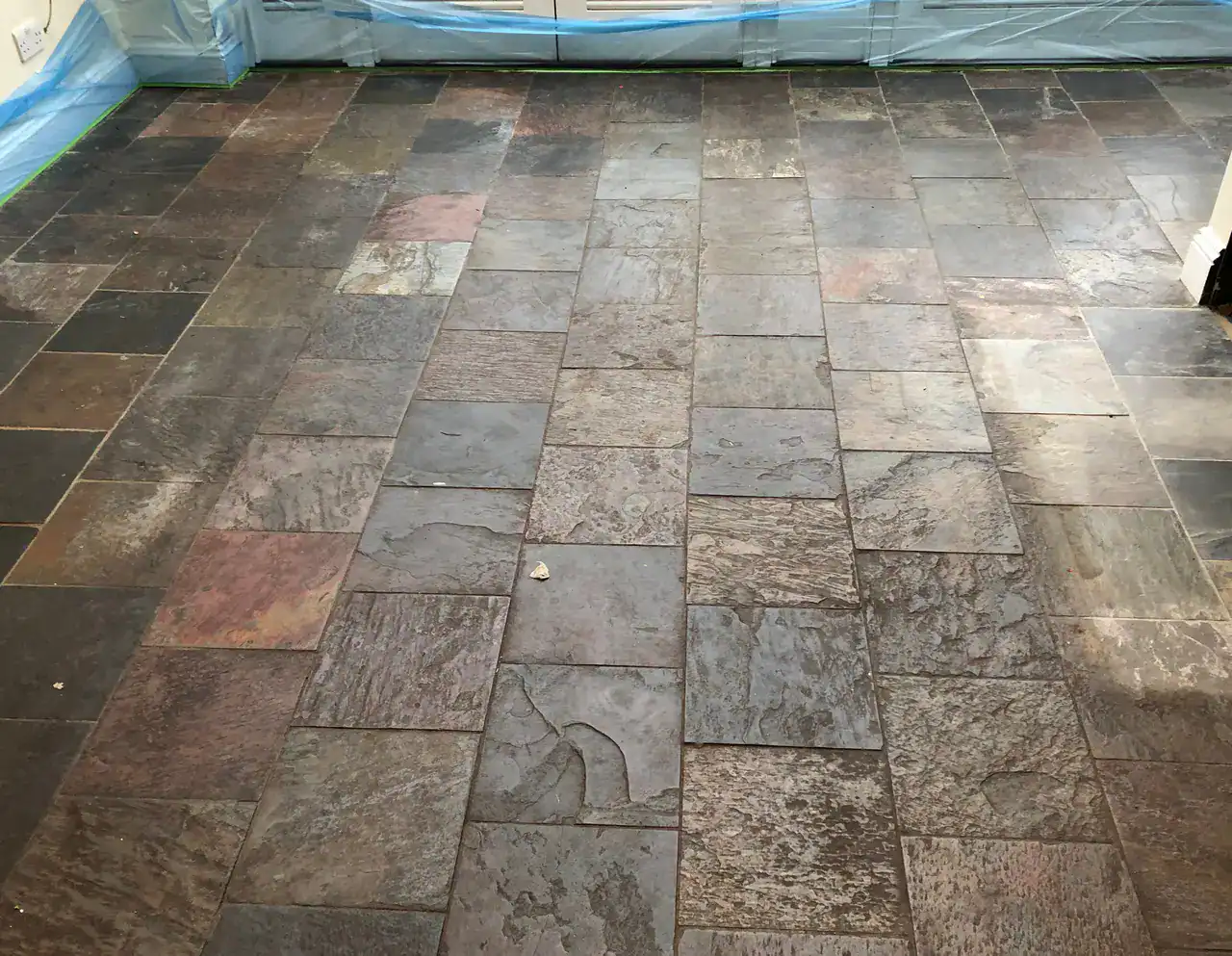
If the damage follows lanes, damp edges or old coating areas, the pattern often points towards the likely cause
Where to go next once you know why the slate surface is breaking down
Once the cause is clear, the next decision is choosing the safest route for broader slate care without guessing at treatment. Layer separation, coating accumulation and old shaling each point to a different pathway, so the next page should explain behaviour and safe options rather than push a single fix.
Slate is a fine-grained metamorphic rock that cleaves along natural planes. Its layered structure prevents mechanical polishing, limits restoration to cleaning and sealing, and makes it sensitive to aggressive cleaning chemistry. The floor can look dramatically better, and in many cases better than when first installed, when residue, sealant failure and colour response are managed correctly. Broader material behaviour, care choices and safe handoff routes are covered in slate floors in UK homes.
Sound next steps depend on whether the floor needs cleaning, local repair, tile replacement or a sealing reset. Case evidence can help a homeowner compare similar behaviour, including slate floor cleaning in Corris and slate floor cleaning and sealing in Priddy.
Products Used In This Guide
No third-party product links were present in the supplied original HTML for this diagnostic article. Product recommendations are therefore not added here.

David Allen — Abbey Floor Care
David Allen has worked with slate floor problems, flaking surfaces and coating failure diagnosis for Abbey Floor Care for over 30 years. His diagnostic work focuses on separating true layer separation from failed sealants, surface residue and traffic wear before any repair or restoration route is chosen.
Recent Posts:
We work throughout the country, just some of our work counties:
Copyright © 2026 Abbey Floor Care. Tile And Natural Stone Cleaning Consultants FAQ - Privacy Policy - Terms And Conditions
Abbey Floor Care is a participant in the Amazon Services LLC Associates Programme, an affiliate advertising programme designed to provide a means for websites to earn advertising fees by linking to Amazon.co.uk. As an Amazon Associate, we earn from qualifying purchases.