Slate Floor Restoration Wimbledon? When Cleaning Fails
Last Updated on June 28, 2026 by David
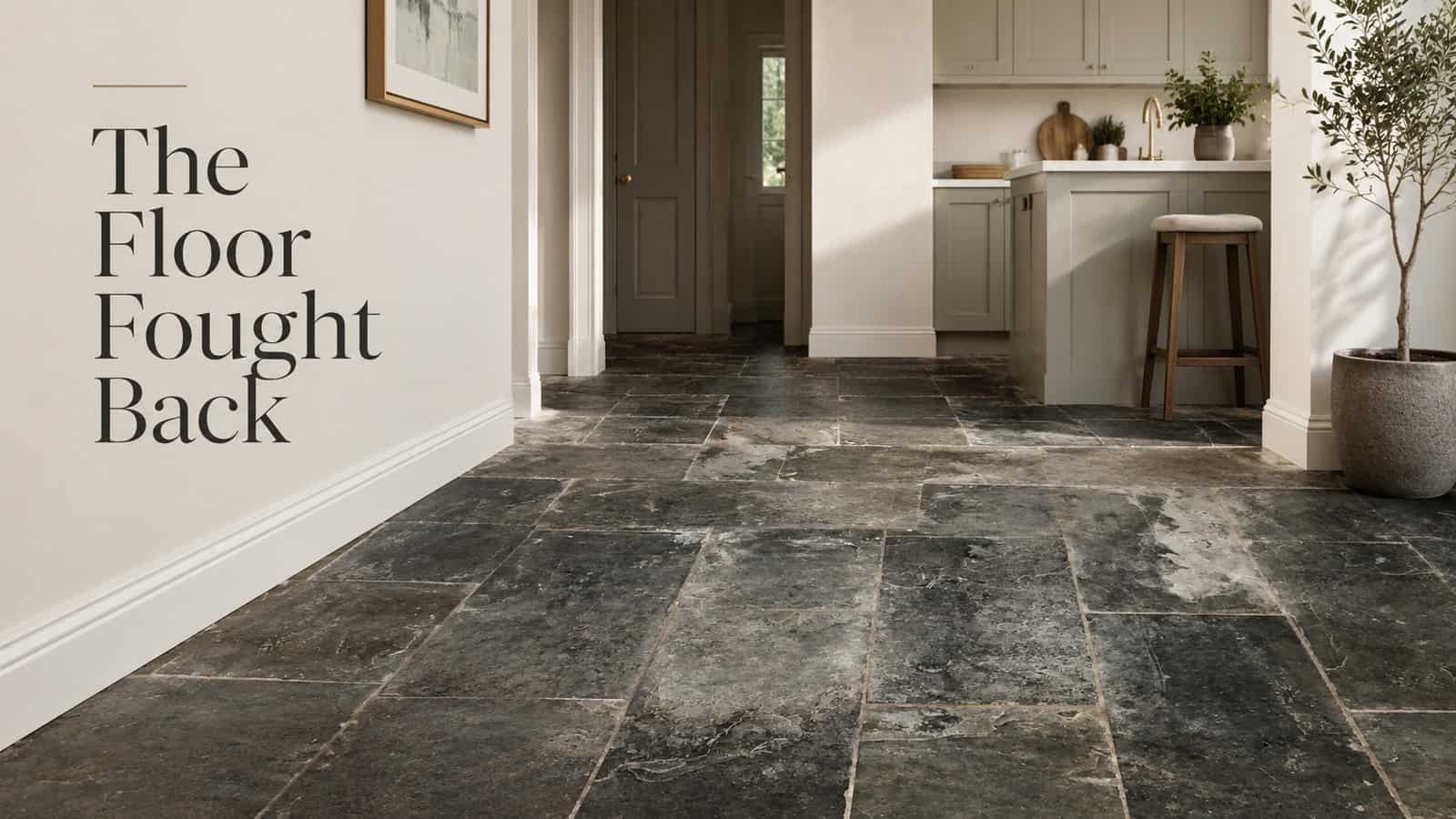
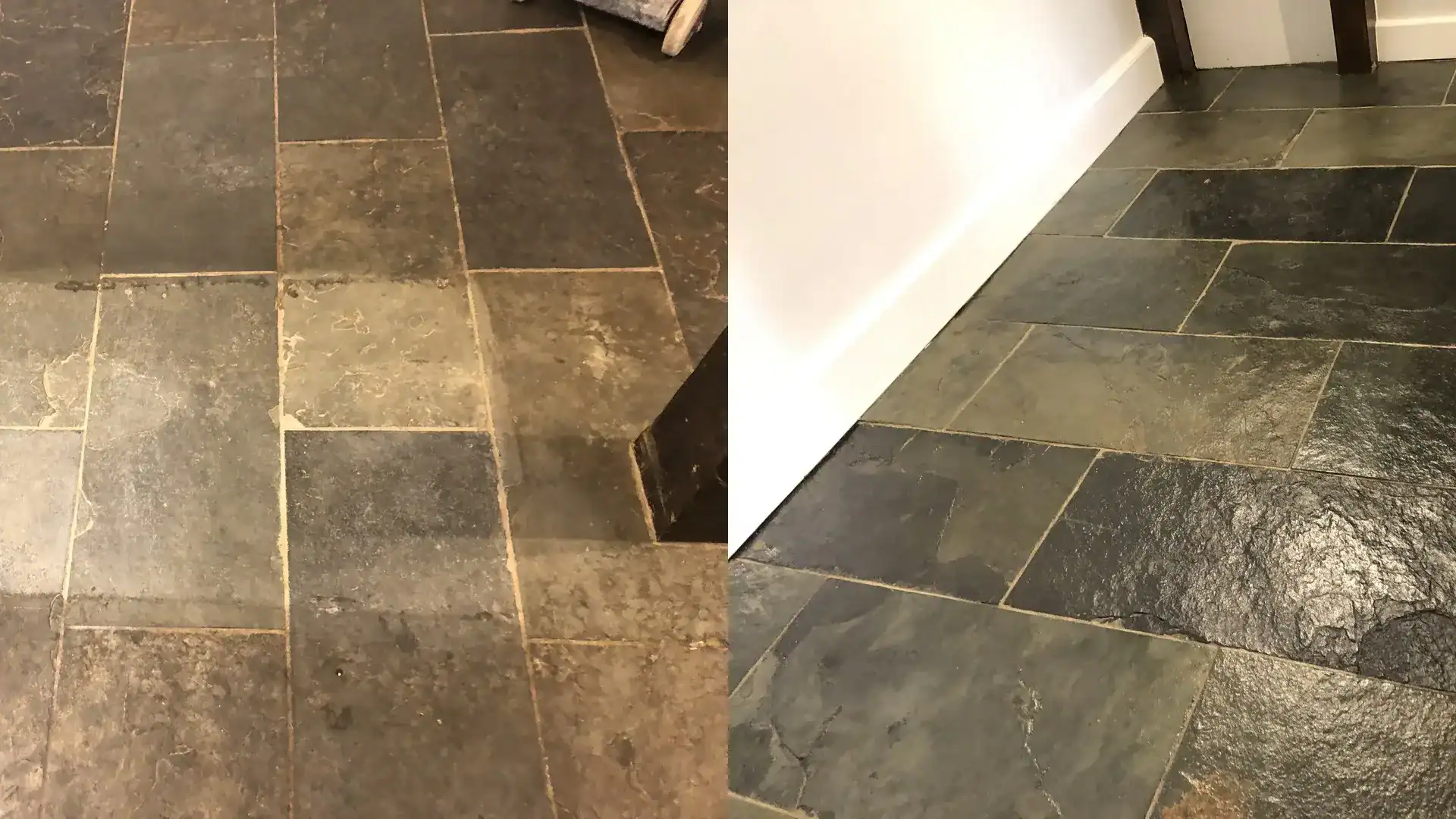
Slate restoration in this Wimbledon home changed a 60 square metre kitchen, dining and entrance floor from a heavily soiled, dull and unfinished-looking surface to a cleaner, deeper green-black floor with clearer grout lines and a stronger wet-look sheen.
How this slate floor in the home had lost its clean, finished appearance
Home Setting And First Impression
If your slate floor still looks dull after normal cleaning, the first concern usually feels practical rather than technical. The floor no longer looks cared for, even when the room itself looks tidy, and that created the main visual problem in this Wimbledon kitchen, dining area and entrance.
The slate floor ran across 60 square metres through several connected household zones, so the homeowner could not ignore the condition or treat it as a small isolated mark. The kitchen, dining area and entrance formed one visual route, which carried the worn appearance from the everyday cooking space into the main circulation area of the home.
The homeowner wanted us to clean and restore the floor to a like-new appearance because the surface had lost the clean, finished look expected in a lived-in but well-kept residential house. It did not simply look old. It looked unfinished, tired and difficult to bring back with routine care.
Visible Dullness Across The Slate
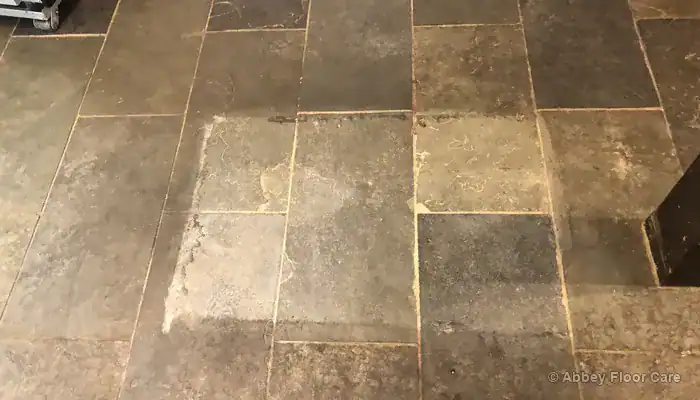
If your slate has a flat grey cast across the main floor area, the room can look darker and less fresh even when the tiles remain structurally sound. This floor showed a dull, flat appearance with very little colour depth, particularly across the larger open areas where light should have caught the stone more evenly.
The dullness changed the way the slate read from a standing position. Instead of showing the green-black colour variation that makes this kind of floor attractive, the surface looked muted and tired across the kitchen, dining and entrance run.
That mattered because slate should show natural variation and rich texture, not a flat, lifeless cast. Readers comparing similar symptoms can see the same type of colour concern discussed in slate flooring that looks rich wet but pale dry, where the visible difference between a dry, tired surface and a colour-enhanced finish becomes the key homeowner concern.
Heavy Soiling On Tiles And Grout
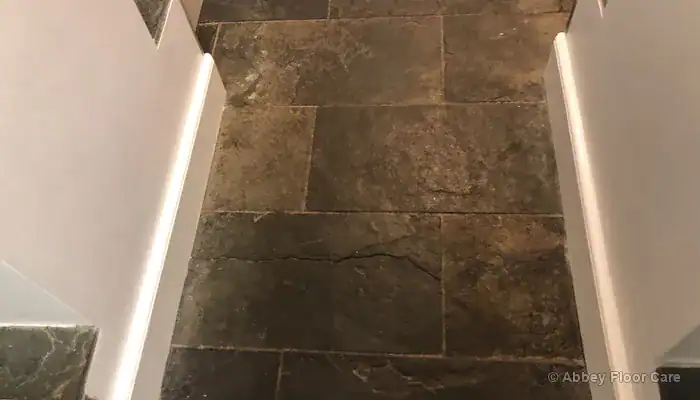
If your slate floor looks dirty again soon after mopping, the most frustrating part is the feeling that cleaning effort no longer pays back. This Wimbledon floor showed heavy soiling across both tiles and grout, so the problem affected the whole surface rather than one local spill or stain.
The floor looked tired because both the tile faces and the joints had lost their crispness. The grout lines no longer gave clean definition between tiles, and the whole surface had taken on a dull, used appearance that made the room look harder worked than it should.
The entrance area added to the problem because foot traffic naturally carries grit and outdoor contamination into the house. The kitchen and dining area then extended that use pattern into everyday family movement, which made the slate look consistently marked rather than selectively dirty.
The visible condition matched the kind of household slate problem where ordinary cleaning stops giving an even result. A similar real-floor example appears in slate floor cleaning that fixed patchy colour, where the homeowner-facing issue was not just soil but the loss of a clean, coherent surface.
White Chalky Deposits And Patchy Areas
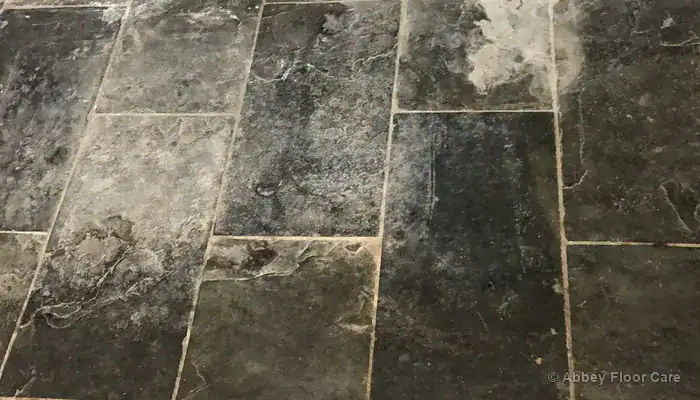
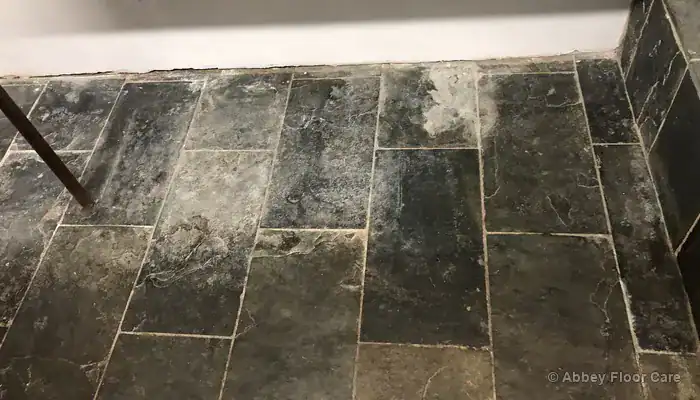
If your floor has pale deposits sitting over darker slate, the surface can still look patchy after you wipe the darker tiles clean. This floor had white chalky deposits across the surface, which made the finish look broken and uneven.
Those chalky areas mattered because they interrupted the natural green-black tone of the slate. Instead of reading as one continuous installed surface, the floor pulled the eye towards pale patches and tired edges, making the room feel less finished.
The patchy appearance showed most clearly where darker tiles should have shown stronger depth. Black and green-black slate can look dramatic when properly finished, but pale deposits and uneven tone quickly make the surface look dusty, tired and difficult to maintain.
The homeowner’s concern was easy to understand. The floor did not simply need a routine clean; it had reached the point where the visible finish no longer matched the standard of the surrounding home.
Damaged And Missing Grout Areas
If grout lines look broken, dirty or incomplete, the whole slate floor can look older than it really is. We found areas of lost and damaged grout on arrival, and those joints weakened the finished appearance of the kitchen, dining and entrance floor.
The grout condition affected the visual rhythm of the floor. Slate tiles rely on the joints to frame the surface cleanly, so damaged or missing sections made the installation look tired even where the individual tiles still had plenty of serviceable life.
The homeowner needed the floor to look presentable across the full 60 square metres, not merely cleaner in the easiest open areas. Local grout damage made that harder because the eye catches broken lines quickly, especially in kitchens and entrances where people naturally look down while walking.
The practical importance of joint condition also comes through in slate floor repair and replacement decisions, where damaged edges, joints and local failures guide how far restoration should go. On this Wimbledon floor, the visible issue was clear enough: the grout needed attention as part of the overall appearance recovery.
The Homeowner’s Restoration Aim
If a slate floor no longer looks clean enough for the room, the goal becomes more than removing surface dirt. The homeowner wanted the kitchen, dining and entrance areas restored to a like-new appearance because the floor no longer gave the house the clean, finished feel it should have provided.
The homeowner wanted a richer, more even surface across the connected rooms. They were not asking us to hide the natural character of the slate; the aim was to make that character visible again by removing the dull, soiled and patchy presentation.
So the project began with a straightforward visible brief. The floor had heavy soiling, tired grout, white deposits, dull colour and no real depth, and the homeowner wanted us to correct those problems across the full 60 square metres.
That entry condition also makes the case study useful for readers with similar floors in busy UK homes. Kitchens, dining spaces and entrances carry constant footfall, and slate in those areas needs a finish that looks significantly better after restoration and then stays simpler to care for with correct ongoing maintenance.
Why ordinary cleaning no longer improved the dull and soiled surface
Dull slate that refuses to improve after mopping usually means soil and residue are sitting where normal cleaning cannot lift them evenly. The riven surface texture holds contamination in small low areas, whilst grout joints collect dirty water and detergent traces as the mop passes over them.
Normal mopping moves soil around; restoration removes what the surface is holding.
Residue lock-in describes the visible condition where a floor looks clean while wet but dries back to a cloudy or patchy appearance. The homeowner sees pale areas, tired grout and uneven colour; correction needs controlled cleaning, rinsing and slurry extraction rather than repeated domestic washing. Slate is a fine-grained metamorphic rock that cleaves along natural planes — its layered structure prevents mechanical polishing and limits restoration to cleaning and sealing, and makes it sensitive to aggressive cleaning chemistry.
How the floor was cleaned and restored without overworking the slate
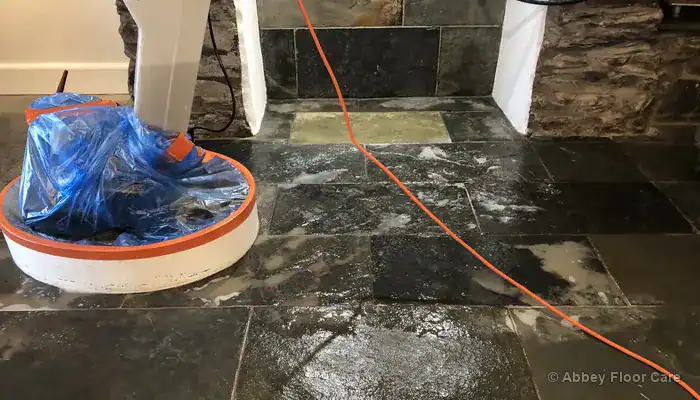
Scrubbing a worn slate floor too aggressively can remove dirt but leave the surface looking harsher and less natural. We first cleared the Wimbledon floor of dry surface soil, then treated it with LTP Grimex so the cleaner could loosen ingrained dirt and old residue from the tile faces and grout lines.
The cleaning stage used rotary agitation, pressurised rinsing and wet extraction to remove the dirty solution before it could settle back into the textured surface. We then allowed the floor to dry fully, so grout repairs and finish decisions could come from the true dry appearance rather than a temporarily dark wet surface.
For the finishing stage, we used Cee Tech urethane sealer to create a film-forming, colour-enhancing surface with a wet-look sheen. A fine-honed slate floor has a smooth, consistent surface that diffuses light evenly, while an impregnating sealer leaves the natural riven texture unchanged, and a topical sealer adds a low surface sheen. The wider principles behind this type of controlled work are covered in professional slate floor restoration techniques, and this project followed that same restraint: enough cleaning power to restore appearance without overworking the stone.
What changed after the restoration work was completed
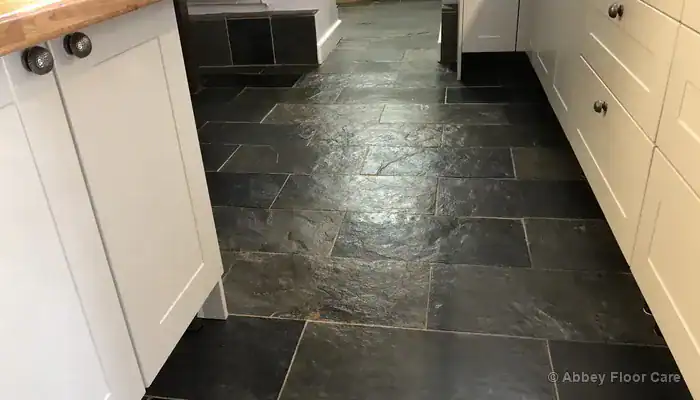
Before restoration, the 60 square metre slate floor looked dull, heavily soiled and visually flat across the kitchen, dining and entrance areas. The grout lines looked tired, the surface showed white chalky deposits, and the natural green-black depth of the tiles stayed hidden.
After cleaning, the floor regained clarity because the cleaning removed heavy soil and residue from the tile faces and joints. The repaired grout gave the installation cleaner definition, and the surface no longer looked as though normal household cleaning had failed.
After finishing, the Cee Tech urethane sealer restored a strong wet-look sheen and deeper green-black colour across the connected rooms. The floor looked significantly better than before intervention, and in many cases a correctly sealed slate floor can look better than when first installed because the finish properly activates the natural pigment.
Everyday use also improved because a professionally restored and correctly sealed floor is significantly easier to clean and maintain than a worn or incorrectly treated floor. Correct ongoing maintenance — pH-neutral cleaning, grit removal before wet mopping, and resealing at the right interval — is the single most important factor in extending the floor’s life, and practical routines are covered in how to clean slate floors when they stay dull.
Where to find the main slate floor cleaning and restoration guide
Readers who want the wider explanation should move from this Wimbledon case study to guidance that covers cleaning limits, sealer choices and long-term care in more depth. This project documents one completed floor, while the main guide explains how different slate floors behave when soil, old coatings, texture and sealing decisions interact.
The broader guide helps when a homeowner compares a dull floor, a patchy surface or a tired wet-look finish with the result shown here. The main background is set out in slate floor problems below the surface, while coating and preparation detail can be followed through cleaning slate before old sealer traps dirt. Those pages give the next layer of explanation without turning this case study into a general service page.

David Allen — Abbey Floor Care
David Allen has worked with slate and other floor surfaces for over 30 years through Abbey Floor Care. This Wimbledon case study reflects his practical approach to correcting heavy soiling, damaged grout and lost colour depth on a real 60 square metre slate floor.
Recent Posts:
We work throughout the country, just some of our work counties:
Copyright © 2026 Abbey Floor Care. Tile And Natural Stone Cleaning Consultants FAQ - Privacy Policy - Terms And Conditions
Abbey Floor Care is a participant in the Amazon Services LLC Associates Programme, an affiliate advertising programme designed to provide a means for websites to earn advertising fees by linking to Amazon.co.uk. As an Amazon Associate, we earn from qualifying purchases.