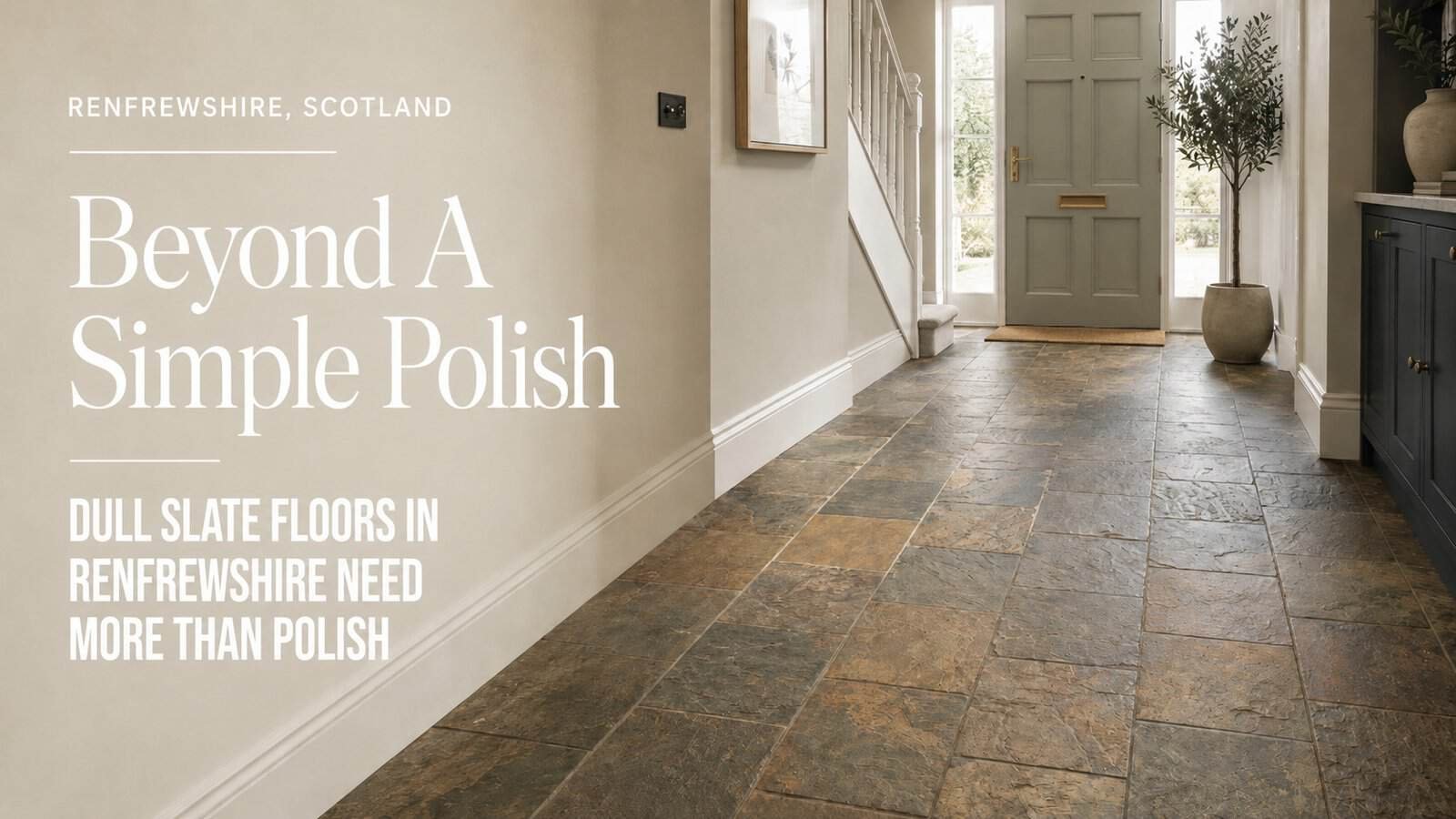
Dull Slate Floors In Renfrewshire Need More Than Polish
Last Updated on June 8, 2026 by David
Slate Restoration in Renfrewshire for Floors That Have Lost Their Finish
Flat Slate That No Longer Responds To Cleaning
Slate floors in Renfrewshire often reach the point where cleaning no longer changes the way the surface looks. The floor may still feel sound underfoot, but the colour sits flat, the traffic lanes look pale, and the finish no longer gives the kitchen, hallway, utility room, or entrance area the depth the homeowner remembers.
In my experience, dull slate in local homes usually shows itself as a finish problem before it looks like a structural one. The floor marks quickly, dries unevenly after mopping, and seems to hold grey soil in the lower parts of the natural split surface. That is the point where professional slate restoration becomes more relevant than repeated household cleaning.
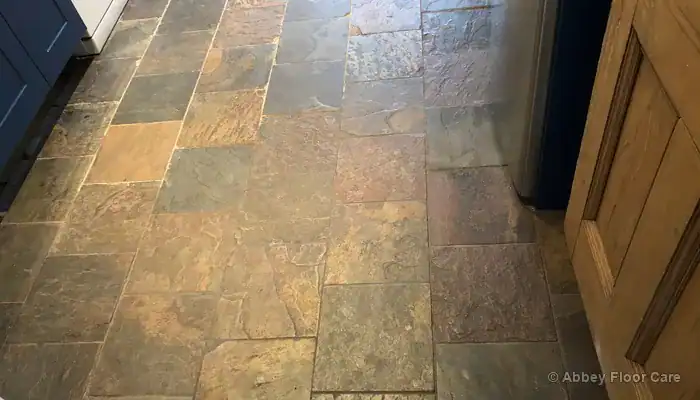
Riven Slate That Looks Patchy Rather Than Naturally Varied
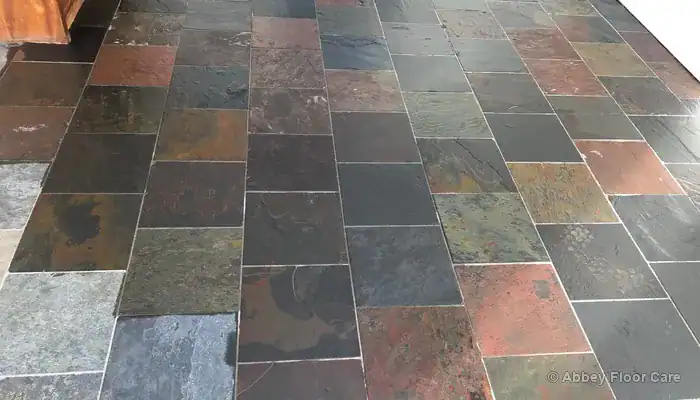
Natural split texture gives slate its character, but those same ridges and troughs can make a worn floor look confusing. Some tiles look darker, some edges look heavy with old coating, and some low areas keep holding residue long after the rest of the floor appears dry.
Patchy slate does not mean every tile has failed in the same way. A Renfrewshire floor may include older Welsh material, imported Indian slate, or a mixed domestic installation where colour, density, and surface character vary from tile to tile. That variation belongs to the floor. Greasy edges, pale traffic lanes, and cloudy coating patches point more towards a finish that needs proper assessment.
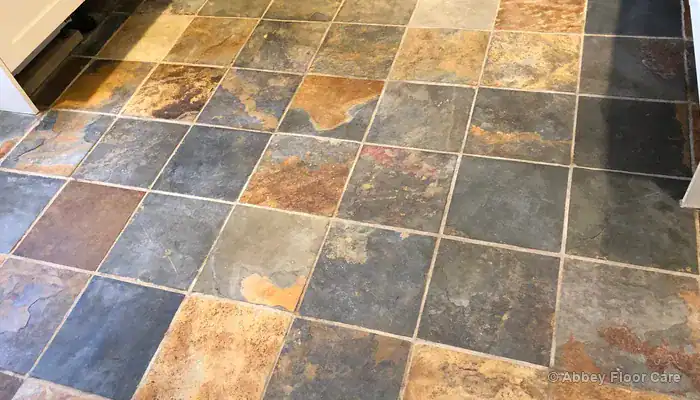
Local Floors Where Shine Expectations Need Careful Framing
Shine expectations create much of the uncertainty around slate restoration in Renfrewshire. A homeowner may ask whether slate can be polished, but the better question is whether the existing floor can regain colour depth, a controlled sheen, and a surface that behaves properly under daily use.
Riven domestic slate rarely becomes a mirror-bright surface without losing the texture that made it slate in the first place. A fine-honed slate floor has a smooth, consistent surface that diffuses light evenly, whilst an impregnating sealer leaves the natural riven texture unchanged. A topical sealer adds a low surface sheen.
Older Scottish housing, converted properties, rural cottages, and modern kitchen installations can all contain slate chosen for colour and texture rather than uniform reflectivity. Professional restoration should therefore identify whether the homeowner wants a natural enriched finish, a satin shine, or a managed low-gloss coating before any slate polish or polishing process is discussed.
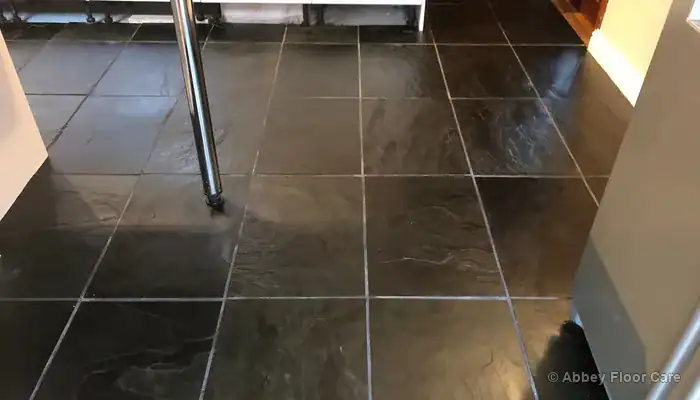
Renfrewshire slate restoration is delivered as a local assessment-led service through the Abbey Floor Care route, with suitable work assigned through the vetted contractor network serving central Scotland. The assessment confirms what the floor is showing, what finish remains, and whether the visible dullness comes from worn protection, old coating, surface contamination, or a finish expectation that needs resetting.
Local service delivery matters because slate floors are not all the same across Scottish homes. Period properties around Paisley, Renfrew, Johnstone, and surrounding villages may hold older material or later replacement tiles, whilst newer kitchens can contain imported slate with a softer, more absorbent surface. The visible problem may look similar. The treatment route can differ substantially.
Slate case study evidence from other UK projects supports the same practical lesson: the most successful restoration outcomes begin with inspection, not assumptions. The Matlock slate restoration case study shows how riven texture, old coatings, controlled cleaning, and finishing choices combine in a real service setting. That evidence is useful because it presents restoration as a managed sequence rather than a single “polish” product.
Homeowners comparing dull slate with online polish advice can easily be led towards the wrong expectation. Product-led shine advice often ignores surface texture, traffic wear, previous sealers, and the difference between a coating that reflects light and a stone surface that has been mechanically polished. A local restoration page should therefore help the reader recognise the floor condition first, then move them towards a suitable professional assessment.
Slate restoration in Renfrewshire should leave the homeowner with a clearer understanding of the floor before any work begins. The visible signs that matter are loss of colour depth, patchy coating, rapid re-soiling, pale traffic lanes, edge build-up, uneven drying, and a finish that no longer responds to routine care. Those signs point towards a floor that deserves specialist inspection rather than stronger mopping or abrasive scrubbing.
Why Existing Coatings and Previous Treatments Must Be Checked First
Old coatings and previous treatments can hide the real condition of a slate floor until restoration work begins. Sealer failure is the breakdown of the protective layer that once helped the floor resist soil and moisture; the homeowner sees cloudy patches, pale traffic lanes, sticky edges, or areas that darken quickly. Correction starts with identifying what remains on the surface before new protection is applied.
Existing coatings must be understood before slate restoration can be safely planned.
Layer separation is a slate-specific risk because the stone splits along natural sheet-like boundaries. The homeowner may see flakes, raised edges, or small loose layers rather than simple dirt, and the correction is stabilisation or careful exclusion from aggressive treatment before cleaning or sealing proceeds. The slate flaking diagnostic guide gives deeper context on this damage pattern without turning the Renfrewshire service page into a repair tutorial.
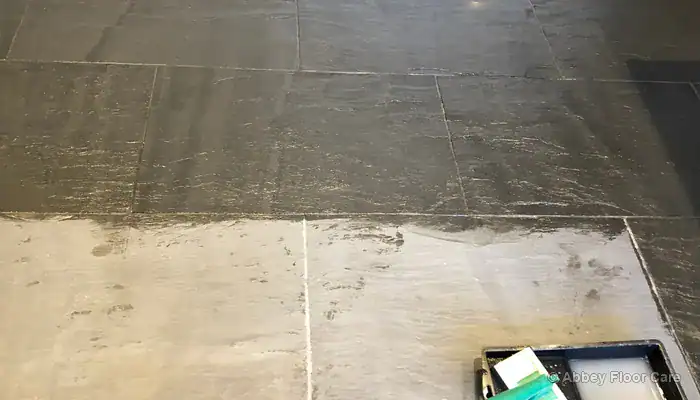
Coating removal must be treated as preparation rather than a cosmetic extra. Old acrylic build-up can sit in tile edges, grout lines, and low-use corners, so stripping work has to remove degraded residue before the floor can accept an even finish. Fresh sealer over contaminated residue simply produces the same patchy appearance the homeowner wanted to correct.
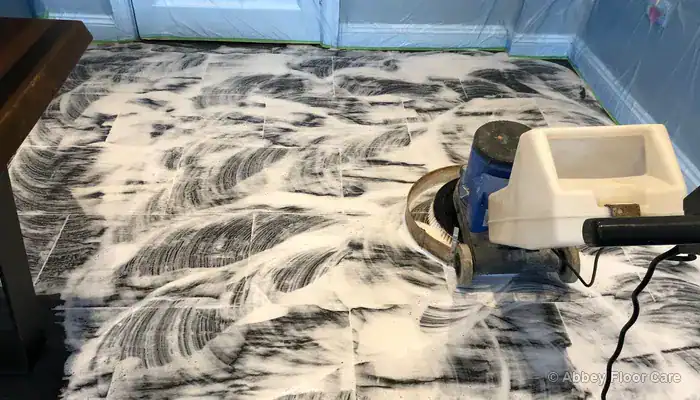
The Specialist Equipment Used to Clean, Strip and Capture Slate Contamination Safely
Using the wrong cleaning or stripping approach can drive slurry deeper into slate texture instead of removing it. Riven ridges, recessed troughs, grout joints, and open surface relief can all hold loosened contamination, so wet work needs controlled agitation followed by immediate capture rather than loose mopping.
Professional restoration uses compatible stripping chemistry, brush agitation, pressurised rinsing, and wet vacuum recovery to remove old residues from the floor. A solvent-based stripper softens suitable old coatings, whilst a wet vacuum or slurry extractor removes liquefied soil before it dries back into the surface. The professional slate restoration techniques guide expands on the specialist sequence for readers who want more technical depth.
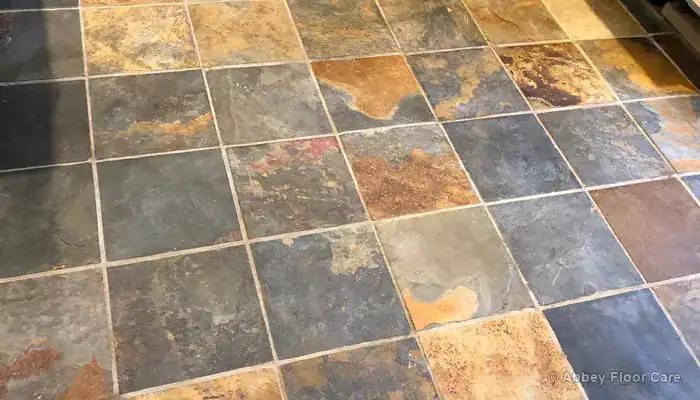
Specialist experience matters because slate origin affects how much water, cleaner, and sealer the surface will tolerate. Dense Welsh slate behaves differently from softer imported slate, so the service process must adjust drying time, rinsing intensity, and finish selection. The aim is a floor that is cleaner beneath the finish, not merely darker for a few weeks.
What a Restored Slate Floor in Renfrewshire Can Realistically Look Like
A restored slate floor should look cleaner, richer, and easier to maintain, but it should still look like slate. Colour loss is the visible fading caused when foot traffic wears the pigmented surface and old finish; the homeowner sees pale walkways or flat patches. Correction uses controlled cleaning, coating removal, and the right sealer rather than promising a mirror polish.
Natural colour recovery gives riven slate a deeper, more settled appearance while preserving the original surface character. A colour-enhancing finish activates remaining mineral tone and contrast, so the floor looks more intentional without pretending every tile should become identical. The wet-look slate finish guide explains the difference between colour depth and coating sheen in more detail.
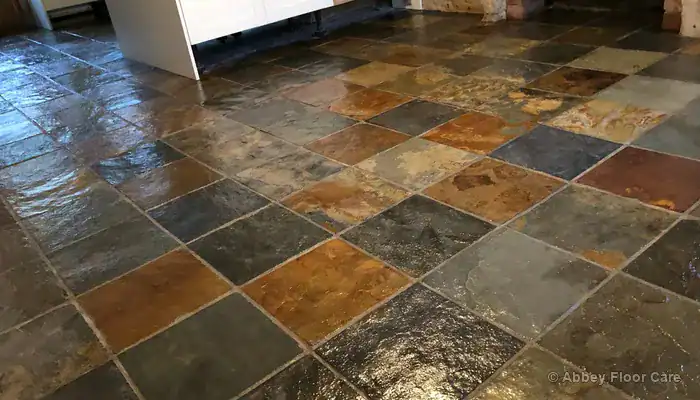
Unrealistic polish expectations create disappointment when homeowners expect textured slate to behave like a smooth reflective stone. A topical urethane film can create low sheen or gloss because the coating forms the reflective layer, but that finish has a lifecycle and will need careful maintenance. The restored floor should stay cleaner for longer and respond more predictably to routine care than an unprotected or residue-covered surface.
Learn More About Slate Floor Care Before Choosing Your Restoration Route
Choosing the right restoration route starts with understanding what slate can and cannot be expected to do. Dullness, coating failure, flaking risk, colour enhancement, and shine expectations all sit within the wider behaviour of slate as a domestic floor material, so broader background can help homeowners decide whether local assessment is the next sensible step.
Renfrewshire service delivery keeps this page focused on professional assessment, restoration scope, and realistic outcomes for local floors. Wider guidance on slate behaviour, finish limits, cleaning response, and long-term care is available in the main slate floor care hub, while everyday dull-floor maintenance questions are covered separately in the slate cleaning guide for floors that stay dull. That separation keeps restoration decisions clear without turning a local service page into a broad maintenance manual.

David Allen — Abbey Floor Care
David Allen brings more than 30 years of practical experience restoring slate floors across the UK through Abbey Floor Care, with projects completed across Renfrewshire, Scotland and the surrounding area. His guidance reflects hands-on knowledge of local building stock, period floor conditions and the restoration decisions that produce lasting results.
Recent Posts:
We work throughout the country, just some of our work counties:
Copyright © 2026 Abbey Floor Care. Tile And Natural Stone Cleaning Consultants FAQ - Privacy Policy - Terms And Conditions
Abbey Floor Care is a participant in the Amazon Services LLC Associates Programme, an affiliate advertising programme designed to provide a means for websites to earn advertising fees by linking to Amazon.co.uk. As an Amazon Associate, we earn from qualifying purchases.