Slate Floor Cleaning Fixed Gamston Grout Marks
Last Updated on July 2, 2026 by David
Why this Gamston slate floor still showed grout residues after installation
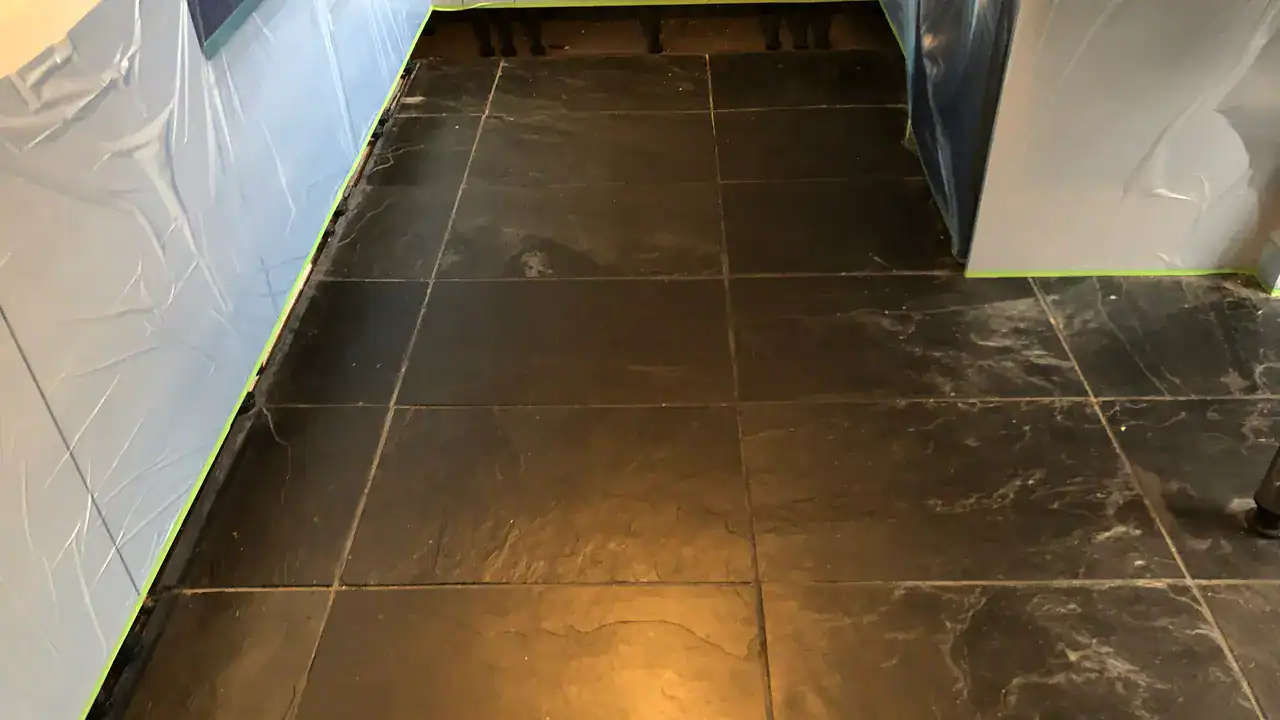
If your slate shows pale grout haze after installation, the floor may look dirty even after careful mopping because the marks are not loose kitchen soil. On this Gamston kitchen floor, there were cloudy patches across the tile faces, darker marks in the used areas, and ingrained soil near the door where outdoor grit and moisture entered the room.
Grout haze left after installation was the main visible problem on this small kitchen slate floor in Gamston, Nottingham, NG2 6NE. The homeowner had already tried normal mopping and wiping, but the floor still looked uneven, marked, and dull because the residue remained on the tile surface rather than lifting away during routine cleaning.
The doorway made the problem stand out. Traffic carried soil across the same route each day, while cooking activity, outside grit, damp footwear, and repeated washing all affected the appearance, so the floor began to look as though the slate itself had become dirty rather than simply holding installation residue.
Gamston homes around Rushcliffe, Nottinghamshire are mainly modern suburban houses, with many detached and semi-detached family properties, bungalows, and smaller terraces built as part of the wider West Bridgford expansion. Slate floors in these properties are often found in kitchens, utility rooms, entrance halls, garden-facing extensions, and open-plan kitchen-dining spaces where a hard-wearing natural floor suits family use. In a kitchen setting, slate has to cope with door traffic, cooking spills, grit from outside, and frequent mopping. The broader location anchor is the NG2 postcode district.
Modern Gamston layouts can create concentrated wear where rear doors, kitchen routes, and utility entrances carry grit and moisture across the same slate tiles every day. Textured slate can hold that soil in the surface and grout, so a floor may still look marked or uneven even when the homeowner has cleaned it regularly.
The grout lines also changed how the floor looked before work began. They had originally been mid grey, but some areas had darkened and become less consistent, which made the slate and the joints read as one general cleaning failure rather than as separate installation and traffic-related issues.
The homeowner called because repeated cleaning was no longer giving any useful improvement. The floor needed an accurate reading first, because the visible condition combined pale surface marks, doorway soil, and uneven grout colour in a room that should have been straightforward to keep clean.
How bonded grout residue was removed by hand before the slate was deep cleaned
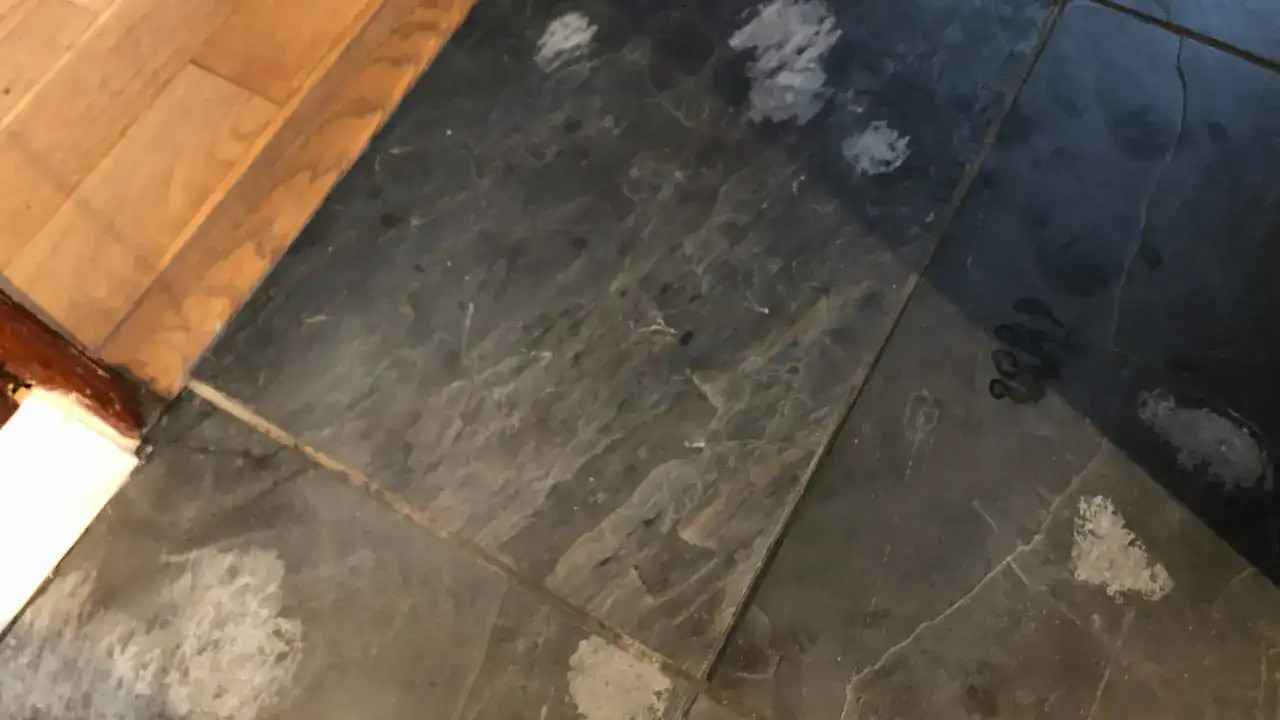
If your slate still feels marked after mopping, bonded grout residue may have locked into the raised and recessed texture rather than sitting loosely on top. The haze on this Gamston floor had to be separated from the tile surface carefully, because heavy pressure or unsuitable abrasion could change the riven character that gives the slate its natural appearance.
Grout haze is the thin cement-based film left when installation residue dries across tile faces instead of being fully washed away. The homeowner sees pale smears, cloudy patches, and dirty-looking areas that do not wipe clear, and the correction starts with controlled release of that residue before deeper cleaning can work properly.
Hand diamond sanding blocks gave controlled contact on the affected slate because the residue had bonded unevenly to the textured surface. The technician worked the visible marks carefully, reducing the bonded material without flattening the ridges, cutting into the tile edges, or turning a cleaning problem into permanent surface change.
Cement residue remover logic matters because cement-based material behaves differently from ordinary soil on slate. A suitable residue release stage softens the bond so mechanical action can separate the film, whilst careful rinsing and recovery prevent loosened material from drying back into the surface relief and grout joints.
Riven surface texture creates ridges and troughs that hold contamination after each failed mop pass. A flat wiping action skims over the raised points and leaves diluted soil in the lower areas, so the cleaning sequence had to combine hand work on the bonded marks with machine agitation across the main kitchen area.
Bonded grout residue must be removed without flattening the slate texture.
Rotary cleaning worked after the hand residue stage because the surface contamination had been opened enough for controlled agitation. A polypropylene brush can reach into uneven slate texture without behaving like a harsh abrasive pad, while a carbon brush can support deeper agitation where the surface needs more bite without turning the work into grinding.
Wet vacuum recovery completed each cleaning pass because loosened slurry has to leave the floor while it remains suspended. The wet vacuum / slurry extractor removed dirty liquid from the tile surface and grout lines, reducing the risk that dissolved contamination would dry back into the riven texture and make the floor look patchy again.
Deep grout detail cleaning improved the joints that the rotary machine could not fully reach. A grout scrub brush lifted trapped soil from the deeper lines, helping the cleaned slate and the mid grey grout sit together more evenly instead of leaving dark lines around a cleaner tile surface.
The same residue-controlled approach also supports related slate cleaning projects where grout haze and surface texture shape the method. A separate Wimbledon slate cleaning case study gives more context on controlled grout haze removal on slate. Careful sequencing keeps the focus on cleaning the existing floor rather than forcing the slate into an unnecessary repair or restoration route.
What changed once the slate surface finally responded properly to cleaning
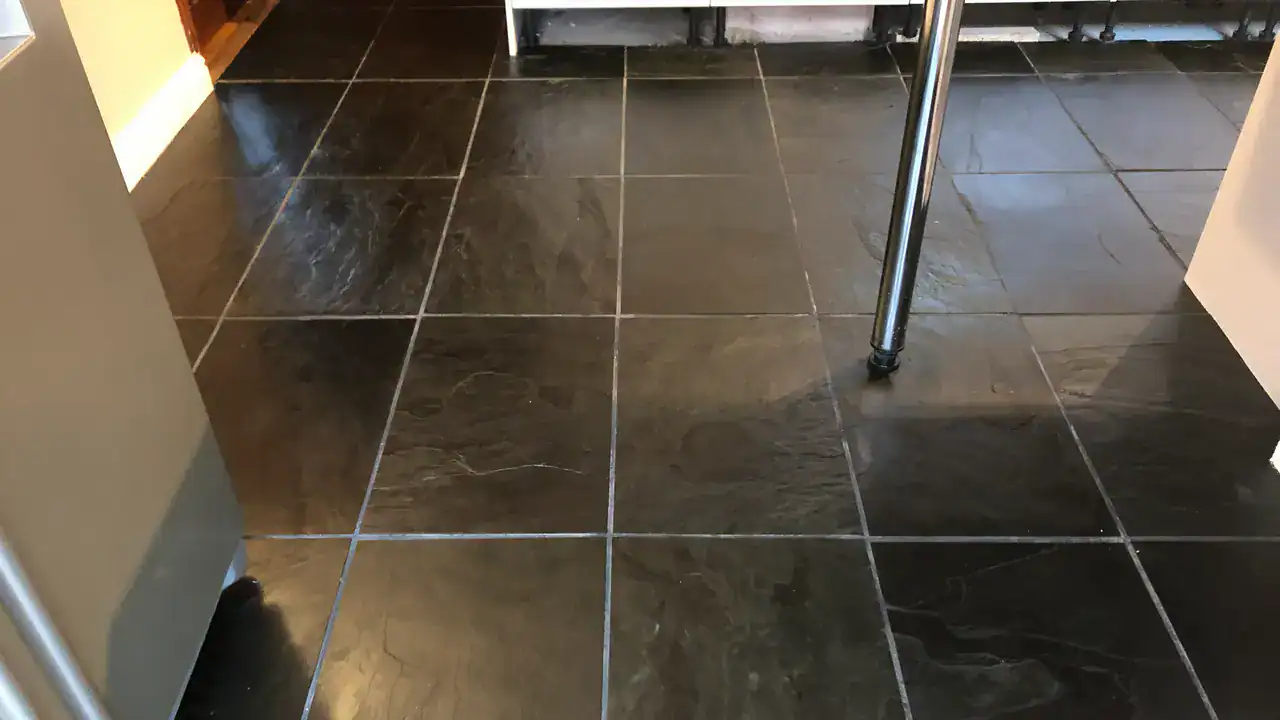
Before cleaning, the Gamston slate floor showed pale grout haze, darker doorway soil, and grout lines that made the whole kitchen look harder to clean than it should have been. The homeowner had already put real effort into mopping and wiping, but the bonded residue kept collecting contamination and made each clean feel temporary.
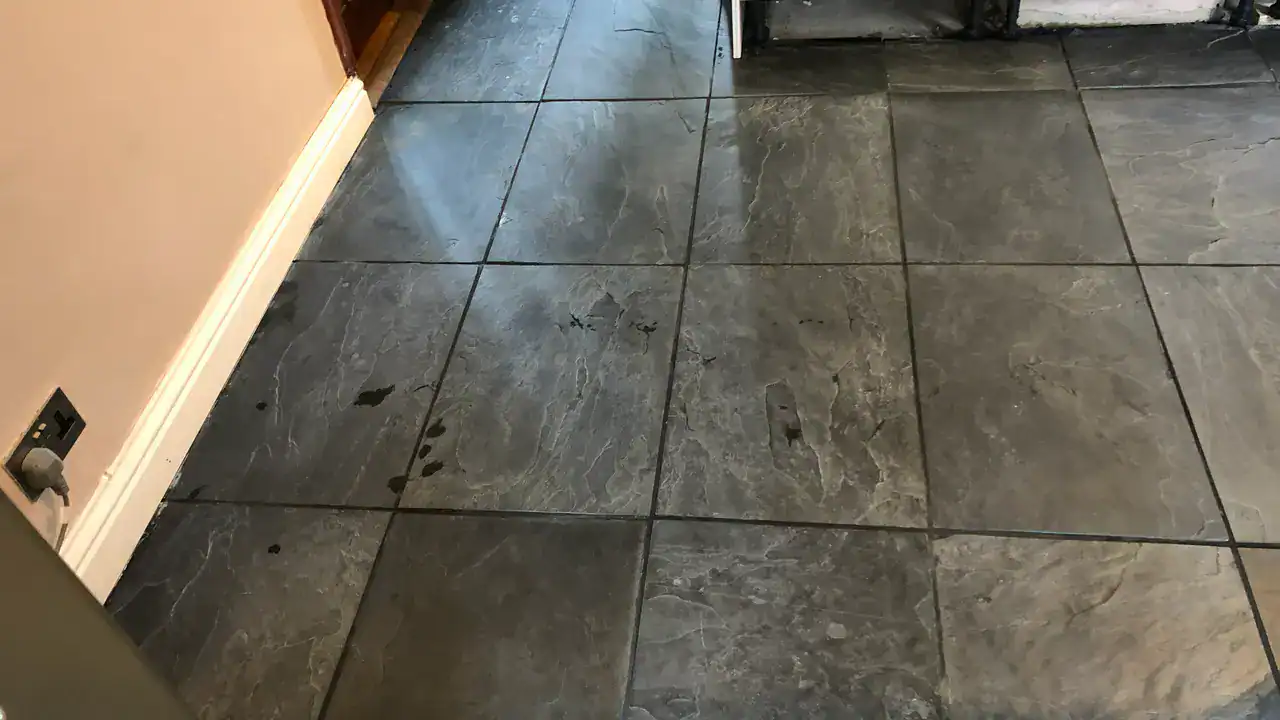
After cleaning, the tile surface looked clearer because the grout haze no longer sat across the slate faces. The doorway area also improved because ingrained soil had been lifted from the textured surface and grout, leaving a more uniform finish than ordinary wiping had been able to produce.
Colour-enhancing sealer changed the final appearance once the floor had dried properly. Two coats of colour-enhancing urethane sealer deepened the natural black tone, increased the visual contrast in the stone, and gave the surface a satin protective finish that made the kitchen simpler to care for.
Topical urethane sealer needed a clean, dry, residue-free surface so the finish could bond evenly. The sealer added a low sheen and helped future soil remain closer to the surface, while the careful preparation prevented the patchy look that can happen when a finish traps contamination underneath.
Professional judgement mattered too, because the grout did not need recolouring once cleaning had improved the overall floor. David Allen’s long stone-floor experience supported a practical decision: the homeowner accepted the cleaned mid grey grout, so the work stopped at the point where the floor looked right and maintenance became manageable.
Where to learn more about slate floor cleaning problems like this
Slate cleaning problems make more sense when a real floor shows how the symptoms connect. The Gamston kitchen did not need generic cleaner advice; it needed the grout haze, textured surface, soil movement, and sealing response to line up before the floor could behave properly under normal care.
Broader slate guidance helps homeowners compare similar issues without turning every marked floor into a repair or full restoration project. The material hub on slate floors in UK homes gives wider context on cleaning behaviour, surface texture, sealing choices, and long-term considerations. That broader view helps place this Gamston case study within the normal behaviour of domestic slate floors.
Products Used In This Guide
No outbound product links appeared in the original article HTML. This section remains reserved for preserved product references when the source article includes them.

David Allen — Abbey Floor Care
David Allen has cleaned and restored stone floors for over 30 years through Abbey Floor Care, including this Gamston slate floor where installation grout haze and ingrained kitchen soil were corrected. His case study work focuses on identifying the cause of visible marks, choosing controlled cleaning methods, and finishing slate so the floor becomes practical to maintain.
Recent Posts:
We work throughout the country, just some of our work counties:
Copyright © 2026 Abbey Floor Care. Tile And Natural Stone Cleaning Consultants FAQ - Privacy Policy - Terms And Conditions
Abbey Floor Care is a participant in the Amazon Services LLC Associates Programme, an affiliate advertising programme designed to provide a means for websites to earn advertising fees by linking to Amazon.co.uk. As an Amazon Associate, we earn from qualifying purchases.