
Can You Wax Ceramic Tile Floors? Usually No
Last Updated on September 29, 2026 by David
Usually, do not wax glazed ceramic tile floors. Wax forms a temporary film that can make the surface slippery and harder to clean; seal suitable porous grout instead, while keeping the glazed finish film-free.
The comparison below separates factory-finished ceramic surfaces from the areas that may genuinely benefit from protection.
Unsure Whether Your Ceramic Floor Needs Wax or Sealer?
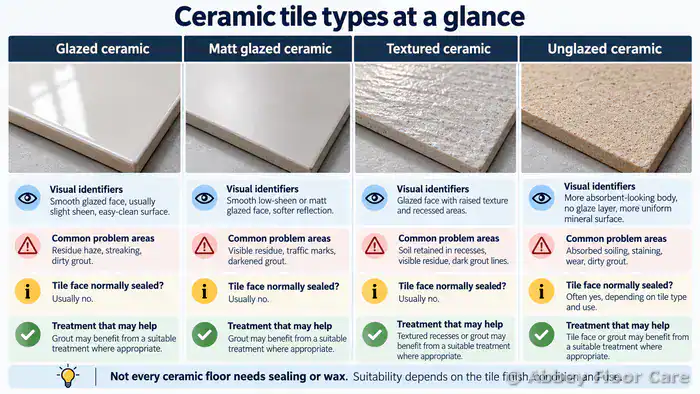
If your ceramic tile floor looks dull or dirty, inspect the grout, tile face and textured grooves under the same light before assuming the ceramic needs wax or sealer. A floor can appear generally tired even when the glazed tile faces are intact, because darker joints and trapped soil are often read as one continuous problem. Locate the discolouration first; do not choose a product on appearance alone.
Discolouration that follows grout joints usually points to the joint system rather than the ceramic tile around it. Look for dark lines, uneven colour at intersections and a patchy border around otherwise consistent tiles. Cementitious grout has a distinctly different character from a finished tile face, so it can look worn or dirty whilst the tile remains uniform. In that case, a grout-focused option may be worth considering, whereas tile wax would address the wrong part of the installation.
Porous grout creates the most common visual contrast on ceramic floors. Its absorption pathway can leave joints darker after cooking spills, muddy footwear or repeated mopping, although darkening alone does not show that the tile itself needs sealing. Compare an affected joint with a cleaner one in a low-traffic corner and check whether the change remains within the grout width.
Soil held in textured tile grooves indicates a surface-contamination issue, not automatically a porous tile. Textured tiles can retain dust, fine particles and cleaning residue in their recesses even where the visible surface has a complete factory finish. Anti-slip porcelain in a UK wet room and textured ceramic in a kitchen can both show this pattern, particularly when regular mopping moves soil across the floor without lifting it from the grooves.
It is easier to assess textured grooves when the tile face and grout are considered separately. Repeating dark marks within the relief, whilst the flatter areas retain a similar colour, point towards trapped soil. That differs from a coating issue, which more often produces a continuous film or inconsistent sheen across areas with different traffic levels.

A glazed tile face that remains visually consistent should not be assumed porous simply because the floor as a whole looks dull. The factory-fired glaze provides the visible surface with its permanent finish, whether glossy, matt or patterned. Water marks, smudges and cloudiness may be visible, but none of these observations proves that a penetrating sealer can enter the surface.
Matt and non-reflective finishes need particularly careful interpretation. They naturally reveal dust marks, footprints, streaks and water marks more readily than glossy tiles, and a cleaning-product film can make those signs more obvious without altering the tile beneath. Compare the finish under different lighting rather than automatically applying a gloss product.
Glazed ceramic is different from unglazed ceramic tile, which has no protective glass-like surface across its visible body. Unglazed tiles can appear more absorbent and may need a compatible protective treatment, especially in wet areas or where staining affects the surface. The label “ceramic” alone does not establish porosity, so the finish and manufacturer’s specification still matter.
Water behaviour can assist with classification, but it should not be the only decision test. A bead may result from surface tension, residual polish or an existing coating, whilst rapid darkening may indicate an unglazed or worn area. A proper assessment also considers the tile edge, an unused spare tile, grout condition and any history of wax, polish or sealant.
Wax forms a temporary surface film; it does not renew the original ceramic finish. Carnauba wax, beeswax, solvent-based wax and water-based acrylic wax can create different gloss levels, but all add a maintenance layer that may wear unevenly. On a glazed floor, that layer can create a slip hazard, especially near kitchen splashbacks, entrances and wet-room approaches.
Polish products also need identifying before use. A surface-film polish may brighten unglazed ceramic, quarry tiles or clay tiles where a compatible protective film suits the material, but a glossy product can alter matt surfaces and darken colours unevenly. Ceramic tile polish cannot correct discoloured grout, soil trapped in grooves or damaged glaze. The visible defect should remain the deciding factor.
Existing residue needs separate attention because old wax, detergent film, factory transit wax and installation residue can all imitate dullness. Factory transit wax is shipping protection, not an ongoing floor treatment, and should be removed with a compatible residue-removal treatment. Polymer-modified grout haze often leaves a cloudy film on recently installed UK domestic tiling, particularly around large-format rectified porcelain where narrow joints make residue more noticeable. Haze does not mean the tile needs another coating; it means the material on the surface needs identifying accurately and removed with a compatible residue-removal treatment.
When comparing a new floor with an older installation, separate tile quality from maintenance history. Variations in glaze quality can affect how readily grout haze or installation residue shows, whilst the ceramic tile beneath may remain sound. Period properties may also contain unglazed or decorative tiles that need a different assessment from modern glazed kitchen and bathroom tiles.
Floor use helps complete the picture. A hallway with traffic wear, a kitchen exposed to cooking grease and a bathroom affected by hard water will each develop different visible patterns. Those patterns do not justify a universal wax or sealer decision; they show why the room, grout and finish must be assessed together. Broader comparisons of ceramic flooring types appear in this ceramic tile flooring guide, which helps place finish and upkeep expectations in context.
The practical distinction is simple: consistent glazed tile faces generally need compatible routine care, whilst porous joints, unglazed surfaces, textured recesses or an existing film may require a more specific decision. A professional assessment should identify the affected zone before wax, polish or sealer is chosen. This protects the original finish from unnecessary product build-up and keeps treatment aligned with the actual condition.
Why the Wrong Coating Can Make Care Harder
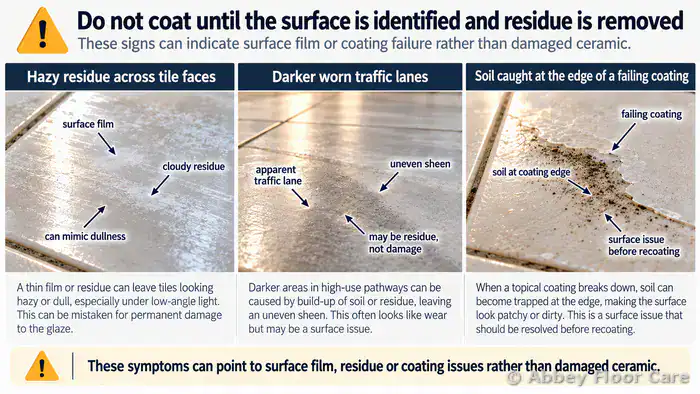
An unnecessary coating can make an otherwise finished ceramic surface more difficult to maintain. Look across the floor from a low angle: broad hazy areas often suggest a surface film, while dull patches following walking routes usually indicate uneven wear in the added layer rather than a change to the ceramic tile itself.
A coating can turn ordinary residue into a surface that holds later soil.
A residue lock-in cycle begins when detergent film or wax residue remains after cleaning and later soil bonds to that tacky layer. Repeated applications can increase film thickness, reduce surface adhesion and create a dull appearance that ordinary mopping cannot level out. The tile remains beneath the film, but the corrective treatment is to remove the built-up film with a compatible residue-removal treatment before returning to a suitable routine cleaning method.
Traffic patterns develop in a wax film because footfall removes or thins the surface layer along busy routes, whilst quieter edges retain more sheen. It can resemble scratched or faded ceramic, even though the unevenness follows movement rather than the tile pattern. A professional assessment should separate this from glaze damage before any further polish or coating is considered.
Wax can therefore have a narrow role on a compatible porous or worn surface, but it offers poor value when used simply to make glazed ceramic shine. Built-up wax can be difficult to remove, and aggressive scrubbing may increase abrasion risk around the permanent glaze. The safer approach is usually to identify and remove the cause of dullness before adding another layer.
Which Floor Conditions Actually Need Protection?
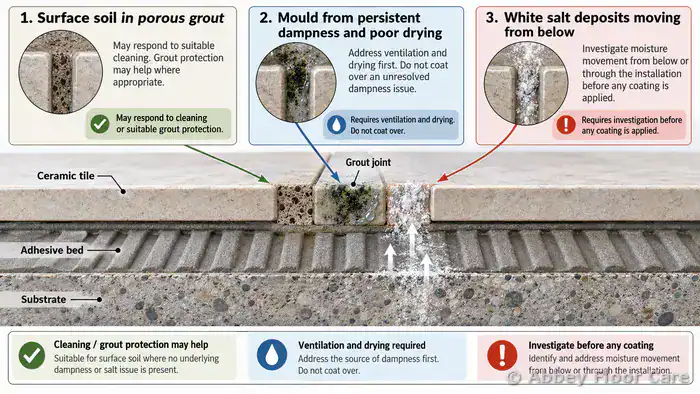
Mould spores, persistent dampness and white deposits need more than a cosmetic coating decision. Dark grout in a shower cubicle may reflect ordinary soil absorption, but mould spores in wet rooms point to a damp environment that needs attention to ventilation, drying and grout condition before the surface is hidden beneath a film.
Cementitious grout efflorescence presents a different warning sign. Mineral salt deposits form when sub-surface moisture carries dissolved material through porous mortar, leaving white crystalline growth as the moisture evaporates. A homeowner may see pale blooms or powdery lines across grout joints rather than ordinary dark staining. Protection should wait until the moisture pattern and joint condition have been assessed, because a coating cannot correct the source of the deposit.
Routine cosmetic discolouration may justify grout-focused protection once joints are sound and clean. Biological growth or moisture movement changes that decision. A penetrating grout treatment can reduce absorption without altering the tile’s appearance, but it should not conceal a wet-room defect. Room exposure, ventilation and recurring dampness matter as much as the colour visible on the floor.
Match the Treatment to the Room and Routine
Grout recolouring is often the more suitable option when the grout frame looks uneven but the ceramic finish remains intact. Compare the grout with the tile surface, then consider how the room is used. A uniform epoxy colourant can restore the visual frame and add joint protection without changing the factory finish of each tile.
Kitchen floors deal with cooking grease, oils and frequent foot traffic, whilst bathrooms and wet rooms face soap scum, limescale and repeated moisture. A treatment that creates high gloss may look attractive at first but can increase slip concerns or reveal traffic wear quickly. A non-reflective matt finish may suit a busy area better where consistency matters more than added shine.
Cleaning habits affect value as well. A pH-neutral tile cleaner uses mild surfactants and balanced chemistry to support routine maintenance without etching or stripping compatible protection. Remove grit before wet mopping to limit abrasion risk, and avoid overusing alkaline detergents to reduce detergent film. Correct routine maintenance remains the single most important factor in extending a floor’s life; practical guidance appears in this ceramic tile cleaner guide.
Grout protection should reflect both the joint condition and the homeowner’s maintenance commitment. An impregnating grout sealer provides invisible, breathable protection within suitable pores, whereas a topical grout sealer forms a surface barrier with lower durability and more frequent upkeep. Professional grout recolouring may offer better value where colour restoration and a non-porous joint finish matter more than temporary surface shine.

What to Check Before Choosing a Tile Treatment
Choosing a tile treatment before checking the installation can create the wrong maintenance burden. Look across the finish and grout, then note room exposure, existing residue and the routine the surface must support. Confirm whether the tile finish is glazed, matt, textured or unglazed before considering wax, polish or sealer.
Check whether discolouration follows the grout, sits within textured grooves or spreads across the tile face. Note hard-water marks, polymer haze, detergent film and any previous coating, as each condition affects the suitability of a new product. Consider traffic, wet-room exposure, ventilation and whether there is a realistic willingness to maintain a film-forming treatment.
Glazed ceramic normally needs careful cleaning rather than tile sealing, whilst suitable grout protection may reduce absorption and staining. A textured or worn surface may need specialist assessment rather than a general product. Readers who need wider ceramic and porcelain floor-care guidance can use the ceramic and porcelain flooring guide before deciding whether professional advice is appropriate.

David Allen — Abbey Floor Care
David Allen has more than 30 years of experience with ceramic tile care through Abbey Floor Care. His buyer-guide work focuses on assessing factory finishes, grout protection, wax-film risks and treatment choices that best suit a UK home’s room conditions and maintenance routine.
If you would like to apply to become the contractor for this area, please use the contact form.
Copyright © Abbey Floor Care.
We are proud to be your local stone floor cleaning, polishing, and restoration specialists for homes and commercial properties in Central Scotland.
With years of experience working with all types of stone floors, our friendly and professional stone floor cleaning services can’t be beaten on price or service.
FAQ - Privacy Policy - Terms And Conditions
Abbey Floor Care is a participant in the Amazon Services LLC Associates Programme, an affiliate advertising programme designed to provide a means for websites to earn advertising fees by linking to Amazon.co.uk. As an Amazon Associate, we earn from qualifying purchases.