
Restoring A Pitted Travertine Tile Floor In Nantwich Cheshire
Last Updated on February 2, 2026 by David
This travertine floor in Nantwich had gradually become harder to live with. The surface no longer looked even; darker patches sat in the small pits, and the grout lines never seemed to stay clean for long. None of this happened suddenly; over time, it reached the point where ordinary cleaning no longer made any visible difference.
The floor was about ten years old and showed the typical signs of wear you see when travertine’s original surface protection has worn away. Dirt had settled into the natural holes in the stone, the grout lines darkened quickly after cleaning, and some areas had become scratched and marked through daily use.
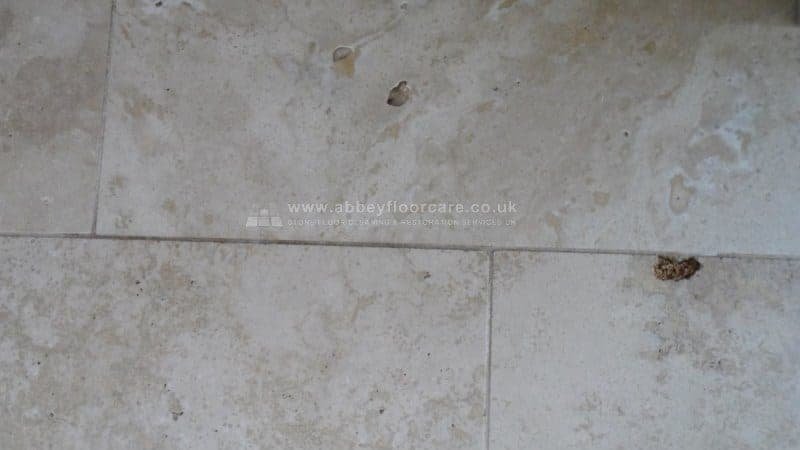
The main concerns were practical rather than cosmetic. Soil trapped in the pitted surface made the floor look permanently dirty, the grout lines re-darkened very quickly, and some tiles showed deeper scratches where the surface had weakened. Scrubbing by hand had become routine without delivering lasting results.
After inspecting the floor, it was clear that the problems were linked to worn sealer, soil lodged in the surface voids, and open pits that allowed dirt to collect and spread. The aim of the work was to remove embedded material, stabilise the surface, and make the floor easier to maintain going forward.
Cleaning a Travertine Tiled Kitchen and Hallway Floor in Nantwich
Cleaning travertine at this stage needs to be controlled. Strong cleaning solutions were used to break down residual contaminants and release ingrained soil, so the surrounding areas were protected before any work began.
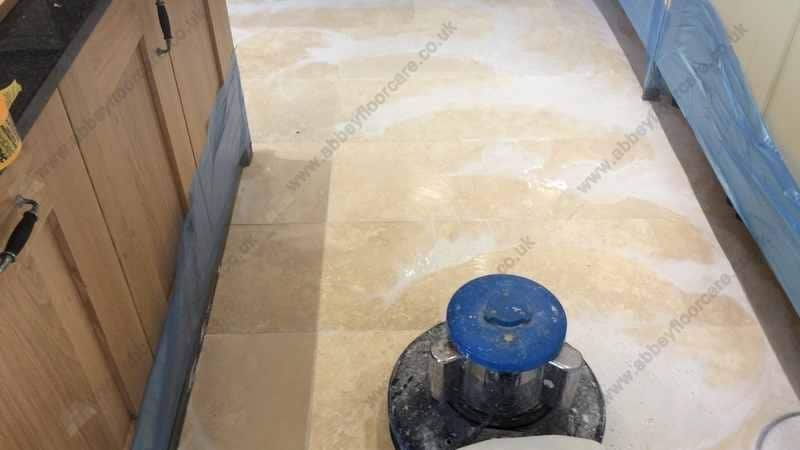
A travertine-safe cleaner combined with a sealer remover was applied and left to dwell. This allows old coatings and compacted dirt to soften rather than being forced out by aggressive scrubbing. The surface was then worked using controlled mechanical agitation to lift residues from the tiles and grout.
The resulting slurry was fully rinsed and extracted to remove loosened soil rather than redistribute it across the floor.
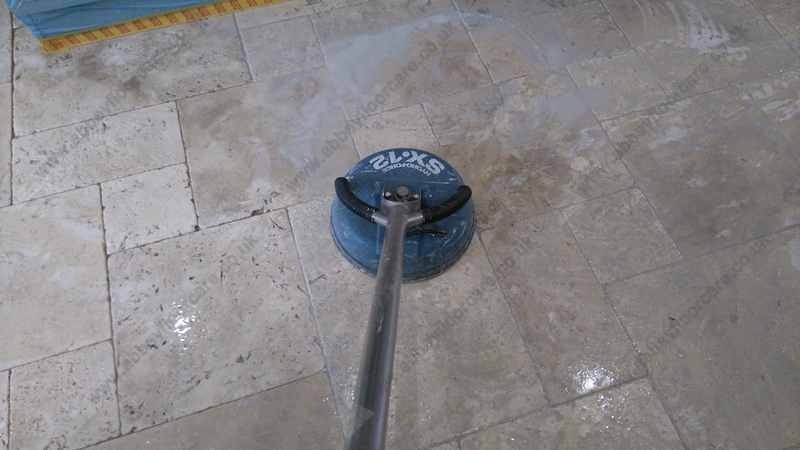
This process was repeated where needed until the surface and joints were free of old sealer residues and ingrained contamination.
Filling Pits and Open Voids in the Travertine Tiles
The small holes visible in travertine are a natural feature of the stone, but once they open up, they become a collection point for dirt and moisture. Over time, larger voids can also weaken the tile’s surrounding edges.
After cleaning, the open pits and areas of missing grout were filled using a colour-matched beige filler chosen to support the stone rather than draw attention to the repairs.

Excess material was removed carefully, leaving the filled areas slightly concave. This helps prevent the pits from immediately refilling with dirt during normal use.
Sealing the Travertine Floor in Nantwich
Once the floor was clean, dry, and stabilised, sealing could be applied. Different sealers create different finishes, so the choice here was guided by how the floor was used and the level of wear it experienced.
A topical satin-finish sealer was applied to create a sacrificial wear layer over the stone and grout. This type of sealer sits on the surface rather than soaking deeply into the tile.
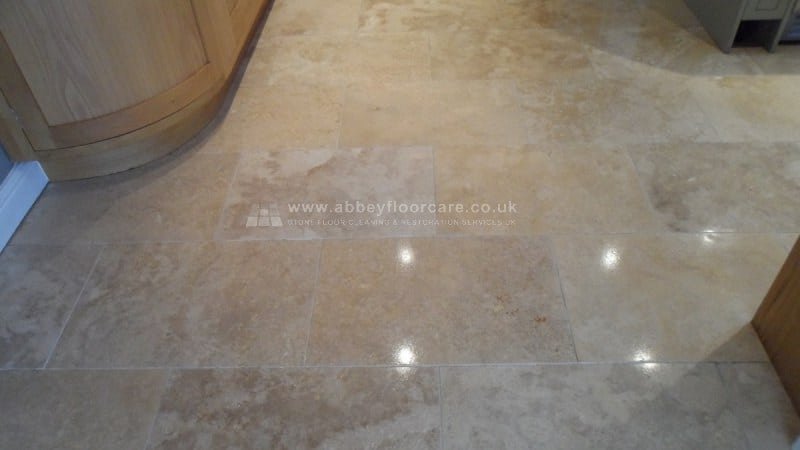
The finish reduced how quickly spills could stain the floor and made routine cleaning more predictable, without altering the stone’s character.
Aftercare Context
Sealants do wear over time, particularly on busy kitchen and hallway floors. As that protective layer thins, dirt can reenter the stone and grout, which is why floors often appear to deteriorate gradually rather than suddenly.
This project is one of many examples referenced in our Travertine flooring care and restoration guide, which explains how travertine behaves in real homes and why these changes develop over time.
If you have a stone floor in Nantwich or the surrounding area and are trying to understand what is happening to it, you’re welcome to use our simple contact form

Article by: David Allen – Abbey Floor Care
This article documents the completion of a travertine floor restoration in a private home in Nantwich. David records what was observed on site, the work carried out on this floor, and the surface condition once the project was finished, as part of a wider library of real-world stone-floor case studies.
touch.
Recent Posts:
We work throughout the country, just some of our work counties:
Copyright © 2025 Abbey Floor Care. Tile And Natural Stone Cleaning Consultants FAQ - Privacy Policy - Terms And Conditions
Abbey Floor Care is a participant in the Amazon Services LLC Associates Programme, an affiliate advertising programme designed to provide a means for websites to earn advertising fees by linking to Amazon.co.uk. As an Amazon Associate, we earn from qualifying purchases.