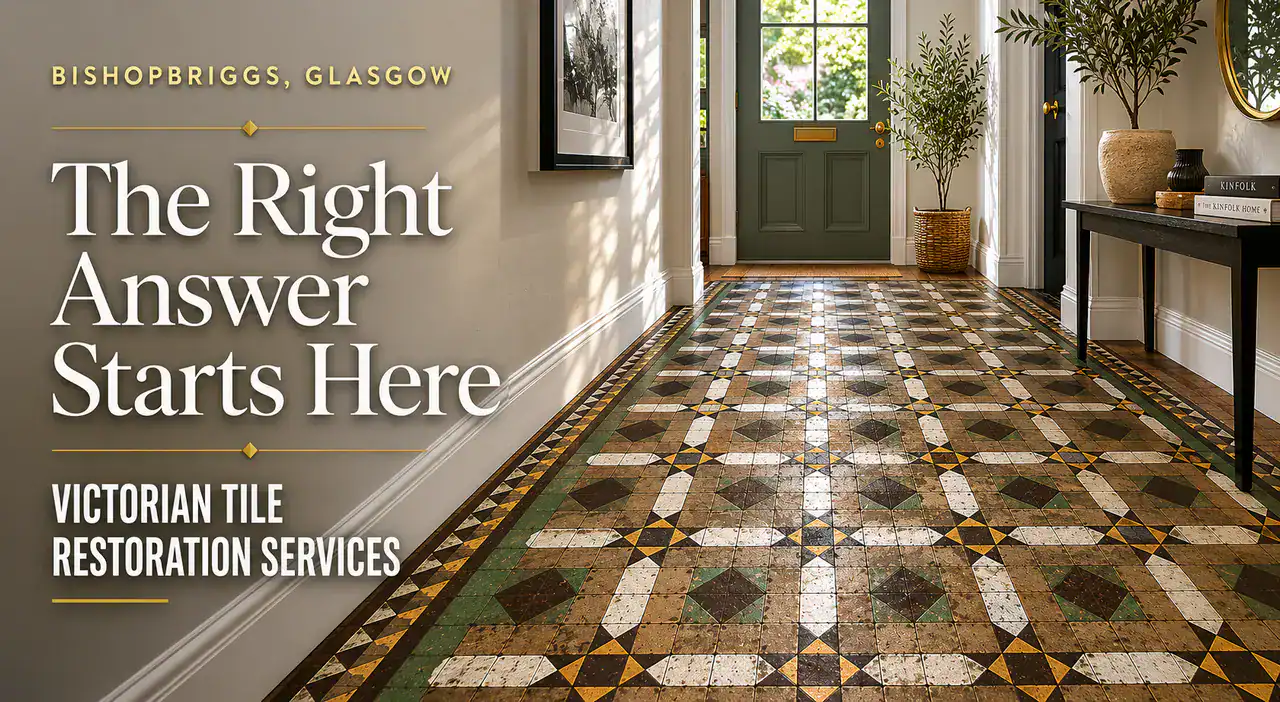
Victorian Tile Restoration Problems In Bishopbriggs Homes
Last Updated on May 30, 2026 by David
Victorian Tile Restoration Assessments In Bishopbriggs Before Any Work Begins
If your Victorian tile floor shows loose grout, movement, dark contamination, or failing coatings, a professional assessment should always come first. These visible symptoms often reflect years of wear, previous alterations, hidden contamination, or ageing repairs that cannot be accurately understood from appearance alone.
Loose Grout And Movement Underfoot
If your floor shows loose grout between the tiles, the first question is whether the affected area remains stable during normal use. Homeowners often notice gritty fragments appearing after sweeping, widening joints, or a slight movement when pressure is applied to individual tiles.
Movement may affect a single tile, a small cluster, or a much larger section extending across an entrance hall. A hollow sound, a clicking sensation, or joints that repeatedly break down can all suggest that support beneath the surface is no longer performing consistently.
The assessment records every unstable area before any treatment is considered. Two sections can look almost identical from above yet differ significantly in severity. That matters.
The survey identifies where movement is isolated and where it extends across a wider section of the floor.
Dark Contamination And Surface Residue
If your floor remains dark after cleaning, the appearance may be linked to contamination rather than ordinary dirt. In my experience, many Bishopbriggs period properties contain floors that have spent decades beneath carpet, vinyl, lino, or other coverings that leave residues behind.
Black smears, yellow-brown adhesive marks, paint spots, and sticky patches are all common findings during assessment. Some contamination sits on the surface, whilst other residues become embedded within the clay body, creating patchy colour and an uneven appearance.
The assessment maps these areas carefully. A dark patch beside a doorway may have a completely different cause from one in the centre of the hallway, even though both appear similar at first glance.
Failed Coatings And Patchy Appearance
If your floor has glossy patches beside dull areas, remnants of older coatings may still be present. Homeowners often describe floors that look acceptable when wet but return to a cloudy, uneven, or tired appearance once they dry.
Assessment regularly identifies traces of old waxes, previous sealers, and other surface treatments applied over many years. These coatings rarely wear evenly, which is why obvious visual differences can develop across the same floor.
Recording coating condition forms an important part of the survey because different areas may have received different treatments throughout the property’s history.
Missing Sections And Pattern Disruption
If parts of the decorative layout appear incomplete, the floor may have been altered during previous building work. Missing sections are often found around thresholds, former partition walls, fireplaces, and areas where utilities have been installed.
Original geometric layouts frequently remain recognisable despite these disruptions. Borders, centre panels, and decorative features can often still be identified even when some pieces are absent.
The survey records missing sections, unmatched repairs, and interruptions to the original design. This creates a clear picture of what survives and what has changed over time.
Worn Decorative Surfaces
If the pattern appears faded along regular walking routes, the floor may simply be showing the effects of decades of use. Entrance halls and vestibules tend to experience concentrated foot traffic, particularly in homes where the original tiled floor has remained exposed for generations.
Wear seldom develops evenly. Softer colours often appear more faded than darker sections, whilst heavily used routes may look noticeably different from less-used corners of the room.
The assessment records the condition of decorative details, borders, and colour variation. This provides a realistic picture of what remains visible before restoration planning begins.
Moisture Marks And Uneven Drying
If parts of the floor remain darker for longer after cleaning, that variation is noted during assessment. Homeowners often report isolated dark patches, perimeter staining, or areas that never seem to dry at the same rate as surrounding tiles.
White powdery deposits, tide marks, and damp-looking edges are also recorded when present. These visible signs help distinguish ordinary surface contamination from conditions that may influence future treatment decisions.
Different parts of the same floor frequently display different levels of absorption and colour variation. For that reason, the assessment considers the installation as a whole rather than judging the floor from one isolated area.
Victorian floors in Bishopbriggs are commonly found in entrance halls, porches, vestibules, and transition spaces where outdoor soil, water, and daily foot traffic create long-term wear patterns. These are also the areas most likely to reveal evidence of previous coverings, repairs, and alterations.
The assessment also considers whether the floor shows signs of over-cleaning. Scratches, uneven wear, roughened surfaces, and patchy colour are often visible long before any restoration work begins.
The floor’s visible character is documented as part of the survey. Natural age-related wear, colour variation, and historic character are distinguished from defects such as loose sections, failed joints, contamination, and unstable repairs.
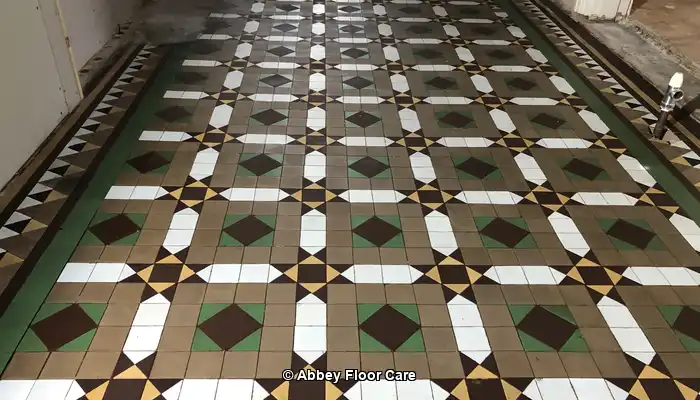
Service delivery in Bishopbriggs begins with this condition-led approach because similar symptoms can arise from very different causes. A floor that appears dull, unstable, stained, or worn needs accurate identification of the visible condition before any restoration pathway is selected.
Abbey Floor Care uses the assessment to route projects through its vetted contractor network. Homeowners receive a clear explanation of the floor’s condition, the visible issues identified during inspection, and the options available for further investigation or restoration.
How Victorian Tile Restoration In Bishopbriggs Avoids Damage From Incorrect Treatments
Repeatedly treating a Victorian tile floor without understanding its condition often causes more harm than the original problem. Abrasive pads can remove surface character, acidic products can affect clay materials, and excessive water can worsen already unstable areas.
Historic floors often require treatments that allow moisture to move naturally through older construction. Using non-breathable coatings where moisture needs to escape can result in peeling finishes, recurring deposits, and premature coating failure.
Correct assessment prevents avoidable restoration damage.
Victorian encaustic and geometric tiles are clay-fired at high temperature. Their fired surface is chemically stable, yet physically vulnerable to abrasion and incompatible with acidic cleaning. Professional assessment identifies which treatments are compatible with the floor before any cleaning, repair, or protection system is selected.
Specialist Victorian Tile Restoration Equipment And Materials Used In Bishopbriggs
Specialist restoration equipment is selected according to the condition of the floor rather than a fixed process. A stable floor affected by contamination requires different tools from a floor showing movement, failed joints, moisture marks, or missing sections.
Professional systems may include controlled agitation equipment, extraction machinery, residue-removal products, drying equipment, and breathable protective treatments. Materials used for repairs are chosen to work with older floor construction rather than against it.
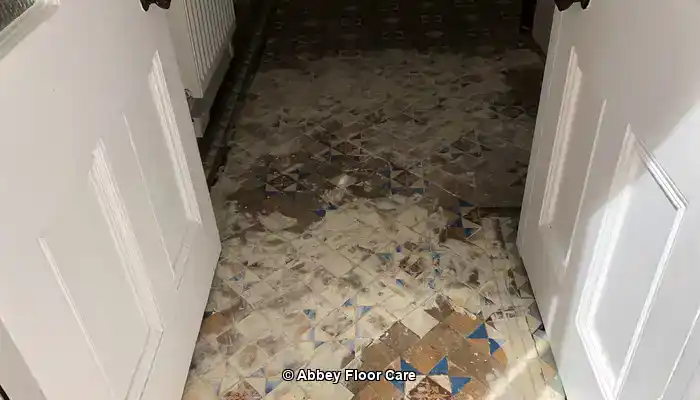
Compatible bedding materials, salt-management treatments, and breathable protective systems may be incorporated where required. What we often see here is that the correct materials are just as important as the workmanship itself.
The objective remains the same: matching equipment, materials, and techniques to the specific condition identified during the Bishopbriggs assessment.
What Victorian Tile Restoration Can Realistically Achieve For Bishopbriggs Floors
Victorian tile restoration can recover colour, stability, and decorative clarity, but it cannot remove every sign of age. Setting realistic expectations is an important part of a successful project.
What improves is the visibility of the original pattern, the appearance of the joints, the removal of contamination, and the stability of loose sections. A restored Victorian tile floor reveals the original fired matte surface with more consistent colour and pattern, whilst a topically sealed surface, where appropriate, adds a slight protective sheen without altering its period character.
What remains may include historic wear, softened edges, minor chips, and age-related variation that developed through decades of use. Local repairs and stabilisation can improve performance and appearance, but genuine evidence of the floor’s history often remains visible.
Victorian Tile Restoration Advice And Further Guidance For Bishopbriggs Homeowners
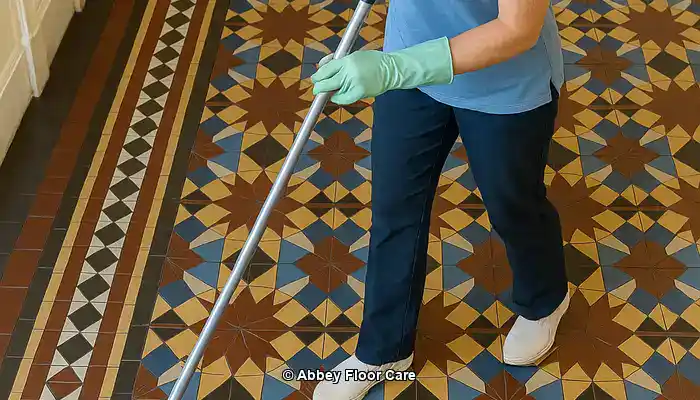
Further guidance becomes particularly valuable once restoration work is complete and long-term care decisions need to be made. Understanding how historic clay floors behave helps homeowners make informed maintenance decisions in the years ahead.
Older floors often respond differently to moisture, cleaning products, and protective treatments than modern installations. Detailed guidance on cleaning limitations, moisture behaviour, maintenance routines, and long-term care can be found in the Victorian tile cleaning and care hub.
Homeowners in Bishopbriggs should arrange a professional assessment when grout continues to fail, tiles move underfoot, contamination repeatedly returns, or coatings show signs of breakdown. Early assessment provides a clearer understanding of the floor’s condition before more extensive deterioration develops, as shown in this Victorian tile restoration case study.
Maintenance Advice
Products we recommend for Victorian Tile maintenance:
Cleaning products: LTP Wax Wash, LTP Grimex.
Equipment: Vileda H2PrO Spin Mop System.

David Allen — Abbey Floor Care
David Allen brings more than 30 years of practical experience restoring Victorian tile floors across the UK through Abbey Floor Care, with projects completed across Bishopbriggs, Glasgow and the surrounding area. His guidance reflects hands-on knowledge of local building stock, period floor conditions and the restoration decisions that produce lasting results.
Recent Posts:
We work throughout the country, just some of our work counties:
Copyright © 2026 Abbey Floor Care. Tile And Natural Stone Cleaning Consultants FAQ - Privacy Policy - Terms And Conditions
Abbey Floor Care is a participant in the Amazon Services LLC Associates Programme, an affiliate advertising programme designed to provide a means for websites to earn advertising fees by linking to Amazon.co.uk. As an Amazon Associate, we earn from qualifying purchases.