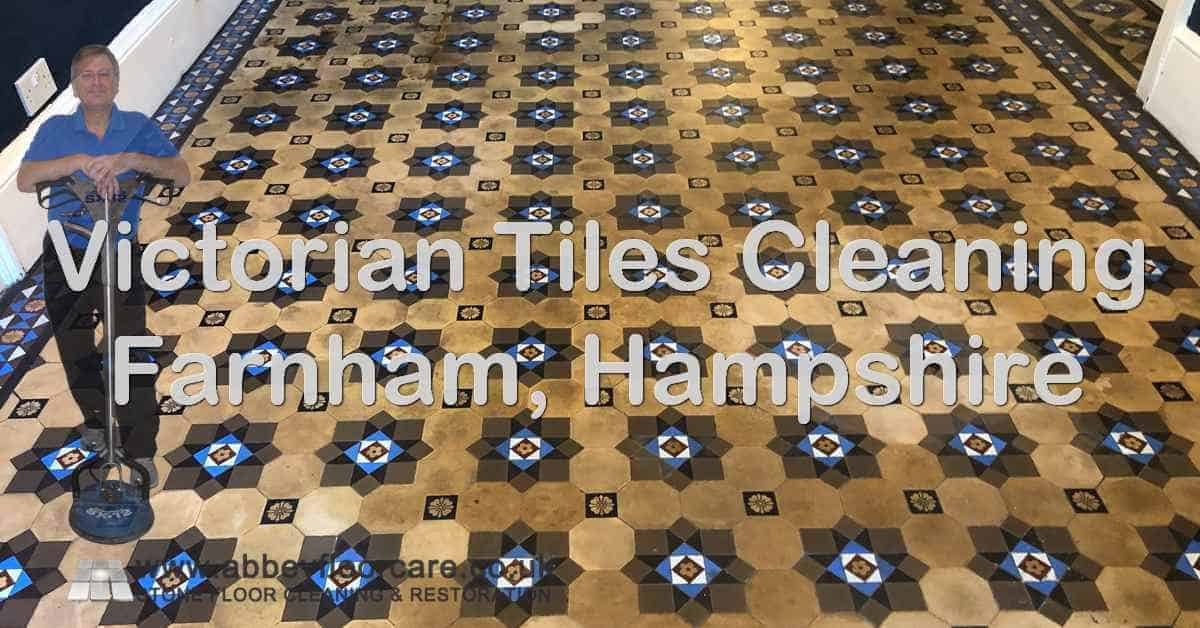
Victorian Tile Floors That Stay Dirty After Cleaning
Last Updated on May 18, 2026 by David
Cleaning floor tiles naturally without damaging the pattern was the central issue on this Farnham project. The hallway had gradually lost its colour contrast beneath old residue, staining, and worn coatings that ordinary mopping simply could not remove.
The case study below follows the same floor from first inspection through safe cleaning, drying, and protective sealing.
Why this Farnham Victorian clay tile floor kept looking darker after every clean
Initial Condition Assessment
If your victorian tile keeps looking darker after every clean, old residue may be sitting below the mop-cleaned surface rather than lying loose on top. The Farnham hallway showed this very clearly because traffic lanes, edges, grout joints, and low spots had all collected softened coatings and dirty cleaning solution over many years.
The victorian clay tile floor sat in a busy entrance hallway where daily footfall carried grit, damp soil, warm water, and cleaning product into the unglazed clay surface. Embedded soiling, surface dirt, cleaning product penetration, rinse-off failure, porous condition, and ordinary cleaning products had all affected how the old clay tiles responded after each wash. In my experience, once contamination starts settling into the pores, normal mopping tends to redistribute it rather than remove it.
Farnham contains a high proportion of Victorian and Edwardian terraced houses, period cottages, and large detached properties, alongside later twentieth-century suburban homes built around the historic town centre. Victorian Tile floors are most commonly found in entrance hallways, front paths, porches, utility areas, and sometimes kitchen walkways within these older properties, particularly where original decorative flooring has survived beneath modern coverings. Farnham sits within the Borough of Waverley in Surrey, close to the Hampshire border, and falls mainly within the GU9 and GU10 postcode districts.
Ordinary dirt will usually lift when a soft mop, warm water, mild detergent, and clean cloth are used correctly. Residue trapped within the clay behaves differently. Waxes, old products, softened coating, grime, and previous treatments hold contamination inside the surface pores, leaving the hallway dull even after careful cleaning.

The Problem Identified
Residue build-up had completely changed how the floor responded to later cleaning. Old sealers, waxes, acrylic sealers, previous treatments, adhesive traces, soiling coating, stripper residue, remover residue, softened residue, and contamination in grout lines had formed a dulling layer that routine cleaning could only move around.
Historic staining also appeared in isolated areas where rust marks and earlier moisture exposure had affected the unglazed surface. Rust stains need pH-neutral rust remover, affected areas tested first, controlled contact time, a non-metallic brush, stain removal by small area test, and full rinse off so the unglazed tiles are not over-treated.
Topical coating failure was visible where an old barrier had become patchy, dirty, stained, and trapped beneath later cleaning attempts. A failed surface coating can peel, hold moisture, collect dirt, and need strip-back before re-seal decisions are made. Crucially, that is why the work began with cleaning evidence rather than a cosmetic finish choice.
The Farnham floor matched the same dull-after-cleaning pattern documented in the Derby victorian tile cleaning case study. That comparison matters because both hallways stayed grubby after regular washing, and both improved only when softened residue was extracted instead of redistributed.
Why Domestic Cleaning Failed
Domestic mopping had failed because dirty solution was never fully removed from the pores. The surface became wet, the residue softened, and the mop spread diluted contamination across the original pattern before the water dried back into uneven patches.
Steam cleaner heat damage was specifically avoided because steam cleaners use high heat and moisture to force water through grout and into unsealed tiles. That can drive stain movement, crack vulnerable areas, encourage tiles to effloresce, and create avoidable damp marks on a floor already carrying historic residue.
Bleach discolouration was another obvious risk because bleach and harsh chemicals can discolour pigments, mark historical grout, and leave uneven patches across the tile surface. That sort of irreversible damage is why the cleaning method avoided bleach, vinegar, abrasive powders, rubber pads, and aggressive scrubbing where the intricate details were already dulled.
Victorian encaustic and geometric tiles are clay-fired at high temperature — their fired surface is chemically stable but physically vulnerable to abrasion and incompatible with acidic cleaning. That single point governed the entire project. The cleaning had to remove contamination from the surface pores without surface scratching, dulling, or loss of original pattern detail.
Cleaning should remove residue, not abrade the original clay surface.
Why Controlled Cleaning Was Chosen
Controlled cleaning was chosen because the floor needed residue removal, not grinding, resurfacing, or aggressive stripping. A patch test in a small area confirmed the test method, cleaning product compatibility, first application response, surface safety, and whether the historic tiles could be cleaned without avoidable damage to the tile face.
Moisture control mattered because older hallways often have no modern damp proof membrane beneath the tiles. Over-wet cleaning can loosen bedding, slow drying, activate salts, and leave white marks as moisture evaporates, so the process relied on dwell time, agitation, wet vacuum extraction, and rinse control rather than flooding the floor.
Patch testing also showed that much of the darkening was removable residue rather than permanent loss of colour. That mattered to the homeowner because the floor could improve significantly after intervention. What we often see here is that these floors look far better once old coatings and ingrained dirt are properly removed.
The preparation stage marked out the areas where old cleaning water, grit, and softened coating had settled most heavily. Similar residue behaviour appears in the Windsor hallway residue case study, where repeated cleaning passes were needed before the dull finish stopped returning.
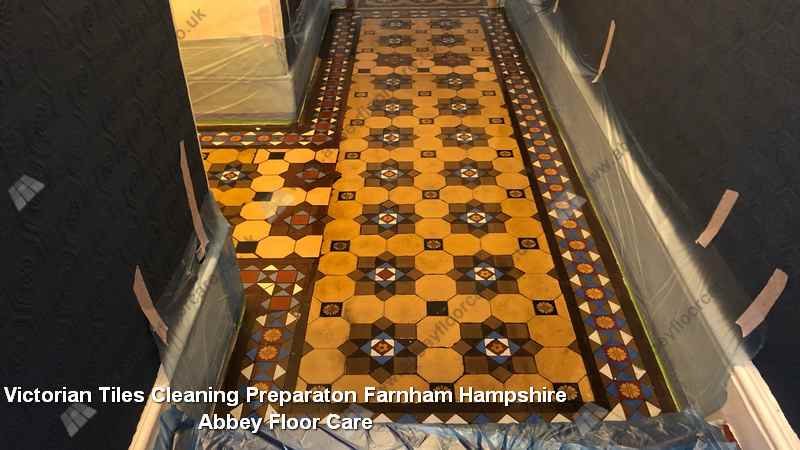
The preparation confirmed that a safe result depended on chemistry, timing, and extraction rather than pressure. Surface residue was softened, lifted, and removed as slurry, leaving the original colour and fired matte character intact instead of forcing a fake gloss over contamination.
Why old staining and residue were hiding the original hallway pattern
Historic staining and failed surface residues often hide the pattern long before the floor is genuinely damaged. In Farnham, the dull areas were compared against a cleaned test area so removable grime could be separated from older marks that had penetrated deeper into the unglazed clay.
Removable residue behaved like a coating problem because old sealers, waxes, and dirty cleaning solution had built up across the surface. Once the test clean broke through that layer, the original colour contrast and geometric pattern immediately became clearer.
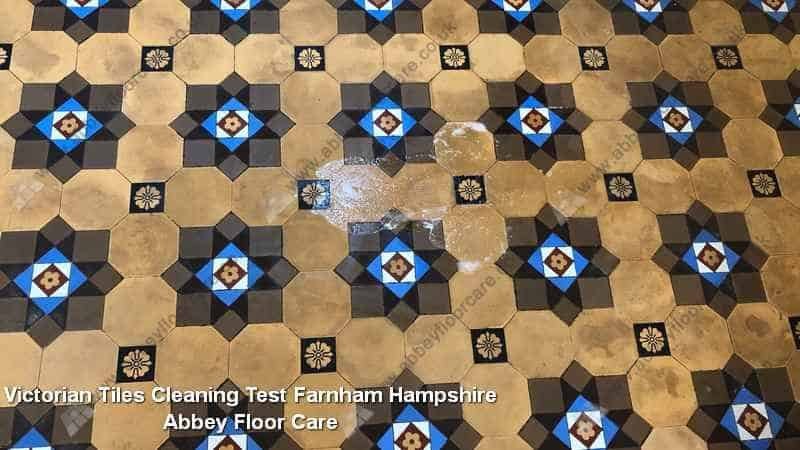
Older staining behaved differently because rust, leak marks, and long-term soil can migrate into the tile body itself. The cleaned sample set realistic expectations by showing which marks would soften, which areas would regain clarity, and which deeper stains needed careful reduction rather than aggressive treatment.
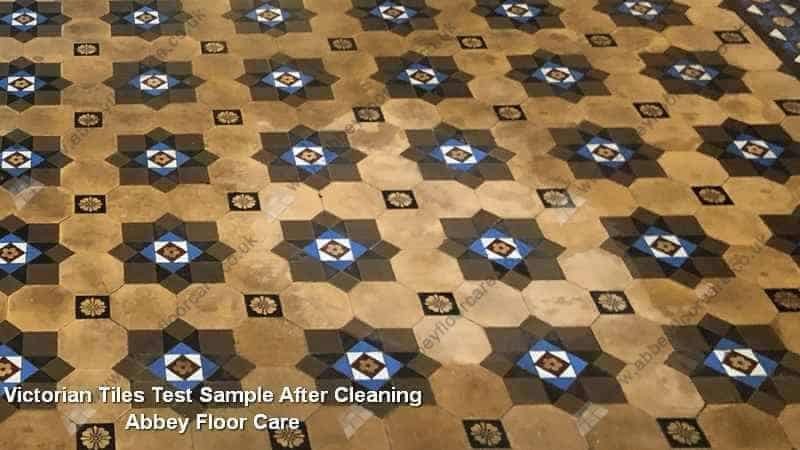
How controlled Victorian tile cleaning removed deep residue without damaging the surface
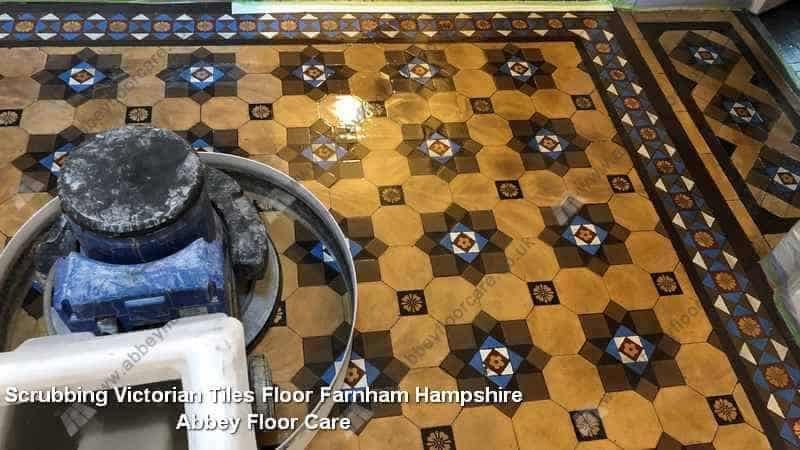
Repeated scrubbing can damage an old victorian clay tile floor long before it removes deep residue. The Farnham cleaning used a patch test, controlled dwell time, low-abrasion agitation, wet vacuum extraction, and rinse control so softened grime was removed before it could dry back into the pores.
Controlled alkaline cleaning worked because the product was allowed time to loosen waxes, grime, and softened residue before the floor was agitated. The dirty solution, slurry, rinse water, fluids, and loosened soiling were then extracted with a wet vacuum so the cleaning process did not leave excess water sitting within the old hallway.
Controlled cleaning lifts contamination without grinding away historic clay.
Low-abrasion cleaning protected the original surface because the process avoided abrasive pads, wire wool, vinegar, bleach, and acidic cleaners. The same low-water extraction principle appears in the Blyth victorian tiles cleaning case study, where careful slurry removal improved colour without forcing a surface sheen.
Why the Farnham hallway looked significantly clearer after professional cleaning
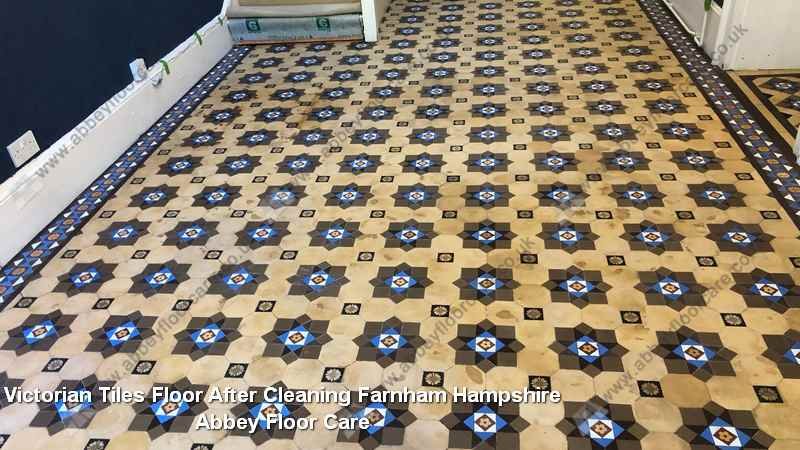
If your floor looks cloudy even after cleaning, the Farnham result shows what changes when the contamination layer is removed from the surface pores. The hallway regained stronger colour balance, sharper border definition, and a far more readable original pattern because the old dulling film was no longer masking the clay beneath.
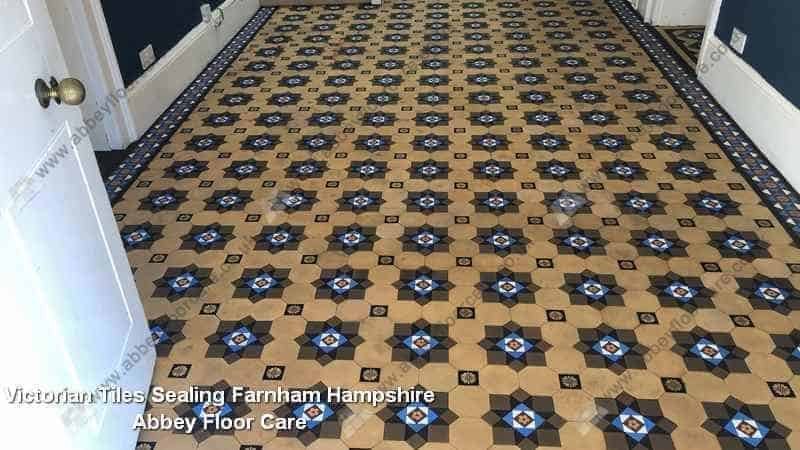
Breathable protection was applied only after the floor was dry enough for sealing. The impregnating sealer allowed moisture to evaporate, kept the finish fully breathable, managed water vapour, improved stain repellency, reduced surface moisture problems, and helped the old tiles stay cleaner without forming a heavy topical coating.
A restored Victorian tile floor shows the original fired matte surface with consistent colour and pattern, while a topically sealed surface — where appropriate — adds a slight protective sheen without altering the period character. A professionally restored and correctly sealed floor is significantly easier to clean and maintain than a worn or incorrectly treated surface.
Where to find more examples of Victorian tile cleaning without harsh stripping
Harsh stripping often creates more risk than controlled victorian tile cleaning on old patterned hallways. The Farnham project sits alongside other cleaning-led case studies where failed coating layers, old residue, and damp-sensitive clay needed careful extraction before any protective finish was considered.
Correct ongoing maintenance protects this type of floor by removing grit before wet mopping and keeping cleaning mild enough to avoid premature sealer breakdown. Stronger products should be avoided because they can strip protection, discolour grout, and leave the surface harder to manage. Wider safe cleaning guidance is brought together in the victorian tile cleaning hub for homeowners comparing similar floors.
The water absorption test remained a useful later check because water droplets that soak in quickly show reduced beading and weaker protection. Correct ongoing maintenance — pH-neutral cleaning, grit removal before wet mopping, and resealing at the right interval — is the single most important factor in extending the floor’s life.
Related examples such as the Tutbury Minton cleaning case study show how dull patterned floors can recover colour when old residue is removed carefully. Those projects support the same point as Farnham: breathable sealing protects cleaned pores, but the real change begins with controlled cleaning and full extraction.

David Allen — Abbey Floor Care
David Allen of Abbey Floor Care has over 30 years of hands-on experience cleaning and protecting Victorian tiled floors in UK homes. This Farnham case study documents how dark residue, older staining, and failed surface coatings were corrected on a period hallway without damaging the original pattern.
Recent Posts:
We work throughout the country, just some of our work counties:
Copyright © 2026 Abbey Floor Care. Tile And Natural Stone Cleaning Consultants FAQ - Privacy Policy - Terms And Conditions
Abbey Floor Care is a participant in the Amazon Services LLC Associates Programme, an affiliate advertising programme designed to provide a means for websites to earn advertising fees by linking to Amazon.co.uk. As an Amazon Associate, we earn from qualifying purchases.