Victorian Tile Restoration Saved This Floor
Last Updated on May 14, 2026 by David
Why This Nottingham Hallway Looked Beyond Restoration Before The Work Started
Initial Condition Assessment
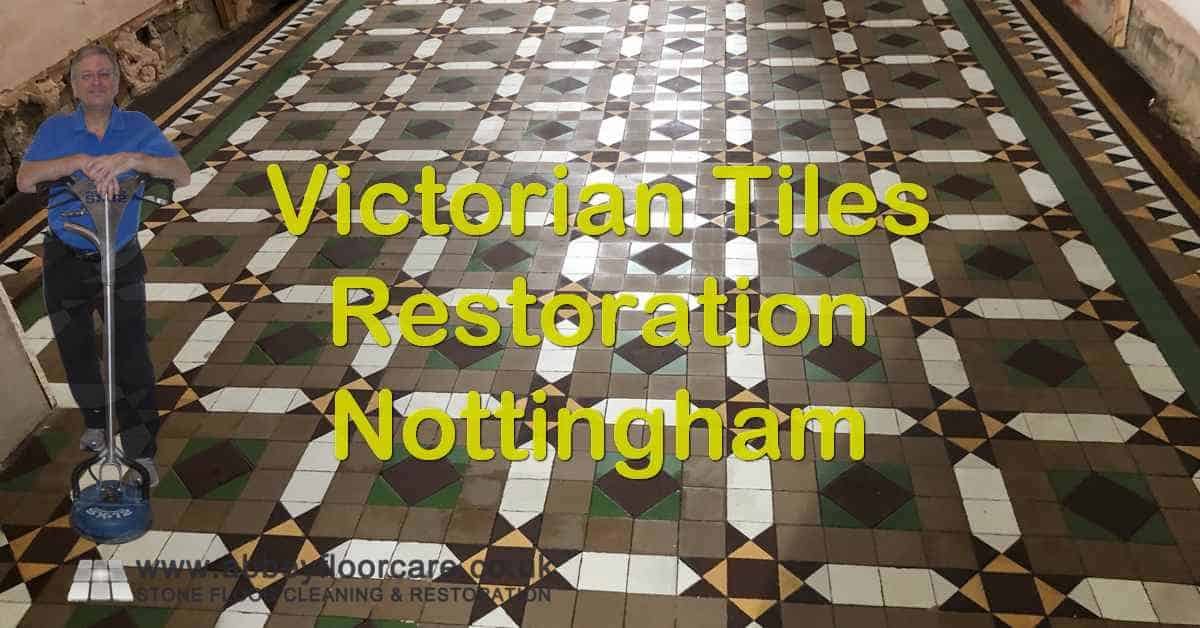
If your Victorian tile floor looks worn, patchy and beyond saving, the problem is often old coatings and embedded residue hiding the original clay rather than complete loss of the floor itself. This Nottingham hallway in The Park Estate had a dull surface, darkened joints, missing sections and worn protection that flattened the geometric pattern and robbed it of definition. Heavy foot traffic had worn the main walking route, whilst old surface treatments had trapped grime across the entrance area.
Victorian tile restoration at this property began by separating visible damage from recoverable original fabric. In my experience, that distinction matters. The hallway showed decades of wear, neglect, high-traffic dulling and isolated damage, but the original pattern still held enough definition to guide a careful restoration layout. The work was approached as authentic restoration rather than cosmetic surface dressing because the aim was to recover colour and stability whilst preserving the period character of the original tiled entrance.
Nottingham contains a large number of Victorian and Edwardian terraced houses, interwar semis, and converted period properties dating from the late 19th and early 20th centuries, particularly in older districts close to the city centre. Victorian Tile floors are most commonly found in entrance hallways, porches, vestibules, and sometimes kitchen areas where original geometric or encaustic designs have survived beneath later floor coverings. Nottingham sits within Nottinghamshire in the East Midlands, with many period properties spread across areas covered by the NG postcode districts and Nottingham City Council.

Residue Build-Up And Failed Protection
Old coating failure made this Nottingham hallway look far dirtier than ordinary cleaning could ever correct. Waxes, old sealers, surface coatings and softened residue had built up inside the tile pores and along the grout lines, creating a dull film that routine washing simply shifted around the surface. Victorian encaustic and geometric tiles are clay-fired at high temperature. Their fired surface is chemically stable, but physically vulnerable to abrasion and incompatible with acidic cleaning.
Residue film accumulation was treated as a project condition, not something the homeowner was expected to diagnose. Old sealers, stripped patches, vulnerable exposed clay, ingrained dirt, coating removers, residues, penetration, break down, scrub and vacuum work all mattered because contamination had settled into the surface rather than sitting loosely on top. Similar old coating and colour recovery issues are shown in restoring colour to faded Victorian mosaic tiles, where the same residue and pigment principles affect the final appearance. Crucially, this Nottingham project needed that same restrained approach because aggressive pads could remove original colour whilst still leaving residue trapped in lower areas.
Tile porosity also explained why the hallway continued holding dirt after previous washing attempts. The unglazed tiles, embedded soiling, surface dirt, clay tiles, cleaning product penetration, pre-wet control, rinse-off stages, porous condition and stain removal decisions all influenced how much residue could be lifted safely. The floor needed enough chemistry to loosen grime, but not so much water that dirty liquid soaked through the clay and reactivated problems below. That balance is easy to get wrong.
Moisture Behaviour Beneath The Hallway
Old permeable sub-floors completely changed how the Nottingham restoration needed to be handled. Water could pass through the tile surface, excessive moisture could encourage movement or lifting edges, and dampness had to be treated as a baseline condition rather than an unusual fault. The floor was assessed as a moisture-active subfloor situation because many original period hallways were built without modern separation beneath the clay tiles.
Moisture control shaped the cleaning, drying and sealing sequence throughout the project. A damp proof membrane was not assumed, so moisture, dry several days, deep cleaning, winter, damp meter checks, salts and sealing readiness all informed the programme. Comparable moisture-aware restoration decisions appear in worn Victorian Minton floor restoration, where original tiles, loose areas and breathable protection had to work together. The same principle applied here: clean the floor deeply, extract liquid quickly and allow the base to dry before protection was applied.
Air blower drying supported the restoration once wet work had been completed. Accelerated drying, overnight drying, damp test meter readings, floor dry checks, airflow, sealing readiness and stain protection all mattered because trapped moisture could compromise the final finish. The drying stage was not decorative. It determined whether the sealer could protect the clay surface without locking dampness below.
Recoverable Original Fabric
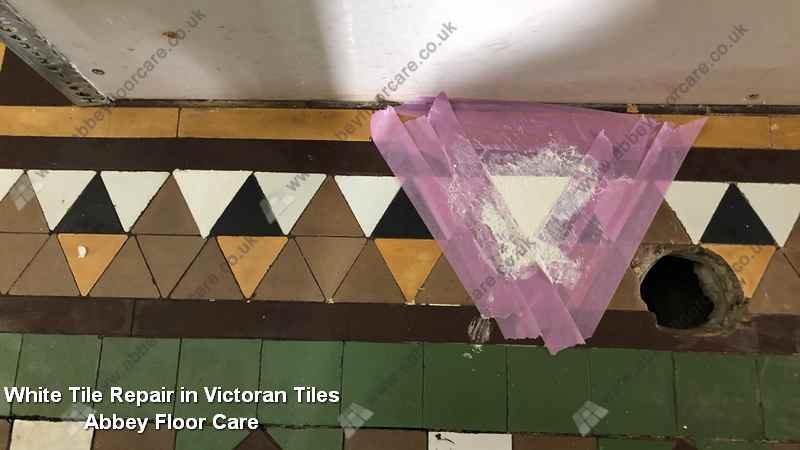
Missing and damaged pieces made the floor look more broken than the surviving pattern actually was. The surrounding original tiles still showed enough border, repeat and colour information for accurate project planning, and repairs were kept proportionate to the condition of the hallway. The floor was inspected for carpet fixing damage, old nail marks, missing pieces and weak repairs before final cleaning and sealing decisions were made.
Lead holes formed part of the visible history found around some old covered floors. Drilled holes, molten lead, carpet fixing, nail damage, perimeter damage, surrounding tiles, excavated tiles, salvaged tiles, matching colour and a damaged line can all appear where old carpet systems were fixed through period clay. This Nottingham floor required limited repair rather than a full rebuild, and the repair approach stayed focused on preserving as many original tiles as possible.
Rubber underlay shadow marks can also remain on covered period floors long after carpet removal. Carpet underlay, rubber breakdown, absorbed marks, shadow marks, undulations, chemical cleaning, a covered floor, surface staining and a long period of contact can leave darker areas that need careful assessment before anyone promises full removal. What we often see here is a mixture of residue, staining and physical wear sitting together across the same floor.
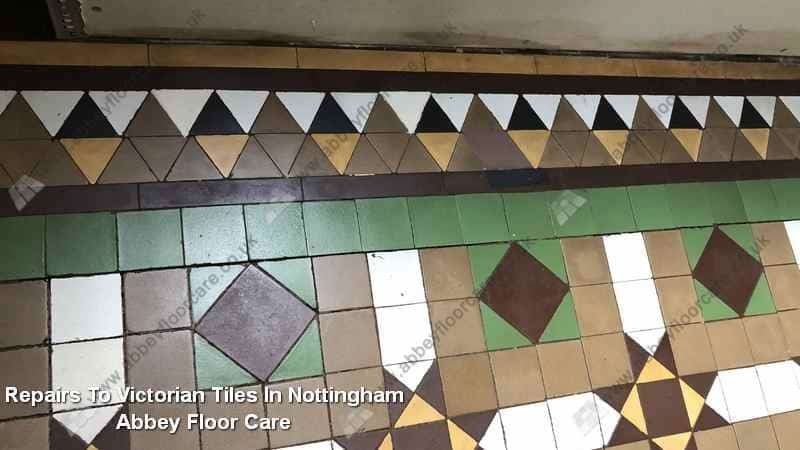
Geometric pattern layout gave the restoration its boundary. The border, repeat, main design, patterned hallway floor, intricate borders and precision matching all needed to remain readable after repairs rather than being replaced by a modern-looking patch. A related completed project showing original layout, loose sections and repair planning is documented in Victorian tile restoration in Penkhull, where the same single-floor evidence approach shows how repair and cleaning decisions are kept inside the restoration scope. This Nottingham hallway needed that same restraint because the value sat in the surviving period tile scheme.
A restored Victorian tile floor shows the original fired matte surface with consistent colour and pattern, whilst a topically sealed surface — where appropriate — adds a slight protective sheen without changing the period character. The expected outcome was stronger original colour, clearer pattern and easier day-to-day cleaning, not an artificial new-build appearance. Correct ongoing maintenance — pH-neutral cleaning, grit removal before wet mopping, and resealing at the right interval — remains the single most important factor in extending the floor’s life, and broader cleaning routines are covered in the Victorian and Minton tile cleaning hub. Acidic cleaners were avoided because they can roughen the fired clay surface and make future soiling worse.
Why Dirt And Dark Grout Kept Returning Across The Hallway Floor
Tile porosity pulls dirty rinse water and loosened residue back into the clay and grout lines after ordinary mopping. The Nottingham hallway had open surface pores, trapped old coatings, scrubbed residue and discoloured gaps that continued holding contamination after each wash. Grout joint contamination meant the joints darkened again because old coatings, gaps, deteriorated material, rinse water and trapped dirt kept feeding the dull surface appearance.
Mopping moves residue; extraction removes it.
Slurry extraction changed the result because the dirty liquid was removed before it could dry back into the floor. The process relied on loosened slurry, wet vacuum recovery, rinse control and immediate extraction rather than allowing grime to settle back into tile pores and joints. Without that extraction stage, the hallway would simply have looked briefly cleaner before the same residue reappeared across the surface.

How The Nottingham Restoration Removed Deep Residue Without Damaging The Original Tiles
Repeated scrubbing can damage original Victorian tile when residue is treated as ordinary surface dirt rather than a restoration problem. The Nottingham floor needed softened old coatings, controlled agitation, wet vacuum recovery and careful repair planning, not abrasive over-cleaning. The restoration sequence followed the preservation-led approach described in the right way to restore Victorian tiles, where failed sealer removal, moisture management and tile replacement are kept inside a controlled restoration process. That approach protected the original clay surface whilst still removing the dull residue layer.
Controlled extraction removed softened grime before it could resettle. Old sealer, strong alkaline cleaner, coatings remover, soak time, scrubbed residue, cleaning pad use, chemical action and rinse control were all managed so the surface could be cleaned without flooding the base. Lead holes and small repair points were assessed alongside drilled holes, carpet fixing marks, nail damage and surrounding tiles so repair decisions stayed accurate and proportionate.
How The Restored Hallway Regained Clearer Colour And Became Easier To Maintain
If your Victorian tile looks pale after deep cleaning, the final protection stage controls how clearly the colour returns. The Nottingham hallway was sealed only after drying checks because porous tiles, old floors, no damp proof membrane assumptions, low sheen protection, trapped moisture risk and the tile body all affected the finish choice. Once complete, the floor regained stronger colour and looked dramatically better than before restoration.
Breathable colour enhancement improved the clay tones without creating a heavy surface barrier. The sealer acted as a colour enhancer and impregnator, entering the pores, adding protection, staying breathable, resisting oil staining, being buffed off and leaving no coating film over the Victorian tiles. A professionally restored and correctly sealed floor is significantly easier to clean and maintain than a worn or incorrectly treated floor. That difference becomes obvious quite quickly in busy entrance hallways.
Maintenance after restoration protects the original colour by reducing grit abrasion and residue build-up. A neutral pH cleaner, regular dry soil removal and sensible resealing intervals help the surface stay cleaner for longer, whilst acidic or bleach-based products should be avoided because they can roughen the fired clay and weaken future protection. The final appearance remained a low-sheen period finish, not a modern glossy layer.

Where To See More Victorian Tile Restoration Projects And Heritage Floor Advice
Victorian tile restoration projects vary because contamination, dark grout and moisture behaviour combine differently on every period floor. This Nottingham hallway showed how tile porosity, absorbed marks, rubber underlay shadow marks, grout darkening and old coating residue can combine with repair needs in one entrance floor. A wider route through cleaning, aftercare and related clay floor issues is available in the Victorian and Minton tile cleaning hub, which helps homeowners compare maintenance and restoration pathways. The same maintenance principles keep a restored floor simpler to care for once the project is complete.
Completed repairs were judged against the whole hallway rather than isolated close-up patches. Matching colour, original pattern, repairs, replacement pieces, salvaged tiles, geometric borders and damaged sections all needed to blend into the surviving tile scheme. The final floor restored appearance, improved dramatically and returned the entrance to practical daily use whilst keeping its original period character.

David Allen — Abbey Floor Care
David Allen has restored Victorian tile floors for Abbey Floor Care for over 30 years, including this Nottingham case study where old residue, dark grout and damaged sections were corrected. His work focuses on controlled restoration, original material retention and compatible sealing so period clay floors regain colour whilst keeping their historic character.
Recent Posts:
We work throughout the country, just some of our work counties:
Copyright © 2026 Abbey Floor Care. Tile And Natural Stone Cleaning Consultants FAQ - Privacy Policy - Terms And Conditions
Abbey Floor Care is a participant in the Amazon Services LLC Associates Programme, an affiliate advertising programme designed to provide a means for websites to earn advertising fees by linking to Amazon.co.uk. As an Amazon Associate, we earn from qualifying purchases.