Victorian Tiles Maintenance Failed In This Derby Hallway
Last Updated on May 6, 2026 by David
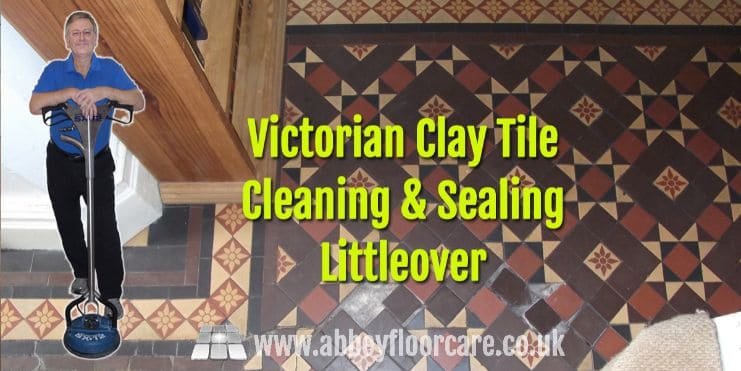
A dull Victorian clay tile hallway in Littleover, Derby had stopped responding to regular cleaning because old residue, worn coatings, and ingrained grime were sitting in the clay surface rather than wiping away from it.
Why this Derby hallway still looked dull and grubby despite regular cleaning
Derby Hallway Context
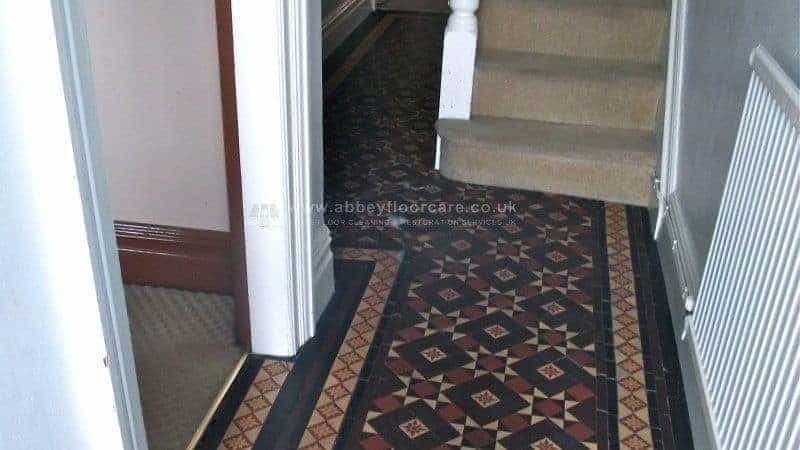
If your Victorian tiles still look dull and grubby after regular cleaning, the cause is rarely loose dirt. It’s usually residue sitting within the clay itself. This Littleover hallway had been mopped repeatedly, yet once dry it still looked flat, greyed, and patchy. That behaviour pointed straight to a controlled cleaning requirement, not restoration or a sealing-led intervention.
Derby’s housing stock explains why this comes up so often. Victorian and Edwardian terraces dominate many areas, with interwar semis and later suburbs layered in. Original tile floors tend to survive in entrance hallways and vestibules, occasionally in front rooms where features have been preserved. The setting matters, but the behaviour of the tile matters more.
The wear pattern here was typical of a busy entrance. Grit, damp soil, and everyday cleaning residue had been walked repeatedly along the same route, gradually muting the reds, buffs, and darker tones. What we often see in these cases is not dirt sitting on top, but contamination being worked into the surface over time. A similar pattern showed up in the Victorian clay tiles cleaning project in Blyth, where residue film and absorbent behaviour dictated the cleaning approach.
What The Homeowner Could See Before Cleaning
The key visual clue was simple. The floor looked richer when damp, then dropped back to dull as it dried. That tells you the colour is still there, just masked. The issue wasn’t loss of pigment, it was residue lock-in—contamination sitting in pores, worn areas, and old surface layers.
Victorian tile porosity sits at the centre of this. Unglazed clay, especially when worn, draws in moisture and whatever that moisture carries with it. Dirt, detergent, and rinse water don’t just sit on the surface—they migrate below it. That’s why a pH7 cleaner, a non-scratch pad, and careful spot testing can maintain a floor after professional work, but they won’t reverse years of embedded grime on their own.
The homeowner referred to Minton tiles, which is common shorthand for patterned Victorian floors. The label matters less than the construction. Unglazed clay, geometric layout, and colour running through the body all point to a surface that can be damaged by abrasion. The grubby Minton tile hallway floor case shows the same balance—mechanical cleaning is needed, but always within the limits of historic clay.

Old Coatings And Residue Found On The Floor
Linseed oil had to be considered. Older clay floors were often treated with oil or wax-based finishes, sometimes layered over time. When those coatings degrade, they don’t protect—they trap. The result is a darkened, lifeless surface that still looks dirty even after cleaning.
Beeswax behaves in a similar way when it fails. Instead of forming a stable layer, it settles into the pores and holds contamination there. That combination—wax, residue, and porous clay—reduces clarity and makes the floor look permanently dull.
Adhesive contamination was also checked. Old carpet glue, varnish residues, and paint splashes can sit unnoticed for years, especially under coverings. Black bitumen adhesive is particularly risky. Once solvents touch it, it can soften and migrate deeper, creating permanent staining if not handled correctly.
Cement residue was another potential complication. It doesn’t always show clearly at first glance, but if present, it changes how cleaning must be approached. Acid reactions on clay need tight control—used incorrectly, they mark the tile rather than clean it.
Loose grout and weakened joints were noted as part of the inspection. Rotary work can catch edges if joints are unstable, so these conditions influence technique even if they’re not the main task.
Efflorescence was considered but not active. No heavy salt deposits were visible, but over-wetting was still avoided. Excess moisture can trigger salt movement and push contamination further into the structure. That’s a problem you don’t want to create.
The approach here deliberately preserved wear. Dishing in traffic areas, softer buff sections, and surface ageing are part of the floor’s history. The aim wasn’t to erase that—it was to remove what didn’t belong.
The scope stayed tight. One hallway, one cleaning-led intervention. For broader context on maintenance and behaviour, the Victorian and Minton tile cleaning hub covers the wider principles without turning this case into a general guide.
Why the clay tiles kept pulling dirt back in and losing their colour
Residue sitting below the surface explains the pattern perfectly. Wet, the floor looks better. Dry, it dulls again. Water temporarily deepens colour, but once it evaporates, the same contamination reappears. That cycle is the hallmark of embedded residue rather than surface dirt.
Absorbent clay holds residue below the surface, not just on top.
Acrylic sealer residue can make things worse. Once it breaks down, it creates a sticky interface that holds dirt and interferes with proper rinsing. Beeswax adds another layer of complication, especially when it has settled into the tile rather than sitting cleanly on top. At that point, the surface isn’t just dirty—it’s loaded.
How the deep grime was safely lifted without soaking the tiles
If your Victorian tile hallway darkens during cleaning and then dries patchy, excess water is often the culprit. It carries loosened contamination deeper into the clay instead of removing it. That risk shaped the entire approach here.
Cleaning was carried out in controlled sections. Not flooded. Not rushed. Just enough moisture to activate the detergent and lift the grime, followed immediately by extraction.
Slurry extraction did the real work. Alkaline degreasing loosened the contamination, agitation brought it to the surface, and wet vacuum recovery removed it before it could settle again. The rotary machine was used carefully—not as an abrasive tool, but as a controlled method of agitation. That distinction matters.
Adhesive residues were treated cautiously throughout. Bitumen and old sealers can respond unpredictably, especially under solvent action. Once they move, they stain. So every mark was judged before it was touched.
How the hallway looked once the dirt was removed and colour returned
The change wasn’t about making the floor look new. It was about revealing what was already there. Before cleaning, the surface looked flat and grey because residue had muted the natural tones.
Once that layer was removed, the difference was immediate. After cleaning, the reds, buffs, and darker tiles showed clearer contrast, with a calm, low-sheen finish. Not glossy. Not artificial. Just honest surface character.
A breathable protective finish was applied as part of the same process. It sat within the pores rather than forming a heavy film, which makes future maintenance straightforward. Mild detergent, warm water, and sensible cleaning routines are all that’s needed from that point.
Handled properly, floors like this often end up looking better than expected. Not because they’ve been altered, but because the original material has been allowed to show again.
Where to see more real examples of similar Victorian tile floors being cleaned
Looking at comparable projects helps put this into context. Not every floor needs the same level of intervention. Some need cleaning only. Others involve repair, grout work, or more complex issues.
The soiled Victorian tile floor cleaned in Farnham shows another example where residue removal and controlled extraction defined the outcome.
And the Victorian tiles hallway cleaning project in Darlington demonstrates how similar materials behave when cleaning is kept separate from restoration claims.
The Derby hallway stayed within that same boundary from start to finish. For wider technical context, the Victorian and Minton tile cleaning hub brings together the material behaviour, sealing choices, and maintenance principles behind these results.


David Allen — Abbey Floor Care
David Allen of Abbey Floor Care has worked on Victorian, Minton, and encaustic clay tile floors across the UK for over 30 years. In this Littleover, Derby case study, he documented how a dull grubby hallway was corrected through controlled cleaning, slurry extraction, and breathable protective finishing.
Recent Posts:
We work throughout the country, just some of our work counties:
Copyright © 2026 Abbey Floor Care. Tile And Natural Stone Cleaning Consultants FAQ - Privacy Policy - Terms And Conditions
Abbey Floor Care is a participant in the Amazon Services LLC Associates Programme, an affiliate advertising programme designed to provide a means for websites to earn advertising fees by linking to Amazon.co.uk. As an Amazon Associate, we earn from qualifying purchases.