Muddy Family Floors Need Ceramic Tile Cleaning In Epsom
Last Updated on October 7, 2026 by David
A ceramic tile floor in a busy Epsom family home had become increasingly difficult to keep clean, with muddy footprints, food marks and pet traffic affecting the entrance, washroom, kitchen, dining area and conservatory.
Everyday Family Life Had Left the Epsom Floor Hard to Keep Clean
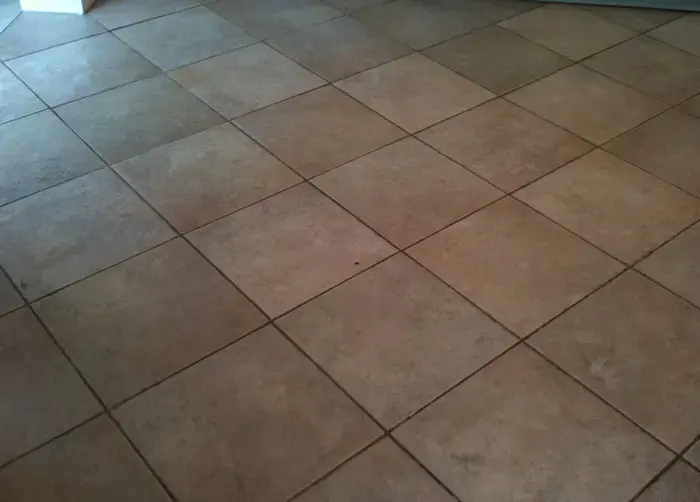
Muddy footprints, food marks and pet traffic kept returning across this Epsom ceramic tile floor, and ordinary household cleaning was no longer bringing back its earlier appearance. With three children under five and a pet spaniel, outdoor soil, constant indoor movement and the occasional spill were part of daily life.
The tiled route ran through the back entrance, washroom, kitchen, dining area and conservatory, so it carried traffic from several areas of the home. The entrance took the brunt of muddy shoes and grit, whilst the kitchen and dining area picked up food residue during normal family use.
The conservatory created another busy link between the house and garden. Repeated footfall was concentrated along the same routes, and over time the grout joints became noticeably darker than the surrounding tile faces.
Routine mopping removed some loose marks, but it could not restore a consistent finish. The homeowner wanted a cleaner, hard-wearing floor that would cope with ongoing family and pet traffic without requiring an unrealistic level of daily effort.
Heavy Soil Left the Epsom Tiles and Grout Looking Flat

Built-up daily soil had left both the glazed ceramic tile faces and the grout looking flat, especially where low-angle light highlighted the darker joints. Attached residue dulled the tile surface, but the grout created the strongest visual contrast.
Comparing an affected grout line with the adjacent tile face showed that the installation was not dirty in the same way throughout. The non-porous factory-fired glaze resisted absorption, whereas cementitious grout porosity created a porous grout absorption pathway through capillary voids, allowing contamination ingress and repeated soil absorption.
That difference explained why mopping was no longer producing a clean-looking result. The attached soil and darker contamination within the joints needed to be lifted from the installation, not simply moved around the floor.
The Worst Area by the Back Door Was Difficult to Assess
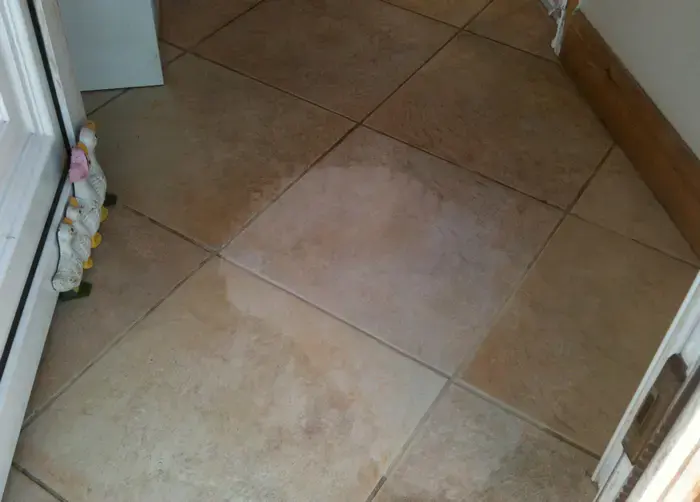
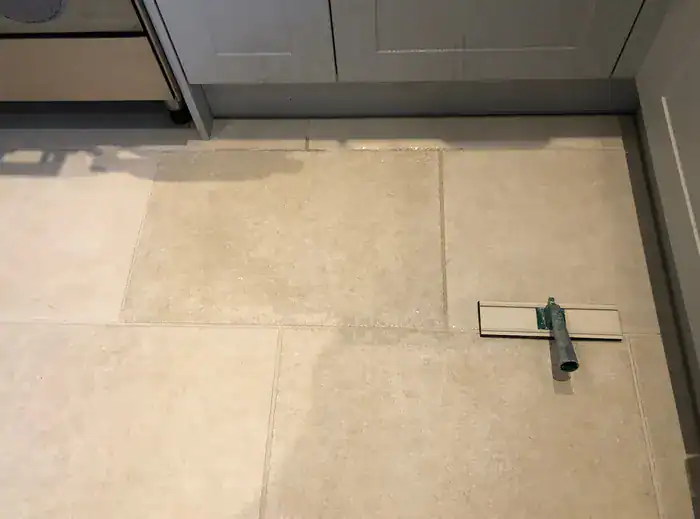
The heavily trafficked area by the back door had been repeatedly scrubbed, but without a controlled comparison the outcome would have been difficult to assess. I carried out a small test clean in this section, then compared the treated patch with the untouched floor beside it under the same lighting.
The cleaned test area showed a clearer tile surface and noticeably fresher grout contrast. Beside it, the untreated floor still appeared flat and tired. That direct before-and-after comparison gave the homeowner confidence that the full tiled floor could respond to the same professional treatment.
She approved the full Epsom project, and we agreed that grout protection would follow once the floor had dried.
Household Mopping Had Not Shifted the Greasy Everyday Soil
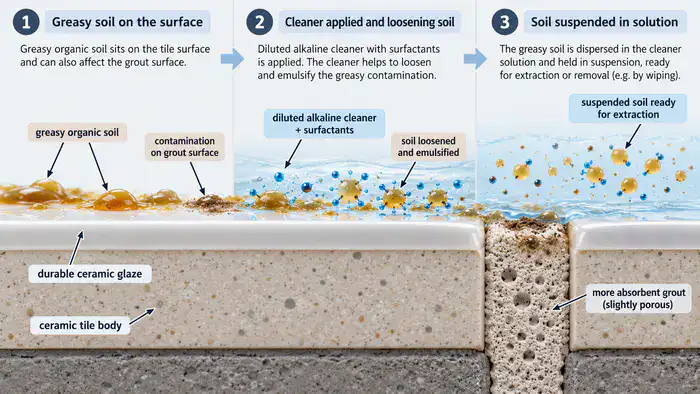
Greasy everyday soil had remained attached despite household mopping. An alkaline cleaning solution loosened it, and I used a high-alkaline cleaner because its alkaline pH and surfactants support degreasing, emulsification and deep cleaning across organic soil without attacking the ceramic glaze.
I applied the solution across the affected floor and allowed suitable dwell time before agitation. This gave the chemistry time to soften the built-up residue, biological contamination and surface soil before mechanical action worked across the tile faces and porous grout joints.
The process loosened attached soil instead of moving dirty water across the floor.
During dwell time, it was clear that the treatment was working on the contamination rather than merely wetting the floor. Because this alkaline treatment suited the heavy family-home soil identified during the test clean, readers considering suitable options for similarly dirty ceramic floors can also review heavy-duty ceramic tile cleaning options.
Rotary Scrubbing Reached the Grout Lines
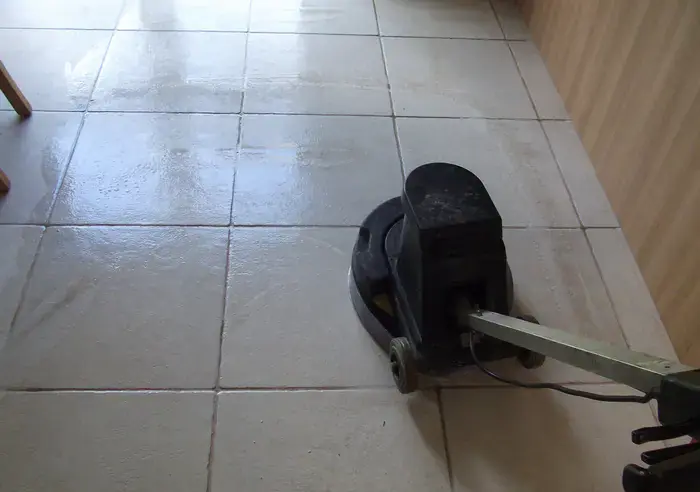
A rotary floor machine cleaned the open areas efficiently, although corners and edges would still have looked unfinished without separate attention. I fitted the machine with a medium-stiffness polypropylene brush, as its bristle action could agitate the grout joints and provide controlled abrasion without abrading the glazed tile surface.
The machine worked the loosened solution through the textured ceramic tiles and recessed joints, where embedded soil had resisted mopping. I chose this brush rather than a carbide rotary brush because silicon carbide bristles and aggressive mechanical scrubbing would have introduced unnecessary abrasion risk to the factory glaze during deep cleaning.
Hand scrubbing finished the areas the machine could not reach, including corners, edges and tight perimeter sections. As a result, the accessible floor received consistent agitation and the perimeter was brought up to the same visual standard rather than being left as a dark border.
Hot-Water Extraction Removed the Loosened Dirt
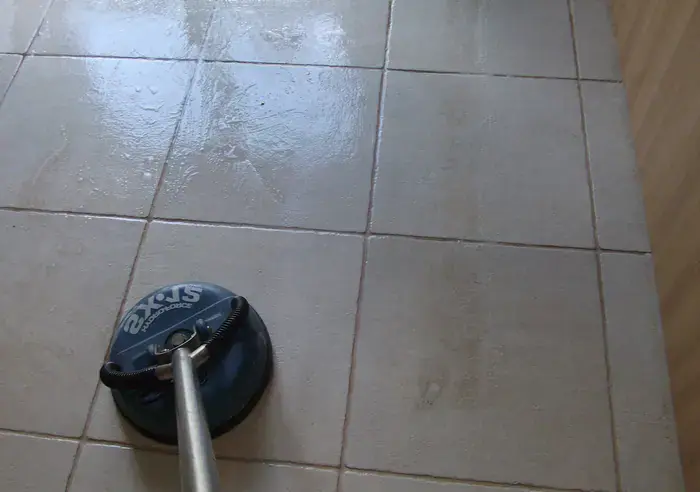
Hot-water rinsing and extraction removed the loosened soil after scrubbing. The wet sheen showed that suspended contamination and cleaning solution were leaving the floor, whilst a wet vacuum / slurry extractor provided slurry extraction and reduced the risk of redeposition into the grout joints.
I rinsed the tiled areas thoroughly before extracting the remaining moisture. Mobile air movers then accelerated drying, allowing the cleaning and protection work to be completed within one day rather than leaving the busy household with a damp working area.
Normal Family Traffic Could Affect the Newly Cleaned Grout
The cleaned joints needed penetrating protection before normal family traffic resumed. Once the floor had dried completely, impregnating grout sealer was applied across the floor as recorded for the project, although its practical value was concentrated in the more absorbent grout rather than the already glazed ceramic faces.
The grout joints contained the absorption pathway, so pore sealing reduced absorption and formed an invisible, water-repellent internal barrier against everyday dirt and spills. The glazed tile surfaces already had a permanent non-porous finish, so they did not require a separate film-forming tile coating.
This grout-first approach suited the traffic pattern in the home because it slowed contamination ingress without changing the tile’s appearance. I also avoided chemical anti-slip etching, as the existing glaze surface and wet slip resistance did not call for a chemical treatment that could alter surface friction or floor safety.
The Family Needed a Floor That Was Easier to Clean
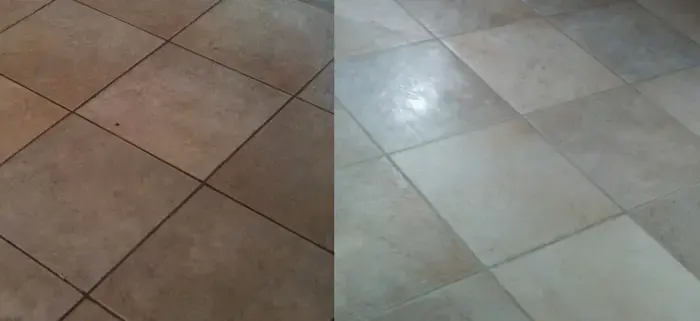
The family needed a floor that was easier to clean in the rooms they used every day. When I returned to the completed Epsom floor, the refreshed grout and tile surfaces could be compared directly with their earlier condition in the same family rooms. The brighter, cleaner result was immediately visible across the entrance, washroom, kitchen, dining area and conservatory.
Before cleaning, darker joints and attached surface residue made the floor look consistently tired, even after routine mopping. Muddy traffic around the back door and food-related marks in the kitchen and dining area created a patchy appearance across the connected tiled route.
After cleaning, the ceramic glaze looked clearer and the grout regained a more consistent colour relationship with the tile. The floor looked significantly better because the contamination layer had been removed rather than concealed beneath a coating.
The practical improvement was as useful as the visual one. A floor that had previously needed repeated effort now responded more predictably to normal cleaning, allowing the homeowner to manage daily soil from three young children and a pet spaniel with less frustration. Professional cleaning did not remove the need for continued care, but it returned the surface to a condition where routine cleaning could work properly again.
Keeping the Finished Floor Manageable Needed the Right Routine
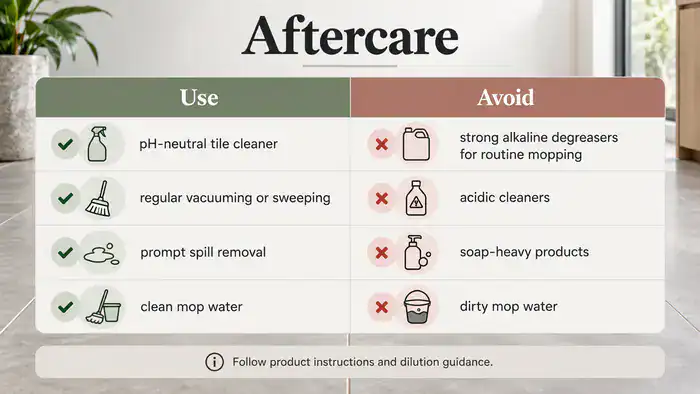
Preserving the finished result after handover needed a straightforward pH-neutral routine. A pH-neutral tile cleaner maintains pH balance through mild surfactants, supports residue-free daily cleaning and carries no etching risk for the factory glaze or unnecessary attack on protected grout.
Pro Tip: We recommend these products for daily Ceramic Tile maintenance cleaning.

Fila Pro Floor Cleaner
|

LTP MPG Sealer H20
|

Vileda H2PrO Spin Mop System
|
I recommended a good-quality microfibre mop system for regular cleaning because it could lift daily soil without leaving the detergent film associated with harsher products. I also left the homeowner with a starter bottle of FILA PRO Floor Cleaner, so the new routine could begin with a suitable formulation rather than an improvised household substitute.
Strong alkaline household cleaners needed to be avoided during routine maintenance, as repeated high-pH exposure could weaken protection and encourage residue accumulation. The comparison was straightforward: gentle pH-neutral cleaning and microfibre contact supported the restored surface, while aggressive chemistry could restart the cleaning-failure cycle.
Removing grit before wet mopping also remained important, because loose dust, crumbs and small particles can act like sandpaper across glazed surfaces. The homeowner could sweep or vacuum first and then mop, reducing abrasion risk and helping to extend the floor’s working life.
Correct ongoing maintenance supported the grout protection and kept the family floor easier to manage. The wider principles of ceramic and porcelain floor care are set out in ceramic and porcelain floor care guidance, while renewed grout discolouration, returning haze or damp-area growth would indicate a need for further professional advice rather than stronger supermarket products.

David Allen — Abbey Floor Care
David Allen has more than 30 years of experience with Abbey Floor Care, documenting professional ceramic tile cleaning projects across the UK. In this Epsom case study, he addressed heavy family-home soil across the tiled route, restored the grout presentation and established a manageable maintenance routine.
Recent Posts:
We work throughout the country, just some of our work counties:
Copyright © 2026 Abbey Floor Care. Tile And Natural Stone Cleaning Consultants FAQ - Privacy Policy - Terms And Conditions
Abbey Floor Care is a participant in the Amazon Services LLC Associates Programme, an affiliate advertising programme designed to provide a means for websites to earn advertising fees by linking to Amazon.co.uk. As an Amazon Associate, we earn from qualifying purchases.