The Master Guide to Victorian & Minton Tile Restoration
Last Updated on July 5, 2026 by David
Why Victorian tiles go dull, patchy, and harder to clean over time
If your Victorian tiles look dull, patchy, or harder to clean each year, the cause is usually a combination of trapped residue, moisture movement, and long-term clay wear. Ordinary mopping reaches loose surface soil, but old coatings, dirty rinse water, waxes, linseed oil, salts, and softened clay wear can sit below the visible face. The floor then looks tired after cleaning because the dirt you can see is only the last sign of a wider system.
Victorian and Minton hallway floors are usually unglazed clay, not modern glazed tile. Their colour comes from mineral oxide pigmentation fired into the tile body, so the red, buff, black, cream, and ochre tones belong to the original material rather than sitting on top like paint. That makes the floor durable. But not indestructible. Softer colours can wear faster under grit, foot traffic, and repeated harsh scrubbing.
Tile porosity matters because old domestic tiles can absorb moisture, cleaning product, surface dirt, and embedded soiling into a porous condition that ordinary cleaning products rarely remove evenly. Pre-wetting and rinse control are professional judgements rather than casual DIY steps, because too much water can push contamination deeper, while too little control leaves residues behind. The practical point is simple: Victorian tile cleaning is not just making the surface wet and rubbing harder.
Dishing is the shallow concave wear that forms where people have walked the same route for decades. The homeowner sees hollowed traffic lanes, duller earth-coloured tiles, and a broken reflection across the surface. Cleaning can remove soil and old residue from those hollows, but it cannot put back worn clay or restore missing pattern depth.
Old coatings can hide what is really happening to the tiles
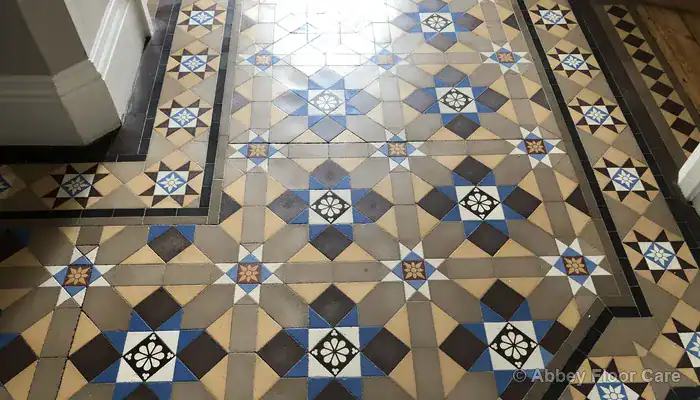
If your old patterned Victorian floor still looks dull after cleaning, the problem may be trapped dirt inside the clay rather than dirt sitting on top. Aged wax, linseed oil, acrylic sealer, dirty rinse water, salts, and softened surface wear can all disguise the real condition of the tiles. By the time the floor looks patchy or difficult to clean, the visible grime is often only the final sign of residue, moisture movement, and long-term clay wear working together.
Victorian and Minton hallway tiles are usually unglazed clay rather than modern glazed tiles. Their red, buff, black, cream, and ochre colours come from mineral oxide pigmentation fired into the tile body, so the pattern belongs to the clay itself. That is why careful cleaning can reveal strong original colour without needing a surface polish. It is also why aggressive scrubbing, acidic products, or abrasive pads can permanently reduce softer colours instead of simply removing dirt.
Porosity is the key reason old Victorian tiles need controlled cleaning. These domestic floors can absorb moisture, cleaning product, surface dirt, and embedded soiling into the open tile body, especially where wear has made the clay more exposed. Pre-wetting and rinse control are professional judgements because too much water can push contamination deeper, while too little extraction leaves dirty residue behind. The practical point is simple: safe Victorian tile cleaning is not soaking an old patterned floor and rubbing harder.
Dishing is the shallow hollow wear formed where people have walked the same route for decades. Homeowners usually notice dull traffic lanes, earthier colours, and broken reflections across the patterned floor. Cleaning can lift soil and old residue from those hollows, but it cannot rebuild worn clay or restore missing pattern depth.
Patchy colour often appears when ancient coatings have broken down unevenly across the tiles. Waxes, linseed oil, old products, acrylic sealers, and soiling coating can soak into the clay body, darken over time, and make the floor look as though it only needs a stronger clean. Wax and linseed oil blackening is a coating problem as much as a cleaning problem, because safe removal means separating residue from porous clay without stripping away original colour.
Acrylic sealer failure creates a different kind of patchiness. Instead of an even natural clay surface, the homeowner sees patchy sheen, dull islands, peeling, whitening, or sticky areas after cleaning, especially where damp, salts, or old waxes sit beneath water-based layers. Strip off decisions belong to specialist assessment because acrylic sealers only behave predictably under perfect conditions with no damp and no salts.
Residue film accumulation also makes Victorian floors look dirty again soon after cleaning. Cleaning solution, soil, and rinse water can dry back into the clay instead of being removed, so the surface looks better while wet and then turns grey as it dries. A practical example of embedded soil and grout contamination appears in the soiled Victorian tile cleaning case study in Farnham, where the cleaning result depended on separating contamination from the clay rather than polishing the tile faces.
Damp and salts can change the way Victorian tiles dry
If your Victorian tiles dry in patches after cleaning, moisture may be moving through the floor from below. Many original Victorian tiles were fitted with no DPM, so moisture rise, evaporation, damp issues, salts, and winter rainfall can affect old floors long after the surface has been washed. Damp-proof membrane absence does not mean every floor is failing, but it does mean drying behaviour and breathable sealer choice matter before any protective finish is considered.
Efflorescence is the white deposit left when moisture carries dissolved salts to the surface and evaporation leaves crystals behind. Homeowners see powder, pale bloom, cloudy edges, or persistent deposits that return after cleaning. Treatment decisions depend on whether the white marks are surface residues, salt movement, or coating failure, because gentle circular motions and rinse thoroughly language belongs to controlled treatment guidance rather than a hub-page cleaning shortcut.
Over-wetting salt activation can turn a clean-looking floor into a recurring marking problem. Too much moisture can over wet old floors, disturb salts, trigger a salt crystal reaction, and leave white marks after drying. Steam, excessive water application, and casual soaking are poor fits for moisture-active Victorian tiles when the aim is to clean old patterned floors without damaging clay or colour.
Clean tiles can still show age and colour wear
If your Victorian floor looks faded even when it is clean, the colour may be worn rather than dirty. Colour loss happens when visible pigment, clay slip, or fired surface character has been physically reduced. Red, buff, cream, or black areas may remain pale after careful cleaning because missing clay cannot be washed back into the tile.
Patterned encaustic areas need even more restraint because the inlaid slip layer can be thin. Abrasive pads, powders, scratch marks, wearing down, natural finish loss, over cleaning, clay inlays, and removal of intricate patterns all point to the same risk: the design can be permanently reduced by harsh restoration. The guide to faded Victorian mosaic tile colour explains the boundary between cleaning improvement and genuine pigment wear, and that distinction helps keep this hub inside cleaning rather than restoration.
Heavy foot traffic changes both cleanliness and colour response. A hallway may contain decades of wear, neglect, worn surface areas, damaged high-traffic zones, and original surface character in the same run of tiles. Professional cleaning and suitable protection can make the floor look much brighter and easier to maintain, but historic wear should be recognised as part of the old clay surface rather than treated as a failure to clean.
Cleaning only works when protection and aftercare support it
If you want an old patterned Victorian floor to stay cleaner, loosened dirt must be removed from the clay before it dries back in. Slurry extraction, wet vacuum removal, controlled agitation, and rinse control lift soil from the tile surface without grinding away the original colour. The Victorian clay tile cleaning project in Windsor shows how cleaning and sealing can support the same floor without turning the hub into a method guide.
Breathable protection matters because many old clay floors need moisture escape as well as stain resistance. A breathable sealer can protect unglazed encaustic tiles from stains and dirt once the floor is fully dry, while water beads show reduced absorption without forming a sealed plastic skin. A professionally restored and correctly sealed floor is significantly easier to clean and maintain than a worn or incorrectly treated floor.
Good aftercare protects the cleaning result by reducing abrasion and residue. pH-neutral cleaning, grit removal before wet mopping, and resealing at the right interval help preserve the tile surface without blocking moisture movement through the clay body. Practical examples of cleaning-led aftercare appear in the Victorian tiles cleaning case study in Darlington, where cleaning, protection, and future care sit inside the same material boundary.
Why older Victorian tiles need different cleaning from modern floors
If you clean Victorian tiles like modern porcelain, you can push water and residue into the floor instead of removing grime safely. Older Victorian tiles behave differently because water can move through the clay, bedding, and joints rather than sitting only on the surface. Modern glazed and porcelain tiles often repel moisture at the face. Original Victorian tiles may have no DPM, allowing damp, salts, and drying behaviour to influence the cleaning result.
Historic floor construction also affects loose tiles, vulnerable edges, and the risk that rotary cleaners may lift loosened areas during cleaning treatment. Over-wet cleaning on old floors can disturb the setting and make tile movement more visible. Structural behaviour is covered in more depth in the right way to restore Victorian tiles, where movement and bedding problems belong outside a cleaning hub.
Why grime sinks into old patterned clay instead of wiping away
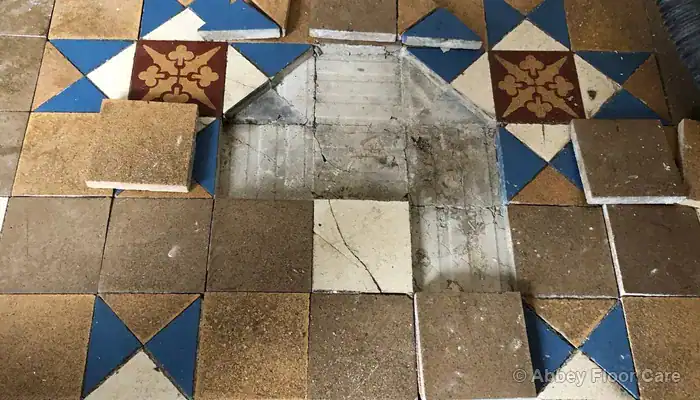
If your Victorian tiles will not wipe clean, the dirt may be sitting below the surface in open clay pores and worn hollows. Repeated mopping can make Victorian tiles look worse when dirty liquid sinks into open clay instead of being removed from the floor. The surface may brighten while damp, then dry back to grey or brown because the tile pores and worn hollows hold soil below the immediate face.
Open clay structure draws liquid sideways and downward through tiny pathways. Slurry extraction is the professional removal stage that takes suspended soil out of the floor before it dries back into tile pores, original features, and damaged areas. The missing difference is removal, not more force.
Open clay holds dirty liquid until extraction removes it.
Darkening that returns after drying indicates embedded contamination rather than simple surface dust. Controlled cleaning can restore appearance without treating the floor like marble, porcelain, or any surface that can simply be polished back.
Why Victorian tiles look faded or patchy after cleaning
If your floor looks uneven after cleaning, the cleaning may have revealed the real clay surface rather than caused new damage. Uneven colour often means old coatings have been disturbed and the true clay surface is becoming visible. Untreated clay usually dries flatter and paler because no coating is deepening the colour, so historic wear and softer buff tile wear become easier to see.
Coated areas can look darker, shinier, or cloudier because waxes, acrylic sealers, old sealer residue, and surface coating layers remain in pores and grout lines. Acrylic wax finish, water-based topical sealer, and linseed oil coating layers can create a deepening effect that looks attractive until build-up, damp, or salts make the surface fail.
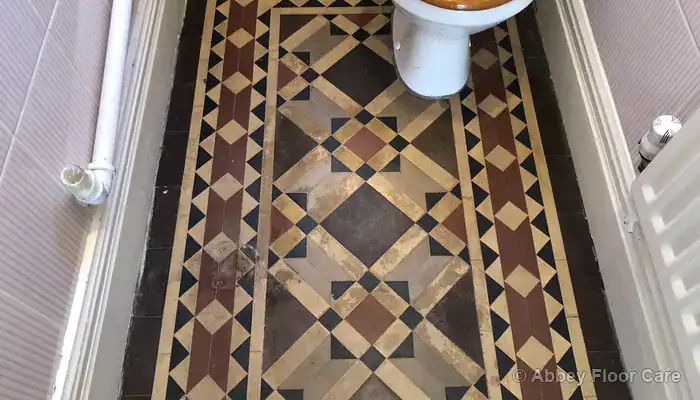
Patchiness is therefore a diagnostic clue, not proof that cleaning has failed. Before-and-after change can reveal stronger geometric patterns, clearer colour depth, and surface colours that were previously hidden by coating residue.
Why mopped Victorian tiles turn grey again after drying
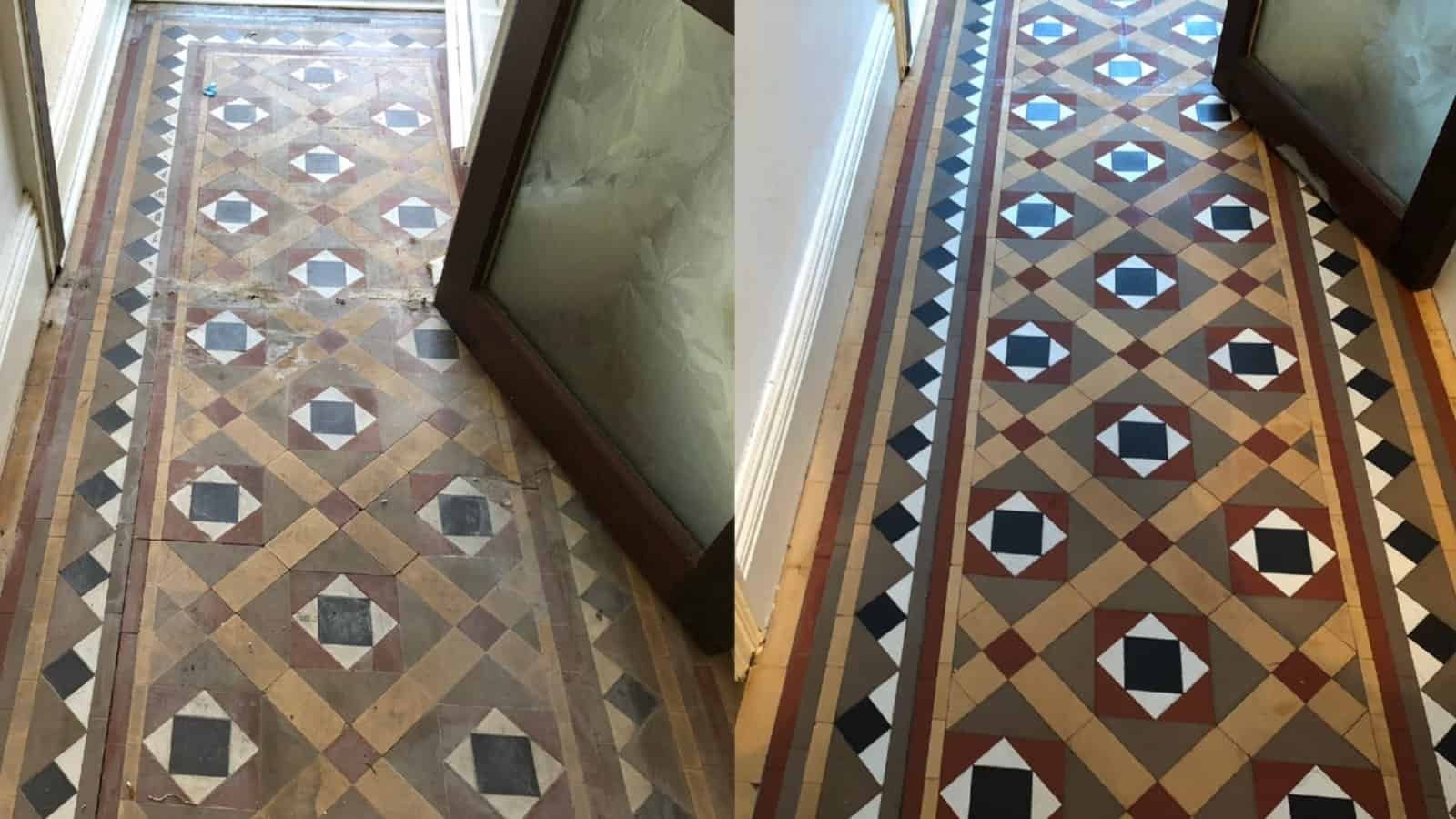
If your Victorian tiles look clean while damp but grey again after drying, residue is probably cycling back through the surface. Cleaning solution, household detergent, rinse water, and fine soil can remain in porous clay when dirty liquid is spread around rather than extracted. The floor then looks clean only while wet because contamination has not actually been removed from the tile body.
Residue cycling leaves dull areas, streaks, sticky patches, and fast re-soiling because the surface keeps receiving contamination from below. This can be worse where cement grout joint failure leaves missing cement, dirty joints, loose grout, and unprotected edges that collect soil under heavy tread.
The homeowner’s threshold is repeated greying after careful mopping and full drying. At that point, stronger domestic products are more likely to add residue than resolve the underlying clay behaviour.

Why deep grime needs extraction rather than harder scrubbing
If scrubbing only makes your Victorian tiles look briefly better, the dirty liquid is probably still in the clay. Slurry extraction separates successful professional cleaning from ordinary mopping because loosened grime must be removed before it settles back. Domestic scrubbing can agitate dirt, but it often leaves the dirty liquid sitting in the clay surface, grout joints, and worn hollows.
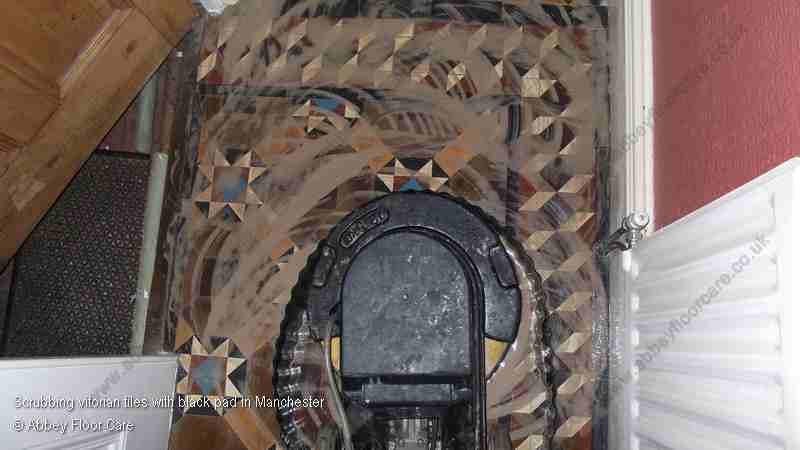
Controlled cleaning uses alkaline degreasing detergent, dwell time, agitation, and wet vacuum removal to separate grime, waxes, and softened residue from the floor. Heavy-duty chemistry, stiff brush contact, and coarse scouring pad choices require judgement because soft clay, vulnerable edges, and historic tile face wear can be damaged by excessive force.
The result is a cleaner surface that regains clarity and stays cleaner longer because the contamination layer has been removed rather than redistributed. The Victorian clay tile cleaning project in Blyth shows this cleaning boundary in practice, with professional extraction and protection treated as controlled support rather than a DIY sequence.

Why the wrong sealer can trap cleaning problems in the floor
If a Victorian tile floor is sealed before it is dry and clean enough, the finish can trap moisture and make whitening, patchiness, and cleaning problems worse. Film-forming coatings create a surface barrier, while old porous tiles may still need water vapour to escape from the tile body and bedding. Sealing the wrong Victorian tile floor can therefore make the floor harder to clean rather than easier to maintain.
Breathable protection works by slowing stains and dirt without blocking moisture. A breathable impregnating sealer sits in the pores, allows moisture to evaporate, and offers stain repellency once the floor is dry enough for sealing. High-gloss risks are explained in the high-gloss sealer risk guide for Victorian hallway tiles, where moisture-active floors and surface film coatings are treated as a sealing decision rather than a cleaning shortcut.
Protection must slow spills without blocking vapour movement.
Failed coatings behave differently from breathable finishes because trapped moisture can peel, cloud, stain, or make the surface look dirty again. Shine alone is never a reliable sign that the floor has been protected correctly.

Why white marks and stains keep coming back after cleaning
If white powder returns after your Victorian tiles dry, the cause is usually moisture and salts rather than ordinary surface dirt. Efflorescence describes white calcium deposits, nitrates, salts, and white powder left on the surface as moisture rises from the substrate and evaporates. More cleaning may remove the visible deposit for a short time, but it will not stop salt movement if moisture is still active below the floor.
Staining is different because colour has entered the clay or grout, while coating failure sits at the surface as a failed barrier. Paint and adhesive encrustation is different again: paint splatters, glue, old adhesive, hardened substances, and scraper marks can leave residues or penetration from hallway carpet and other coverings.
Recurring marks matter because repeated cleaning can over wet old floors and reactivate salt problems. Over-saturation, bedding plane moisture, and drying behaviour explain why white deposits may return even after the tile surface has been cleaned.

How to keep Victorian tiles clean without causing long-term damage
Grinding or aggressive scrubbing can permanently reduce colour on Victorian tiles, even when the floor only needs safer maintenance. Abrasive pads, hard scouring, wire wool, and over-cleaning can scratch the historic tile face and wear clay inlays instead of simply removing dirt.
Safe care reduces grit before wet mopping and limits residue by using pH-neutral cleaning suited to porous tiles. One specific thing to avoid is steam cleaning, because heat and excess moisture can drive dirty liquid deeper into the tile body and disturb salts in old floors.
Correct ongoing maintenance keeps the floor cleaner, reduces surface wear, and protects the original colour and surface character. A cleaning-led example appears in the Victorian tile cleaning project in Littleover Derby, where the useful lesson is maintenance discipline rather than stronger domestic scrubbing.
When Victorian tile cleaning is no longer enough
If marks keep returning after the floor is fully dry, the problem may need diagnosis rather than more cleaning. Cleaning reaches its limit when the floor shows salts, movement, permanent colour loss, coating residue, or unstable bedding. The important distinction is whether the floor is temporarily soiled or whether moisture, wear, coating residue, or structural behaviour is controlling the result.
These diagnostic thresholds help separate routine cleaning from specialist assessment:
- White powder returns after drying, indicating salt movement.
- Dark patches reappear within 48 hours, indicating embedded contamination.
- Tiles move or sound hollow, indicating loose tile risk.
- Pattern detail remains pale when clean, indicating colour wear.
Loose tiles, cracked areas, raised or sunken tiles, and vulnerable edges should not be treated as normal cleaning problems. The Edwardian clay tile repair and cleaning case study shows how repair belongs to a separate workflow when movement, grout failure, or replacement issues dominate.
Where to go when routine cleaning will not protect the floor
If your Victorian tiles need more than careful cleaning, the safest next step depends on whether the floor has coating build-up, salt movement, sealing risk, colour wear, or structural damage. A hub page should not resolve every condition, because repair, restoration, sealing risk, and colour-loss diagnosis each need their own boundary. Clear routing helps protect the clay and colour from unnecessary over-treatment.
Thick coating build-up, old sealer, carpet adhesive residue, bitumen residue, and paint contamination point towards specialist removal rather than ordinary mopping. A real example of adhesive and coating residue appears in the Minton tile floor restoration in Ovington, where the useful lesson for this hub is recognising when dirt is not the whole problem.
Clear routing protects the floor from over-treatment. Floors with missing tiles, structural movement, or restoration-led colour recovery should move to the relevant subordinate page rather than pulling this cleaning hub into repair or restoration instruction.


David Allen — Abbey Floor Care
David Allen has worked with Victorian, Edwardian, and Minton clay tile floors through Abbey Floor Care for over 30 years. His experience supports this cleaning hub by separating safe cleaning, coating removal, salt behaviour, breathable sealing, and aftercare from restoration or repair work that needs its own diagnosis.
Recent Posts:
We work throughout the country, just some of our work counties:
Copyright © 2026 Abbey Floor Care. Tile And Natural Stone Cleaning Consultants FAQ - Privacy Policy - Terms And Conditions
Abbey Floor Care is a participant in the Amazon Services LLC Associates Programme, an affiliate advertising programme designed to provide a means for websites to earn advertising fees by linking to Amazon.co.uk. As an Amazon Associate, we earn from qualifying purchases.