Understanding the Impact of Grinding and Polishing Terrazzo in Edinburgh Homes
Last Updated on December 17, 2025 by David
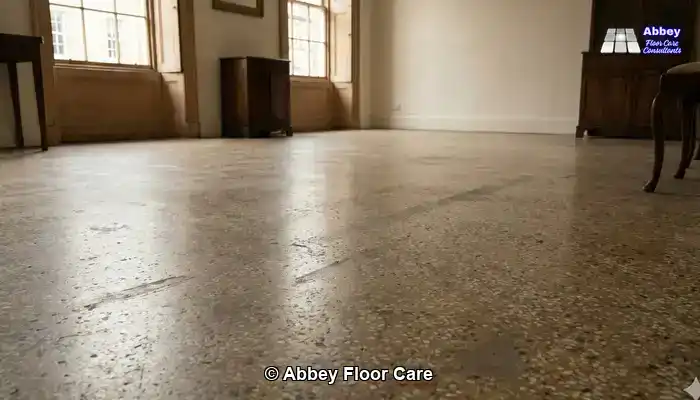
If you have terrazzo at home in Edinburgh, it’s easy to feel caught between two worries: living with a floor that looks tired, or letting the wrong work change it forever. Grinding and polishing can transform a surface, but they can also expose underlying problems that a quick “shine-up” would hide for a while.
In heritage-minded homes, the key is not chasing a look at any cost, but protecting the character and structure of the floor with Heritage sensitivity built into every decision.
Key Takeaways
- Grinding changes a terrazzo floor by removing a worn surface layer and correcting unevenness where needed.
- Polishing changes the look by increasing clarity and sheen, but it does not make a floor “damage-proof”.
- A specialist’s decision is driven by condition, not preference, and starts with what the floor can safely tolerate.
- Some discolouration and visual variation can remain, especially in older floors with past repairs or wear.
- The most durable results come from correct preparation, realistic expectations, and ongoing care after restoration.
Why Grinding and Polishing Deserve Careful Thought in Edinburgh Homes
Grinding and polishing are often spoken about as if they’re just different ways to “finish” a floor, but with terrazzo, the reality is more serious: you’re working with a surface that may have aged, softened, and absorbed contamination over decades. A professional’s first job is to decide what the floor is honestly asking for, not what a marketing description suggests, using Inspection-led decisions rather than assumptions.
Pro Tip: We recommend these products for daily Terrazzo cleaning.

Fila Pro Floor Cleaner
|

LTP MPG Sealer H20
|

Vileda H2PrO Spin Mop System
|
That’s why a careful explanation matters before any machinery is chosen: the safest outcome comes from matching the approach to the condition, not forcing the condition to suit the approach, while keeping Surface degradation firmly in view.
For homeowners who want a clear explanation of whether grinding or polishing is appropriate for their floor, a professional terrazzo grinding and polishing assessment in Edinburgh provides condition-led guidance before any irreversible work is considered.
What Terrazzo Is — And Why Its Surface Changes Over Time
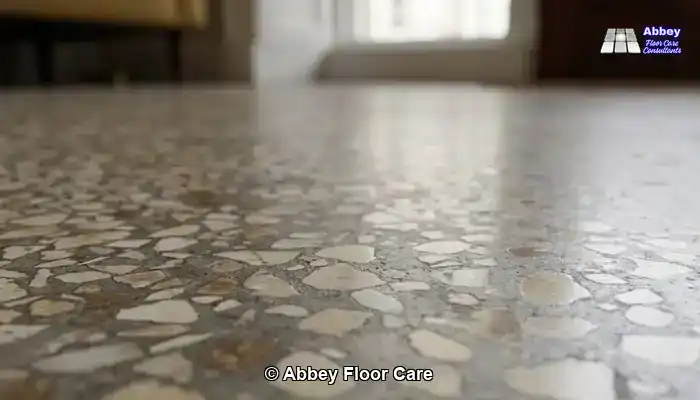
Most domestic terrazzo is a cement-based surface where Marble Chips sit within a Portland Cement Binder, and that binder tends to become more absorbent as it ages. In Edinburgh, this matters because the floor’s appearance is often driven by what has penetrated the binder over time, not what’s sitting on top of it, so the “dull” look can be a sign of Cement binder wear rather than a simple cleaning problem.
Once contamination sits within the binder, the floor can keep looking grey even after careful cleaning, because you’re seeing what’s inside the surface rather than what’s on it, which is why embedded soil can be such a stubborn part of the story.
How Grinding Affects Terrazzo Floors
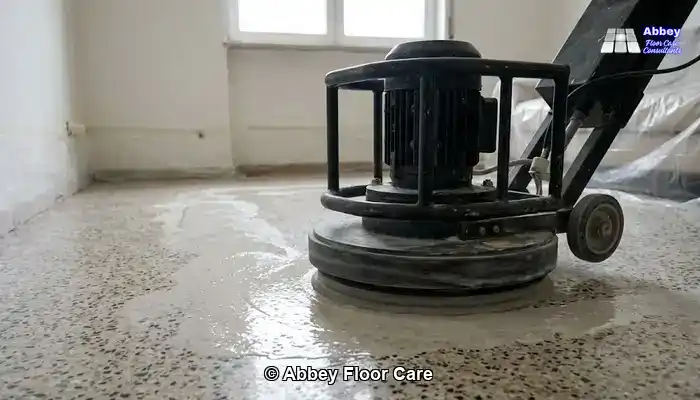
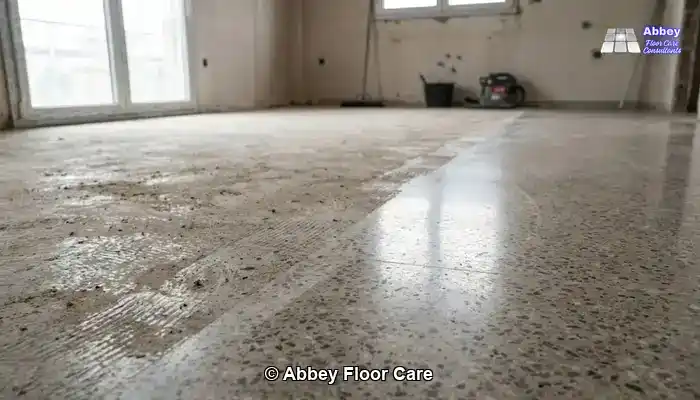
Mechanical Grinding is a controlled resurfacing stage that removes a damaged top layer and can also address Lippage on an uneven tile floor. In Edinburgh homes, the key point is that grinding is not “extra polishing”; it is a deliberate step that changes the surface by removing material, so a specialist will only recommend it when the condition shows it’s necessary and safe, with Material removal treated as a serious, irreversible act.
Because grinding reveals what the surface has been hiding, a restorer will typically stabilise cracks or old channels first with Resin Repair Filler so the floor can be refinished as a single coherent surface. That sequence falls under the umbrella of Structural repairs.
How Honing and Polishing Change the Finish
Honing is the refining stage after grinding, and Polishing is the optional step that can take the surface to a higher sheen. In Edinburgh, the professional question is not “gloss or matte?” but which level of refinement best fits the floor’s condition and the homeowner’s priorities, because a higher sheen can look striking yet may show wear sooner, making finish selection a long-term decision rather than a quick aesthetic choice.
A specialist may also use a densifier to support higher polish levels where appropriate. Still, the principle stays the same: the finish must suit the surface’s real condition, not a showroom expectation, and it must anticipate Long-term wear rather than ignore it.
Why Grinding and Polishing Are Not Interchangeable
Grinding and polishing can appear similar from the outside because both involve Diamond Abrasives, but they do different jobs and carry different implications. In Edinburgh terrazzo, grinding is used to correct wear, contamination, and surface unevenness. In contrast, polishing is used to refine clarity once the surface is sound, so a professional won’t treat them as swap-in alternatives when Lippage correction or deeper surface damage is part of the problem.
When a homeowner wants “just a polish”, a careful restorer will explain that polishing cannot undo deeper wear patterns or unevenness that sits below the surface, and that the correct sequence comes from Inspection-led decisions, not preference.
What Grinding and Polishing Cannot Promise
Even excellent work has limits, and terrazzo is particularly honest about them because the Portland Cement Binder can hold historic discolouration and older contamination that may not fully lift, even after resurfacing. In Edinburgh, the safest way to approach expectations is to separate what can be improved from what may remain, because some visual variation is a consequence of age and Surface degradation, not a sign that the work was “done wrong”.
It’s also important to be clear that a higher sheen does not prevent future marking or chemical dulling, and polished surfaces can show traffic patterns sooner, which is why Heritage sensitivity includes choosing a finish that suits real life, not just day-one shine.
How Specialists Decide What a Terrazzo Floor Can Safely Tolerate
A professional assessment centres on what the floor can safely withstand, because the appropriate amount of resurfacing depends on thickness, condition, and the structure’s stability. In Edinburgh properties, that often includes careful consideration of cracks, past patching, and the underlying causes of movement, so the decision is built around Structural repairs and stability, not just appearance.
The critical boundary is that the safe resurfacing depth cannot be confirmed without seeing the floor in context, which is why a responsible restorer treats Material removal as conditional, not automatic.
What This Means for Ongoing Care After Restoration
Once a terrazzo floor has been refinished, the goal is to keep the surface looking clear for longer by reducing absorption and minimising avoidable wear. In Edinburgh homes, impregnating sealer is commonly used to manage absorbency in the Portland Cement Binder. Still, it’s essential to understand that it supports easier cleaning rather than making the surface immune, because the underlying reality of Embedded soil and wear still depends on day-to-day habits.
The calmer, longer-lasting results usually come from treating the floor as a finished surface that needs protection from harsh products and unnecessary abrasion, with Finish selection matched to the household’s real use rather than ideal conditions.
When a Professional Assessment Makes Sense
If your terrazzo still looks grey after cleaning, if cracks are present, or if you suspect unevenness, the most sensible next step is a professional terrazzo assessment in Edinburgh that explains what is happening and what is realistically achievable before committing to grinding or polishing.
A good restorer will explain the trade-offs plainly, set limits without hedging, and outline what the work can and cannot change so that you can move forward with realistic, calm long-term wear expectations.
Final Insights
Grinding and polishing are not “options” to pick from a menu; they are professional tools used in a specific order when the floor’s condition calls for them. The safest results come from clear judgment, careful sequencing, and honest limits — especially where the floor has age, history, and value.
A condition-led terrazzo assessment allows those decisions to be made calmly, with the floor’s long-term health in view.
About the Author
David Allen is a natural stone and tile restoration specialist with over 30 years of hands-on experience restoring floors in homes across the UK. His work covers terrazzo and a wide range of stone and tile surfaces, with a focus on careful mechanical refinishing, repair-led restoration, and practical guidance to help homeowners protect their floors long term.
9 Hazel Avenue
Lenzie
Glasgow
G66 4RR
07533-873-476
Copyright © Abbey Floor Care.
We are proud to be your local stone floor cleaning, polishing, and restoration specialists for homes and commercial properties in Central Scotland.
With years of experience working with all types of stone floors, our friendly and professional stone floor cleaning services can’t be beaten on price or service.
FAQ - Privacy Policy - Terms And Conditions
Abbey Floor Care is a participant in the Amazon Services LLC Associates Programme, an affiliate advertising programme designed to provide a means for websites to earn advertising fees by linking to Amazon.co.uk. As an Amazon Associate, we earn from qualifying purchases.