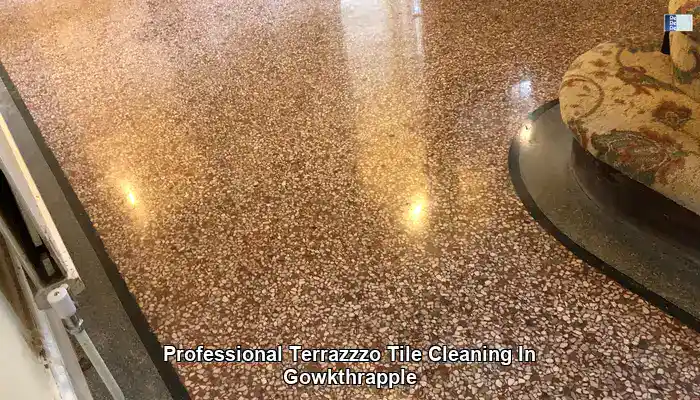
Terrazzo Tile Polishing Services: What Professional Polishing Involves
Last Updated on January 22, 2026 by David
Terrazzo Tile Polishing Services: What Professional Polishing Involves
Summary of professional terrazzo tile polishing services:
- Every terrazzo floor is approached on its own merits — the sequence is chosen to suit the floor, not a generic “polish package”.
- The work starts with an assessment to separate surface residue from true wear, cement-binder breakdown, lippage, and defects.
- Polishing is usually part of a controlled sequence (assessment → grinding/honing → polishing → sealing), adjusted to the condition and finish you want.
- The aim is an even, stable finish with improved clarity and sensible slip safety — without overworking the surface.
- Aftercare stays principle-led: pH-neutral routine cleaning, non-abrasive tools, and avoiding harsh chemicals and “shine restorers”.
- If the floor is uneven, grey in traffic lanes, or stained in the binder, the “polishing service” may need resurfacing stages first.
Terrazzo Tile Polishing: Why specialist control matters
Heritage-aware expertise for terrazzo floors
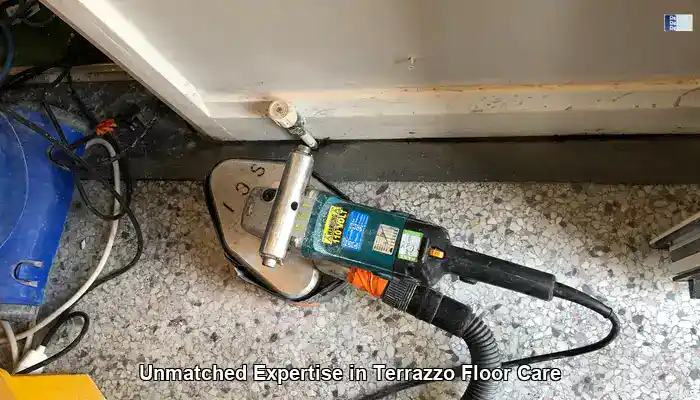
If your terrazzo has gone dull, patchy, or grey in the traffic lanes, choosing the right team really does matter. In UK homes, terrazzo is commonly marble chips set in a Portland cement binder. That binder can become more porous and fragile over time, particularly if it’s been exposed to harsh cleaning products. A good polishing service is therefore careful, controlled and reversible where possible — and only becomes “irreversible” when the assessment proves that resurfacing is genuinely required.
Done properly, polishing can lift clarity, improve how evenly the floor reflects light, and make day-to-day cleaning easier after sealing. Done badly, it can leave a floor that still looks tired (because the real issue is embedded soil and worn binder), or a finish that’s been pushed too far and shows wear sooner.
How to choose a terrazzo polishing provider
Because terrazzo polishing can involve mechanical work, the right provider will behave more like a restorer than a general cleaner. Look for clear signs of process control:
- Assessment first: they explain what they’re seeing (wear, etching, binder degradation, lippage, hollow-sounding areas) before discussing finish options.
- Condition-led sequencing: they describe the likely stages (grinding/honing where needed, polishing only where the floor can properly support it).
- Expectation setting: they’re clear that sealing manages absorption; it does not prevent etching or scratches.
- Finish choice discussion: they help you choose between honed/satin and polished, including the reality that higher sheen shows wear more readily.
- Respect for older floors: they’re honest that older repairs may never be visually “perfect” and that exact colour matches aren’t always possible.
Pre-visit preparations that protect the job
You don’t need to “pre-treat” terrazzo with household products. In fact, residues can make assessment harder. The most helpful preparation is practical and protective:
- Clear access so assessment and equipment set-up can be done safely.
- Remove fragile items nearby and plan for normal disruption (noise, wet working, and careful protection of adjacent surfaces).
- Share any history you know: old carpet adhesive, previous coatings, recurring cracks, or areas that sound hollow.
What professional terrazzo polishing usually involves

1) A proper assessment, not a guess
The assessment is where a safe outcome starts. It separates:
- Surface dirt, residues and old films (which can be removed), from
- Wear, etching, scratches and binder breakdown (which cleaning cannot correct).
If a floor stays dull after sensible cleaning, that’s often a sign the surface is worn or the cement binder has softened and absorbed soil. In those cases, “polishing” only makes sense once the damaged surface has been corrected through controlled mechanical stages.
2) Grinding and honing (when the floor needs resurfacing)
This is the part many homeowners don’t expect when they hear the word “polishing”. If there’s lippage, traffic-lane darkening, adhesive staining, or patchy binder erosion, the floor may need controlled grinding to remove the damaged top layer and flatten the surface.
Honing then refines the surface in progressive stages, removing grinding scratches and tightening the look. It’s what turns a corrected terrazzo surface into a clean, even finish ready for either a practical honed look or a higher sheen.
3) Polishing (optional) and finish choice
Polishing is an optional stage used when you want more sheen and the floor’s condition supports it. It refines both the cement matrix and the marble chips to increase clarity. Some floors respond beautifully; others are better kept at a satin finish for a more forgiving, lived-in look.
A straightforward expectation: a polished finish can look superb, but it also shows wear sooner. That isn’t a flaw — it’s simply the trade-off that comes with higher clarity and reflection.
4) Sealing (protection, not armour)
Sealing helps manage absorption in the cement binder and makes routine cleaning easier. What sealing does not do is stop etching or prevent scratches. It gives you a better-controlled surface — it doesn’t make terrazzo indestructible.
Final inspection and quality control
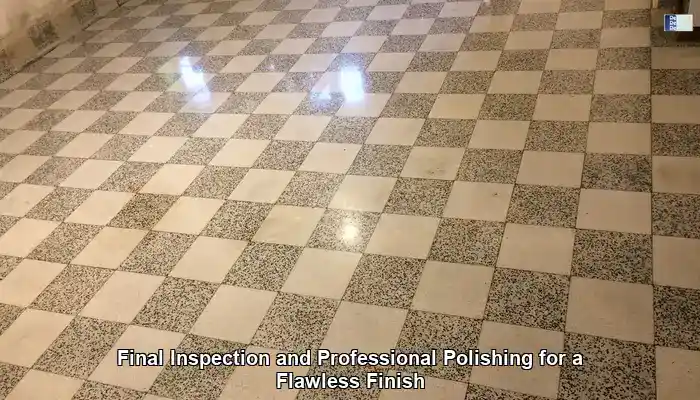
A careful provider checks for missed residues, uneven sheen, exposed pinholes that need addressing, and edge areas that often behave differently to the main field. This is also where you agree the “look” in plain language (matt/satin/polished) and understand what normal future wear will look like in your highest-traffic areas.
Benefits of professional terrazzo polishing (done properly)
Improved clarity and a more even appearance
When the surface is genuinely corrected, the marble chips read more clearly, light reflects more evenly, and the floor stops looking permanently “grey” in the lanes. That’s the difference between a superficial shine and a properly restored surface.
Better day-to-day practicality
A correctly finished and sealed surface is easier to maintain because you’re not fighting deep soil held in a porous binder. You’re cleaning a controlled surface, not trying to rescue a worn one with stronger and stronger chemicals.
Slip safety and finish control
“Shiny” does not have to mean “slippery”. Finish level can be chosen with safety in mind — and a satin or mid-sheen finish often delivers an excellent balance of elegance and practicality.
Aftercare principles (methodical, low-fuss, and safe)
After professional polishing, your job is simple — but the rules matter because terrazzo is sensitive to both acids and abrasion:
- Remove dry grit regularly to reduce abrasion.
- Use a pH-neutral cleaner for routine cleaning.
- Avoid acidic cleaners, bleach, strong alkalis, abrasive pads/brushes, steam cleaning, and DIY “shine restorers”.
- Watch for early indicators: dullness after cleaning, rapid absorption, reappearing dark patches, or visible scratching.
For examples of terrazzo-appropriate cleaners and tools — and an explanation of why they’re suitable — see
What Is the Best Product for Terrazzo Cleaning
.
Costs and quoting (high level only)
With terrazzo, the scope is dictated by the floor itself rather than a fixed “polishing package”. The purpose of a proper assessment is to identify what the floor genuinely needs — and to avoid paying for a superficial polish when the real issue is wear, unevenness, or binder deterioration. What most often determines the level of work required is:
- Area size and access.
- Condition: binder degradation, embedded soil, adhesive staining, cracks/holes/channels, and any hollow or unstable areas.
- Flatness: tile lippage and uneven surfaces that require mechanical correction.
- Finish level: honed/satin versus polished.
A careful quote should reflect what the floor needs to become stable and presentable — not a generic promise of “shine”.
For broader context on terrazzo care, polishing, and restoration choices in UK homes, see:
Terrazzo Floors in UK Homes: Care, Polishing & Restoration Explained
.
9 Hazel Avenue
Lenzie
Glasgow
G66 4RR
07533-873-476
Copyright © Abbey Floor Care.
We are proud to be your local stone floor cleaning, polishing, and restoration specialists for homes and commercial properties in Central Scotland.
With years of experience working with all types of stone floors, our friendly and professional stone floor cleaning services can’t be beaten on price or service.
FAQ - Privacy Policy - Terms And Conditions
Abbey Floor Care is a participant in the Amazon Services LLC Associates Programme, an affiliate advertising programme designed to provide a means for websites to earn advertising fees by linking to Amazon.co.uk. As an Amazon Associate, we earn from qualifying purchases.