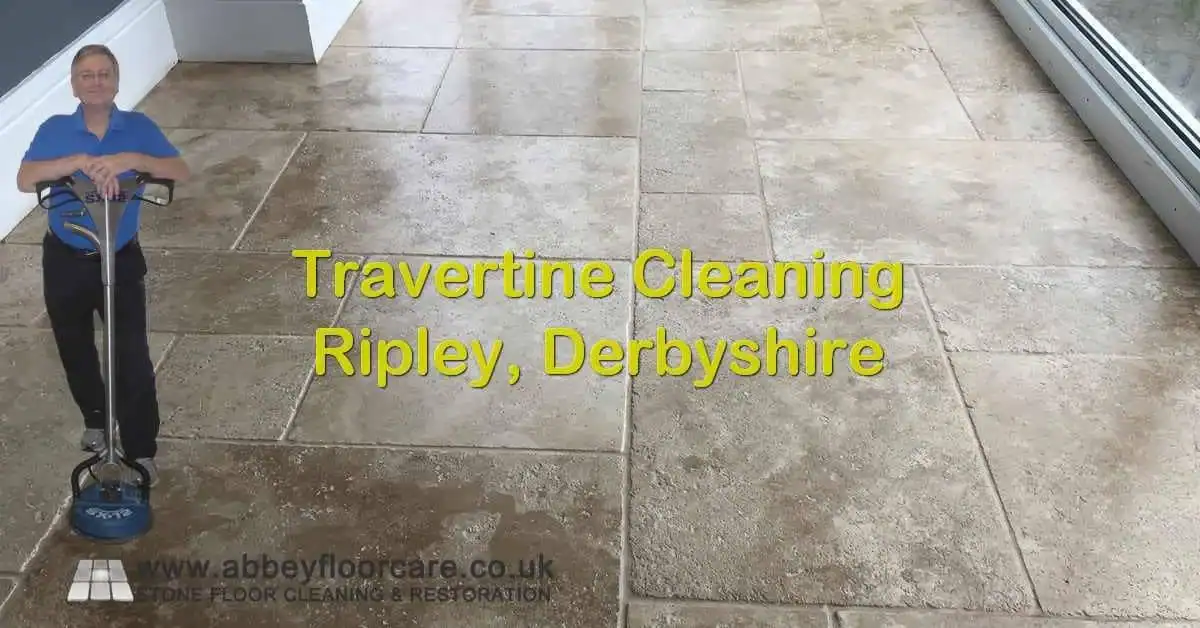
Tumbled Travertine Cleaning Ripley Derbyshire: A Restoration Case Study
Last Updated on March 4, 2026 by David
This Travertine Cleaning Ripley project details the professional restoration of a 12-year-old soiled Travertine tile floor that had reached a critical state of wear.
Located in a high-traffic kitchen diner and conservatory, the stone had lost its protective barrier, leading to deep-seated soiling within the characteristic pits and grout lines of the tumbled finish.
Project Navigation
- Step 1 – Preparing The Rooms For Travertine Cleaning
- Step 2 – Deep Cleaning The Travertine Tiles And Grout
- Step 3 – Pressure Rinsing The Floors
- Step 4 – Filling Holes In Travertine
- Step 5 – Filling Cracks in Some Of The Tiles
- Step 6 – Sealing Travertine Tiles In Ripley
- Step 7 – Travertine Aftercare Advice
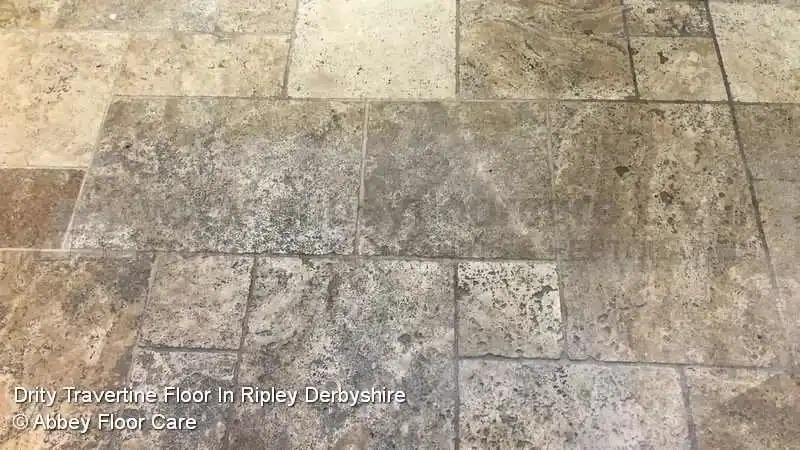
The primary challenge for this Ripley residence was the total failure of the original sealer. Over twelve years, the protective layer had been stripped away by foot traffic and cleaning, leaving the porous limestone vulnerable to organic soiling. The client required a specialist travertine cleaning service covering the Ripley area to address the darkened grout lines and the debris-filled “voids” or holes that define tumbled Travertine.
The Project Scope: The objective was to restore the floor to a condition where the natural earth tones were visible, ensuring the surface remained easy to maintain without intensive manual scrubbing. Our assessment identified heavy soil buildup in the grout and structural holes, necessitating a deep mechanical clean, void filling, and the application of a topical sealer.
Step 1 – Preparing The Rooms For Travertine Cleaning
To ensure a professional finish, the work area was cleared of all small furniture. We began with a thorough dry soil removal phase, vacuuming the entire floor to prevent loose debris from becoming abrasive during the wet cleaning stages.
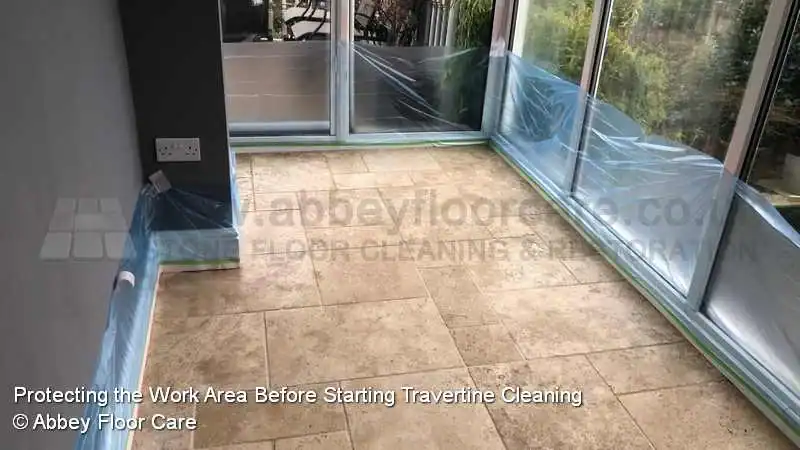
Protection of the property is paramount. We installed protective sheeting across the base of the kitchen units, walls, and adjoining floor surfaces. This containment strategy prevents cleaning chemicals and moisture from splashing onto paintwork or sensitive cabinetry during the agitation process.
Step 2 – Deep Cleaning The Travertine Tiles And Grout
A specific dilution of Travertine cleaner was applied across the kitchen and conservatory. We focused the application on the heavily soiled grout lines and the recessed holes in the tiles. The solution was left to dwell for ten minutes, allowing the chemicals to break the molecular bond between the soil and the stone surface.
Following the dwell time, we utilised a heavy-duty rotary scrubbing machine. The mechanical action of the brush is essential for tumbled stone, as it drives the cleaning agent into the textured surface and dislodges impacted dirt that standard mopping cannot reach.
Step 3 – Pressure Rinsing The Floors
Once the soil was suspended in a liquid slurry, we employed our pressurised rinse and capture equipment. This system simultaneously blasts the stone with clean water and vacuums away the waste, ensuring no dirty residue is left behind in the pores of the Travertine.
This process was repeated systematically until all traces of the old sealer residues and deep-seated soil were successfully extracted from the floor.
Step 4 – Filling Holes In Travertine
Travertine is naturally geologically pitted. While these holes provide character, they are structural weak points that trap dirt. If left unfilled, the edges of these voids can crumble, leading to larger “spalling” and making the tile unstable.
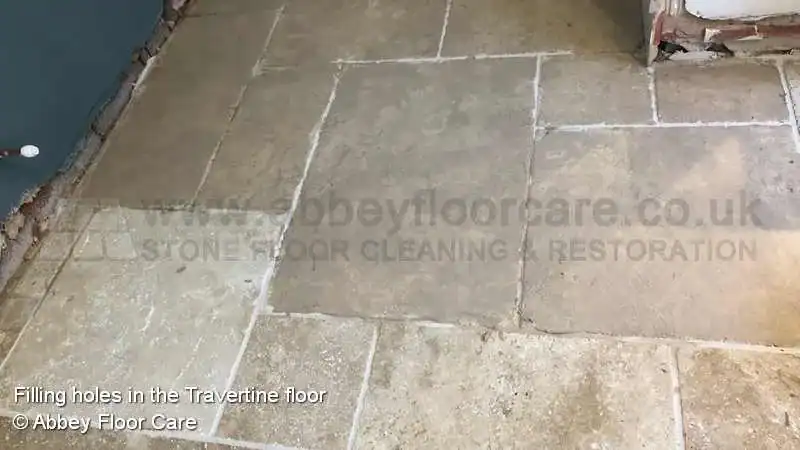
To stabilise the floor, we applied a high-quality beige colour filler. This rigid filler was worked into all open holes and areas of missing grout. We carefully cleaned the excess to ensure the filler remained flush with the tile surface, restoring the structural integrity of the floor.
Step 5 – Filling Cracks in Some Of The Tiles
In this 12-year-old floor, we identified five cracked tiles. This is often a result of minor subfloor movement over time. To prevent these cracks from collecting soil or spreading, we treated them specifically. Using a flexible silicone grout, we filled the fissures to allow for micro-movement while maintaining a seamless visual appearance.
Step 6 – Sealing Travertine Tiles In Ripley
The final phase of the restoration involved choosing the correct protective barrier. While matt and gloss options are available, the client selected a topical, satin-finish film-forming sealer. We applied a high-solids sealer which provides a durable “sacrificial” wear layer.
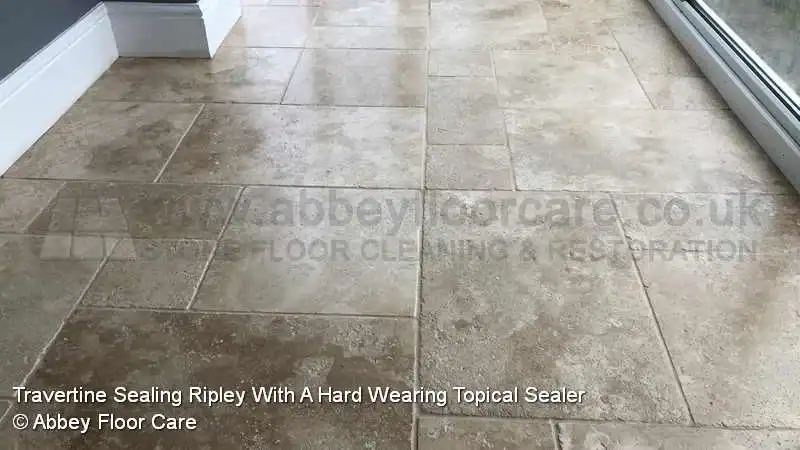
This mid-sheen finish serves three purposes: it protects the stone and grout from liquid penetration, provides a surface that is significantly easier to wipe clean, and enhances the natural colour of the tumbled Travertine. The result was a floor that looked “as new,” much to the satisfaction of the homeowner.
“Thank you so much, David, fantastic job. Both floors look like new.”
Mrs Joanne P. – Ripley, Derbyshire
This project stands as a prime example in our Travertine floor care guide regarding the recovery of neglected stone through professional intervention.
Step 7 – Travertine Aftercare Advice
To maintain the integrity of the new topical sealer, we advised the client to avoid harsh supermarket cleaners. We recommended LTP Floorshine, a cleaner specifically formulated by the sealer manufacturer to clean without stripping the protective film. Using the correct aftercare chemistry ensures the longevity of the restoration and prevents the premature return of deep-seated soiling.
If you have a Travertine or natural stone floor in Ripley or the surrounding Derbyshire area that requires professional attention, please reach out for a technical assessment. I would be happy to assist in restoring your flooring to its original beauty.
Recent Posts:
We work throughout the country, just some of our work counties:
Copyright © 2025 Abbey Floor Care. Tile And Natural Stone Cleaning Consultants FAQ - Privacy Policy - Terms And Conditions
Abbey Floor Care is a participant in the Amazon Services LLC Associates Programme, an affiliate advertising programme designed to provide a means for websites to earn advertising fees by linking to Amazon.co.uk. As an Amazon Associate, we earn from qualifying purchases.