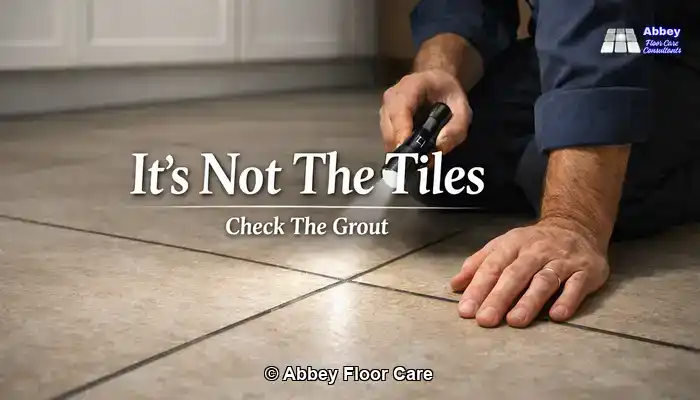
Do You Really Need a Specialist for Porcelain Tile Restoration in Surrey?
What Homeowners Usually Notice With Porcelain Floors
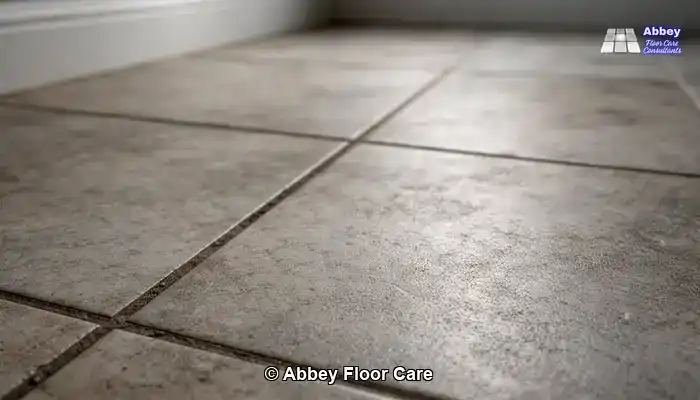
Many Surrey homeowners contact me because their porcelain still looks dull or dirty after cleaning, particularly on textured surface tiles where soil sits in the pattern rather than on top of it.
Another frequent concern is a grey film that appears after mopping, which is usually linked to residues such as grout haze or detergent layers sitting on the surface rather than genuine staining.
Grout often becomes dark and patchy over time, while the tiles themselves remain unaffected, because the grout absorbs far more than porcelain ever will.
Where polished porcelain is fitted, the floor can start showing faint swirls and loss of clarity, caused by minute scuffs sitting on the factory finish rather than damage deep within the tile.
Why Porcelain Behaves Differently From the Grout Around It

Porcelain is fully vitrified and resists absorption, so most problems remain on the surface as chemical films rather than penetrating into the body of the tile.
By contrast, cement-based grout is porous, meaning contaminants soak in easily and gradually darken, which is why grout often looks worse than the tiles themselves.
In kitchens and bathrooms across Surrey, hard water leaves mineral build-up that bonds to the surface, creating chalky marks known as limescale deposits.
Because porcelain rarely absorbs anything, attempts to strip marks using harsh cleaners simply attack the grout and surrounding joints instead of solving the root of the problem.
When a Professional Deep Clean Is Appropriate — and What It Can’t Fix
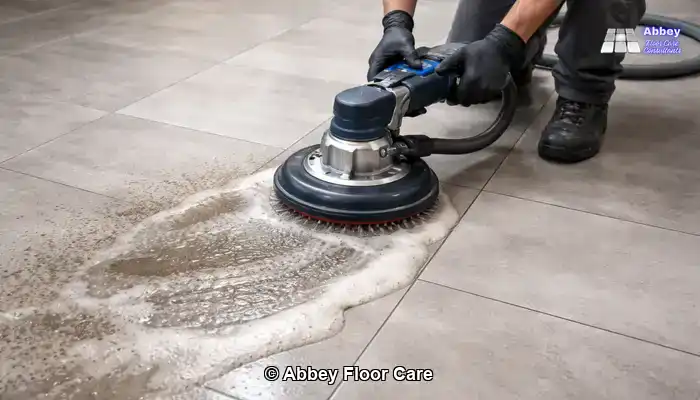
When residues, haze, or soil build up across the floor, a controlled chemical–mechanical deep clean allows professional products and agitation to break films apart while protecting the porcelain tiles.
Alkaline solutions are used to break down grease and traffic soil, because an alkaline cleaner targets organic build-up rather than the tile itself.
Acidic solutions are used in a different stage to dissolve mineral films and grout residues, applied carefully as an acid wash where it is safe to do so.
After agitation, the slurry must be removed thoroughly using slurry extraction, otherwise residues simply dry back on the floor and the haze returns.
However, even the best deep clean cannot reverse bleached grout or wear within joints, because the problem lies inside the grout rather than on the tile surface.
When Grout Recolouring or Joint Renovation Makes More Sense
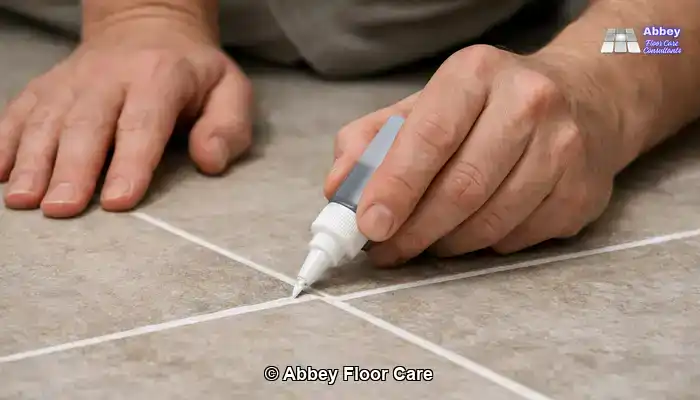
Where grout has faded, stained, or become uneven in colour, the most durable cosmetic improvement is usually grout recolouring applied after thorough preparation.
This process places a colour-stable coating across the joint, helping restore an even shade while adding protection to the grout against future soiling.
Recolouring improves appearance but does not make weakened joints physically stronger, because the structure of the grout remains the same underneath.
In areas where joints are cracked, missing, or contaminated, local repair or replacement is more appropriate than trying to disguise the issue with colourants.
When Burnishing a Polished Porcelain Floor Is Worth Considering
On polished installations, burnishing is sometimes used to refine the upper surface, using ultra-fine abrasives to recover clarity in the polished porcelain.
The process works by smoothing micro-scuffs using a high-quality burnishing pad, not by grinding away material as you might with natural stone.
Burnishing can improve reflection and evenness, but it cannot recreate a damaged factory finish if the original surface has already been compromised.
Before any work is recommended, small test areas allow us to see whether the burnishing delivers enough improvement to justify the investment.
When Replacement Is the Only Practical Answer for Damaged Tiles
Where tiles are chipped or cracked, the only truly invisible solution is tile replacement, assuming spare tiles are still available.
Porcelain bodies cannot be repaired convincingly because any filler or coating sits on the surface and contrasts with the surrounding porcelain tiles.
The replacement procedure requires care to avoid damaging adjacent tiles and to protect heating systems beneath the floor such as UFH.
This decision is always inspection-led because the practicality of removal depends on adhesive strength, tile availability, and the surrounding grout condition.
Where Sealing Does and Does Not Belong With Porcelain
Most porcelain does not need sealing because it is non-porous, and applying a coating simply leaves a film on the porcelain tiles.
True exceptions exist with micro-porous porcelain, where targeted sealing can help slow staining and make maintenance easier.
Textured porcelain occasionally benefits from protection in heavy-use areas, but this must be assessed case by case using porosity testing.
Where sealing is appropriate, an impregnating sealer is normally preferred because it protects without changing the appearance of the floor.
How a Specialist Assesses Your Floor Before Recommending Any Work
Assessment begins with understanding the tile type, installation age, and household usage so we can match the right approach to the porcelain tiles in front of us.
We then inspect the joints carefully, because the long-term appearance of the floor usually depends more on the grout than on the tiles themselves.
Test patches allow us to see how residues respond, confirming whether an alkaline cleaner or acidic stage is required — and where it is not safe to use either.
Where gloss recovery is being considered, controlled trials with a burnishing pad show what improvement is realistic before any commitment is made.
What We Won’t Promise Without Seeing the Floor
I will never guarantee a “like-new” result on grout because the outcome depends on the original grout condition, not just the cleaning process.
I will not recommend sealing automatically, because unnecessary coatings create sealer residue that is difficult and costly to remove.
I won’t promise that burnishing will recreate the original finish, because it only refines the existing factory finish and cannot rebuild what has been lost.
And I will not estimate costs without inspection, because each decision depends on the materials, contamination type, and condition of the porcelain tiles.
Simple Maintenance That Supports the Result After Restoration
Routine cleaning should rely on a pH-neutral cleaner so residue does not build up and joints are not damaged by harsh chemicals.
Avoid steam, bleach, or heavy detergents because these accelerate fading and weaken the grout even when the tiles seem unaffected.
In hard-water homes, regular wiping in wet areas helps reduce limescale deposits before they have time to harden on the surface.
When soils begin reappearing quickly, it is usually a sign the floor needs professional slurry extraction rather than stronger household products.
Next Steps if You’re Unsure Whether a Specialist Is Needed
If you’re unsure whether what you’re seeing is residue, grout ageing, or surface scuffing, the most sensible step is a calm, inspection-led conversation with a porcelain specialist.
Our role is not to explain what is appropriate for your floor, what cannot be achieved, and where an assessment protects your home.
If you’d like professional eyes on your porcelain floor in Surrey, I’m happy to arrange a straightforward assessment to explain what’s realistic and what isn’t.
19 Willow Rd,
New Malden
KT3 3RS
(01372)-664-337
We work throughout the country, just some of our work counties:
Copyright © Abbey Floor Care. Natural Stone Floor Restoration in Surrey and South West London FAQ - Privacy Policy - Terms And Conditions
Abbey Floor Care is a participant in the Amazon Services LLC Associates Programme, an affiliate advertising programme designed to provide a means for websites to earn advertising fees by linking to Amazon.co.uk. As an Amazon Associate, we earn from qualifying purchases.