How to Clean Travertine Floors (When Normal Cleaning Stops Working)
Last Updated on February 20, 2026 by David
To clean travertine tiles properly, you need to remove grit first, use a pH-neutral cleaner, and rinse thoroughly so dirt does not settle back into the stone.
How to clean travertine tiles safely
1. Remove all loose grit with a dry vacuum or soft brush.
2. Use a pH-neutral stone cleaner diluted as directed.
3. Mop lightly with minimal water.
4. Allow the cleaner time to loosen soil — do not scrub aggressively.
5. Rinse thoroughly and remove dirty water fully.
6. Dry the surface to prevent residue settling back into the stone.
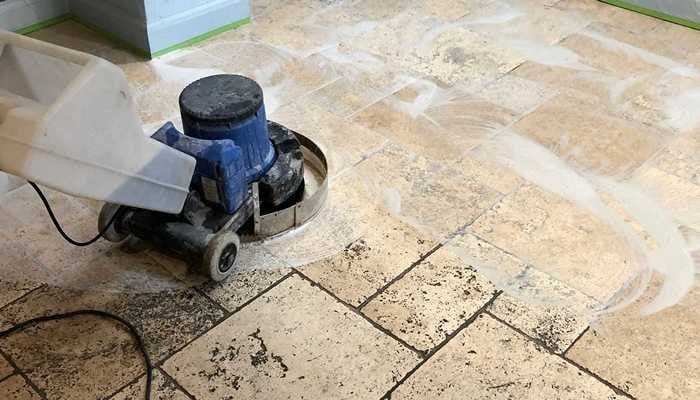
Travertine tiles can look dull or permanently dirty if soil becomes trapped in the stone’s natural pits. Cleaning them properly requires a slightly different approach from ceramic or porcelain tiles. Here is how to clean travertine safely without damaging the surface.
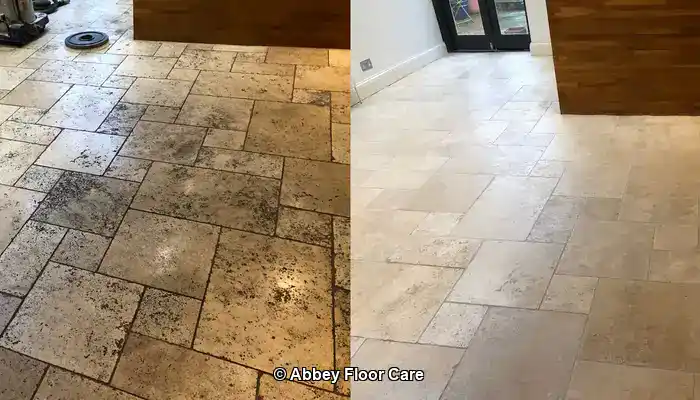
Many homeowners reach a point where their travertine floor feels like a constant frustration. It looked calm, warm, and characterful when it was first laid. Then slowly, without any obvious mistake, it began to darken, hold on to dirt, and resist every attempt to clean it properly.
This is especially common with tumbled travertine, which shows the problem sooner and more clearly than smoother finishes. The floor can start to look tired, patchy, or permanently grubby, even when you are careful and consistent. That experience is far more normal than most people realise.
This situation is one of many examples referenced in our Travertine flooring guide, which explains how travertine behaves in real homes and why these changes tend to appear over time.
Jump straight to the section you need
Why ordinary cleaning stops working on travertine
Why regular maintenance feels different from deep cleaning
Why travertine needs a different mindset to stay clean
Why some cleaning products feel easier to live with
Why does ordinary cleaning stop changing how the tiles look
Travertine does not soil as easily as ceramic or porcelain tiles. Its surface is full of tiny voids and natural pits, just beneath a thin outer skin. Over time, everyday dirt, mop water residue, and fine grit accumulate in those spaces.
Once that happens, surface wiping alone can no longer reach the dirt that is actually making the floor look dull. The floor may feel clean underfoot, yet still look uneven or permanently shadowed. This is usually the point where homeowners realise something deeper is going on.
Deep cleaning addresses soil that has settled into the stone and grout, rather than what sits on top. It is not about force or harsh products, but about loosening ingrained dirt and removing it fully, without pushing it further into the stone.
Products often used during deeper cleaning and everyday care

Wet & Dry Vacuum
|

Spin Mop System
|

Deck Scrubber Brush
|
Why does dry soil have to be removed before anything else
Most of the dirt that damages travertine arrives as dry grit. If that grit is mixed with liquid cleaner, it can behave like a fine abrasive paste, wearing the fragile surface and opening more pits. Removing loose soil first reduces the risk of making the problem worse while trying to fix it.
Why cleaning solutions need time, not force
Travertine responds best when cleaning solutions are allowed to loosen soil gradually. Scrubbing harder rarely helps and often exposes more voids. Keeping the surface damp while the cleaner works helps lift dirt without grinding it into the stone.
Why rinsing matters more than most people expect
If loosened soil is not fully removed, it simply settles back into pits and grout as the floor dries. This is one of the main reasons a floor can look clean while wet, then dull again once dry. Proper rinsing and extraction are what actually change how the floor behaves afterwards.
Why does grout often look darker than the tiles
Grout is usually more absorbent than travertine itself. It collects dirty wash water, residues, and moisture, which gradually turn it grey or black. This is not usually staining in the permanent sense, but accumulated soil held in a very porous material.
Why does everyday care feel different after deeper cleaning
Once a travertine floor has been properly cleaned and protected, everyday care feels much simpler. Maintenance cleaning is about preserving that clean surface, not trying to rescue a floor that is already overwhelmed by soil.
The difference is subtle but important. Regular cleaning supports the sealer and prevents dirt from settling deeply again. It does not need to be aggressive, frequent, or complicated to be effective.
Cleaning products are commonly paired with different sealer types

Fila Pro Floor Cleaner
Impregnated surfaces
|

LTP Floorshine
Topical sealers
|
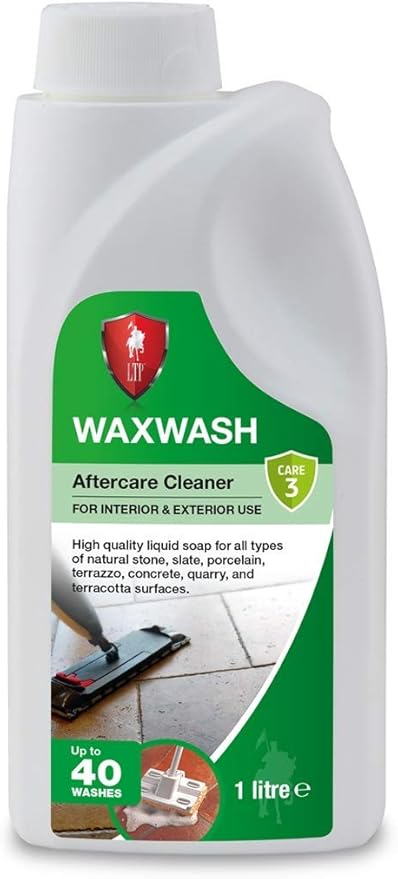
LTP Wax Wash
Waxed finishes
|
Why routine cleaning should feel gentle
Travertine responds best to regular, light cleaning that removes soil before it becomes embedded. Microfibre tools and neutral cleaners lift dirt without disturbing the surface or the protection already in place.
Why over-wetting causes long-term problems
Flooding a travertine floor with water allows moisture and soil to travel deeper into pits and grout. This can undo the benefits of sealing and gradually recreate the same dull, patchy look that led to deep cleaning in the first place.
Why travertine tiles need a different mindset to stay clean
Travertine rewards understanding more than effort. Most long-term issues stem from treating it like a hard, non-porous tile rather than a natural stone with its own limits and sensitivities.
Why knowing the stone changes expectations
Travertine’s natural holes, fillers, and surface texture mean it will never behave like a flawless slab. Small pits, tonal variation, and gradual wear are part of the material’s ageing.
Why cleaner choice matters more than brand strength
Because travertine is calcium-based, acidic or aggressive products permanently damage the surface. Damage often appears as ingrained dirt, but it cannot be cleaned away once it occurs.
Why daily grit does more harm than spills
Fine grit acts like sandpaper underfoot. Removing it regularly protects both the stone and any sealer, reducing surface breakdown over time.
Why does microfibre behave differently from cotton
Microfibre lifts and traps dirt rather than spreading it around. This is one of the reasons grout lines stay lighter when microfibre tools are used consistently.
Why sealing supports cleaning rather than replacing it
Sealers slow down absorption but do not make travertine maintenance-free. Cleaning habits still determine how quickly soil builds up again.
Why preventing soil matters more than fixing it
Entrance mats, furniture protection, and quick spill response reduce the amount of dirt that ever reaches the stone, extending the time between deeper cleans.
Why do some situations call for specialist assessment
If a floor remains dark or uneven after careful cleaning, the issue may be worn fillers, trapped coatings, or deeper structural wear. At that point, cleaning alone cannot change the outcome.
Some Products To Help Make Cleaning So Much Easier.
As an Amazon Associate I earn from qualifying purchases.

Sanilo Toilet Brush and Holder, Wide choice of beautiful Toilet Brush and Holder, Stainless Steel Handle, With Exchangeable Brush Head, Easy to clean (Bath Salt) £34.99 (as of February 23, 2026 15:56 GMT +00:00 - More infoProduct prices and availability are accurate as of the date/time indicated and are subject to change. Any price and availability information displayed on [relevant Amazon Site(s), as applicable] at the time of purchase will apply to the purchase of this product.)
3 in 1 Cup Lid Gap Cleaning Brush, Multifunctional Bottle Cup Lid Gap Cleaner, Home Kitchen Crevice Cleaning Brush Tools (Blue) £3.99 (as of February 23, 2026 15:56 GMT +00:00 - More infoProduct prices and availability are accurate as of the date/time indicated and are subject to change. Any price and availability information displayed on [relevant Amazon Site(s), as applicable] at the time of purchase will apply to the purchase of this product.)
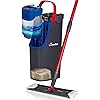
Vileda H2PrO Flat mop system - Revolutionary clean and dirty water separation - Water-saving design - Compact storage - Ergonomic handle - Microfibre power - Can be used one-handed £43.79 (as of February 23, 2026 15:56 GMT +00:00 - More infoProduct prices and availability are accurate as of the date/time indicated and are subject to change. Any price and availability information displayed on [relevant Amazon Site(s), as applicable] at the time of purchase will apply to the purchase of this product.)
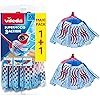
Vileda SuperMocio 3Action XL Mop Refill - Pack of 2 - Fits all SuperMocio Mops- Authentic Vileda Mop Head Replacement - Machine Washable - Advanced Microfibre Technology £8.90 (as of February 23, 2026 15:56 GMT +00:00 - More infoProduct prices and availability are accurate as of the date/time indicated and are subject to change. Any price and availability information displayed on [relevant Amazon Site(s), as applicable] at the time of purchase will apply to the purchase of this product.)
Elbow Grease Pink Rubber Gloves | Super Strong, Cotton Lined, Non-Slip Household Gloves (Medium - 1 Pack) £1.30 (as of February 23, 2026 15:56 GMT +00:00 - More infoProduct prices and availability are accurate as of the date/time indicated and are subject to change. Any price and availability information displayed on [relevant Amazon Site(s), as applicable] at the time of purchase will apply to the purchase of this product.)

Article by: David Allen – Abbey Floor Care
This article explains why travertine floors — particularly tumbled finishes — hold on to dirt so stubbornly, how soil behaves within the stone’s natural structure, and why cleaning success depends more on understanding the material than using stronger products.
Recent Posts:
We work throughout the country, just some of our work counties:
Copyright © 2025 Abbey Floor Care. Tile And Natural Stone Cleaning Consultants FAQ - Privacy Policy - Terms And Conditions
Abbey Floor Care is a participant in the Amazon Services LLC Associates Programme, an affiliate advertising programme designed to provide a means for websites to earn advertising fees by linking to Amazon.co.uk. As an Amazon Associate, we earn from qualifying purchases.