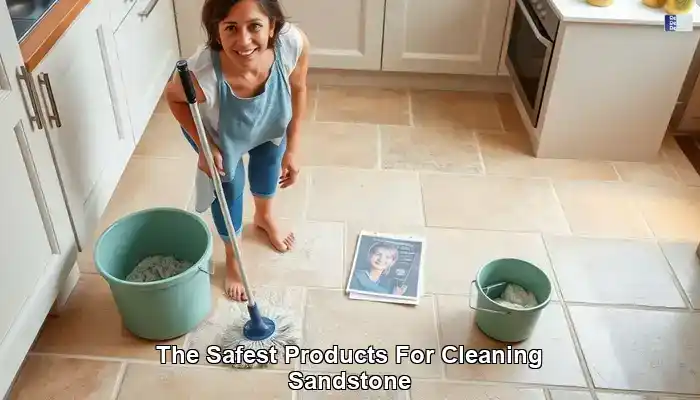
The Safest Products For Cleaning Sandstone
Last Updated on January 27, 2026 by David
Essential Natural Stone Cleaning Products for Sandstone Maintenance
Sandstone is porous, and many sandstone floors and surfaces have a riven or textured finish that traps fine dirt. That’s why “normal” household cleaners can feel hit-and-miss: some leave a film that attracts more soil, and others are simply too harsh for a stone that absorbs what you put on it.
If your main worry is safety (and you don’t want to experiment on your own floor), the aim is simple: choose a cleaner that is made for natural stone, is gentle by design, and doesn’t leave anything behind that changes how the stone looks or behaves.
Discover Eco-Friendly Cleaning Solutions for Sandstone
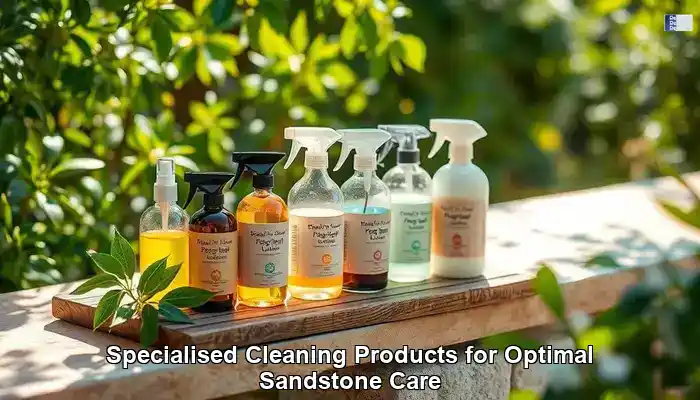
A stone-safe cleaner should lift everyday grime without leaving a sticky residue that makes sandstone look dull or “dirty again”.
“Eco-friendly” can be a useful clue, but it’s not a guarantee. What matters most is how the product behaves on porous stone:
- Low-residue (so it doesn’t leave a film that grabs dust and traffic soil)
- Stone-safe (labelled for natural stone, not a general degreaser)
- Gentle on finishes (especially if your sandstone has an older sealer or uneven patches)
If a product is strongly perfumed, feels “soapy”, or leaves a squeaky film, that’s often when sandstone starts looking flat or patchy a few days later.
Benefits of pH-Neutral Cleaners for Sandstone Surfaces
For most indoor sandstone maintenance, pH-neutral is the safest baseline. It’s not about chasing a “stronger” clean — it’s about avoiding the kind of chemistry that can lighten, darken, or unevenly change the look of porous stone.
A good pH-neutral stone cleaner is designed to lift everyday grime while rinsing away cleanly. That matters because sandstone doesn’t just get dirty on the surface — it can hold traces of whatever you put on it.
Utilising Biodegradable Cleaning Formulas for a Sustainable Clean
Biodegradable formulas can be helpful when you want a cleaner that breaks down without leaving aggressive residues behind. That’s especially relevant in UK homes where damp conditions, tracked-in garden soil, and everyday moisture can combine to make sandstone feel “never quite finished”.
The key is still the same: choose a biodegradable cleaner explicitly intended for natural stone and described as non-film-forming or low-residue.
Specialised Cleaning Products for Optimal Sandstone Care
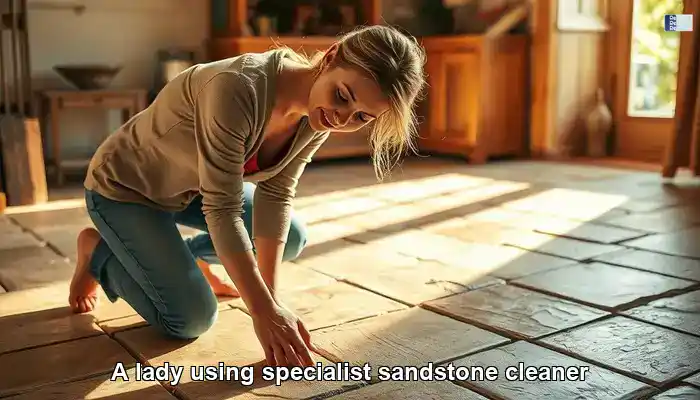
Specialist sandstone-safe cleaners are chosen for compatibility with porous stone, not for harsh “stripper” strength.
Sandstone is not one single “thing”. It varies in density, texture, and how it responds to moisture — and that’s why product choice is more about characteristics than brand names.
When you’re reading labels, you’re looking for products that are designed to clean without:
- etching or bleaching
- leaving a sticky film
- reacting with older sealers or patchy coatings
Expert Recommendations from Manufacturers for Sandstone Care
If your sandstone was supplied with care guidance (or you know it has been sealed), follow the product guidance for natural stone and sealed stone, rather than general “multi-surface” cleaners.
The safest approach is usually to use a pH-neutral, stone-safe maintenance cleaner for routine upkeep, and a separate stone-safe specialist cleaner for specific problems (like greasy build-up or stubborn residues) — without turning that into a DIY “chemistry set”.
The Importance of Speciality Cleaners for Sandstone Challenges
Some sandstone problems are not “dirt” in the normal sense. They’re the result of:
- old residues that keep reappearing
- traffic soil ground into texture
- patchy or failed sealer that traps grime
In those cases, the safest product choice is one that targets the type of contamination (for example: greasy build-up versus mineral deposits) while still being described as suitable for natural stone.
If a cleaner promises rapid results, “instant restoration”, or aggressive stripping power, that’s a sign it may be too harsh for sandstone in a lived-in home.
Choosing Sealant-Compatible Cleaners for Sandstone Protection
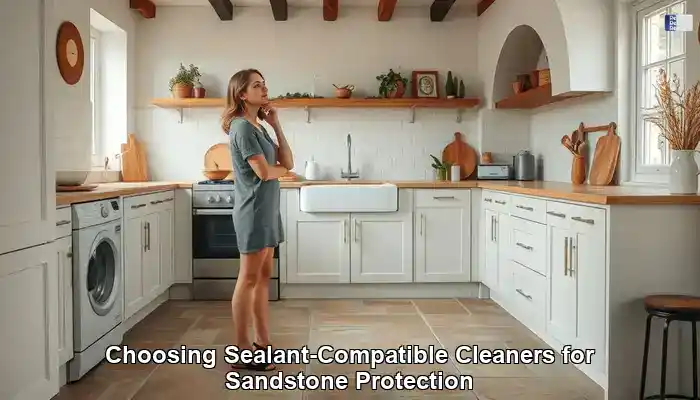
If your sandstone has any sealer (especially an older, patchy sealer), choose cleaners labelled as compatible with sealed natural stone.
A lot of “sandstone cleaning disasters” happen when a strong cleaner meets an older sealer. The cleaner doesn’t just remove dirt — it can disturb the sealer unevenly, leaving cloudy patches, dull areas, or a surface that looks worse after “cleaning”.
If you suspect your sandstone has been sealed in the past, prioritise cleaners that are described as:
- safe for sealed natural stone
- pH-neutral
- low residue / non-film-forming
Eco-Conscious Solutions for Sandstone Cleaning
If sustainability matters to you, you can still keep the selection simple: choose a stone-safe cleaner with biodegradable credentials and a low-residue, pH-neutral profile.
The goal is a sandstone surface that stays visually calmer for longer — not one that looks bright for a day and then starts grabbing dust again.
Effective DIY Cleaning Solutions for Sandstone Maintenance
Many homeowners reach for household products because they feel “safer” than specialist cleaners. The risk is that sandstone is porous, and some common household substances can quietly create long-term problems: uneven colour, sticky residues, or patchy reactions with old sealers.
If you want the safest approach, it’s usually better to avoid improvised mixes and stick to products designed for natural stone — because sandstone tends to remember what you’ve put on it.
Creating a Vinegar and Water Cleaning Solution
Vinegar is a common online suggestion, but it’s not a reliable option for protecting sandstone. Even when it seems to “work”, it can trigger uneven changes, especially if the stone has an older sealer, mineral deposits, or delicate surface layers.
If vinegar is on your shortlist, it’s a sign you’re really asking a different question: “What can I use that won’t cause a reaction?” A pH-neutral stone cleaner is the safer answer.
Effective Baking Soda Paste for Stubborn Stains
Baking soda is often described as mild, but on textured sandstone it can act like a fine abrasive, leaving unevenly lightened areas or a “scuffed” look in the high spots.
For sandstone, “gentle” isn’t just about avoiding scratches — it’s also about avoiding patchy visual changes that make the floor look inconsistent.
Using Mild Soap Solutions for Routine Cleaning
Soaps can leave a film. On sandstone, film is one of the quickest routes to “it looks dusty again”.
If your sandstone always looks dull shortly after cleaning, a residue-forming cleaner is a common culprit. A low-residue stone cleaner is usually the safer long-term choice.
Enhancing Shine with Lemon Juice and Olive Oil Polish
Polishes and oils are risky on sandstone. They can darken the stone unevenly, attract soil, and create a surface that looks patchy and difficult to keep consistent.
If you’re hoping for a richer look, that’s usually a sealing and finish conversation—not a “polish” conversation—and it needs to remain compatible with porous stone.
Hydrogen Peroxide Solution for Tough Stains
Oxidising cleaners (including peroxide-based products) can be unpredictable on sandstone because they may lighten certain minerals, affect older residues unevenly, or create “clean spots” that stand out.
If staining is persistent, the safest approach is often to determine whether you’re dealing with residue, sealer issues, or true staining — because the wrong product choice can visually lock the problem in.
Identifying and Avoiding Harmful Cleaning Chemicals
Knowing what to avoid is often more valuable than knowing what to buy. Sandstone problems are frequently caused by the wrong cleaner category rather than a lack of effort.
Avoiding Acidic Cleaners That Damage Sandstone
Acidic cleaners are a common cause of bleaching, patchiness, and permanently “tired-looking” sandstone. The damage may not appear instantly, but over time, it can make the surface look lighter in places and harder to maintain evenly.
Steering Clear of Harsh Abrasives
Textured sandstone already has natural high and low points. Abrasives can wear those high points first, creating an uneven look that no normal cleaning can fix. Anything described as “scrub”, “scour”, “abrasive”, or “deep scrub pad” is a red flag for sandstone safety.
The Dangers of Bleach and Ammonia on Sandstone
Bleach and ammonia can cause discolouration and unpredictable reactions, particularly where the sandstone has older contamination, previous products, or sealing residues. They’re also difficult to “fully remove” from porous material once they’ve soaked in.
Avoiding Solvents and Petroleum-Based Products
Solvents can drive contamination deeper into the stone and may disturb older coatings unevenly. They can also leave the surface looking mottled or “stained”, even when the original problem was only surface dirt.
Engaging Professional Cleaning Services for Sandstone Care
Sometimes the safest “product choice” is recognising when the issue isn’t a product issue at all. If dirt is held deep in texture, or if an old sealer is trapping soil, routine cleaners will keep disappointing you.
If you want context around sandstone behaviour and what cleaning and restoration can (and can’t) change, start here:
Sandstone floor cleaning and restoration in UK homes.
If your situation matches a riven indoor flag floor where normal cleaning never feels enough, this supporting guide may be the better “next read”:
Cleaning and sealing an indoor riven sandstone floor (context guide).
Finding Certified Stone Cleaners for Effective Results
A sandstone specialist should understand porous, textured stone and the risks posed by harsh chemicals. The main point is not speed — it’s compatibility: cleaning that improves how the stone behaves without creating new patchiness, residues, or surface wear.
Restoration Experts to Revitalise Your Sandstone Surfaces
If the floor has patchy old sealer, deep ingrained grime, or areas that never look the same twice, restoration is usually about stabilising the surface behaviour — not chasing a perfect showroom finish.
That’s also why “stronger products” often aren’t the answer: the limiting factor is usually the stone and the residues within it, not a lack of cleaning power.
Establishing Regular Maintenance Plans for Sandstone Care
For most homeowners, the simplest sustainable position is: a stone-safe, pH-neutral, low-residue cleaner for routine use, and avoiding anything that strips, coats, or polishes the surface unpredictably.
That keeps sandstone looking calmer for longer, without turning normal cleaning into a constant battle.
Essential Safety Measures for Cleaning Sandstone
Sandstone safety is mostly about avoiding surprises: test conservatively, avoid harsh categories, and don’t assume a product is safe just because it’s “natural”.
Utilising Protective Gear During the Cleaning Process
Even “gentle” products can irritate skin and eyes. Basic protection (gloves and good ventilation) keeps cleaning sensible and low-risk.
Conducting Tests on Small Areas Before Full Application
If you’re unsure how a product will behave, the safest approach is a small, discreet test area. Sandstone varies, and older residues can cause uneven reactions.
Ensuring Proper Ventilation While Cleaning
Ventilation matters most when you’re dealing with products that smell strong, feel aggressive, or linger. If a product feels “too powerful” indoors, it’s often a sign it’s not a good fit for sandstone maintenance.
Frequently Asked Questions About Sandstone Care
Which eco-friendly products are recommended for cleaning sandstone?
Look for a stone-safe cleaner that is pH-neutral, biodegradable, and labelled low-residue or non-film-forming. Those characteristics matter more than a brand name.
Is it safe to use vinegar for cleaning sandstone?
Vinegar is not a dependable “safe” choice for sandstone. On porous stone (especially with older sealers or residues), it can lead to uneven results. A pH-neutral stone cleaner is the safer baseline.
How often should I clean my sandstone surfaces?
Sandstone doesn’t have a single universal schedule. If the stone looks dusty again quickly, it’s often because of texture, tracked-in fine dirt, or residue from previous cleaners, not because you’re “not cleaning often enough”.
What should I avoid when cleaning sandstone?
Avoid acidic cleaners, abrasive pads/powders, bleach, ammonia, solvents, petroleum-based products, and polishes/oils that alter surface behaviour or leave residues.
How can I restore the original appearance of my sandstone?
If the issue is deep, ingrained dirt or patchy old sealer, restoration is usually about correcting the surface behaviour and residues, not simply “cleaning harder”. Start with the sandstone hub for a behaviour-led explanation.
Are there professional services available for cleaning sandstone?
Yes. The safest choice is a specialist who understands porous, textured sandstone and avoids harsh chemistry that can leave the surface patchy or unstable.
What should I do if my sandstone becomes stained?
The safest first step is identifying whether it’s true staining, residue, or sealer-related patchiness — because the wrong cleaner can make the contrast worse on porous stone.
Is it safe to use bleach on sandstone surfaces?
No. Bleach can discolour sandstone and create uneven results that are hard to reverse.
Can I use a pressure washer to clean sandstone?
Pressure washing can damage sandstone and is not a safe default choice for the material.
What is the best approach to maintaining sandstone surfaces?
Choose a pH-neutral, stone-safe, low-residue maintenance cleaner, avoid harsh categories, and keep expectations realistic for riven or heavily textured sandstone.

Article by: David Allen – Abbey Floor Care
UK sandstone and natural stone specialist with over 30 years’ hands-on experience. David specialises in how sandstone reacts to everyday cleaning products — which substances are safe, which quietly cause damage, and why some floors look worse after “cleaning”. His writing focuses on helping homeowners understand product risks and make safer choices for porous, textured stone, without sales pressure or technical jargon.
9 Hazel Avenue
Lenzie
Glasgow
G66 4RR
07533-873-476
Copyright © Abbey Floor Care.
We are proud to be your local stone floor cleaning, polishing, and restoration specialists for homes and commercial properties in Central Scotland.
With years of experience working with all types of stone floors, our friendly and professional stone floor cleaning services can’t be beaten on price or service.
FAQ - Privacy Policy - Terms And Conditions
Abbey Floor Care is a participant in the Amazon Services LLC Associates Programme, an affiliate advertising programme designed to provide a means for websites to earn advertising fees by linking to Amazon.co.uk. As an Amazon Associate, we earn from qualifying purchases.