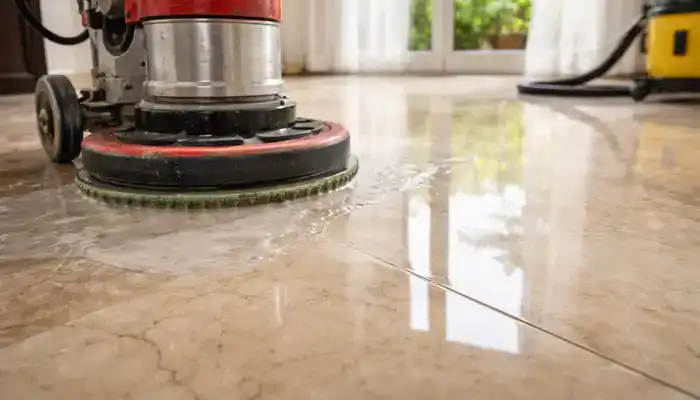
What’s Involved In Honing Marble Tiles?
Last Updated on January 18, 2026 by David
Key Takeaways – What’s Involved In Honing Marble Tiles?
- Honing removes a microscopic layer of damaged marble to lift dullness, light scratches, and surface etching.
- Diamond abrasives are used in stages, moving from correction to refinement so the finish looks even, not patchy.
- Slurry control is essential; proper extraction and rinsing prevent haze and keep the work tidy in your home.
- Honing vs grinding: honing refines and follows existing contours, while grinding removes more stone to correct uneven floors.
- Sealing helps slow staining, but it does not prevent acid etching or future wear from grit.
If your marble tiles have gone dull, look “cloudy”, or show fine scratches that will not shift no matter how hard you mop, you are not imagining it. In most cases, what you are seeing is surface damage, not dirt. Honing is the professional process used to remove that damaged top layer and reveal fresh marble underneath, ready for the final finish you want (from a soft, honed sheen through to a full polish).
In plain English, honing means removing a tiny amount of stone from the surface using diamond abrasives. That sounds drastic, but it is controlled, methodical, and designed to be safe for marble when done correctly. In everyday terms, it is the difference between a floor that always looks slightly tired and one that looks clean again, even before any polishing.
For a wider understanding of how routine marble cleaning fits into long-term care, repair, and restoration, see our marble care, cleaning, repair and restoration guide.
Honing is commonly used to remove:
- Fine scratches and scuffing from daily foot traffic and grit,
- Light etching (dull marks) from acidic spills or unsuitable cleaners,
- Adhesive residues and stubborn films left behind by old coverings, and
- Patchiness caused by uneven wear in busy walkways.
Once the marble has been honed, it is ready for final finishing such as polishing or sealing, depending on the look you want and how the floor is used.
What Honing Means For Your Marble Floor

Honing restores the worn surface, making the marble look evenly clean again.
Marble is a calcium-based stone, which means it is sensitive to acids and can wear relatively quickly. Most “dullness” is really micro-scratching and etching. You cannot clean those away because they are not sitting on top of the marble; they are changes to the surface itself.
Honing removes the affected layer, then refines the surface in stages until the finish is even again. The result is a floor that looks consistently clean, reflects light properly, and does not show every footprint or smear.
Why This Floor Needed Honing In The First Place

Old coverings can hide wear, but the marks are often only in the surface layer.
In this case, the marble had been covered with carpet tiles to hide scratches and marks. That is extremely common. Once the carpet was removed, the main issues were surface scratching and old adhesive residues.
The floor was not badly damaged. That matters because deep scratches or significant unevenness can push a job into grinding. Here, it was possible to go straight to honing without removing much stone.
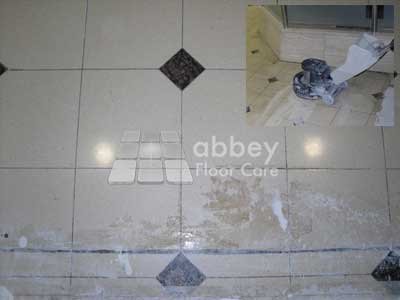
Honing removes a microscopic layer of damaged marble in a controlled way.
What Happens During The Honing Process
Honing is a mechanical resurfacing process. The marble is improved by refining its surface rather than trying to wash problems away with chemistry.
1) Inspection And Damage Assessment
The surface is assessed in good light to confirm whether marks are residues or true surface damage. This prevents unnecessary abrasion and avoids patchy results.
2) Removing Residues First (If Needed)
Old adhesives or coatings are dealt with first because they can clog abrasives and interfere with the honing stages.
3) Progressive Honing With Diamonds
Honing is carried out in stages, starting with the least aggressive diamonds needed and progressing to finer grades. This sequence is what prevents swirl marks and uneven sheen.
4) Slurry Control And Extraction
Honing produces a light slurry of water and marble particles. If left to dry, it can re-bond to the surface and cause haze, so proper rinsing and extraction are essential.
5) Edge Work And Detail Areas
Edges and tight areas are refined separately so the finish blends evenly across the whole floor.
Honing Versus Grinding: The Key Difference

Grinding removes more stone to correct deeper damage or unevenness.
Honing removes a small amount of marble and follows the existing contours of the floor. Grinding removes more stone and is used when damage or unevenness is more severe.
If a marble floor is uneven, badly worn, or has significant lippage, honing alone may not be enough. In those cases, a broader restoration approach — including levelling work — is sometimes required. You can read more about this in our guide to marble restoration.
What Finish Can Honing Achieve?

After honing and final finishing, the marble looks clear and bright again.
A honed marble surface can range from a soft, satin finish through to a high sheen. The final appearance depends on how far the refining stages are taken.
Why The Reflection Can Still Look Slightly Rippled
Honing improves the surface without flattening the floor. If the marble is slightly uneven, gentle ripples in the reflection are normal and do not indicate poor workmanship.
Will Honing Damage My Marble?
Done correctly, honing is a safe and controlled way to correct surface damage. Problems usually arise when stages are skipped, abrasives are too aggressive, or slurry is not properly removed.
What Happens After Honing
After honing, the marble can be left with a satin finish or taken further with polishing. Sealing may also be applied to slow staining, but it will not stop etching or scratching.
How To Keep Honed Or Polished Marble Looking Right
Day-To-Day Cleaning
- Dry dust regularly to remove grit.
- Use a microfibre mop and a pH-neutral stone cleaner.
- Wipe up spills promptly, especially acidic liquids.
Common Mistakes To Avoid
- Using acidic or “shiny floor” cleaners.
- Scrubbing with abrasive pads.
- Steam cleaning marble floors.
Summary: The Real Value Of Honing
Honing is how marble is brought back to a clean, even surface. It is a controlled process that removes damage, refines the finish, and prepares the stone for its final appearance without unnecessary stone removal.
Recent Posts:
We work throughout the country, just some of our work counties:
Copyright © 2025 Abbey Floor Care. Tile And Natural Stone Cleaning Consultants FAQ - Privacy Policy - Terms And Conditions
Abbey Floor Care is a participant in the Amazon Services LLC Associates Programme, an affiliate advertising programme designed to provide a means for websites to earn advertising fees by linking to Amazon.co.uk. As an Amazon Associate, we earn from qualifying purchases.