Can Limestone Floors Be Polished? King’s Lynn Kitchen Floor Case Study (UK)
Last Updated on February 27, 2026 by David
If your limestone floor used to look smooth and even, but now feels dull, slightly rough, or “grabs” dirt again faster than it used to, you’re not imagining it. This is one of those changes that creeps in slowly, until one day you realise the floor doesn’t behave the way it once did.
What often catches people out is that it can happen alongside perfectly normal day-to-day cleaning. You’re doing your best, but the finish keeps fading, and the floor never quite looks consistently fresh.
This case study shows what that looked like in a real kitchen floor in King’s Lynn — and why the problem wasn’t simply “dirt”.
Can limestone floors be polished?
Yes. Limestone floors can be polished, but what you see afterwards depends on the surface’s condition and how it has worn over time. In this King’s Lynn kitchen, the floor was refined to restore clarity and a practical sheen, without chasing a high-gloss finish that would have shown marks quickly in daily use.
Why a polished limestone floor isn’t always “shiny”
“Polished” can mean different things on limestone. Some floors end up with a bright, reflective shine. Others suit a calmer, softer sheen. In this kitchen, the chosen finish was deliberately more forgiving, so the floor looked clean and even without feeling like it needed constant perfection.
Why limestone can lose its shine over time
Limestone doesn’t behave like porcelain or ceramic. As the top surface gradually wears, it can become less smooth and less reflective. That makes the floor look duller — and it can also make soil cling more readily, so the floor seems to “re-dirty” faster than it used to.
- The sheen becomes uneven or fades
- Some areas darken faster than others
- The surface feels less smooth and seems harder to keep looking fresh
Why certain everyday liquids leave marks that won’t wash out
In kitchens and bathrooms, limestone is often exposed to mildly acidic liquids. On limestone, acids can change the surface itself, leaving pale or cloudy areas that don’t behave like normal stains. That’s why these marks often remain visible even after careful cleaning.
Limestone polishing case study — King’s Lynn, Norfolk
King’s Lynn map
This job had an unusual twist: the floor was originally thought to be travertine, based on how it had been described and on a few early photos. Some tiles included filled areas, which can make limestone resemble filled and honed travertine at a glance.

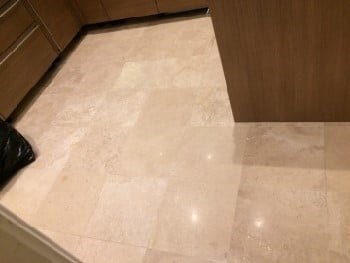
Once on site, it was clear that the floor was limestone. Most tiles were solid, with only a small number showing filled areas. The surface was worn and dull, but it still had that softer, velvety look limestone often has when it’s tired rather than deeply damaged.
The main issue wasn’t dramatic gouges or heavy damage. It was the quieter, everyday kind of wear — the sort that slowly takes the clarity out of the surface and makes the floor harder to keep looking even.
Why does this floor look tired without being badly damaged
There were no deep scratches. Most of the marks were fine, consistent scuffing from normal foot traffic — the kind that slowly clouds the surface and takes away that “clean, even” look.
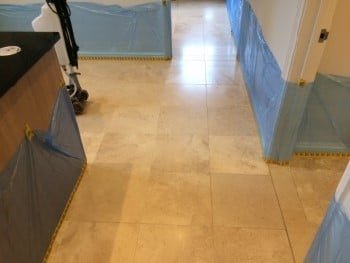
Why was the finish refined rather than pushed to a high gloss
A very bright shine can look stunning on day one, but in a working kitchen, it can also make everyday marks stand out more quickly. For this floor, the aim was a finish that looked clean, felt smoother underfoot, and stayed looking even without needing constant fuss.
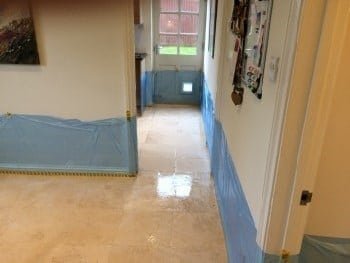
The floor was refined in stages to even out the surface, and the finish could be chosen to suit the space. A mid-polish level was selected after seeing a test area, as it gave the kitchen a clear, fresh look without making the floor look like a mirror.
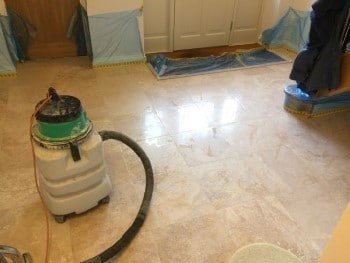
Once the surface was even and dry, it was sealed, which helped the floor stay easier to live with day to day.
What this case study usually helps homeowners understand
When a limestone floor becomes dull and hard to keep looking even, it’s rarely one dramatic incident. It’s more often a slow shift in how the surface behaves — and once that clicks, the confusion tends to drop away. The floor isn’t “dirty in a normal way”; it’s acting like a worn surface.
That understanding is often the most useful part: not encouraging a decision, just making the floor’s behaviour feel logical again.
If your King’s Lynn limestone floor is acting like a ‘dirt magnet’ or has lost its original clarity, the problem is likely surface wear rather than a cleaning error—[Contact Abbey Now] for a local assessment and let us restore a practical, beautiful finish to your kitchen floor today.
FAQs
Why can a limestone floor look clean but still dull?
Because dullness often comes from changes to the surface rather than soil sitting on top. As the upper layer wears, light reflects differently, so the floor loses clarity even after cleaning.
Why does limestone show more wear than some other floors?
Because limestone is a natural mineral surface, its finish can soften and cloud gradually with everyday use. That change is subtle, but it affects how the floor looks and how easily it releases dirt.

Article by: David Allen – Abbey Floor Care
Works with domestic natural stone and tile floors in UK homes.
David’s work focuses on understanding how materials such as limestone behave over time — why staining occurs, why cleaning can feel inconsistent, and why floors sometimes stop responding the way homeowners expect. His writing is intended to help make sense of what people are seeing, without sales pressure or technical language.
Products you may have encountered while reading about limestone floors.
This case study focuses on how the limestone surface behaved and why the floor appeared as it did over time.
For readers who want to explore everyday cleaning and care separately, the products below are commonly discussed in relation to limestone floors.

Fila Pro Floor Cleaner
|

LTP MPG Sealer H20
|

Vileda H2PrO Spin Mop System
|
Recent Posts:
We work throughout the country, just some of our work counties:
Copyright © 2025 Abbey Floor Care. Tile And Natural Stone Cleaning Consultants FAQ - Privacy Policy - Terms And Conditions
Abbey Floor Care is a participant in the Amazon Services LLC Associates Programme, an affiliate advertising programme designed to provide a means for websites to earn advertising fees by linking to Amazon.co.uk. As an Amazon Associate, we earn from qualifying purchases.